27 Tage-300 Stunden Yogalehrer Ausbildung und Yoga Therapie in Rishikesh, Indien
Yoga Teacher Training India
This 300-hour residential yoga teacher training course is registered with Yoga Alliance in both the USA and Canada. In this course, you will focus on the traditional teachings of Ancient Hatha Yoga - Patanjali Yoga. You will expand your knowledge and experience from your 200-hour yoga teacher training in all areas of yogic practices such as asana, pranayama, meditation, bandhas, kriyas, mudras as well as theory on yogic philosophy, anatomy, and the art of teaching.
Die Lehrer
Höhepunkte
- Intensive Yogapraktiken
- Fortgeschrittene Meditationstechniken
- Kurs in Yogatherapie und Ayurveda
- Abschlusszertifikat zur Registrierung bei Yoga Alliance
- Zertifizierter 300-stündiger Yogaausbildungskurs und Lehrplan
- Täglich 2 yogische vegetarische Mahlzeiten und Kräutertee
- Ausflüge und Besichtigungen
- 26 Übernachtungen Unterkunft
Level
- Experte
Stile
24 Tage Unterricht auf Englisch
Unterkunft
Ausstattung
- Essbereich
- Garten
- Küche
- Lobby
- Yoga Studio
- Wäscherei
- Bibliothek
You will stay at Patanjali International Yoga Foundation (PIYF) ashram, Rishikesh, India. Patanjali International Yoga Foundation provides accommodation and other facilities to our yoga students to make their stay comfortable and healthy. Single or shared accommodations are available. Please keep in mind, that this is a yoga ashram and not a hotel, so we provide all ashram facilities.
Upon your arrival, you will be provided with soap and toilet paper and for the duration of the retreat, it will be at your own personal expense. For your personal safety and security, please bring a padlock for your room. Patanjali International Yoga Foundation provides clean bed sheets and towel once a week, shared kettle, iron, and hairdryer on each floor, and a blanket but during the winter, it is recommended you to bring a sleeping bag.
Ashrams usually represent a return to a simpler way of living, which is very different to a hotel. Generally there is a more communal atmosphere and often an expectation that guests will pitch in with whatever needs doing.
Programm
This 300-hour advanced yoga teacher training is registered with Yoga Alliance in both the USA and Canada and based on the traditional teachings of Ancient Hatha yoga - Patanjali Yoga organized by Patanjali International Yoga Foundation (PIYF) Rishikesh, India - RYS 200, 300, 500 hour.
The curriculum of PIYF 300-hour advanced yoga teacher training course fully covers the international standards of Yoga Alliance USA and Canada.
The objective of the advanced yoga teacher training is to deepen and expand the knowledge and yogic practices from the previous 200-hour yoga teacher training. This 300-hour yoga teacher training course also includes teachings on Yoga Therapy and Ayurveda. All classes are taught by Dr. Jitendra Das and his assistant yoga teachers
Daily schedule
This 300-hour yoga teacher training program follows a very tight schedule, with almost eight to ten training hours a day assigned to some aspect of yoga, including contact and non-contact hours. You will find the training intensive but enlightening.
06:00 Wake up, self-practice
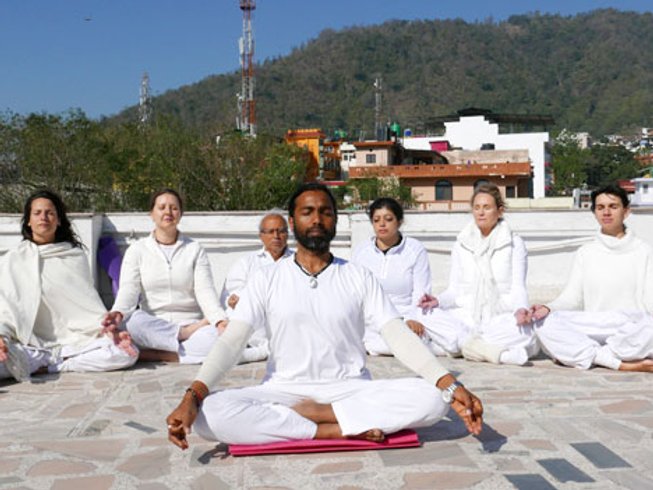
07:00-07:45 Mantra, Kriya, Pranayama, Meditation
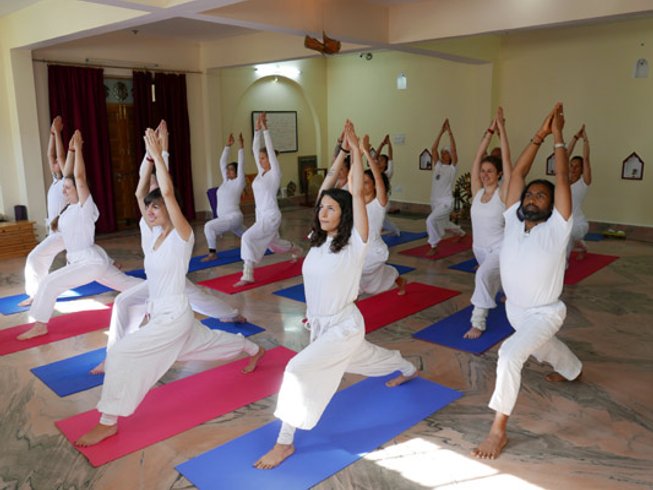
08:00-10:00 Morning yoga practice, Mantra Chanting, Warming up, Surya, Namaskar, Structural practice asana, Relaxation
10:30-11:00 Lunch break (yogic meal)
11:00-12:00 Non-contact hours - self-study
12:00-13:00 Theory class - Yoga Therapy and Ayurveda
13:00-14:00 Theory class - philosophy, art of living
14:00-15:00 Yoga Nidra
15:00-15:30 Herbal Tea
17:00-19:00 Evening yoga practice & Practicum - Asana, Adjustments, Alignment
19:30-20:00 Dinner break (yogic meal)
20:30-21:30 Meditation
22:00 Lights off
Training syllabus
The Yoga Alliance USA and the Canadian Yoga Alliance Canada have set widely-accepted international standards for yoga teacher training programs which include 100, 200, and 300 hours across five areas of teachings.
Patanjali International Yoga Foundation (PIYF) Rishikesh, India explores these teaching areas in 300-hour yoga teacher training in Rishikesh, India at the bank of holly Ganga river in the lap of Himalaya. PIYF includes yoga therapy and Ayurveda into 300-hour yoga teacher training course.
1. Yoga techniques
Advanced asana, pranayama, bandha, kriya, mantra, mudra, and dhyana (meditation) techniques will be taught during the advance teacher training. Also, trainees will learn about the benefits, checkpoints, and contraindications, as well as how to teach, assist, adjust, and correct others.
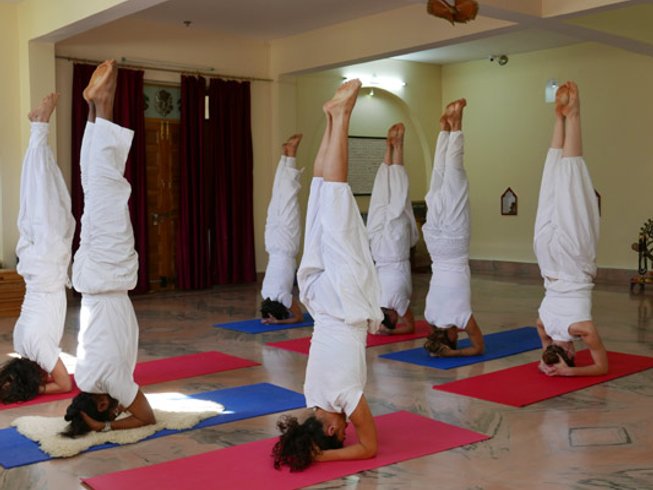
- Asana: learn more than 67 advanced asanas (postures) including their different levels and variations, from intermediate to advanced level. In each asana you will learn proper adjustments, alignments, techniques, corrections, contraindications, physical and psychic awareness, and benefits.
- Bandha: learn the advanced practice of three bandhas - energy locks in the body - Mula bandha, Jalandhara bandha, Udiyana bandha, and Maha bandha.
- Pranayama: learn 10 advanced techniques of pranayama- Anuloma-Viloma, Nadishodhana, Ujjai, Bhramari, Shitali, Sitkari, Bhastrika, Kapalbhati, Suryabhedi, and Chandrabhedi, with emphasis on technique, duration, ratio, physical and psychic awareness, contraindications, and benefits.
- Kriya : learn and practice advanced techniques of Shatkriya (six body cleansing methods): Dhauti, Basti, Neti, Nauli, Tratak, and Kapalbhati, with emphasis on technique, duration, ratio, physical and psychic awareness, contraindications and benefits.
- Mudras: learn and practice 16 advanced mudras (gestures) from Hatha yoga text books according to Shatchakra and energy channels: Chin, Jnan, Pankaj, Shankh, Shivaling, Manduki, Mahamudra, Mahabandh, Mahabhed, Tadagi, Shanmukhi, Kaki, Vipritkarni, Pashini, Shambhvi, and Nasikagra mudra
- Meditation: yoga trainee students will learn and be guided into practice of advanced meditation techniques in accordance with each chakra, plus five additional practices of different meditations with emphasis on background, techniques, and benefits.
- Mantra: Learn to chant and present main vedic mantras and how to use them to purify and balance the chakras.
- Surya and Chandra Namaskar: yoga trainee students will learn and be guided into practice of advanced practice of sun and moon salutation to balance body, mind, and energy channels.
- 2. Advanced philosophy, lifestyle, and ethics
The instructors will explain and discuss the history and philosophy of yoga. The trainee will learn from 1-2 chapters of Yoga Sutra of Patanjali: definition of yoga, Panch vritis (five mental modifications), Abhayas and Vairagya, practice to highest energy (God), helpful element, Kriya yoga, panch avidya (five illusions), and the eight original limbs: Yama, Niyama, Asana, Pranayama, Pratyahar, Dharna, Dhyana and Samadhi from Yoga Sutra of Patanjali. As well as study of major verses from Gherand Samhita from the first chapter to the seventh chapter.
3. Teaching methodology
Learn how to demonstrate and adjust advanced asanas, observe the class and assist other students. As well as the instructors teach to the trainees advanced lesson planning, injury prevention how to avoid injury from advanced asana, how to use hand for advanced yogasana adjusting, how to do advanced alignment principles in yoga poses, educational techniques to teach principles of advanced yoga, practicum in teaching yoga, what to talk and not to talk during advanced yoga practice, understanding, correcting, assisting, encouraging, and caring for advanced yoga practice.
4. Anatomy and physiology
Trainee will learn advanced both physical and subtle anatomy. You will get complete information about three nadis - Ida, Pingla, and Shusmana, Kundalini and Shat chakras (six energy channels): Mulladhar, Swadhisthana, Manipur, Anahata, Vishuddhi,Ajna and Sahashrar chakra, Triguna (three qualities), Panchkosha (the five layers of body), panchprana (the five vital energy).
5. Practicum
Learn how to teach advanced all yoga techniques and how to manage the structure of advanced yoga practice and advanced lessons.
Class structure and planning: yoga trainees will learn how to create an advanced effective and intelligent structure and build your advanced class during the training.
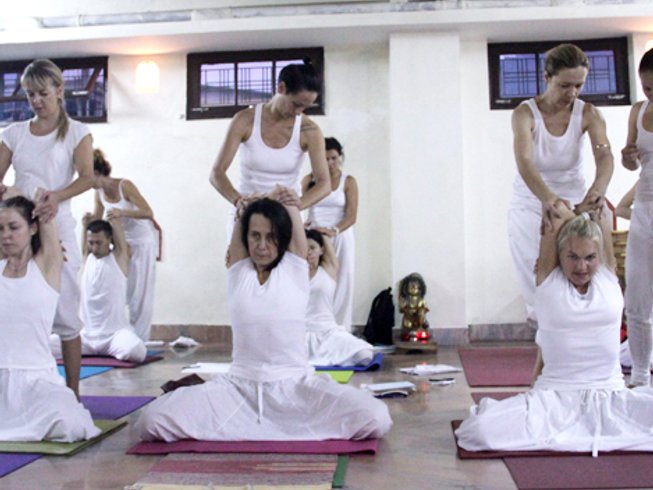
Assisting and alignment: yoga trainee student will learn how to make hands-on advanced adjustments for every pose study and you will practice with a partner yoga student.
Practice of teaching: yoga teacher trainees will learn practice teaching poses one by one as you learn them. We would slowly and intelligently build up to teaching advanced sun and moon salutations and keep adding a little more material until you have built a full class and will feel comfortable teaching it. Throughout this process you are given a lot of support, feedback, and encouragement, to give you the tools to become a great teacher.
300-hour yoga teacher training: yoga therapy and Ayurveda
- Patanjali International Yoga Foundation includes and introduces Yoga Therapy and Ayurveda in 300-hour yoga teacher training topics such as:
- Ayurvedic Three Doshas: Human body is a divine creation that consists of five elements of the nature of earth, water, fire, air, and space. These five elements lead to the formation of three Ayurvedic constitutions of the body or as we call it, Ayurveda 3-Doshas of the body. The instructors not only teach how to recognize them, but also how to design the practice, the diet, and the wholesome living according to this 3-Doshas.
- 1. Vata Dosha: the air constitution
- Characteristics (physical, psychological, and behavioral diagnosis), signs of imbalance, signs of balance, correct yoga practice to balance, Ayurvedic herbs
- 2. Pitta Dosha: the fire constitution
- Characteristics (physical, psychological, and behavioral diagnosis), signs of imbalance, signs of balance, correct yoga practice to balance, Ayurvedic herbs
- 3. Kapha Dosha: the water constitution
- Characteristics (physical, psychological, and behavioral diagnosis), signs of imbalance, signs of balance, correct yoga practice to balance, Ayurvedic herbs
- 4. Common diseases
Learn about more than 20 common diseases and their treatment through correct diet, Ayurvedic herbs, correct yoga practice
5. Sankaprachalana
- Deep digestive system cleansing technique with particular yoga asanas (Tiryak tadasana, Katichakraasana, Tiryak bhujangasana and Udarakarsasana) and Ayurvedic treatment.
- 6. Food according to Sat Chakra and Pancha Pranas
Learn about the seven energy meridians and five vital energy in our body.
7. Food and seven Tissues (Dhatus)
Proper understanding of tissues helps the practitioner to predict the symptoms and provide the best yogic treatment. Learn about the relationships of seven tissues in our body.
8. Meditation brain therapy
Learn seven effective ways of meditation and their effects on the mind, body, and energy. Also learn about Ayurvedic herbs specifically for the brain.
Code of conduct
- Discipline is an integral part of the training program and the course routine must be strictly followed.
- Disrespect of rules and regulations may result in course termination, without any refund.
- Restricted dress code for all classes is white yoga trousers, t-shirt, socks, jacket, jumper, and shawl.
- Absenting from the scheduled program without prior permission of the teacher will be considered as a gross breach of discipline.
- A student must inform the staff in advance if they intend to skip a meal, so there is no waste of food.
- Any activity that is not related to the course is not permitted.
- Do not be late for class, the door of yoga hall would be closed and you will no longer be allowed to enter.
- Smoking and consumption of any drugs, alcohol, and meat are strictly prohibited during the training.
- Animals and children under 12 years are not allowed in the ashram.
Graduation and certification
As a graduate of this 300-hour yoga teacher training, you can choose to register either with Yoga Alliance USA or Yoga Alliance Canada, which will give you an opportunity to teach worldwide as you become RYT-500
Course prerequisites and requirements
This yoga teacher training course is an intensive journey of personal and professional self-development, therefore there are necessary course prerequisites, that we believe will help to create better teaching-learning relationships and an equal group of students. All applicants of 300-hour advanced yoga teacher training must have previously completed their 200-hour yoga teacher training in any Yoga Alliance registered school.
Note:
Patanjali International Yoga Foundation will send the specific prerequisites and study materials after the course registration.
Ausflüge (inklusive)
Included in your program package are excursions and sight seeing tours.
Lehrer

Dr Jitendra Das
Dr. Jitendra Das has studied and practiced yoga, Ayurveda, and Vedic scripture at school and university, as well as with senior Indian masters. He studied yoga, Ayurveda, Sanskrit, Veda, and related subjects in Haridwar. He teaches and practices yogasana, pranayama, bandha, mantra, mudra, meditation, cleansing kriyas, Ayurveda, and Vedic chanting at Rishikesh, and gives conferences, workshops, and seminars worldwide.

Tatiana Morozova Morozova
Tatiana Morozova is an experienced teacher of Patanjali International Yoga Foundation with over 15 years of practice and deep knowledge of teaching. Tatiana follows the ancient Hatha yoga style, both in her teaching and also in her practice. Currently, she is the representative of Patanjali International Yoga Foundation in Russia and the leading teacher in Patanjali International Yoga Foundation Ashram in Rishikesh.
Lage
This 300-hour yoga teacher training program will be held at Patanjali International Yoga Foundation, Rishikesh, Uttarakhand, India. It is situated on the banks of the holy Ganga River and on the foothills of the Himalayas in northern India. Rishikesh is a very relaxed place in India, enabling you to get a very peaceful atmosphere. It is believed, that meditation in Rishikesh brings people closer to the attainment of moksha, as does a dip in the holy river that flows through it.
Distance
- Dehradun Airport (DED), 30 kilometers
- Haridwar, 25 kilometers
- Indira Gandhi International Airport (DEL), 250 kilometers
- Lakshman Jhula Bridge, 500 meters
- Rishikesh town, 4 kilometers

Ausstattung
Services
- Wäscherei
- Bibliothek
Verpflegung
Patanjali International Yoga Foundation provides five to seven dishes in one meal with proper nutrition and fresh cooked. The food is suitable for both western and eastern students and there is a different menu for each day. There will be daily herbal tea times during the retreat.
According to Yoga and Ayurveda textbooks, two meals are healthy and sufficient. Also there should be an eight-hour gap between two meals for a healthy life, but students can have fruits and nuts, if they feel hungry.
Folgende Mahlzeiten sind inbegriffen:
- Lunch
- Dinner
- Drinks
Die folgenden Getränke sind enthalten:
- Tee
Die folgenden Ernährungsweisen stehen zur Verfügung und/oder berücksichtigt werden:
- Vegetarisch
- Yogisch
Freizeitaktivitäten und Sehenswürdigkeiten (optional)
- Bungee jumping
- Cycling
- Flying fox
- Kayaking
- Motorcycle tours
- Rafting
- Sightseeing
- Trekking
- Tubing
Was ist im Preis inbegriffen?
- 26 Übernachtungen
- 2 tägliche gesunde vegetarische Mahlzeiten und Kräutertee
- Abschlusszertifikat
- Umfangreiche Studienmaterialien
- Tägliche intensive Meditationspraxis
- Täglicher Theorieunterricht in yogischer Philosophie, Anatomie und der Kunst des Unterrichtens
- Ausflüge und Besichtigungstouren
- Hilfsmittel für Neti Kriya Kännchen
- Yogamatten im Yogasaal verfügbar
- 18% GST
Was ist nicht im Preis inbegriffen?
- Flugpreise
- Optionale Aktivitäten
- Transfers vom und zum Flughafen
Anreise
Empfohlene Flughäfen
Transfer verfügbar gegen Aufpreis US$ 35 pro Person
Indira Gandhi International Airport
209 km von Ihrem Ziel entfernt
Arrival by airplane
The nearest international airport is New-Delhi’s Indira Gandhi International Airport (DEL), 250 kilometers or domestic Dehradun Jolly Grant Airport (DED) which is only 30 kilometers away. Domestic flights to Dehradun Jolly Grant Airport (DED) are operated by Air India, Jet Airways, and Spicejet. Please note, that the best way to leave Delhi airport is by the Delhi Traffic Police Prepaid Taxi Service which is located on the left side right after you pass customs on the way out to the arrivals hall.
Arrival by bus
Buses to Rishikesh leave New-Delhi from the Kashmiri Gate National Bus Stand approximately every hour. The bus ride takes about 7-9 hours.
Arrival by train
Rishikesh has a train station, but it is currently serviced only by one train. The best option is to reach Haridwar station, which is only about 30 minutes away from Rishikesh, and then continue by road. Haridwar is serviced by many trains from/to Delhi, Varanasi, Rajasthan, Amritsar, and others. From Delhi, the train ride takes approximately 5-7 hours.
Arrival by taxi
Taxis are widely available anywhere in India. The taxi drive from Delhi is around 6 hours, depending on traffic conditions. From Haridwar, the taxi ride takes around 40 minutes. Patanjali International Yoga Foundation can arrange a taxi service upon advanced request.
Stornierungsbedingungen
- Eine Reservierung erfordert eine Anzahlung von 30% des Gesamtpreises.
- Die Anzahlung wird nicht erstattet, wenn die Buchung storniert wird.
- Der Restbetrag ist am Tag der Ankunft zu zahlen.

Bewertungen

Für diesen Veranstalter können Sie Ihre Buchung durch BookYogaTeacherTraining.com garantieren. Alle gängigen Kreditkarten werden akzeptiert.