23 jours-200h en formation de professeur de yoga hatha ancien à Rishikesh, Inde
Yoga Teacher Training India
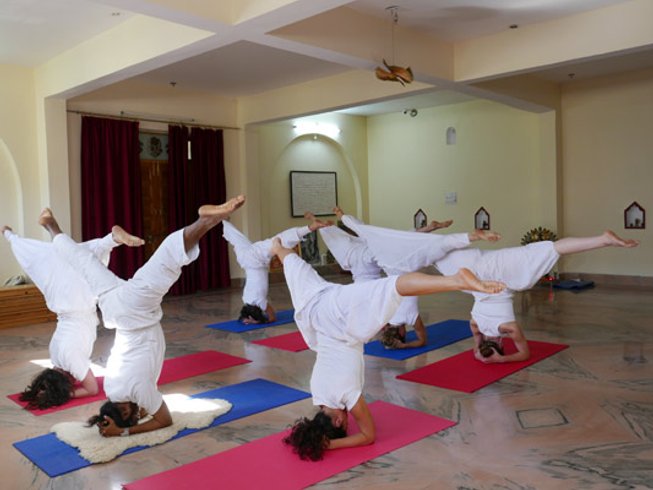
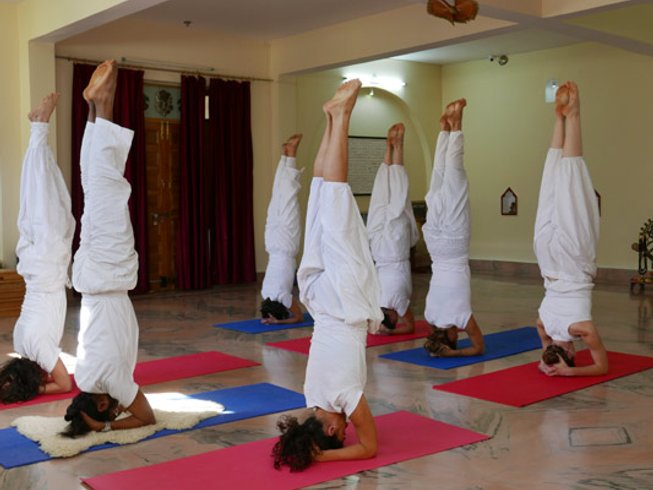
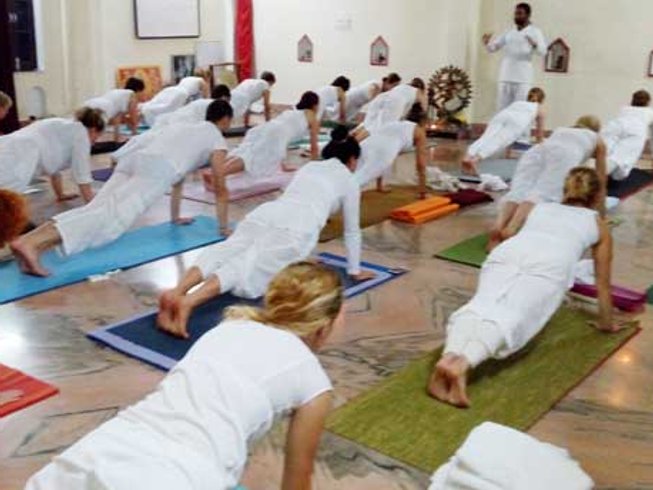
Join this 200-hour yoga teacher training at Patanjali International Yoga Foundation in India, which will focus on the traditional teachings of ancient Hatha yoga - Patanjali yoga. This training is perfect for aspiring yoga teachers as well as serious practitioners who just want to develop their own practice and expand their knowledge of yoga. This training will provide you with completely new physical and mental experience. Give yourself the opportunity to take your practice to the next level and feel confident in teaching others.
Rencontrez les professeurs
Particularités
- Cours de yoga intensifs quotidiens
- Certification pour vous inscrire auprès de Yoga Alliance
- Pratique quotidienne des asanas, du pranayama et de la méditation
- Programme de formation de yoga certifié de 200h
- Repas végétariens quotidiens et tisane
- Excursions et visites touristiques
- Hébergement de 22 nuits
Styles
20 jours de cours en Anglais
Hébergement
Installations
- Coin repas
- Jardin
- Cuisine
- Hall d'entrée
- Studio de yoga
- Service de blanchisserie
- Bibliothèque
During this retreat, you will stay in an ashram at Patanjali International Yoga Foundation. You will stay in single or shared rooms with attached bathrooms with hot water. Please keep in mind that this is not a hotel. Upon your arrival, you will be provided with soap and toilet paper. The rest of the time, you need to buy it.
For your personal safety, please bring a padlock for your room. The ashram provides clean bed sheets and towels once a week, shared kettle, iron, and hairdryer on each floor, and a blanket.
Patanjali International Yoga Foundation ashram rules
- The ashram gates are opened from 7:00 a.m. to 9:30 p.m. By 10:00 p.m. everyone should be in their rooms
- The outside guests are allowed to visit you from 11:00 a.m. to 5:00 p.m. at the reception sitting place only and they are not allowed in the rooms
- Please keep your rooms neat and clean with self-service
- Please make a general cleaning before checking out or pay 500 INR for the general room’s cleaning
- Please clean and dry your plates and cups after food
- In case of using fat creams and skin oils, please use your own bed linens
- Please save water
- Put used toilet paper and sanitary items into the rubbish bin
- Stick posters or other items on the walls are strictly prohibited
- Use of electric heaters is strictly prohibited
- Every guest is responsible for self-belongings
- Any damage of the property is under your own responsibility and expenses should be refunded
- Please through the rubbish from your rooms to the rubbish can near the main gates
Programme
Certifications
Students who complete their subsequent trainings are eligible to register with Yoga Alliance as Registered Yoga Teachers (RYT®).
Course aim and objective
The objective of the training is to physically and mentally prepare aspiring yoga teachers and serious yoga practitioners to be confident in practicing and teaching by themselves. All classes will be taught by Dr. Jitendra Das and his assistant yoga teachers.
Training requirements
This yoga teacher training is an intensive journey of personal and professional self-development, therefore Patanjali International Yoga Foundation has created some prerequisites they believe will help to develop a better teaching - learning relationship and an equal group of students. They highly recommend that all applicants have at least two to three years of established yoga practice.
Training syllabus
The Yoga Alliance USA and the Canadian Yoga Alliance Canada have set widely-accepted international standards for yoga teacher training programs which include 100, 200, and 300 hours across five areas of teachings.
Patanjali International Yoga Foundation (PIYF) Rishikesh, India explores these teaching areas in 300-hour yoga teacher training in Rishikesh, India at the bank of holy Ganga river in the lap of Himalaya.
1. Techniques:
Asana, pranayama, bandha, kriya, mantra, and dhyana (meditation) techniques will be taught during the training. Also, trainees will learn about the benefits, checkpoints and contraindications, as well as how to teach, assist, adjust and correct others.
- Surya Namaskar (sun salutation): Yoga trainees will learn the 12 positions of sun salutations with points of concentration, breathing, and mantra. Also, trainees will learn Surya Namaskar with many variations of practice.
- Asanas: learn more than 40 basic asanas (postures) including their different levels and variations, from beginner to advance level. In each asana, you will learn proper adjustments, alignments, techniques, corrections, contra-indications, physical and psychic awareness, benefits, etc.
- Bandhas: learn the practice of three bandhas - energy locks in the body - Mula bandha, Jalandhara bandha, Uddiyana bandha, and Maha bandha. The instructors place emphasis on technique, contraindications, and benefits.
- Pranayama: learn eight main types of pranayama (breathing) techniques - Anuloma-Viloma, Nadishodhana, Ujjai, Bhramari, Shitali, Sitkari, Bhastrika, and Kapalbhati. Each pranayama will be taught with an emphasis on many techniques, duration, ratio, physical and psychic awareness, contraindications and benefits.
- Kriyas: learn and practice Shatkriya (six body cleansing methods): Dhauti, Basti, Neti, Nauli, Tratak and Kapalbhati with emphasis on techniques, practice, and theory, variations, awareness, contraindications, benefits, etc. The instructors will explain how to use kriya in daily life.
- Dhyana (meditation): yoga teacher training students will learn and be guided into practice of major six meditation techniques in accordance with each chakra, plus five additional practices of different meditations with emphasis on background, techniques, and benefits.
- Mantra: learn to chant and present main Vedic mantras.
2. Philosophy, lifestyle, and ethics
The instructors will explain and discuss the history and philosophy of yoga.
Yogic lifestyle: Students will learn the yogic diet and achievements of yoga.
Textbooks: The trainees will learn the eight original limbs: Yama, Niyama, Asana, Pranayama, Pratyahara, Dharna, Dhyana and Samadhi from Yoga Sutra of Patanjali. As well as seven limbs of Hatha Yoga from Gherand Samhita and their use in modern lifestyle.
3. Teaching methodology
Learn how to demonstrate and adjust different asanas, observe the class and assist other students. As well as the instructors teach to the trainees lesson planning, injury prevention how to avoid injury from asana, how to use hand for yogasana adjusting, how to do alignment principles in yoga poses, educational techniques to teach principles of yoga, practicum in teaching yoga what to talk and not to talk during yoga practice, understanding, correcting, assisting, encouraging and caring, also guiding the progress of students in yoga.
4. Anatomy and physiology
There are both physical and subtle anatomy lessons. You will get complete Information about three nadis - Ida, Pingla, and Shusmana, Kundalini, and Shat chakras (six energy channels): Muladhara, Swadhisthana, Manipur, Anahata, Vishuddhi, Ajna and Sahasrara chakra.
5. Practicum
Learn how to teach all yoga techniques and how to manage the structure of yoga practice and lessons.
- Class structure and planning: yoga trainees will learn how to create an effective and intelligent structure and build your class during the training. By the end of the training you would have enough structure and have the confidence to go forward on your own.
- Assisting and alignment: yoga trainees will learn how to make hands-on adjustments for every pose study and you will practice with a partner yoga student.
- Practice of teaching: yoga teacher trainee will learn practice teaching poses one by one as you learn them. We would slowly and intelligently build up to teaching sun salutations and keep adding a little more material until you have built a full class and will feel comfortable teaching it. Throughout this process, you are given a lot of support, feedback, and encouragement, to give you the tools to become a great teacher.
Code of conduct
- Discipline is an integral part of the training and so the course routine must be strictly followed
- Disrespect of rules and regulations may result in course termination with no refund of the fee
- Restricted dress code is white yoga trousers, T-shirt, socks, jacket, jumper, and shawl
- Absenting from the scheduled program without prior permission of the teacher would be construed as a gross breach of discipline
- A student must inform the staff in advance if they intend to skip a meal so there is no waste of food
- Any activity that is not related to the course is not permitted
- Do not be late for class, the door of the yoga hall would be closed and you will no longer be allowed to enter
- Smoking and consumption of any drugs, alcohol, and meat are strictly prohibited during the training
Daily schedule
This training follows a tight schedule where almost each of the seven to eight training hours in the day will be assigned to some aspect of yoga. You will find the training intensive, but enlightening.
- 06:00 Wake up and self-practice
- 07:00 - 07:45 Kriya, Bandha, pranayama, and meditation
- 08:00 - 09:45 Morning yoga practice - Surya namaskar, asana, and relaxation
- 10:30 - 11:00 Lunch break (yogic meal)
- 12:00 - 13:00 Anatomy and Physiology
- 13:00 - 14:00 Science of yoga theory class - Yoga Sutra and Philosophy
- 14:00 - 15:00 Yoga Nidra
- 15:00 - 15:30 Herbal tea
- 17:00 - 19:00 Evening yoga practice (practicum, asana, adjustments, and Ashtanga Vinyasa)
- 19:30 - 20:00 Dinner break (yogic meal)
- 20:30 - 21:30 Meditation
- 22:00 Lights off
Depending on different circumstances, the mornings can begin as early as 6:00 a.m. with meditation followed by some yoga postures and maybe some classes or lectures in philosophy or anatomy.
Excursions
Excursions and sightseeing tours are included in the retreat package.
Professeurs

Dr Jitendra Das
Dr. Jitendra Das has studied and practiced yoga, Ayurveda, and Vedic scripture at school and university, as well as with senior Indian masters. He studied yoga, Ayurveda, Sanskrit, Veda, and related subjects in Haridwar. He teaches and practices yogasana, pranayama, bandha, mantra, mudra, meditation, cleansing kriyas, Ayurveda, and Vedic chanting at Rishikesh, and gives conferences, workshops, and seminars worldwide.

Tatiana Morozova Morozova
Tatiana Morozova is an experienced teacher of Patanjali International Yoga Foundation with over 15 years of practice and deep knowledge of teaching. Tatiana follows the ancient Hatha yoga style, both in her teaching and also in her practice. Currently, she is the representative of Patanjali International Yoga Foundation in Russia and the leading teacher in Patanjali International Yoga Foundation Ashram in Rishikesh.
Lieu
This yoga retreat will take place at Patanjali International Yoga Foundation in Rishikesh, India, situated on the banks of the holy Ganga River, at the foothills of the Himalayas. Rishikesh is a very relaxed and spiritual place, enabling you to get into the very peaceful atmosphere. It is believed that meditation in Rishikesh brings people closer to the attainment of moksha, as does a dip in the holy river that flows through it.
Nearby places
- Dehradun Airport (DED) - 30 kilometers
- Haridwar - 25 kilometers
- Indira Gandhi International Airport (DEL) - 250 kilometers
- Lakshman Jhula Bridge - 500 meters
- Rishikesh town - 4 kilometers

Caractéristiques
Équipements
- Coin repas
- Jardin
- Cuisine
- Hall d'entrée
- Studio de yoga
Services
- Service de blanchisserie
- Bibliothèque
Repas
Patanjali International Yoga Foundation will provide five to six dishes in one meal with proper nutrition and freshly cooked. Food is yogic Ayurvedic vegetarian. Foods are suitable for both western and eastern students. There are different menus for each day.
According to Yoga and Ayurveda textbooks, two meals are healthy and sufficient. Also there should be an eight-hour gap between two meals for a healthy life, but students can have fruits and nuts, if they feel hungry.
Les repas suivants sont inclus:
- Lunch
- Dinner
- Drinks
Les boissons suivantes sont comprises:
- Thé
Les régimes alimentaires suivants servis et/ou pris en charge :
- Végétarien
- Yogique
- Ayurvédique
Activités et lieux à visiter
- Bungee jumping
- Cycling
- Flying fox
- Kayaking
- Motorcycle tours
- Rafting
- Sightseeing
- Trekking
- Tubing
Ce qui est inclus
- Formation certifiée de professeur de yoga de 200h
- Pratique intensive quotidienne de mantra, asana, pranayama, kriya, mudra et méditation
- Cours théorique quotidien sur la philosophie yogique, l’anatomie et l’art de l’enseignement
- Certificat de fin de formation
- 22 nuits d’hébergement
- 2 repas végétariens yogiques sains par jour
- Excursions et visites locales
- Tisane quotidienne
- Supports de cours imprimés
- Outils pour le pot de neti kriya
- Tapis de yoga disponibles dans la salle
- 18% de GST
Ce qui n'est pas inclus
- Activités supplémentaires
- Billet d’avion
- Transferts depuis et vers l’aéroport
- Repas supplémentaires
- Dépenses personnelles
- Transferts depuis et vers la gare
Comment se rendre sur place ?
Aéroport recommandé
Transferts disponibles moyennant un coût supplémentaire US$ 70 par personne
Indira Gandhi International Airport
À 209 km de votre destination
Arrival by airplane
Please book your flight to arrive at Indira Gandhi International Airport (DEL) or Dehradun Airport (DED). Transfer from and to those airports is available upon request.
Arrival by bus
Take a bus from Kashmiri Gate bus station in New Delhi. The bus ride takes about seven to nine hours.
Arrival by train
Take the train to arrive at Haridwar train station. Transfer from and to Haridwar is available upon request.
Conditions d'annulation
- Pour réserver, un dépôt de garantie correspondant à 30% du prix total est requis.
- Le dépôt de garantie est non-remboursable si vous annulez votre réservation.
- Le reste du paiement est dû à votre arrivée.

Avis
Pour cette offre, vous pouvez effectuez votre réservation sur BookYogaTeacherTraining.com. La plupart des cartes de crédits sont acceptées.
Des Formations de professeur de yoga similaires que vous pourriez aimer
Vous avez récemment consulté