
26 jours-200h en formation de professeur de yoga vinyasa et hatha pour créer des cours transformateurs au Kerala
Empowering Yoga Teacher Training India
This training is designed for students interested in deepening and refining their personal practice, and for those interested to teach yoga. By practicing classical Hatha yoga with devotion, you will be able to create sequences for expanding your yoga practice and reap physical, mental, and spiritual benefits that will remain with you for the rest of your life.
Rencontrez les professeurs
Particularités
- Cours quotidiens de yoga Hatha, Vinyasa Flow, Yin et Restauratif
- Approche traditionnelle de la séquence de yoga
- Art de l’enseignement, séquençage des séances de yoga flow
- Fondements et principes
- Pranayama, méditation (style Vipassana) et relaxation profonde en yoga Nidra
- Introduction à l’Ayurveda et 1 consultation avec le Dr Anish
- Admissible à l’inscription auprès de Yoga Alliance après la finalisation
- Excursion spirituelle et éco-circuits dans les villages voisins et visite des temples et des plages
- Alimentation végétalienne et végétarienne saine, énergisante et revitalisante
- 27 nuits d’hébergement
Niveau de pratique
- Débutant
- Intermédiaire
- Avancé
Styles
21 jours de cours en Anglais
 Nombre moyen d’heures d’activité par jour : 8
Hébergement
Installations
- Chambres climatisées
- Coin repas
- Jardin
- Cuisine
- Salon
- Menu spéciaux sur demande
- Terrasse
- Yoga shala
- Studio de yoga
- Salle de conférence
- WI-FI gratuit
- Planche à repasser
- Service de blanchisserie
- Salle de réunion
- Douche extérieure
During the yoga teacher training, you will stay in a very comfortable twin bed room, private bathroom and balcony, kitchen facility surrounded by a beautiful garden with a large terrace. Ganesha Palace Hotel is at an ideal location and only two minutes from the beach and Varkala cliff, restaurants, and shops. Special requests like air conditioning can be accommodated on request for a small extra charge.
Rooms are cleaned every week, and the accommodation takes extra concern for your health.
Programme
Certifications
Students who complete the training are eligible to register with Yoga Alliance as Registered Yoga Teachers (RYT®).
Overview
At Shiva Rishi, they strive for a warm, welcoming, comfortable, inclusive, relaxing space and community. When you arrive, you feel like you are coming home. The month with them is a transformational pivot point in your life for delving into the yogic lifestyle and practice. They are here to provide a supportive and nurturing community for your personal growth and flourishing. Through yoga you change yourselves and through a new perception on life, you change the world. Om Shanti Shanti Shanti~
Shiva Rishi Yoga sense the natural desire to deepen your practice and to share the practice with others, because they know it will make their lives better. They teach because they’re on the path of a conscious life that serves the world, making the world a better place. They teach to learn—about themselves, about one another—and to walk the path they are
Yoga teacher training programs concentrate on learning and integrating the five essential elements of teaching yoga, preparing new teachers to teach with confidence and competence, and experienced teachers to deepen, refine, and expand their repertoire of skills and knowledge.
The purpose as yoga teachers is to guide and inspire students in their personal practice, ultimately to a place where the student can continue to practice through his or her life, including from young to old across the season of one's life, guided by the best yoga teachers and community.
Refine teaching of asana, pranayama and meditation
Extensive exploration of how to teach each of over 100 postures for diverse ranges of ability and multiple conditions, focusing on the integration of informed verbal cues, visual demonstrations, and tactile cues; seven pranayama techniques and when, how, and to whom it is appropriate to teach them; a variety of meditation practices that support varied conditions and intentions in contemplative experience. Practice teaching is part of the daily training program.
Creative sequencing
General class design plus in-depth exploration of how to design classes for different styles of yoga, levels of students, student conditions, energetic or postural focus, themes, and seasons, also for workshops and retreats.
Practical yoga anatomy and physiology
A comprehensive introduction to human anatomy and physiology as they relate to yoga. Understanding the basics of joints, movement, and stability in postural practice. The energetics and basic organ systems of human beings. Application to yoga therapy.
“Kriya Enables constant soul awareness in every breath, every thought every movement. Happiness, peace, bliss, and Joy will be the constant companions of the one who practices Kriya yoga with asana, pranayama, and mantra.”
This yoga teacher training in Varkala, Trivandrum, Kerala, with classical Hatha yoga and Vinyasa Kriya Flow yoga incorporates ancient techniques of classical Hatha yoga, combined with Vinyasa Flow in a unique and authentic way, developed over years by Shiva. Vinyasa Kriya yoga means a gentle flow of asanas, breathing (pranayama), and traditional mantras (bija mantra) in combination. Vinyasa Kriya yoga balances the physical, astral, and causal body. With an education in techniques, teaching methodology, anatomy, yoga philosophy, and practical teaching experience, you will ultimately feel safe and adequately prepared to instruct a general adult population. Certified by Yoga Alliance, successful completion of this yoga teacher training qualifies you to teach yoga worldwide.
Shiva Rishi follows a system that advocates for Svadyaya (self-study) so that at the end of the training the student has Adhikara (qualification of the learning) to carry on the yoga journey as a teacher and continued self-practitioner.
Yoga is the process of self-discovery, and through this, the school encourages the students to employ the tools of the various paths of Karma, Bhakti, Jnana, and Raja yoga. Taking roots in ancient knowledge and making a bridge to modern life, this yoga teacher training will guide you through the practical, philosophical, and mythological aspects of yoga.
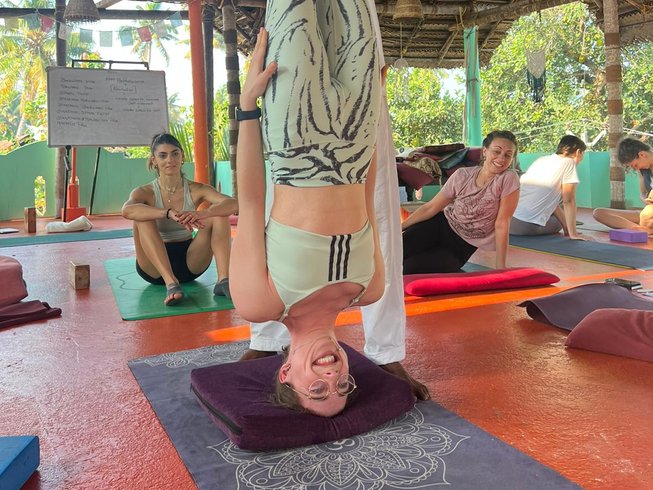
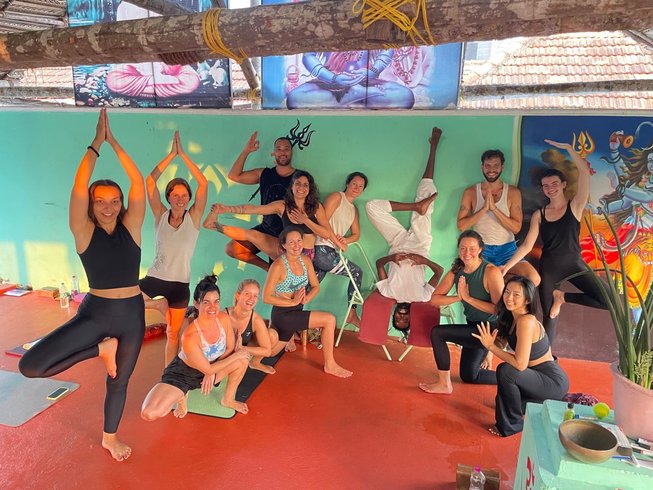
In a serene and ambient rooftop studio surrounded by a tropical garden, you will deepen your self-practice and experience the true principles of yoga. Years of practice and experience have worked their way into the shaping of the Shiva Rishi yoga program. The school takes care in addressing your needs through a beautifully serene atmosphere for your stay as well as practice; open-hearted and knowledgeable teachers; and a thoughtful, sattvic yogi diet to ideally assist your practices.
Shiva Rishi also invites you to join spiritual trips into the gorgeous landscapes of Kerala in that they attune to nature by walks, mantras, music, and bhajan singing.
Ultimately, yoga is more than physical exercise or stress release. These benefits all come as side effects of regular practice, yet the ultimate aim of yoga is to transcend the limited and egoistic self and connect with the unlimited eternal. Beyond education, Shiva Rishi will provide a proper spiritual environment for your journey.
Curriculum
According to the standards set by Yoga Alliance the training divides into five blocks.
I: Techniques
Herein you will receive training in asanas, pranayama, kriyas, mantras and meditation in a practical and analytical way. Following a scientific approach, you will discuss physical and energetic health benefits. Subsequently, you will learn to recognize practice mistakes to focus on alignment. Find some syllabus examples for this block outlined in the following:
Standing asanas
Standing asanas stretch and strengthen back, shoulders, and leg muscles. This is especially important to face stiffness and back pain difficulties increasingly arising in modern times through long hours of sitting. In this section, you will learn common standing postures, how to explain their benefits, and experience their balancing effects on the root chakra. You will further discuss how to provide effective verbal cues to direct practitioners coming in and out of the poses, how to verbally adjust them and how to breathe properly.
Bending postures
Bending asanas loosen the back by separating vertebras and improve blood circulation around the spine. This brings vitalizing and overall health improving effects on all organs and the brain. You will receive analytical training through demonstration, conversation and the use of the teacher training course guidebook on how to teach, practice and adjust bending postures. The learning objects herein are to explain bending postures, their benefits, verbalize, and demonstrate alignments, beware of common misalignments and risk factors, how to direct practitioners coming in and out, how to breathe in these positions.
By following along with the instructor in this course you can expect:
- Better range of motion
- Strong feet/balance and grounding (in life)
- More endurance in standing
- Improvement in the arches
- More agility (in both mind and body)
- Improved sense of well being
Pranayama
Pranayama is considered to be the foundation of yoga. It is perhaps the most essential aspect of yoga and life. Pranayama is the best precursor for calming and centering the mind for meditation.
Pranayama regulates prana flow in the nadis of the pranamaya kosha. Through practice, observation, and discussion you will learn the most common breathing techniques, how to explain benefits, and how to direct practitioners through these exercises.
You will also practice pranayama on occasional spiritual trips and breath the fresh air in the mountains or on the rocks by the seashore. Learning objectives are to get an overview and practice experience of multiple pranayama techniques and learn to use powerful breath workout and pranayama techniques to: detoxify your body, balance hormones, boost immunity and energy, calm the mind, awaken your full potential to discover the true nature of the self, and brings you deeper into the yoga practice.
When the mind is focused on the breath, the nervous system gets calmed down, and there is less stress on the body and it experiences better digestion and elimination. Regular practice of pranayama trains the lungs and improves the capacity of the respiratory system immensely (especially important during these covid times).
These are some of the most common hand mudras in pranayama practice:
- Nasikagra mudras (nose tip position)
- Jnana mudra (psychic gesture of knowledge)
- Chin mudras (psychic gesture of consciousness)
- Chinmaya mudra (gesture of manifest consciousness)
- Aadi mudra (primal or first attitude)
Mantra yoga sadhana
According to Samkhya, one of the schools of Hindu philosophy, the very first element that manifested itself in this plane was sound, and that the element of sound itself originated from Lord Shiva’s Drum.
Sanskrit mantras are energy-based sounds that have the power to vibrate and resonate throughout the entire body. Sound travels five times more efficiently through water than through air, and as the human body is comprised of more than 70% water, it is, therefore, an excellent conductor for both sound and vibration. The regular practice of mantras balances the agitations of manomaya kosha.
Once a week is Yajna yoga in the evening time with a puja with meditation, mantras, breathing techniques, and offerings.
Meditation
- What meditation is, and why it’s practiced
- Variety of meditation techniques and tools
- Quieting the mind to develop deeper levels of awareness
- Connecting with nature and the world you live in
- Connecting with the true self
II: Teaching methodology:
In this section, classes will address how to use verbal and physical hands-on adjustments, how to give clear and coherent instructions, how to sequence classes, how poses interact and how to integrate breathing exercises.
The art of teaching curriculum includes:
- Teaching clinics
- How to address a group of students
- How to use your own body as a teaching tool
- How to use your voice, volume, tempo, and pacing
- How to correct postures
- Choosing the right words
- Energy, passion, confidence, humor
Using your own presence and self-awareness as a transformative teaching tool
- The business of yoga
- Teacher guidelines and etiquette
- Appropriate conduct inside and outside the yoga room
- How to apply for a teaching position
- Teacher expectations
- Student interaction
- Role playing
- Feedback
III: Anatomy and physiology
Herein you will broaden your understanding of the physical anatomy of the human body and combine important aspects of postures and anatomy with contemplative and internal facets of yoga. Next, to physical anatomy, you will go deeper into the realms of energy anatomy of Chakras, Kundalini, Gunas, Tattwas, Koshas, Nadis, and Vayus.
Yoga posture and alignment:
- 1) How your bones determine the range of motion in all the yoga postures.
- 2) How and why everyone does yoga postures differently and what they can do about it.
- 3) How joint compression and muscle tension or resistance plays role in all the yoga asana.
- 4) Learn muscular and skeleton restrictions for proper alignment.
- 5) How to improve yoga posture for individuals
IV: Yoga philosophy, lifestyle ethics, and Ayurveda
This teacher training places an emphasis on studying the vast heritage of yoga philosophy. By introducing the Samkhya system of evolution and discussing traditional texts (such as the Yoga Sutras by Patanjali), you will explore the eight limbs of Ashtanga yoga in more detail and take a glimpse beyond the first limbs towards the ultimate goal of yoga.
Next, to getting inspiration from these sacred texts, it may make you recognize how important a firm foundation in these first limbs is as a prerequisite to progress on this path of liberation and how you, as prospective yoga teachers, can assist other beings with that.
Shiva Rishi Yoga is looking forward to inspiring conversations about the precept of non-violence (ahimsa), the concepts of dharma and karma, and finally the value of teaching yoga while being of service to others (seva).
Ayurveda:
Ayurveda is the science of living. Your practice depends on you being in balance. Through an understanding of Ayurveda, you learn about your bodily constitution, and what kinds of diets and lifestyles are most suitable to one’s character.
The Ayurvedic doctor will teach you about the theoretical basics of Ayurveda, helping you to discover a diet fitting to your type of body and individual needs and intellectually understand the positive effects of the high qualitative sattvic yogi diet you are served throughout the teacher training course.
If you would like to relax from the training, you will be delighted to find the yoga studio surrounded by several skilled Ayurvedic massage salons.
V: Practicum
In this section, you will be slowly prepared to lead a yoga class yourself. In the beginning, you will start to teach sun salutation and simple sequences to each other. In the progress of your training, you will then start to observe and correct and finally practice teaching as the lead instructor or observe others teaching.
Awaken your practice to this 28-day yoga challenge that will inspire you to step on your mat every day. The benefits of practicing yoga every day can be felt almost immediately.
At the end of the month, you’ll complete the challenge feeling stronger, more connected, and more empowered in your practice. You will gain an understanding of the specific teaching skills needed to make the learning experience for your students as easy as possible.
The training also gives lots of contact with (props) to aid in the skill-based mobility (for a range of motion), and Restorative (for calm and recovery) practices. Yoga props are extremely useful in helping to create sthira (steadiness) and sukha (comfort) in your yoga practice.
By no means limited to beginners, props help to accommodate anatomical differences, tight muscles/joints, and limited ranges of motion. If you’ve ever wondered how to efficiently use props in your home or studio practice, they provide an introduction to the accouterments that could bring your asana practice, the union of body, mind, soul, and spirit.
Continuing the journey of yoga: Reflection on the process of becoming a yoga teacher
Ancient roots of modern yoga
- The Vedas
- The Upanishads
- The Bhagavad Gita
- The Yoga Sutras of Patanjali Tantra
- Hatha yoga
- Toward Modern Hatha yoga
Subtle energy
The Five Sheaths Prana
- Nadis
- Bandhas Chakras
- Gunas
- Doshas
- Highlighting subtle energy in classes
Body structure and movement
- The feet
- The knees
- The pelvis
- The abdominal core
- The spine
- The shoulders, arms, and hands anatomy in teaching
Teaching asanas
- Surya Namaskara: The Sun Salutations Standing Asanas
- Core refinement
- Arm balances
- Backbends
- Seated and Supine Twists Forward Bends and Hip Openers Inversions
- Savasana
Teaching pranayama
- The discovery and development of pranayama
- The modern science of respiration teaching basic breath awareness refining the flow of breath
- Ujjayi pranayama
- Deepening the pranayama practice consciously cultivating energy
Sequencing and planning classes
- Principles of sequencing
- The basic arc structure of classes
- Sequencing within and across asana families planning specific classes
- Sequencing for the menstrual cycle
- The chakra model of sequencing
- Popular hatha yoga sequences
- Creating your classes
Yoga sequencing
Backbend posture
- Ardha Bhujangasana
- Sarpasana (snake posture)
- Bhujangasana (cobra)
- Dhanurasana (bow pose) by
Seated Forward Bending Postures
- Janusirsasana (head-to-knee)
- Paschimottanasana (seated forward bend)
- Marichyasana (sage Marichi) A&B
Seated Spinal Twist
- Ardha Matsyendrasana ( spinal twist)
- Meru Varasana (twisting mtn pose, gentle/simple spinal twist)
Arm Balance Posture
- Phalakasana (plank)
- Kakasana (crow) or Bakasana (crane)
- Bhujapidasana (shoulder pressing posture)
- Mayurasana (peacock)
- Koundinya Sage posture
Standing Forward Posture
- Adho mukha svanasana (downward dog)
- Eka Pada Adho mukha svanasana (one leg up)
Standing Splitting/Side Stretching
- Trikonasana (triangle)
- Utthita Parsvakonasana (extended side angle)
- Parivrtta Parsvakonasana (revolved side stretching angle)
- Parsvottanasana (pyramid)
Standing Balancing Posture
- Vrikshasana (tree pose)
- Tadasana (palm tree)
- Garudasana (eagle)
Inversion
- Sarvangasana (shoulder stand)
- Halasana (plow pose)
- Sirsasana (headstand)
- Vrischikasana (Scorpion)
- Reflection on the process of becoming a yoga teacher
- Discussion on what certification provides
- Code of ethics
- Yoga Alliance registration
- Group conversation about options for teaching and sharing
- Discussion about how to maintain appropriate skill and inspiration
You graduated! What does that mean?
- You are proficient in 200-hour level teaching skills as set forth by Yoga Alliance
- You are eligible to register with Yoga Alliance as a 200-hour level teacher
- You still have much to learn!
- You become great teachers by teaching. So go teach
- Practice greatly improves your skills
- Integrate and share what you’ve learned in your own voice
- Your practice is your best friend. The best teachers are the best practitioners.
Daily schedule
- 6:15 - 7:00 Pranayama
- 7:00 - 9:00 Asana
- 9:15 Breakfast and break
- 11:30 - 13:00 Theory / alignment
- 13:15 Lunch and break
- 14:30 - 16:00 Theory
- 16:30 - 18:00 Asana
- 18:30 Dinner and free time
Excursions
- Boat ride to a Shiva temple on the golden Island in the famous and beautiful Keralan Backwaters
- Beach meditation on a serene beachside near a fishermen village
Professeurs
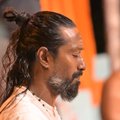
Shiva
Shiva est le fondateur de Shiva Rishi Yoga. C'est un yogi qui s'est formé à divers styles à l'école de Bihar, à Sivananda et aux enseignements de Patanjali, et sa sadhana (pratique de vie) reflète une personne entièrement dévouée au mode de vie yogique. En plaçant la pratique dans le contexte de la culture et de la philosophie indiennes, les cours de Shiva sont une expérience profonde de la véritable tradition du yoga. Selon Shiva, « ce n'est que lorsque l'esprit est concentré dans sa forme la plus subtile que l'on peut réaliser son véritable soi et que le but ultime du yoga est accompli. »
Anish
Le Dr Anish est un médecin ayurvédique (BAMS) et il vous enseignera des cours d’anatomie. Vous y aborderez également les bienfaits des asanas, la manière de traiter des problèmes spécifiques, ainsi que les postures ou pratiques à éviter à ce moment-là. De plus, il vous fera découvrir l’ancienne science de guérison qu’est l’Ayurveda, qui complète idéalement les pratiques yogiques.
Lieu
This yoga teacher training takes place in Varkala, Kerala, India.
Varkala
Varkala is 51 kilometers north of Thiruvananthapuram city in Thiruvananthapuram district and 37 kilometers south of Kollam, south Kerala. Varkala is a calm and quiet hamlet that lies on the outskirts of Thiruvananthapuram district. It has several places of tourist interest like a beautiful beach, a 2000-year-old Vishnu Temple, and the Ashramam - Sivagiri Mutt a little distance from the beach.
The Papanasam beach (also called Varkala beach), which is ten kilometers away from Varkala, is renowned for the natural spring. It is considered to have medicinal and curative properties. A dip in the holy waters at this beach is believed to purge the body of impurities and the soul of all sins; hence the name 'Papanasam beach'.
A two-thousand-year-old shrine, the Janardhanaswamy Temple, is a short distance away from the beach. The Sivagiri Mutt, founded by the great Hindu reformer and philosopher Sree Narayana Guru (1856 - 1928) is also close by.
The Samadhi (the final resting place) of the Guru here attracts thousands of devotees every year during the Sivagiri Pilgrimage days (30th December to 1st January). Sree Narayana Guru propagated the ideology: "one caste, one religion, and one god", in a society torn by the taboos of the caste system.
Varkala offers excellent accommodation facilities for tourists and is fast becoming a popular health resort with many Ayurvedic massage centers.
Attractions: Beach, mineral water springs, the Sivagiri Mutt, and a 2000-year-old Vishnu Temple.
Nearby places
- Kollam, 37 kilometers south

Caractéristiques
Équipements
- Chambres climatisées
- Balcon
- Plage
- Jardin
- Cuisine
- Terrasse
- Yoga shala
Services
- WI-FI gratuit
- Moustiquaire
Repas
You will be provided with traditional Kerala, Ayurvedic, sattvic food 6 days a week. All food is vegetarian, and vegan. Sometimes curd is added to a few dishes but students that do not take milk will be advised.
The food is very healthy, nutritious and delicious, freshly cooked every day and nothing packaged. Fresh from the land!
Les repas suivants sont inclus:
- Drinks
Les boissons suivantes sont comprises:
- Eau
- Thé
Les régimes alimentaires suivants servis et/ou pris en charge :
- Végétarien
- Vegan
- Yogique
- Ayurvédique
Activités et lieux à visiter
- Ayurvedic massage
- Ayurvedic cooking class
- Kerala excursions (backwater tour, Katthakali performance, temple visit, etc)
- Broader India spiritual or cultural tours
Soins et massages
Ayurvedic massage and Ayurvedic health consultations and treatments available by licensed Ayurvedic doctors.
Ce qui est inclus
- 25 nuits d’hébergement dans une chambre twin avec salle de bain et balcon
- Programme de 28 jours avec 6 jours de cours et un jour libre par semaine
- Régime yogi sattvique végétarien complet (petit-déjeuner, déjeuner et dîner) 6 jours par semaine
- Éligibilité à l’inscription auprès de Yoga Alliance à l’issue du cours
- Pratique quotidienne des asanas de yoga et de la méditation
- Enseignements quotidiens (philosophie du yoga, cours d’anatomie, cours de pranayama)
- Yoga bhakti, bhajans
- Méditation et cérémonies de puja
- Wi-Fi gratuit
- Transfert gratuit depuis l’aéroport (aéroport de Trivandrum)
- Quelques excursions touristiques autour de Varkala (c.-à-d. excursion en bateau et méditation sur Golden Island)
Ce qui n'est pas inclus
- Billet d'avion
- Taxi
- Repas pendant le jour libre
- Collations supplémentaires
- Excursions supplémentaires
- Massage possible (en supplément)
- Possibilité d'organiser des taxis (en supplément)
- Cours de cuisine (en supplément)
Comment se rendre sur place ?
Aéroport recommandé
Transferts inclus
Trivandrum International Airport
À 37 km de votre destination
Conditions d'annulation
- Pour réserver, un dépôt de garantie correspondant à 25% du prix total est requis.
- Le dépôt de garantie est non-remboursable si vous annulez votre réservation.
- Le reste du paiement est dû à votre arrivée.

Avis
Pour cette offre, vous pouvez effectuez votre réservation sur BookYogaTeacherTraining.com. La plupart des cartes de crédits sont acceptées.
Des Formations de professeur de yoga similaires que vous pourriez aimer
Vous avez récemment consulté