

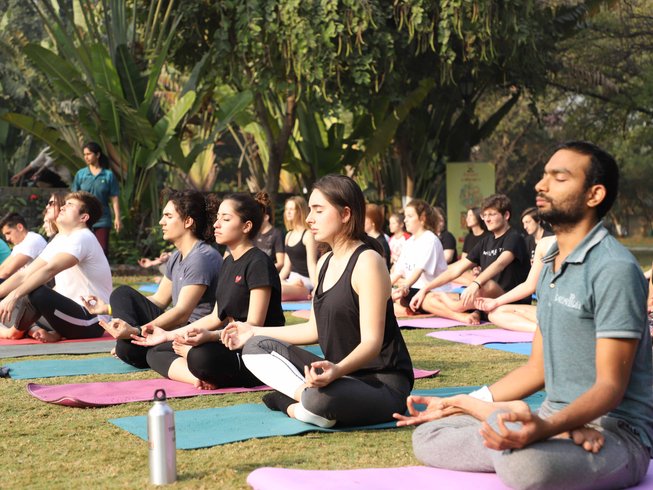

Formation en ligne de 6 mois (400 heures) pour devenir professeur de bien-être et de yoga de niveau 2, incluant 100
Online Yoga Teacher Training
This intensive course has yoga sessions helping yoga students stay at distant places from Pune in other parts of India. The live sessions will be led by Dr. Vikas Chothe and the certified international faculty from Swasti Yoga Center. Upon completion, you will receive a certification accredited by Swasti Yoga Center and after passing the YCB exam you will be certified by the Ministry of AYUSH, Indian Government. But please remember before joining that this program requires lots of effort, plenty of time and a genuine love for yoga. It’s a certification made for truly committed practitioners.
Rencontrez les professeurs
Particularités
- Formation de professeur de yoga en ligne de 400h
- 12 à 15 heures par semaine
- 100 heures de contact
- 300 heures hors contact
- Les sessions en ligne en direct se tiendront sur Zoom, Google Duo ou Microsoft Teams
- Fuseau horaire des sessions en ligne : Pune, Inde (heure normale de l’Inde, GMT+5:30)
- Série de conférences offerte (Global Yoga Festival) sur différents sujets du yoga, notamment la philosophie du yoga, les textes classiques du yoga, l’Ayurveda, l’alimentation yogique, l’anatomie et la physiologie, etc. (En direct)
- Le rythme libre est possible après discussion avec le professeur
- Prix raisonnable
- Bonus : Vos frais de scolarité constituent un crédit pour participer à une future formation dans le magnifique Swasti Yoga Center, Pune
Niveau de pratique
- Intermédiaire
Styles
32 jours de cours en Anglais
Programme
Pre-application requirements
For open candidates, there is no eligibility criteria. For admission in the course, it is suggested that the candidate should have passed 12th standard / high secondary school certificate from a recognized board or equivalent. However, yoga institutions can define their own eligibility.
You will also need to install Zoom, Google Duo, or Microsoft Teams to participate on the live sessions.
Certifications
Upon completion, you will receive a certification accredited by Swasti Yoga Center and Yoga Certification Board (YCB) Government of India.
Swasti Yoga Centre is an ISO 9001:2015 certified yoga center for quality education, training, therapy, and yoga research. They are an accredited training and therapy center by the Yoga Certification Board (YCB) and an associate center of the Indian Yoga Association (IYA).
Why YCB Certification?
The Yoga Certification Board (YCB) was established in India in 2018 by the Ministry of AYUSH (Ayurveda, Yoga and Naturopathy, Unani, Siddha, and Homoeopathy) by the Indian government to develop and promote standardized yoga education and training programs. The YCB yoga certification is significant for several reasons, including its credibility, recognition, and global importance.
Firstly, the YCB yoga certification program is designed to ensure that yoga teachers meet certain minimum standards of competency and knowledge. The certification requires extensive training and testing, including practical and written exams, to ensure that the yoga teacher is equipped with the necessary knowledge and skills to teach yoga safely and effectively.
Secondly, the YCB yoga certification is recognized by the Indian government, which means that only certified yoga teachers are eligible for various government-led yoga programs and initiatives. Additionally, the YCB certification is recognized by various international organizations, including the Indian Yoga Association, and International Yoga Federation, which adds to its credibility and global importance.
Thirdly, the YCB yoga certification has a standardized curriculum that covers various aspects of yoga, including philosophy, anatomy, and teaching methodology. This ensures that all certified yoga teachers have a consistent understanding of yoga and can teach it in a standardized way, regardless of where they are in the world.
Additionally, for yoga enthusiasts, the YCB certification is an assurance that their yoga teacher has met certain minimum standards of competency and knowledge, which is important for their safety and well-being.
How the training works
There will be 100 contact hours and 300 non-contact hours. Self-paced is possible upon discussion with the teacher. You will receive sessions once every week for six months. Live online sessions will be held over Zoom, Google Duo or Microsoft Teams.
Timing of sessions (GMT+5:30)
There will be 12-15 hours of time commitment per week, with weekly live sessions.
Curriculum information
Unit 1 - Introduction to yoga and yogic practices
- 1.1 Yoga: Etymology, definitions (Patanjala Yoga Sutra, Bhagwad Gita and Kathopanishad), aim, objectives, and misconceptions
- 1.2 Yoga: Its origin, history, and development
- 1.3 Brief introduction to Samkhya and Yoga Darshana
- 1.4 Life sketches and teachings of yoga masters (Maharishi Ramana, Shri Aurobindo Swami Vivekananda, Swami Dayananda Saraswati)
- 1.5 Principles of yoga and practices of healthy living
- 1.6 Principles and practices of Jnana yoga
- 1.7 Principles and practices of Bhakti yoga
- 1.8 Principles and practices of Karma yoga
- 1.9 Concept and principles of Sukshma Vyayama, Sthula Vyayama, Surya Namaskara, and their significance in Yoga Sadhana
- 1.10 Concept and principles of Shatkarma: Meaning, types, principles, and their significance in Yoga Sadhana
- 1.11 Concept and principles of Yogasana: Meaning, types, principles, and their significance in Yoga Sadhana
- 1.12 Concept and principles of pranayama: Meaning, types, principles, and their significance in Yoga Sadhana
- 1.13 Introduction to Tri Bandha and their health benefits
- 1.14 Dhyana and its significance in health and well being
- 1.15 Introduction to yogic relaxation techniques with special reference to yoga Nidra
Unit 2 - Introduction to yoga texts
- 2.1 Introduction to Prasthanatrayee, Purushartha Chatushtaya, and goal of human life
- 2.2 Yoga in Kathopnishad, Prashanopanisha, Tattriyopnishad with special emphasis on Panchakosha Vivek and Ananda Mimamsa
- 2.3 Concept of Sthitaprajna, Bhakti, Karma, and Dhyana in Bhagavad Gita
- 2.4 Significance of Bhagavad Gita in day-to-day life
- 2.5 Concept of healthy living in Bhagavad Gita (Ahara, Vihara, Achara, Vichara)
- 2.6 Study of Patanjal Yoga Sutra including selected sutras from following chapters (1. 1 to 12, 2. 46, 3. 1 to 4)
- 2.7 Concept of Chitta, Chitta Bhumi, Chitta Vritti, Chitta Vikshepa, Chittaprasadanam, and their relationship with wellness
- 2.8 Bahiranga Yoga of Maharishi Patanjali (Yama, Niyama, Asana, Pranayama, Pratyahara)
- 2.9 Antaranga Yoga of Maharishi Patanjali (Dharana, Dhyana, Samadhi)
- 2.10 Concept of metal well being according to Patanjala Yoga
- 2.11 Hatha yoga: Its parampara, knowledge of basic yoga texts (Hatha Pradipika and Gerand Samhita). Relation between Hatha yoga and Raja yoga
- 2.12 Sadhaka and Badhaka tatva, principle to be followed by Hatha yoga practitioner
- 2.13 Concept of Matha, Mitahara, Pathya, and Apthaya
- 2.14 Concepts of Nadis, Prana, and Pranayama for subjective experiences
- 2.15 Knowledge of Hatha yoga practices for wellness (Shatkarma, asanas, pranayama, mudra, Nadaanusandhana)
Unit 3 - Yoga for wellness
- 3.1 General introduction to human body and nine major systems of human body
- 3.2 Introductions to sensory organs (Eyes, nose, ears, tongue, and skin)
- 3.3 Basic functions of nine major systems of human body and homeostasis
- 3.4 Yogic concept of health and wellness
- 3.5 Concept of Tridoshas, Sapta Dhatu, Agni, Vayu and Mala; their role in wellness
- 3.6 Concepts of Dinacharya and Ritucharya and their importance in well being
- 3.7 Importance of Ahara, Nidra, and Brahmacharya in well being
- 3.8 Yogic concept of mental hygiene: Maitre, Karina, Mudita, and Upeksha
- 3.9 Importance of psychosocial environment for health and wellness
- 3.10 Yogic concept and principles of Ahara (Mitahara, Yuktahara)
- 3.11 Health benefits of Suryanamskara, Shatkarma, asanas, pranayama, and practices leading to Dhyana (as per the practical syllabus of the course)
- 3.12 Salient features and contra indications of yoga practices for well being (as per the practical syllabus of the course)
- 3.13 Knowledge of common diseases; their prevention and management by yoga
- 3.14 Knowledge of role of yoga in the management of non-communicable diseases
- 3.15 Concept of stress and yogic management of stress and its consequences
Yoga practical
1. Prayer
- 1.1 Concept and recitation of Pranava
- 1.2 Concept and recitation of hymns
- 1.3 Selected universal prayers, invocations, and Nishpatti Bhava
2. Yogic Shat Karma
- 2.1 Neti: Sutra Neti and Jala Neti
- 2.2 Dhauti: Vamana Dhauti (Kunjal)
- 2.3 Kapalbhati (Vatakrama)
3. Yogic Sukshma Vyayama and Sthula Vyayama
a. Yogic Sukshma Vyayama (Micro circulation practices)
- Neck movement - Griva Shakti Vikasaka (I, II, III, IV)
- Shoulder movement - Bhuja Valli Shakti Vikasaka, Purna Bhuja Shakti Vikasaka
- Trunk movement - Kati Shakti Vikasaka (I, II, III, IV, V)
- Knee movement - Jangha Shakti Vikasaka (II - A and B)
- Ankle movement - Pada-mula shakti Vikasaka - A and B, Gulpha-pada-pristha-pada-tala shakti Vikasaka
b. Yogic Sthula Vyayama (Macro circulation practices)
- Sarvanga Pushti
- Hrid Gati (Engine daud)
4. Yogic Surya Namaskara with Mantra
5 Yogasana
- 5.1 Tdasana, hastottanasana, vrikshasana
- 5.2 Ardha chakrasana, padahastasana
- 5.3 Trikonasana, padmasana, vajarasana
- 5.5 Yogamudrasana, parvatasana
- 5.6 Bhadrasana, mandukasana, ushtrasana, shashankasana, uttana mandukasana, paschimottanasana, purvottanasana
- 5.7 Paschimottanasana, purvottanasana
- 5.8 Vakrasana, ardha matsyendrasana, gomukhasana
- 5.9 Makarasana, bhujangasana, shalabhasana, dhanurasana
- 5.10 Pavanamuktasana and its variations
- 5.11 Uttanapadasana, ardha halasana, setubhandhasana, sarala-Matsyasana
- 5.12 Shavasana
6. Preparatory breathing practices
- 6.1 Sectional breathing (Abdominal, thoracic, and clavicular breathing)
- 6.2 Yogic deep breathing
- 6.3 Anuloma viloma / nadi shodhana
7. Pranayama
- 7.1 Concept of puraka, rechaka, and kumbhaka
- 7.2 Ujjayee pranayama (without Kumbhaka)
- 7.3 Sheetalee pranayama (without Kumbhaka)
- 7.4 Sitkaree pranayama (without Kumbhaka)
- 7.5 Bhramaree pranayama (without Kumbhaka)
8. Concept and demonstration of bandha
- 8.1 Jalandhara bandha
- 8.2 Uddiyana bandha
- 8.3 Mula bandha
9. Concept and demonstration of mudra
- 9.1 Yoga mudra
- 9.2 Maha mudra
- 9.3 Vipareetakarani mudra
10. Practices leading to Dhyana Sadhana
- 10.1 Body awareness and breath awareness
- 10.2 Yoga Nidra
- 10.3 Antarmauna
- 10.4 Recitation of Pranava and Soham
- 10.5 Recitation of hymns
- 10.6 Practice of Dhyana
b. Teaching skills (Methods of teaching yoga)
- 1.1 Teaching methods with special reference to yoga
- 1.2 Factors influencing yoga teaching
- 1.3 Need of teaching practice and its use in yogic practice
- 1.4 Teaching aids: Meaning and need, role of language, voice, fluency, clarity, and body language in an ideal presentation
- 1.5 Methods of teaching yoga to an individual, small group, and large group
- 1.6 Lecture cum demonstration in yoga: Its meaning, importance, and method of its presentation
- 1.7 Lesson plan: Its meaning and need
- 1.8 Preparation of lesson plan in yoga, preparation of lesson plan for an individual and for a group
- 1.9 Presentation of lessons in specific yogic practices: Kriya, asana, pranayama, and Dhyana
- 1.10 Assessment of a yoga class (detection and correction of mistakes)
Professeurs
Dr Vikas Chothe
Swasti’s founder, Dr. Vikas Chothe, holds an MD, PhD in Ayurvedic medicine and works as yoga teacher and consultant. He has worked as a yoga ambassador for Indian government and invited as guest speaker by Indian Embassy in Armenia, Austria, and Malaysia. He has been working as a lead examiner for yoga certification board (YCB), AYUSH Ministry and has conducted exams for more than 3,000 students to date and visited the USA, Cambodia, China, UAE, France, Italy for promotion of Yoga and Ayurveda. He is also a yoga school auditor and assessment expert for the Yoga Certification Board.
Dr Shwetambari Chothe
Dr. Shwetambari Chothe is a certified yoga teacher by the government of India, consulting homeopath, assistant professor in LMF Homoeopathic Medical College, Pune, and co-founder of Swasti Yoga Center. Since childhood, she had a keen interest in yoga and Indian culture. She is a great chef with Ayurveda healthy cooking as her specialty. Qualifications: MD Homoeopath, Anatomy and Physiology expert, yoga teacher, and practitioner for six years.
Lieu
This teacher training is held online. Swasti Yoga Center is located in Pune, India (GMT+5:30), and they will live-stream yoga classes via Zoom, Google Duo, or Microsoft Teams which you can participate from the comfort of your home.

Ce qui est inclus
- Formation de 400h de professeur de bien-être par le yoga
- 100 heures en contact, 300 heures hors contact
- Sessions en direct assurées par un corps enseignant international certifié
- Certificat de réussite délivré par Swasti Yoga Center
- Vivez une expérience directe du mode de vie yogique
- Les sessions en direct en ligne auront lieu sur Zoom, Google Duo ou Microsoft Teams
- Enseignement en anglais. Les langues hindi et marathi peuvent être proposées si nécessaire
- La formation peut commencer dès que vous vous inscrivez
- Le rythme libre est possible après discussion avec le professeur
Ce qui n'est pas inclus
- Hébergement
- Repas
- Accessoires de yoga
- Frais d’examen de yoga du Yoga Certification Board (gouvernement de l’Inde) et frais d’inscription - 350 USD pour les ressortissants étrangers
Conditions d'annulation
- Pour réserver, un dépôt de garantie correspondant à 100% du prix total est requis.
- Le dépôt de garantie est non-remboursable si vous annulez votre réservation.

Avis

Pour cette offre, vous pouvez effectuez votre réservation sur BookYogaTeacherTraining.com. La plupart des cartes de crédits sont acceptées.