14 jours-100 heures en formation de professeur de yoga thérapeutique et ayurvéda à Rishikesh, Uttarakhand, Inde
Ayurveda and Yoga Therapy Teacher Training India
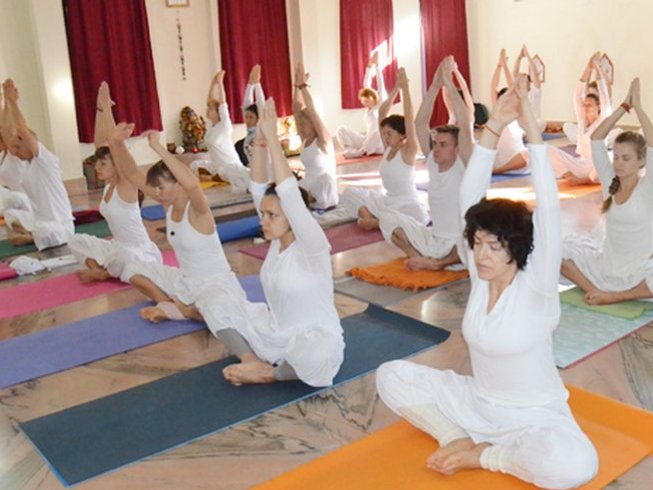
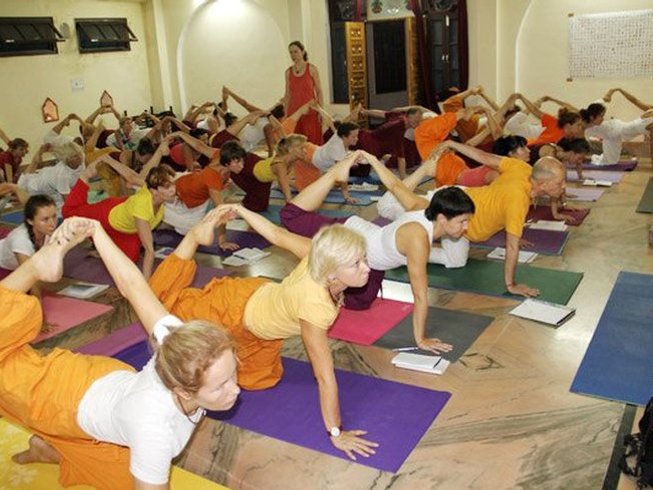
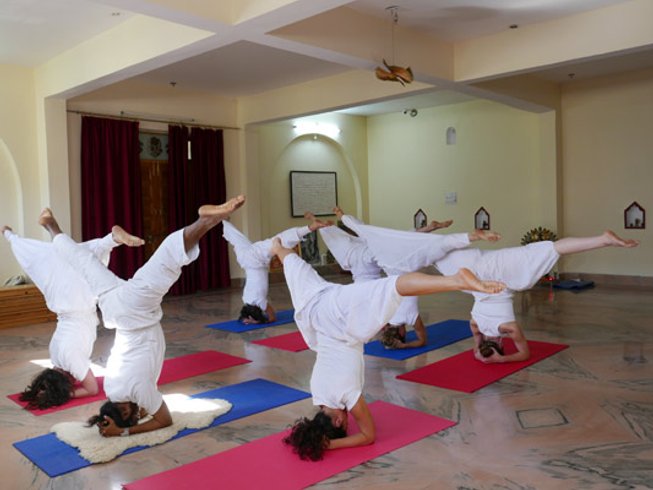
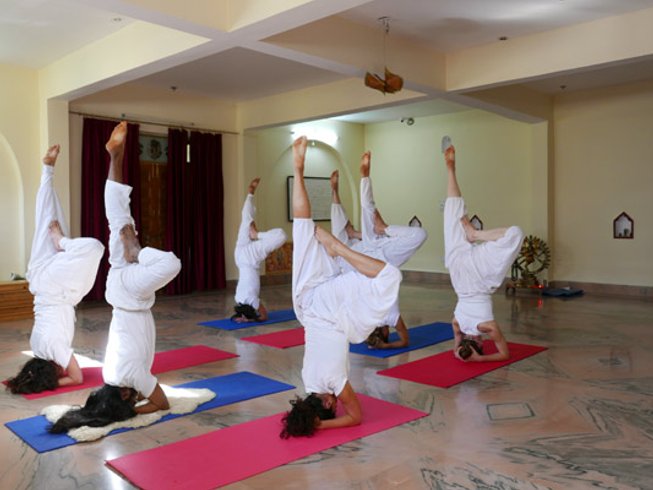
Join this yoga teacher training course in Rishikesh, India to deeply understand Ayurveda as a system of health and medicine. You will explore yoga asanas in a therapeutic way, with a focus on correcting any imbalances and blockages in the body. This course will provide you with a completely new experience on both the physical and mental levels. Give yourself the opportunity to transform your yoga practice to the next level and be confident to share it with others.
Rencontrez les professeurs

En savoir plus
Particularités
- Cours de yogathérapie et d’Ayurveda
- Séances de méditation et de pranayama
- Pratique intensive quotidienne de mantra, kriya et mudra
- Excursion et visites touristiques
- 13 nuits d’hébergement
- Repas végétariens quotidiens
Styles
13 jours de cours en Anglais
Hébergement
Installations
- Coin repas
- Jardin
- Cuisine
- Hall d'entrée
- Studio de yoga
- Service de blanchisserie
- Bibliothèque
During this retreat, you will stay in an ashram at Patanjali International Yoga Foundation. You will stay in single or shared rooms with attached bathrooms with hot water. Please keep in mind that this is not a hotel. Upon your arrival, you will be provided with soap and toilet paper. The rest of the time, you need to buy it.
For your personal safety, please bring a padlock for your room. The ashram provides clean bed sheets and towels once a week, a shared kettle, iron, and hairdryer on each floor, and a blanket. The blanket is provided, but during winter the ashram recommends that you bring a sleeping bag.
Note: The ashram has two buildings, the main and second. If there is no space for single accommodation in the main building, single accommodation might be provided in the second building which is within two minutes' walk. The extra charge for a single room is 150 USD.
Patanjali International Yoga Foundation ashram rules
- The ashram gates are opened from 7:00 a.m. to 9:30 p.m. By 10:00 p.m. everyone should be in their rooms
- The outside guests are allowed to visit you from 11:00 a.m. to 5:00 p.m. at the reception sitting place only and they are not allowed in the rooms
- Please keep your rooms neat and clean with self-service
- Please make a general cleaning before checking out or pay 500 INR for the general room’s cleaning
- Please clean and dry your plates and cups after food
- In case of using fat creams and skin oils, please use your own bed linens
- Please save water
- Put used toilet paper and sanitary items into the rubbish bin
- Stick posters or other items on the walls are strictly prohibited
- Use of electric heaters is strictly prohibited
- Every guest is responsible for self-belongings
- Any damage to the property is under your own responsibility and expenses should be refunded
- Please through the rubbish from your rooms to the rubbish can near the main gates
Programme
Have you completed a 200-hour YTT? Or have you been practicing yoga for a few years? If yes, you are eligible for Yoga Therapy & Ayurveda Course. Yoga therapy means healing various kinds of common diseases through Ayurveda and yoga practice, such as asana, pranayama, bandha, kriya, mudra, and meditation. Yoga Therapy & Ayurveda course studies include the Ayurveda & Ayurvedic three doshas "constitutions," their sign of correctors, balance, imbalance, and recommended lifestyle yoga practice, and ayurvedic diet, herbs, and medicines to stay healthy and treat diseases and read more at yoga therapy.
You will explore yoga asanas in a therapeutic way, with a focus on correcting any imbalances and blockages in the body. This course will provide you with a completely new experience on both, physical and mental levels. Give yourself this opportunity to transform your yoga practice to the next level and be confident to share it with others.
Patanjali International Yoga Foundation Rishikesh India is a separate institute/organization and bears no resemblance to similar names / organization / institutes in what so manner.
Course aim and objective
Patanjali International Yoga Foundation offers a complete course on yoga therapy and Ayurveda. Ayurveda is an ancient and, indeed, the most well-regarded system of health and medicine in India. It is also known as the fifth Veda. The word "Ayurveda" is derived from Sanskrit and means "the science of life".
The principles of yoga and Ayurveda therapy have been used for thousands of years and hold tremendous value in the present life as well. According to them, a person can always enjoy good health and a feeling of well-being.
All classes will be taught by Dr. Jitendra Das and his assistant yoga teachers.
Course prerequisites and requirements
To be eligible to attend this yoga and meditation retreat, Patanjali International Yoga Foundation has established prerequisites to help create groups, that are able to work together for two weeks of intensive yoga journey.
This is a journey of personal and professional development that builds on the practitioner's previous experience. It is easier and more comfortable to guide trainees if they have previous experience. Patanjali International Yoga Foundation recommends that all applicants have 200-hour yoga teacher training or at least two-three years of established yoga practice.
We will send the specific prerequisites and study materials after the course registration.
Certification
Graduates of Yoga Therapy & Ayurveda Training will get a certificate from Patanjali International Yoga Foundation. Yoga Therapy & Ayurveda certificate is not recognized by Yoga Alliance.
Course syllabus
1. Yoga practice
The instructors combine yoga practice with the scientific knowledge of Ayurveda. The yoga trainees will learn in-depth therapeutic yoga practices for all different constitutions of bodies as per Ayurveda. Every class is structured to activate and open all the energy meridians.
2. Chakras practice
Every asana is explained with its entire structure and its effect on different chakras in our body. Not only do the instructors provide theory on chakra knowledge but they also structure each yogic asana practice according to balancing, stimulating, and healing each chakra.
3. Ayurvedic 3-Doshas
Human body is a divine creation that consists of five elements of nature - air, fire, earth, sky, and space. These five elements lead to the formation of three Ayurvedic constitutions of the body or as we call it, Ayurveda 3-Doshas of the body. The instructors not only teach you how to recognize them, but also how to design the practice, the diet and the wholesome living according to these three Doshas.
4. Vata Dosha: the air constitution
- Characteristics (physical, psychological, and behavioral diagnosis), signs of imbalance, signs of balance, correct yoga practice to balance, Ayurvedic herbs
- 5. Pitta Dosha: the fire constitution
- Characteristics (physical, psychological, and behavioral diagnosis), signs of imbalance, signs of balance, correct yoga practice to balance, Ayurvedic herbs
- 6. Kapha Dosha: the earth constitution
- Characteristics (physical, psychological, and behavioral diagnosis), signs of imbalance, signs of balance, correct yoga practice to balance, Ayurvedic herbs
- 7. Ayurvedic medicine / herbs
Learn about Ayurvedic herbs and Ayurvedic medicines for yoga practitioners and for overall good health.
8. Common diseases
Learn about more than 20 common diseases and their treatment through correct diet, Ayurvedic herbs, correct yoga practice
9. Sankaprachalana
Deep digestive system cleansing technique with particular Yoga asanas and Ayurvedic treatment.
10. Food according to Sat Chakra and Pancha Pranas
Learn about the seven energy meridians and five vital energy in our body, signs of balance, signs of imbalance, how to balance them with the help of yoga practice, the right food to balance the five vital energy, herbs to balance the chakras
11. Food and seven tissues (Dhatus)
Proper understanding of tissues helps practitioner to predict the symptoms and provide best yogic treatment. Learn about the relationships of seven tissues in our body.
12. Meditation brain therapy
Learn 7 effective ways of meditation and their effects on the mind, body, and energy. Also learn about Ayurvedic herbs specifically for the brain.
13. Structural yoga practice
Learn and practice how to construct a yoga therapy lesson, to balance all the chakras.
14. Yoga Nidra
Learn and experience deep yogic relaxation to balance the sympathetic and parasympathetic nervous systems and balance the left and right brain. Benefits of Yoga Nidra reflects not only physically but also on conscious, subconscious and unconscious mind. It helps relieve high blood pressure, and stress, improves concentration, and leads to overall emotional integration.
15. Myofascial yoga
Understanding the network of fascia in our body, Myofascial anatomy. Use this knowledge of connective tissues to deepen your yoga practice.
16. Stress management
How to be stress-free while conducting a yoga class, how to manage a student who is stressed, how to be stress-free using meditation and pranayama, correct structure of yoga practice to manage stress
17. Kyphosis
Learn about Kyphosis - diagnosis and treatment, detailed anatomy of the spine, how you can construct a class for this spinal dysfunction, how to make corrections in yoga asana
18. Lordosis
Learn about Lordosis - diagnosis and treatment, detailed anatomy of the spine, how you can construct a class for this spinal dysfunction, how to make corrections in yoga asana
19. Scoliosis
Learn about Scoliosis - diagnosis and treatment, detailed anatomy of the spine, how you can construct a class for this spinal dysfunction, and how to make corrections in yoga asana
20. Menstruation
Learn which asanas are good during menstruation, how to release menstruation pain through yoga asanas and pranayama, Which asanas should be avoided during menstruation, how to construct a yoga class, especially for menstruation, Ayurvedic herbs
21. Pregnancy
Trainee would learn about pre-natal, pregnancy in first, second, and third trimester, and post-natal.
23. Restorative yoga
Asanas that relax the body, asanas that stimulate the healing energy in the body, asanas that help the practitioner to absorb the benefits of the practice in the body
24. Sun and moon salutation
Practice sun and moon salutation to balance the energy channels.
Code of conduct
- Discipline is an integral part of the training and so the course routine must be strictly followed
- Dress code for all yoga classes is loose yoga trousers till the ankle and a t-shirt that cover your shoulder
- A student must inform the staff in advance if they intend to skip a meal so there is no waste of food
- Any activity that is not related to the course is not permitted
- Do not be late for class, the door of the yoga hall would be closed and you will no longer be allowed to enter
- Smoking and consumption of any drugs, alcohol, and meat are strictly prohibited during the training
- Animals and children under 12 years are not allowed in the ashram
- All forms of sexual behavior with students are unethical, even when a student invites or consents to involvement in such behavior. Sexual behavior is defined as but is not limited to all forms of overt and covert seductive speech, gestures, and behaviors in addition to any physical contact of a sexual nature. All forms of sexual harassment are unethical. Harassment is defined as but is not limited to, repeated comments, gestures, or physical contact of a sexual nature
Daily schedule
The requirements of the Yoga Therapy & Ayurveda Training program follow a tight schedule where almost each of the 8 to 10 training hours in the day are assigned to some aspect of yoga. You might find the training intensive but enlightening. Depending on the yoga school, the mornings can begin as early as 6:00 a.m. with meditation followed by some yoga postures and maybe some classes or lectures in philosophy or anatomy.
- 06:00 Wake up and self-practice
- 07:00-07:45 Kriya, Bandha, pranayama, and meditation
- 08:00-10:00 Mantra chanting, Surya Namaskar, Yogasana & Savasana
- 10:00-11:00 Lunch break (yogic meal)
- 11:00-13:00 Free time for self-study / non-contact hours
- 13:00-14:00 Yoga Philosophy
- 14:00-15:00 Theory on science of yoga and Ayurveda Therapy
- 15:00-15:30 Herbal tea or milk tea
- 17:00-19:00 Practicum: Therapeutic learning on how to treat yourself and another person through yoga and Ayurveda
- 19:30-20:00 Dinner break (Yogic meal)
- 20:30-21:30 Meditation / mantra chanting / spiritual movie show
- 22:00 Lights off
The above schedules are changeable according to summer or winter weather. Kindly, please note that the students' check-in date would be on the 2nd, and the check-out date would be the 15th of the month. To stay before or after the yoga course, Patanjali International Yoga Foundation.
The classes run from Monday to Saturday; Sunday is a free day from teaching.
Excursions
Excursions and sightseeing tours are included in the retreat package.
Professeurs
Dr Jitendra Das
Dr. Jitendra Das has studied and practiced yoga, Ayurveda, and Vedic scripture at school and university, as well as with senior Indian masters. He studied yoga, Ayurveda, Sanskrit, Veda, and related subjects in Haridwar. He teaches and practices yogasana, pranayama, bandha, mantra, mudra, meditation, cleansing kriyas, Ayurveda, and Vedic chanting at Rishikesh, and gives conferences, workshops, and seminars worldwide.
Lieu
This yoga retreat will take place at Patanjali International Yoga Foundation in Rishikesh, India, situated on the banks of the holy Ganga River, at the foothills of the Himalayas. Rishikesh is a very relaxed and spiritual place, enabling you to get into the very peaceful atmosphere. It is believed that meditation in Rishikesh brings people closer to the attainment of moksha, as does a dip in the holy river that flows through it.
Nearby places
- Dehradun Airport (DED) - 30 kilometers
- Haridwar - 25 kilometers
- Indira Gandhi International Airport (DEL) - 250 kilometers
- Lakshman Jhula Bridge - 500 meters
- Rishikesh town - 4 kilometers

Caractéristiques
Équipements
- Coin repas
- Jardin
- Cuisine
- Hall d'entrée
- Studio de yoga
Services
- Service de blanchisserie
- Bibliothèque
Repas
The price includes two healthy yogic meals daily. All meals will be vegan / vegetarian and gluten-free except wheat chapati and kheer (milk and rice pudding). The kitchen team provides five to seven dishes in one meal with proper nutrition and properly cooked. The foods are suitable for both western and eastern students. There will be a different menu for each day.
According to Yoga and Ayurveda textbooks, two meals are healthy and sufficient. Also there should be an eight-hour gap between two meals for a healthy life, but students can have fruits and nuts, if they feel hungry.
Les repas suivants sont inclus:
- Lunch
- Dinner
- Drinks
Les boissons suivantes sont comprises:
- Thé
Les régimes alimentaires suivants servis et/ou pris en charge :
- Végétarien
- Vegan
- Sans gluten
- Yogique
Activités et lieux à visiter
- Bungee jumping
- Cycling
- Flying fox
- Kayaking
- Motorcycle tours
- Rafting
- Sightseeing
- Trekking
- Tubing
Ce qui est inclus
- Certificat de la Patanjali International Yoga Foundation
- Matériel d'étude - manuel de cours PIYF
- Pratique intensive quotidienne de mantra, asana, pranayama, kriya, mudra et méditation
- Cours théoriques quotidiens sur la théorie du yoga et l'Ayurveda
- 2 repas végétariens yogiques sains quotidiens et tisane
- Excursions et visites touristiques
- Hébergement de 13 nuits
- Supports de cours imprimés
- Outils pour le pot de neti kriya
- Tapis de yoga disponibles dans la salle
- 18% de GST
Ce qui n'est pas inclus
- Le billet d’avion
- Les activités optionnelles
- Les transferts depuis et vers l’aéroport
Comment se rendre sur place ?
Aéroport recommandé
Transferts disponibles moyennant un coût supplémentaire US$ 35 par personne
Indira Gandhi International Airport
À 209 km de votre destination
Arrival by airplane
Please book your flight to arrive at Indira Gandhi International Airport (DEL) or Dehradun Airport (DED). Transfer from and to those airports is available upon request.
Arrival by bus
Take a bus from Kashmiri Gate bus station in New Delhi. The bus ride takes about seven to nine hours.
Arrival by train
Take the train to arrive at Haridwar train station. Transfer from and to Haridwar is available upon request.
Conditions d'annulation
- Pour réserver, un dépôt de garantie correspondant à 30% du prix total est requis.
- Le dépôt de garantie est non-remboursable si vous annulez votre réservation.
- Le reste du paiement est dû à votre arrivée.

Avis

Pour cette offre, vous pouvez effectuez votre réservation sur BookYogaTeacherTraining.com. La plupart des cartes de crédits sont acceptées.
Des Formations de professeur de yoga similaires que vous pourriez aimer
Vous avez récemment consulté