23-daagse 200-uurs multi-stijl yoga docentenopleiding nabij de Ganges in Rishikesh, India
Authentic Yoga Teacher Training in Rishikesh
Join Maa Ganga Yogashala in Rishikesh, the yoga capital of the world, for an authentic and transformative yoga experience near the sacred Ganga river. This training is designed for beginners and dedicated practitioners who want to deepen their practice and understanding of traditional yoga. With experienced teachers, small batch sizes, and a peaceful environment, they offer a supportive space to learn yoga asana, pranayama, meditation, philosophy, and yogic lifestyle. Whether you want to become a certified yoga teacher or simply reconnect with yourself, Maa Ganga Yogashala provides the perfect setting to begin your journey in the spiritual heart of Rishikesh.
Maak kennis met de instructeurs

Lees meer
Waarom deze reis?
- Daily yoga asana, pranayama, meditation, and philosophy classes
- Authentic yoga teacher training in Rishikesh near the sacred Ganga river
- Small batch size for personalized guidance and attention
- Experienced yoga teachers with traditional yogic knowledge
- Peaceful environment perfect for deepening your yoga practice
- Weekend excursions to waterfalls, temples, and Himalayan viewpoints
- 22 nights comfortable accommodation with healthy sattvic meals
- Certificate of completion
Niveau
- Beginner
- Half gevorderd
- Gevorderd
Stijlen
22 instructiedagen in het Engels
 Gemiddeld aantal uren activiteit per dag: 6
Accommodatie
Faciliteiten
- Kamers met air-conditioning
- Eetruimte
- Milieuvriendelijk
- Tuin
- Terras
- ATM / Bank
- Gratis parkeren
- Gratis Wi-Fi
- Internettoegang
- Draadloos internet
Students at Maa Ganga Yogashala stay in comfortable and peaceful accommodations designed to support relaxation and focus during their yoga journey. The rooms are clean, spacious, and located in a quiet environment in Tapovan, Rishikesh, close to the yoga hall and the sacred Ganga river. The accommodation combines comfort with a calm yogic atmosphere so students can fully concentrate on their practice.
They offer four different types of room options to suit different preferences and budgets. Each room type comes with its own set of facilities, allowing students to choose the level of comfort they prefer during their stay.
- Quad sharing room option for budget-friendly stays
- Twin sharing rooms for students who prefer sharing with one partner
- Private rooms for more privacy and comfort
- Deluxe private rooms with a luxury hotel-style experience
- Balcony available in selected rooms
- Daily housekeeping service
- Wi-Fi access available for students
- Hot water available for showers
Programma
Discover the path of transformation at the best yoga school in Rishikesh
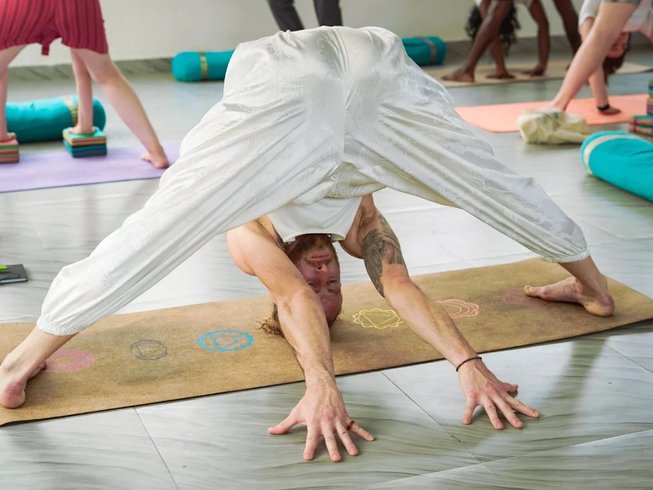
Your life will be transformed by a 200-hour yoga teacher training in the main center for yoga, Rishikesh. As Rishikesh’s top yoga school, Maa Ganga Yogashala can guide those just starting out and also all those who are better skilled. Rishikesh, which is on the banks of the Ganges at the Himalayas, is a fantastic spot for studying and doing yoga. Here, students gain knowledge on every significant part of yoga, which are Hatha, Ashtanga, Vinyasa, pranayama, meditation, yoga philosophy, anatomy, and teaching methodology.
Apart from training, you can get to know the culture, visit places of ritual importance, and take part in yoga with others from around the globe. As a result, people grow closer and more connected to yoga’s spiritual heritage.
This training in Rishikesh is perfect for anyone with a true passion for yoga, since age and experience are not requirements. No matter if you are just starting with yoga or have been practicing for a long time and aim to get certified as an instructor, the course supports your needs.
You can join this course if:
- Yoga roots - You're passionate about yoga and want to learn it from the root, beyond just the physical asanas
- Spiritual growth - You're seeking personal growth, inner peace, and a deeper spiritual connection.
- Teaching certification - You aspire to become a yoga teacher and teach internationally
- Immersive journey - You're a traveler or spiritual seeker, looking for an immersive experience in India, the birthplace of yoga
- Advanced practice - You have some yoga experience and want to take your practice to the next level with structured training and expert guidance
- Professional integration - You’re a wellness professional, fitness coach, therapist, or healer wishing to integrate yoga into your current profession
There are no age restrictions—students from 18 to 60+ have successfully completed the program. All you need is an open heart, a dedicated mindset, and the willingness to learn.
If you're ready to embark on a life-changing journey in the lap of the Himalayas, surrounded by spiritual energy and nature’s serenity, this course is for you.
Course syllabus
The curriculum at Maa Ganga Yogashala has been organized with the aim of offering full-fledged understanding of yoga, as it is embraced by modernity. It is an extensive topic that encompasses the physical postures, known as asanas, pranayama, which is the breathing exercises, and meditation and yoga philosophy. Students will be learning about anatomy and physiology to know how yoga works on the physical and psychological aspects of individuals. It also covers teaching technique, which enables you to teach other people with confidence and precision. All the sessions are very much supported with the theoretical aspects of yoga, making the practice much more deeper than what exists on the surface. The program is very much designed in a way that prepares a student to be a good yoga savior for life.
Hatha (Asana and philosophy)
Hatha yoga is very vast subject and it is very difficult to explain this in brief. But still they will try to give a picture of what you will learn about Hatha yoga in this course. Traditional asana practice of Hatha yoga, which is mostly based on the tradition of Shivananda yoga and Satyananda yoga. You will learn the two ways to perform the asana practice:
- Dynamic way of asana to loosen up the joint
- Static way of asana to strengthen the body
Week One: The first week of Hatha yoga classes is focused on the Pawan Muktasana series which are divided into three sections: joints movements, which prepares the joints and bones for the advanced yoga asana; the second section is dedicated to core strengthening asanas, digestive system-related asana; and the third section is focused on the asana series which channelize the energy throughout the body and prepares the body for dynamic asana series. Once you complete the Pawanmuktasana Series then students learn the traditional way of doing Surya Namaskar. At the school you will also learn the variations of salutation in different yoga tradition.
Week Two: In the second week, you focus on Vinyasa where students will learn the different types of flow and transitions between the asana.
Week Three and Week Four: In these weeks, the focus is on static asana practice where students learn the modifications variations of the advanced asana. Students in these weeks also learn to stay longer in asana in order to become flexible, strong, and sustainable asana practitioners.
During these 200 hours of Hatha yoga training, a student will get skilled with Pawanmuktasana Series, Surya Namaskar, Chandra Namaskaram, standing asanas, kneeling asanas, sitting asanas, prone asanas, supine asanas and inversions.
In these four weeks of Hatha yoga, you will not only practice asana but also practice its theory as:
- Why should you do these asanas
- What is the purpose of doing these sequence
- What are the contraindications and benefits of the asana practices
- Which time it’s good to do these sequences
- How to break down the advanced asanas in order to teach beginners
- How many times one asana can be practiced
Ashtanga Vinyasa (Complete Primary Series, lead in Mysore Style)
Ashtanga Vinyasa is the dynamic form of doing asana. In this dynamic form of practice, achievements are attained by synchronizing the body, mind and breath to a single rhythm. There are 6 series of this special practice.
- Ashtanga Primary Series
- Secondary Series
- Advance Series A, B, C and D
In this training course students will learn the primary series of Ashtanga Vinyasa, which is called "Yog Chikitsa." Here Chikitsa means therapy, so this series is also known as yoga Therapy.
Why it is called yoga Therapy?
Most of the asanas in the primary series of Ashtanga Vinyasa are forward bending poses which directly work the digestive system. A healthy digestive system means the whole body is disease-free. Therefore it work as a therapy for entire body and thus makes this series as therapeutic yoga. The Ashtanga practice is divided into two parts in this yoga course. One is Led class by the lead teacher in which the teacher will guide the students with instruction and students practice by following each instruction. Second is Mysur style practice in which the students will do a traditional way of Ashtanga Vinyasa with their own pace while understanding the rhythm of the breath.
First series is divided into three sections:
- Standing sequence which is the foundational part of Ashtanga Vinyasa
- Sitting sequence of asana
- Inversions
In the First Week, a detailed study and practice on the standing foundational sequence of primary series with proper alignment is done. Once the students get familiar with foundational part of Ashtanga Vinyasa, teachers gradually lead them to the further sitting series and inversions. So by the end of the course students are able to perform whole series by their own with proper alignment and adjustment of each asana.
Due to the creation of heat in the body, Ashtanga yoga cleanses the body through sweating. The body gets more clear and gradually get into a natural shape when you practice it continuously. These characteristics of Ashtanga Vinyasa practice make it one of the greatest and most demanding. Breathing and eyesight are an important part of this particular type of practice. The body moves with the rhythm of the breathing from one asana to another asana. And when this action is continuously moving it takes the form of meditation; that's the reason Ashtanga Vinyasa practice is also called a “dynamic meditation.” The rhythmic of the body and breathing lead to a special kind of control in the body, making the body effortless and smooth, even in every difficult posture. The body starts to feel lightheaded.
Eyesight or drishti also has special significance in Ashtanga yoga. The practice of sight (drishti) brings focus, and focus brings stability in the mind, which is extremely important for yoga practice. A human body has nine openings (doors); one is eyes. And this door or opening is very near to the brain. Whatever disorders arise in the mind is because we do not have the control in the eyes, due to which things from outside enter into the brain and the mind stores whatever it receives. The practice of drishti controls this door, leading to a clear and stabilized mind. This practice is essential for the sadhaks whose body is rigid and lacks of flexibility. Continuous effort of this practice makes the body open by Third Week and makes difficult or advanced yoga posture easier. During this process, the students learn the method and technique of control on the body, making him or her to perform the flow and float, handstand, headstand, intense back bend and related movements with ease and confidence.
Pranayama and breath (practice and theory)
Many people consider pranayama as the science of breathing but the reality is the pranayama and the science of breath are two different subjects. Pranayama means the regulation of prana, where prana is not the breath, it is the subtle energy that resides in every living being which makes them eminent in this world. Whereas breathing is a subtle power that helps keep the body alive, which is composed of five elements.
It is very important for every yoga student and yoga teacher to understand that the science of breathing is quite different from the practice of pranayama. The science of breathing and the practice of pranayama in the school is therefore explained in a very detailed way.
Week One: In this week practice of the course deals with the distinction and the relationship between the science of breath and pranayama, in which the student understands what exactly they are practicing. In the subject of pranayama, you cover this practice in three stages: In the first stage the body is developed for the regulation of the prana which is carried through the purification of the body. In this practice teachers will teach the practice of some special breathing techniques that help the pranic body to purify.
Week Two: During this week, the second stage emphasizes the practices that help to purify the nadis (pranic channels) present in the body and flow the prana to the channel. This is a very important part of the pranayama practice and is completed in the second week.
Week Three and Four: The third stage comes after the expansion of the life to keep prana steady. This stage focus on the exercises which immobilize the prana by transmitting it to various parts of the body. Pranayama is not the new subject, it has been known in India for over 4000 years. Many yoga scriptures talk about it. Also many texts written in the Pre-Buddhist period also referred to this technique of pranayama. It is not a simple subject to understand; proper guidance is needed in order to learn and understand these ancient techniques.
Maa Ganga Yogashala not only emphasizes the exercises or techniques of the practice but also attempts to understand the history of those practices. This is very important, especially these days when people keep mixing information on the internet without any serious research.
Yogic anatomy and physiology (based on yogic point of view)
Anatomy is a medical term which is defined as the study of the structure of human body, covering the knowledge of external and internal organs. Knowing the anatomy of the human body is an added benefit to any health enthusiast, a yoga practitioner and a health or yoga professional. In the recent times, yoga practice has become very popular among all the age groups. Everyone wants do all kind of bends and twists to show off their advanced asanas, but many of them do not understand their body in anatomical way. This has increased the chance of injuring the body. Therefore it is very important to have some knowledge of the anatomy to make your practice more safe and effective. After understanding the knowledge and mechanism of the internal organs and external organs present in the body, each yoga practitioner can derive maximum benefit from the practice of yoga. There are two types of anatomy: one is focused on the medical side and the second is yogic side. Maa Ganga Yogashala focuses mainly on yoga anatomy which is focused in philosophy body, mental body, and energy body (subtle body). So here, you will explore not only the physiology of physical body, but also the mental and the energy body.
- Physical body consists of the respiratory system, circulatory system, skeletal system, muscular system, digestive system, joints and bones etc.
- Mental body consists of Mind and Chitta
- Energy body consists Pancha Kosha
Having the right knowledge of the body allows you to reap the greatest advantage of the actions of yoga by understand the correct way. This will make any practitioner a good yoga teacher. In the yoga anatomy class, the students get opportunity to learn the right movements and ways of yoga posture and other processes such as breathing during pranayama practice.
Yoga darshan or yoga philosophy
Maa Ganga Yogashala strongly believes that one should know the philosophy of yoga before practicing the yoga exercises. Especially if a yoga teacher is not aware of what the goal is, how can he or she explain the students the way to reach the goal? In olden times, yoga practice used to begin after knowing the purpose of yoga. It is used to inspire a beginner to be on the spiritual path. After knowing the true aim of yoga, every yoga sadhaka (practitioner) used to practice yoga in the right direction by working on all round development of body. It is very necessary to know the goal of the practice before doing it. One of the meanings of darshan is “direct knowledge of goal.” These days as yoga is in trend, people just start the practice without knowing its purpose. That makes them unable to reach their goal even after years of hard work or practice. So in this course they first let the students learn their goal and purpose of practicing yoga which help them to achieve their goal. A brief study of important yoga texts, the Patanjali Yoga Sutras, is covered in this course. You will cover all the philosophies that you need to understand before and after yoga practice which is connected to yogic philosophy such as Shat Darshana, Sankya Yoga, Buddhist Philosophy, Vedanta Philosophy, Charvak Philosophy, Vaisheshik Philosophy, Mimansa Philosophy. During this training, you emphasize on Patanjali Yoga formula which is an important book of yoga. Week One is dedicated to Shath Darshan and the purpose of yoga and the next three weeks are dedicated to yoga sutras.
Mantra yoga (yogic mantras - meaning and purpose)
Mantra chanting in the yoga teacher training course. The shastras and ancient scriptures have many meanings of mantra, but what has been the most impressive one is, the “sound which purifies the mind.” Mantra are the tools of mind.
The first chanting, Om, is a mantra in itself, and it is believed that this is the first sound that is produced on earth. The literally means of mantra is thought or contemplation. Mantra is also a type of speech with the help of which you communicate with subtle powers. The mantra was therefore used to awaken subtle powers in antiquity or to please god and to establish contact with god. The mantra is not ordinary sound. this entire universe is pervaded by one wave self energy. That energy present in universe at subtle form is called naad.
In this 200-hour yoga teacher training in Rishikesh, you will focus on 8 mantras which you will learn to chant with a musical instrument (harmonium).
- Day 1: Introduction of mantra, philosophy and purpose; mantra chanting om
- Day 2: Obstacles removal mantra (ganesh mantra); meaning and chanting
- Day 3: Food mantra; meaning and chanting
- Day 4: Guru mantra; meaning of guru; importance and quality of guru
- Day 5: Teacher and student relationship mantra; meaning and chanting
- Day 6: Patanjali mantra; meaning and chanting
- Day 7: Mantra for knowledge; meaning and chanting
- Day 8: Realization mantra; meaning and chanting
- Day 9 (Sanskrit): Origin of Sanskrit, and its purpose; root letters of Sanskrit given by Shiva
- Day 10, 11, 12: Chanting of root letters of Sanskrit; Sanskrit name of asana and its meaning
Dhyana (meditation - practice and theory)
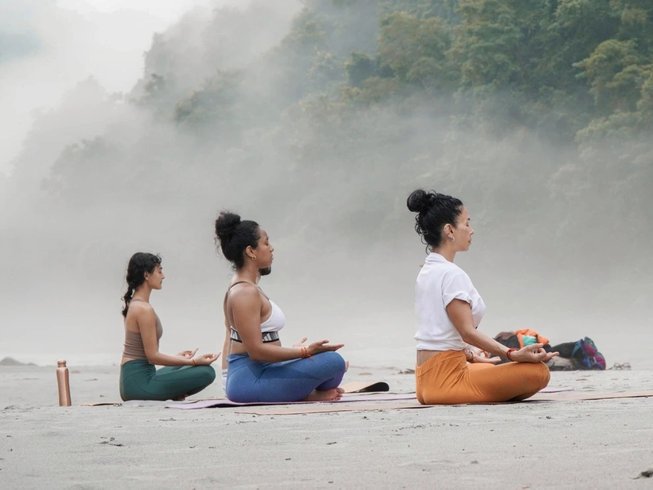
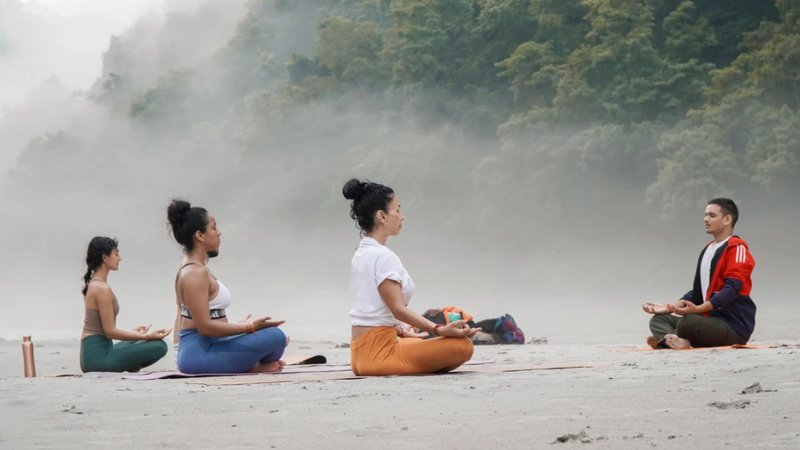
Practicing meditation is the highest practice of yoga. No practice is complete without meditation. If you practice asanas or practice pranayama, that too needs meditation. But meditation is also a practice in itself and needs to be learned like other yogic practices. Meditation not only leads to mental development but also physical and spiritual growth. In the practice of meditation, the mind is used as a means and works on all other levels of the body, which causes growth of physical, mental, and spiritual at the three levels. In fact, there are many ways to meditate, but Maa Ganga Yogashala practices certain methods based on Bihar School of Yoga, which help the student to attain the higher stages of concentration which helps one to lead in meditation.
The practices are :
- Day 1 (pratyahara): Practice of yoga Nidra; meaning, methods and its purpose
- Day 2: Yoga Nidra step by step
- Day 3: Tratak; meaning, methods and purpose
- Day 4: Tratak / yoga Nidra
- Day 5, 6: Kaya sthairyam (conscious method of body stability); meaning and its purpose
- Day 7, 8: Ajapa japa
- Day 8, 9: Antar moun
- Day 10, 11: Chidakash dharana
- Day 12, 13: Antar moun / chidakash dharna
- Day 14: Ajapa japa / antar moun
- Day 15: Questions and answers
- Day 16, 17, 18: Exams
Teaching methodology (core of yoga teacher training course)
A yoga teacher training is incomplete without sessions of teaching methodology. Combination of instructions, observation, demonstration and sequencing, yoga teaching methodology plants an important role in creating effective and competent yoga instructors. Aspiring yoga students can gain a comprehensive understanding of understanding individual body type and adjust their bodies with confidence without making them feel uncomfortable.
Schedule
During the 200-hour yoga teacher training at Maa Ganga Yogashala in Rishikesh, students follow a structured daily routine designed to balance physical practice, theoretical learning, and inner development. Each day includes yoga asana practice, pranayama, meditation, philosophy, anatomy, and teaching methodology.
- 05:00 Wake up
- 06:00 Tea time
- 06:30 – 08:00 Asana practice
- 08:00 – 08:45 Pranayama
- 09:00 – 10:00 Breakfast
- 10:15 – 11:15 Mantra, alignment and adjustment
- 11:00 – 12:00 Yoga philosophy
- 12:00 – 15:00 Lunch and rest
- 15:00 – 16:00 Anatomy / teaching methodology
- 16:15 – 17:45 Asana practice with alignment
- 18:00 – 19:00 Meditation
- 19:30 Dinner
Excursies
During the yoga teacher training program, students also have the opportunity to explore the spiritual and natural beauty of Rishikesh through special excursions and cultural experiences.
- Kunjapuri temple sunrise trek – Witness breathtaking views as the sun rises over the Himalayas
- Ganga Aarti at Parmarth Niketan – Participate in the world-famous evening ritual on the banks of the Ganges
- Waterfalls and nature hikes – Connect with nature through peaceful walks to stunning waterfalls
- Vashishta cave meditation session – Deepen your practice in the ancient caves believed to hold spiritual energy
Instructeurs
Vinay Khurana
Yogi Vinay khurana ji a yoga (meditation) and sound healing teacher who had spent years in the film industry in Mumbai before discovering his true calling in the world of yoga. He has been practicing yoga for over 12 years and has dedicated his life to helping others find peace and tranquility through the ancient practice. While working in the film industry, Yogi Vinay found that the constant stress and pressure of the industry was taking a toll on his health and well-being. He turned to yoga as a way to manage his stress and discovered that it not only helped him feel better physically.
Locatie
Maa Ganga Yogashala is located in Tapovan, Rishikesh, one of the most peaceful and spiritual areas of the yoga capital of the world. Surrounded by the Himalayan foothills and the sacred Ganga river, the location offers a calm and inspiring environment ideal for yoga, meditation, and self-discovery.
The school is close to many famous attractions including the Ganga river ghats, Laxman Jhula, Ram Jhula, beautiful waterfalls, and scenic Himalayan viewpoints. Students can enjoy peaceful walks by the river, visit traditional temples, and experience the vibrant yoga culture of Rishikesh.
Tapovan is also known for its yoga schools, organic cafes, and spiritual atmosphere, making it the perfect place for yoga practitioners from around the world to learn, relax, and connect with nature.

Eten
Maa Ganga Yogashala provides fresh and healthy vegetarian meals prepared with love and care. The food follows a traditional yogic diet that supports the body and mind during yoga practice and teacher training.
Meals are prepared using fresh local ingredients and balanced nutrition to help students maintain energy throughout the day. The food is light, nourishing, and suitable for yoga practitioners.
- Daily vegetarian breakfast, lunch, and dinner included
- Fresh fruits, herbal tea, and healthy snacks provided
- Nutritious sattvic meals inspired by traditional Indian yogic cuisine
- Meals prepared with fresh local ingredients
- Special dietary needs can be discussed in advance
De volgende maaltijden zijn inclusief:
- Breakfast
- Lunch
- Dinner
- Snacks
- Drinks
De volgende drankjes zijn inbegrepen:
- Water
- Koffie
- Thee
De volgende dieetwensen worden geserveerd/zijn mogelijk:
- Vegetarisch
- Yoga
- Andere dieetwensen op aanvraag
Exclusieve geschenken
Maa Ganga Yogashala heeft een paar speciale verrassingen voor je voorbereid, waaronder unieke ervaringen en attente extra’s om je reis nog onvergetelijker te maken.

Gratis Persoonlijk Yoga Adviesgesprek

Gratis Klanksessie
In de prijs inbegrepen
- 23 days of 200-hour yoga teacher training course
- Daily yoga asana practice (Hatha / Ashtanga style)
- Pranayama and meditation sessions
- Yoga philosophy and yogic lifestyle teachings
- Anatomy and teaching methodology classes
- Mantra chanting and alignment workshops
- Course materials and study support
- 22 nights comfortable accommodation during the course
- Daily vegetarian meals (breakfast, lunch, dinner and snacks)
- Wi-Fi access in the accommodation
- Hot water and housekeeping services
- Kunjapuri Temple sunrise excursion
- Ganga Aarti experience in Rishikesh
- Nature walks and waterfall excursions
- Meditation session at Vashishta Cave
- Certificate upon successful completion of the course
Inclusief exclusieve cadeaus
Gratis Persoonlijk Yoga Adviesgesprek
Ontvang een een-op-eenconsult met een ervaren yogadocent om je doelen te bespreken, je beoefening te verbeteren en persoonlijke begeleiding te krijgen voor jouw yogatraject.
Gratis Klanksessie
Geniet van een ontspannende klankhealing-sessie met traditionele klankschalen om je hoofd tot rust te brengen en je innerlijke balans te herstellen. Deze speciale sessie helpt studenten diepe ontspanning en mentale helderheid te ervaren tijdens hun yogatraining.
Niet in de prijs inbegrepen
- Airfare or travel costs to reach Rishikesh
- Airport transfer or taxi services
- Visa fees and travel insurance
- Personal expenses
- Laundry services
- Additional private yoga classes
- Additional excursions or sightseeing not mentioned in the itinerary
- Personal yoga equipment such as yoga mat if preferred
- Medical expenses or medications
- GST
Bereikbaarheid
Aanbevolen luchthavens
Transfers niet voorzien
Chandigarh Airport
158 km verwijderd van uw bestemming
Transfers niet voorzien
Jolly Grant Airport
15 km verwijderd van uw bestemming
Transfers niet voorzien
Indira Gandhi International Airport
209 km verwijderd van uw bestemming
Students can easily reach Maa Ganga Yogashala in Tapovan, Rishikesh by taxi, auto-rickshaw, or local transport. For exact directions, students can also use Google Maps and search for "Maa Ganga Yogashala, Tapovan, Rishikesh". If needed, the team will be happy to assist with directions and travel guidance after booking.
Arrival by bus
If arriving by bus, students can get down at Rishikesh Bus Stand and take a short taxi or auto ride to Tapovan.
Arrival by train
If arriving by train, the nearest railway station is Haridwar Railway Station, which is about 25 km away. From Haridwar, taxis and autos are easily available and the journey usually takes around 40–50 minutes.
Annuleringsvoorwaarden
- Een reservering vereist een aanbetaling van 30% van de totale prijs.
- De aanbetaling wordt niet gerestitueerd als de boeking wordt geannuleerd.
- De rest van de betaling moet worden voldaan bij aankomst.

Beoordelingen
Er zijn nog geen reviews beschikbaar
Voor deze organisator kan je jouw boeking garanderen met BookYogaTeacherTraining.com. Bijna alle creditcards worden ondersteund.
Soortgelijke Yoga Docentenopleiding die je misschien leuk vindt
Onlangs bekeken