
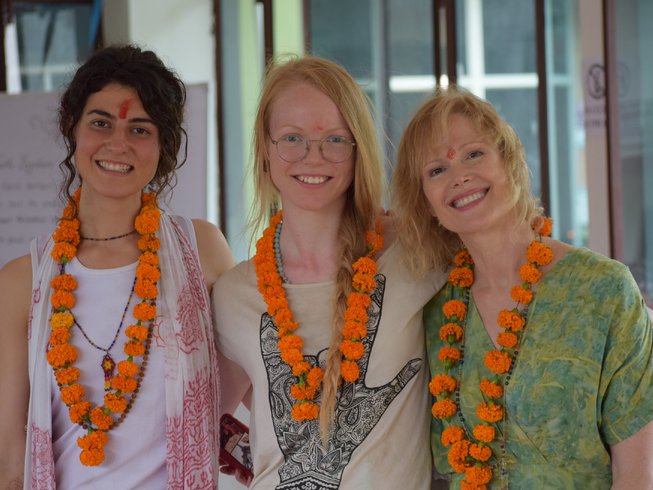
28 días de profesorado de yoga Hatha de 200 horas en Tapovan, Rishikesh, India
Yoga Teacher Training in India
Become a certified yoga instructor by joining this 200-hour multi-style yoga teacher training course in Rishikesh, India! If you are looking to bring a change in your life by learning yoga for self-rejuvenation or transferring the benefits to others by getting a professional certificate and expertise, then Rishikesh Nath Yogshala is the perfect fit for you. You will be trained by world-class trainers who have world-class certificates and exposure.
Conoce a los instructores
Destacado
- Eligible to register with Yoga Alliance upon completion
- Daily yoga classes
- 200-hour yoga teacher training curriculum
- Weekend excursions
- Daily vegetarian meals
- Pick-up from Jolly Grant Airport (DED)
- 27 nights accommodation
Nivel de experiencia
- Principiante
- Intermedio
Estilos
28 días con instrucción en Inglés
Alojamiento
Instalaciones
- Comedor
- Jardín
- Estudio de yoga
Rishikesh Nath Yogshala
Rishikesh Nath Yogshala provides the learners and practitioners with state-of-the-art well-equipped rooms and accommodations with pure Satvik vegetarian food. The institute is located in the yoga capital of India, Rishikesh.
Rooms
The options range from single rooms and double shared rooms. All rooms have attached bathrooms. the bathrooms are equipped with western toilet seats and showers. Hot water is also made available during winter.
Programa
Certification
Students who complete the training are eligible to register with Yoga Alliance as Registered Yoga Teachers (RYT®).
How the Training Works
The aim of this teacher training course is to create a solid basis for you in order to help you pursue a career as a certified yoga teacher. The training focuses on quality in all aspects, ranging from accommodation, a healthy diet, and a team of experienced teachers.
Through the first two steps, mental strength is enhanced by interpreting the qualities of one’s own mind and its limitations. Restlessness ceases to exist at this stage and all the limitations and imperfections of the mind are left behind. Analytical observation and intellectual energy tend to grow and you will start to enjoy internal bliss.
About the Training
Becoming a yoga teacher is the first step to changing your life and sharing your passion for this ancestral discipline. By deepening your practice and living your daily life in consciousness, through impartial and detached observation of your actions, you can inspire other yogis and yoginis to follow the path of freedom by transmitting your knowledge.
This training is the union of teaching in respect of Indian tradition and immersion in a living and welcoming nature that allows an intense spiritual connection away from the confusion of the world.
Benefits of Yoga Teacher Training
- Turns you into a qualified yoga teacher
- Improves flexibility, endurance, blood circulation, memory, and concentration
- Keeps you updated on online courses and workshops (attending home) on the latest practices in the field of yoga, whenever you have the time
- Speak with experts and come up with new innovative poses and modifications to the old ones. You can even suggest a new style similar to hot yoga or whatever
- Access to endless information, including research documents. You can even do your own yoga research
What Does Your Training Cover:
Rishikesh Nath Yogshala follows a curriculum that is in compliance with the international standards of Yoga Alliance from the USA coupled with the expertise of renowned yoga gurus.
The prime aim of this course is to teach physical and spiritual practices that lay down the foundation to become a well-rounded and successful yoga teacher. The main five modules of the course include yoga teaching techniques, teaching methodology and yogic lifestyle, philosophy, anatomy, and physiology, as well as practice
Yoga Pranayama
Pranayama is a set of Yogic Techniques and practices generally defined as breath control and is on its own considered a science. Here is what you’ll learn on the subject:
- Introduction of pranayama
- Benefits of pranayama
- The pranic body
- Prana and lifestyle
- Breath, health, and pranayama
- Pranayama and the spiritual
Bandhas (Energy Locks)
Bandhas are energy locks provided by the contraction of certain groups of muscles and are widely used in yoga practice. Here's a glimpse of what you’ll learn on the subject
- Preparation for Bandha
- Benefits of Bandha
- Mula Bandha
- Jalandhara Bandha
- Uddiyana Bandha
Mantra Chanting
Mantras play a big role in daily Yogic life. Mantras are sounds and prayers that carry huge energy and vibration. Rishikesh Nath Yogshala will teach to sing:
- Opening mantra
- Om chanting
- Gayatri Mantra
- Guru Vandana (prayer to Guru)
- Student and master mantra
- Patanjali mantra (ashtanga mantra)
- Completeness mantra
Kriya and Shatkarma (The Six Purification Methods of Hatha yoga)
Shatkarma is the Sanskrit term for one of the six yogic purification techniques (kriyas) as outlined in the "Hatha Yoga Pradipika." The purpose of these cleansing techniques is to keep the body strong, clean, and healthy. They remove toxins and anything blocking the flow of prana in the body.
Practicing shatkarma internally purifies the body, and makes pranayama and meditation practice easier by preparing the body to perform these practices without distraction, discomfort, or fatigue. This is a traditional yogic cleansing technique that is very effective and good to remove many illnesses and open body blockages.
You will learn:
- Jal Neti
- Ruber Neti
- Sutra Neti
- Kunjal Neti
Hatha Yoga
Indian traditional yoga style is called "Hatha" (“ha” means sun “Tha” means moon) Unifying the sun and the moon within (Yin and Yang). It's a physical method for preparing and maintaining the body, providing stamina flexibility Balance, and strength. This is the most traditionally popular and beneficial yoga style.
What you Will practice:
1st Week:
Joints warm-ups (Pawanmuktasana series a, b and c)
- Surya Namaskara (Sun Salutation) and Chandra Namaskara (moon salutation)
- Yoga Mudrasana
- Matsyasana
- Gupta Padmasana
- Baddha Padmasana
- Kukkutasana
- Garbhasana
2nd Week:
Backward bending asanas
- SaralBhujangasana (Easy cobra pose)
- Bhujangasana (Cobra pose)
- TiryakaBhujangasana (twisting cobra pose)
- Sarpasana (snake pose)
- ArdhaShalabhasana (half locust pose)
- Shalabhasana (locust pose)
- SaralDhanurasana (easy bow pose)
- Kandharasana (shoulder pose)
- Ardha Chandrasana (half moon pose)
- Setu Asana (bridge pose)
- Gomukhasana (cow’s face pose)
3rd Week:
Forward bending Asanas
- Paschimottanasana (back stretching pose)
- GatyatmakPaschimottanasasna (dynamic back stretch pose)
- PadaPrasarPaschimottanasana (legs spread back stretch pose)
- JanuSirshasana (head to knee pose)
- Ardha Padma paschimottanasana (half lotus back stretching pose)
- Hasta PadaAngushthasana (finger-to-toe stretch)
- Padahastasana (hand to foot pose)
- SirshaAngusthaYogasana (head-to-toe pose)
- Utthitajanusirshasana (standing head between knees pose)
4th Week:
Spinal twisting and Advanced Asanas
- ArdhaMatsyendrasana (half spinal twist)
- ParivrittiJanuSirsasana (spiralled head to knee pose)
- Poornabhujangasana (full cobra pose)
- Kurmasana (tortoise pose)
- Poornashalabhasana (full locust pose)
- PoornaDhanurasana (full bow pose)
- Dhanu-rakarshan-asana (archer’s posed)
- Chakrasana (wheel pose)
- Hanumanasana (leg-splitting pose)
- Poornamatsyendrasana (full spinal twist pose)
- Mayurasana (peacock pose)
- Padma mayurasana (Lotus or bound peacock pose)
- Gorakshasana (Yogi Gorakhnath’s pose)
- Astavakrasana (eight-twist pose)
- Vrischikasana (scorpion pose)
- Inverted pose, balancing pose and core pose
Ashtanga Vinyasa
An intensive and integral part of yoga, the Ashtanga yoga style requires deep commitment and self-practice to achieve the goal. The Pyramid’s yoga instructors have experienced teachers and advanced practitioners of the Ashtanga style and will guide you safely through the hardest postures. you’ll learn the complete Led primary series:
Standing Poses
- Hasta Padangusthasana and Pada Hastasana
- Utthita Tri Konasana
- Parivrtta Tri Konasana
- Utthitan Parsva Konasana
- Parivrtta Parsva Konasana
- Prasarita Padottanasana A, B, C, and D
- Utthita Parsvottanasana
- Utthita Hasta Padangusthasana
- Utthita Parsvasahita
- Utthita Eka Padasana
- Ardhabaddha Padmottanasana
- Utkastasana
- Virabhadrasana A,B and C
- Primary Asanas
- Paschimottanasana A, B and C
- Purvottanasana
- ArdhaBaddha Padma Paschimottanasana
- Tirieng Mukha Eka Pada Paschimottanasana
- JanuSirsasana A,B and C
- Marichyasana A,B and D
- Navasana
- Lolasana
- BhujaPidasana
- Kurmasana
- GarbhaPindasana
- Kukkutasana
- BaddhaKonasana A and B
- Konasana A and B
Intermediate Asanas
- Salabhasana A and B
- Dhanurasana
- Ustrasana
- Kapotasana A and B
- SuptaVajrasana
- Bakasana A
- Bakasana B Jump
- ArdhaMatsyendrasana
- Yoga Nidrasana
- Tittibhasana
- PichaMayurasana
- Vatayanasana
- Gomukhasana A amd B
- Hasta Sirsasana (head stand)
Advanced A (Optional)
- Kasyapasana
- Bhairavasana
- UrdhvaKukkatasana A
- Galavasana
- EkaPadaViparitaDandasna
- VipritaSalabhasana
- GandhaBherundasana
- Hanumanasana
- Natrajasana
- Raja Kapotasana
Yoga Philosophy
The history of yoga, the sutras of Patanjali, and the importance of yoga and its origins in India are the subjects of these classes and lectures. Questions will be addressed and you will deepen your knowledge about yoga.
Yoga Anatomy
Anatomy classes expose how the body, bones, inner systems, and respiration are/ affected by asanas and the flow of breath. Knowing the basic structure and function of the organs and systems is very important to practitioners so that their work as yoga teachers can be safe and beneficial to future students.
This is what you’ll learn:
- Complete body anatomy
- Skeleton system
- Muscular system
- Circulatory system
- Nervous system
- Respiratory system
Teaching Methodology and Adjustment
During these classes, you will learn how a perfect posture should be. You will also learn how to connect with your future students through correct class verbal guidance and touch adjustment, and about recurrent yoga injuries and how to prevent them.
The teaching methodology is one the most important part of the course as the students will learn the following:
- How to conduct a class
- Classroom management
- How to get in and come out from the posture
- How to assist and help while teaching the class
- Which kind of words you should be used as a yoga teacher
- What makes you different from other teachers in terms of teaching?
- Which kind of asanas you should recommend for different health issues
- How to use belts, bolster, bricks, and chair during the class adjustment
Classroom Management
The program includes all the major schools of yoga: the traditions of Hatha yoga, Ashtanga yoga, Kundalini yoga, and Yoga Nidra, and gives a full understanding of this spiritual science.
In the class, you will study anatomy and physiology, yoga philosophy, asanas and their detuning, bandhi, shatkarma, pranayama, mantras, mudras, and meditation.
This course will give you all the necessary bases for a full understanding of the basics of yoga and for meaningful immersion in practice. Also in the course are lessons on the methodology of teaching, where you will be taught to apply the accumulated experience and transfer the acquired knowledge to your students at a qualified level.
The learner needs to attain the perfection of the body along with perfection in mind in order to gain mental efficiency. Abhyasa is the keynote of this yogic philosophy.
Practical Exposure
As a team, you and the others will aspire and support the trainees to attain a holistic approach during the training sessions. You will aim for the trainees to witness and experience the value of subtle practices like meditation and pranayama as well as asana practices.
- The relationship with your mentor and learn how yoga was taught in this tradition so that learning is effective
- Develop a one-to-one relationship with your mentor, who will guide you throughout the program and beyond
- Monitoring your mentor in action - coaching, tuning, and inspiration
- Develop your teaching skills by helping your mentor in the class, improving your ability to see the bodies, the proposed modifications along with corrections and adjustments
- Participate in group meetings with your mentor, in which the issues and problems related to the teaching of yoga are addressed
Trainee Assessment
The trainee needs to be competent for graduating as a yoga teacher as per their class-based participation and ongoing observations during classes. Trainees also receive valuable feedback on the practical sessions from assistant teachers and senior teachers.
They need to meet certain teaching standards regarding their anatomy, adjustments, asana alignment, and communication. As a trainee, you will be required to work in groups and with others on teaching practicums. Applicants must be prepared to undergo constructive training on a regular basis.
You will be provided with proper study material as well as guidance throughout the assessment phase.
Course Prerequisites
Overcome the theoretical and practical tests that are proposed and perform the formative assessment tests, which will be indicated throughout the course, in order to obtain the corresponding accreditation.
- Daily study - For good use of the course, the student will commit to dedicating at least two hours to daily study.
- Teaching materials - The student must know that for this course he will be given didactic material protected by copyright.
- Punctuality - Classes have their established start time that must be respected at all times.
- Optional reinforcement - The student may request these optional reinforcement classes.
What Is Expected From You:
- Normal physical and psychological resilience
- Harmonious and balanced cooperation in the training group
- Relaxed after the training weekend
- Election of a further participant as a training and training partner for deepening the content of the training
- Take-over of small activities for the common good of the group in the course of the training (Karma yoga): (eg preparation of tea and meals, assistance in the yoga room)
- Openness and commitment: The training is aimed at everyone who wants to deepen their practice and share with others. A certain Vinyasa yoga experience is desirable, however, passion, dedication, and openness with which you want to devote yourself to education are far more important. You are expected to integrate yoga into your everyday life during your training.
- Discipline: A pre-requisite for obtaining the certificate is 100% presence during the entire training and the internship, the submission of all homework and book reports, as well as the existence of the theoretical and practical examinations.
Daily Schedule:
- 05:30 Wake up
- 06:00 to 06:30 Morning tea
- 06:30 to 08:00 Hatha yoga class
- 08:00 to 09:00 Pranayama
- 09:00 to 10:30 Breakfast / tea
- 10:30 to 11:30 Mantra / anatomy / adjustment / teaching nethodology
- 11:30 to 11:45 Tea break
- 11:45 to 12:45 Teaching methodology / anatomy
- 13:00 to 15:00 Lunch
- 15:30 to 16:00 Philosophy
- 16:00 to 17:00 Anatomy
- 17:00 to 17:30 Tea break
- 17:30 to 18:00 Ashtanga Vinyasa
- 18:00 to 19:00 Meditation / Yoga Nidra
- 19:30 to 21:00 Dinner
Excursiones incluidas
- Ganga River
- Forest
- Cave
- Kunjapuri Temple
Instructores
Ajay Uniyal
Ajay Uniyal se sumergió en la vida espiritual a una edad muy temprana y desde entonces no ha parado. La guía de su abuelo lo hizo aprender filosofía de yoga y Vedanta a la temprana edad de 11 años. Después de eso, Ajay se unió a la práctica de Gurukuland y estudió yoga durante cuatro años. A partir de ese momento, él continúa obteniendo calificaciones más altas y también ha ganado muchos premios, así como varios años de experiencia docente en yoga.
Harmindra Singh
La especialidad de Harmindra es la anatomía y fisiología. Harmindra Singh es uno de los maestros más sinceros y naturales de Ashtanga y Vinyasa Flow en Vinyasa yoga ashram, ha estado practicando Ashtanga y Vinyasa Flow por más de 4 años y enseñando alrededor del mundo. Ha completado su maestría en ciencias del yoga. También es un maestro certificado. Su método de enseñanza es muy sencillo y tradicional. Sus clases también son muy informativas y al mismo tiempo alegres y animadas.

Rupam Pundir Ji
Rupam Pundir is a young and dynamic yoga teacher who specializes in pranayama. Her passion for yoga began at a young age, and she has spent many years studying under great masters learning all aspects of yoga but specifically focusing on the health and wellness benefits of pranayama and meditation. She is also currently furthering her studies pursuing her master degree in Yoga Science from Uttarakhand Sanskrit University in Haridwar, India. Rupam is a dedicated teacher with ample experience and is loved by all of her students.
Ubicación
Tapovan, Rishikesh
This program will take place in Tapovan in Rishikesh, India.
About the Venue
Rishikesh Nath Yogshala is located in the yoga capital of the world and stands close to the banks of River Ganga. Rishikesh is located in the North Indian state of Uttarakhand and is surrounded by Himalayan Hills. The place is intersected by the holy River Ganges, and thus, it is also known as the land of yoga and spirituality.
Rishikesh is claimed to be the 'Yoga Capital of the World' and people from different countries all around the world visit this divine city to enjoy nature and learn yoga and other forms of spirituality. The place is full of spiritual ashrams and yoga shalas. If you seek spiritual pleasure and peace of inner self then Rishikesh Nath Yogshala can help you.
Distances
- Dehradun, 35 kilometers
- Delhi, 250 kilometers
- Haridwar, 30 kilometers

Alimentos
Sattvic Meals
The food provided by the institute is very nice. You will be provided with a delicious, Satvik meal three times a day.
The menu will change on a weekly basis, focusing mainly to introduce healthy and nutritious elements in the meal.
If you wish to try something else, several restaurants and local hotels are located nearby. It is suggested that the students only consume natural and pure meals.
If you wish to try something else, several restaurants and local hotels are located nearby. It is suggested that students only consume natural and pure meals.
Los siguientes alimentos están incluidos:
- Breakfast
- Lunch
- Dinner
- Drinks
Las siguientes bebidas están incluidas:
- Agua
- Café
- Té
Tipos de alimentación disponibles:
- Vegetariana
Actividades opcionales
Concerts
Music holds an incredible power to rule over your heart. In Rishikesh Nath Yogashala, a jam session is organized to make you relax and calm. It also adds a memorable moment during your trip. The music session brings tranquility to the mind.
Healing Therapies
A plethora of healing therapies will play a wide role to bring you peace of mind. Taking part in these therapies means knowing yourself. On this platform, you will experience a wide variety of spiritual treatments to understand your own spirituality.
Movie Nights
You can add a spark to your visit by watching a Bollywood or Hollywood film. Apart from serving you the facility of a mini theater, you will be provided with some popcorn to jazz up the mood.
Peace Projects
The motto behind laying the platform of Rishikesh Nath Yogshala is spreading messages of love and peace. Here, you can join a number of programs designed to train students how to keep themselves calm and peaceful.
Satsang
Satsang is a kind of lecture that introduces you to the story that belongs to the glorious past. These stories let us know how to deal with problems. Yogi Ajay Uniyal’s Satsang is quite unique, which gives you a refreshing and peaceful experience at Rishikesh Nath Yogshala.
Shopping
For shopaholics, shopping adds a wonderful experience. Here, you can go for a memorable shopping experience at the variety of shops, stalls, and stores. You can get a sizeable collection of clothing like scarves, shawls, shirts, and pants.
Apart from that, Ayurvedic beauty and personal care products are also available in abundance. People who love eating will get a plethora of options to choose from.
El paquete incluye
- Certificate of completion OR Eligibility to register with Yoga Alliance upon completion of the course
- Study material
- Yoga mat
- Cleansing kits
- Weekend excursions
- Fire ceremony
- Access to Wi-Fi
- Free pick-up from Jolly Grant Airport (DED)
- Fully vegetarian meals
- 27 nights accommodation
No incluye
- Airfare
- Additional meals
- Additional stay
- Outdoor meals
- Travel insurance
- Drop off from the school to Jolly Grant Airport (DED), bus station, and more
¿Cómo llegar?
Aeropuertos recomendados
Traslado incluido
Jolly Grant Airport
A 15 km de tu destino
No se ofrece traslado
Indira Gandhi International Airport
A 209 km de tu destino
Arrival by airplane
Please book your flight to arrive at Indira Gandhi International Airport (DEL). You may rent a car or catch a taxi from the airport.
You may book another flight to the nearest domestic airport near Rishikesh, which is Dehradun’s Jolly Grant Airport (DED). Transfer from this airport is included. Rishikesh Nath Yogshala will pick you up from the airport.
Arrival by bus
From Delhi, the city of Rishikesh is about 230 kilometers away and is well connected by buses. A bus journey may take about five to seven hours depending on the traffic and it costs you about 130 to 350 INR.
A bus with air conditioning will cost about 250 700 INR. In Rishikesh, there are several travel agencies scattered around Swarg Ashram and Lakshman Jhula that can book luxury buses to common destinations like Delhi, Jaipur, Pushkar, and Varanasi.
Arrival by train
A quiet branch line connects Rishikesh to Haridwar, but there are only about three slow trains daily. It is better to take the train to Haridwar and continue by bus from there which will take 45 minutes and costs 30 INR, by taxi it will take 30 minutes and costs 800 INR or by auto-rickshaw taking 40 minutes and 500 INR. However, traveling by train is recommended in peak seasons or during a ‘mela’ (fair) when bus routes are diverted in Haridwar whereas trains often run empty and the fares are low at just 4 INR for a passenger train service.
You can take share rickshaws (vehicle brand name Vikram) towards Lakshman Jhula for 15 INR from Rishikesh %station. You will have to cross Ram Jhula to reach Swarg Ashram on the other side of the River Ganga. There are many trains from Delhi to Haridwar. Some of the better options are Shatabadi Express, Jan Shatabdi, AC Special Express, and Mussoorie Express.
Política de cancelación
- Una reserva requiere de un depósito del 30% del precio total.
- El depósito no será reembolsado si la reserva es cancelada.
- El resto del pago deberá ser completado a tu llegada.

Comentarios
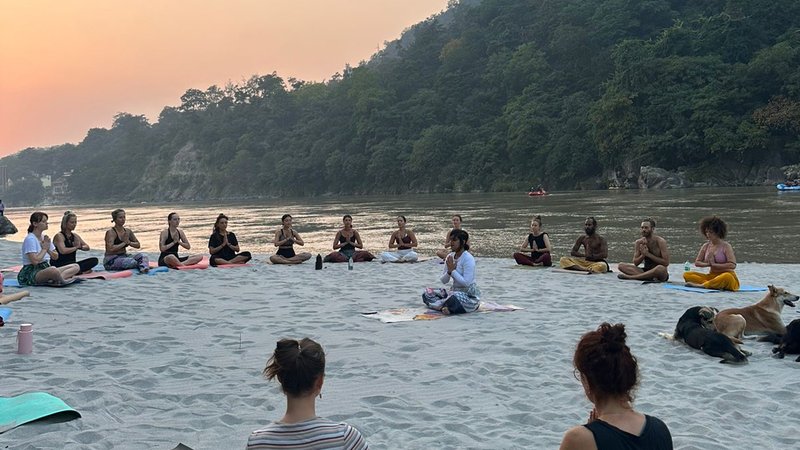
Con este organizador puedes asegurar tu reserva a través de BookYogaTeacherTraining.com. Todas las tarjetas de crédito principales son aceptadas.
Profesorado de yoga que te pueden interesar
Has visto recientemente