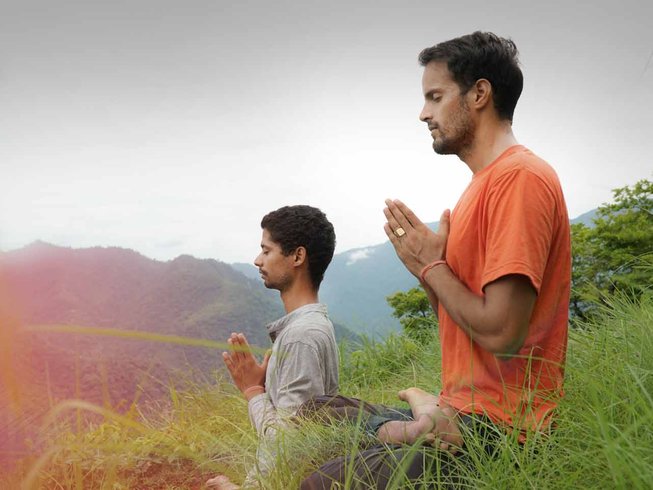

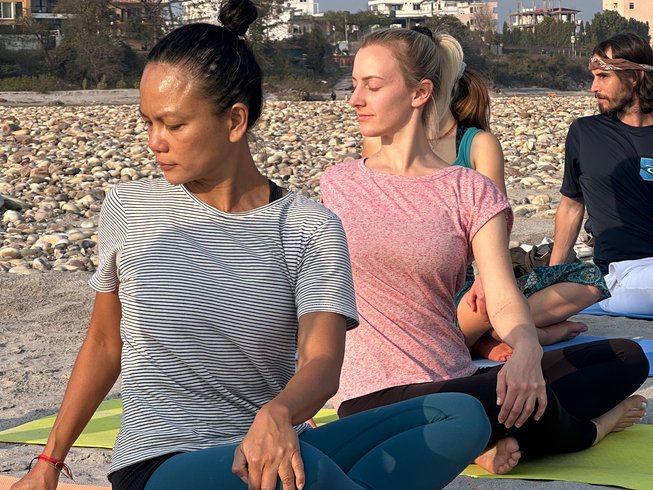
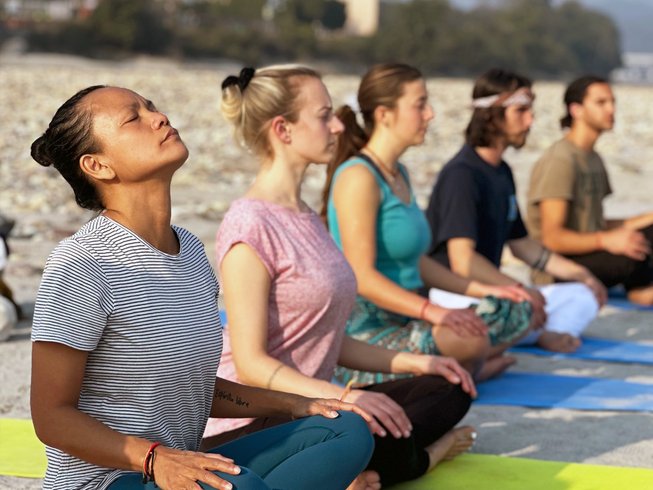
56 Day Hatha, Ashtanga Holistic Yoga Therapy Spiritual 500-Hour Yoga Teacher Training in India
Yoga Teacher Training Course in Rishikesh, India
The 500 hours TTC allows you to cover the full spectrum of yoga alliance certified training in one go. This is an intensive course that will give you knowledge and understanding of asanas, teaching methodology, anatomy, and the philosophy of yoga. This course nurtures physically and mentally. It is a wonderful space that you create for yourself, and learn to establish both as a student and a teacher of yoga. One can draw the corrective which is most wanted in order to make your inner life more perfect, more comprehensive, and more universal. Arogya Yoga School can assist you towards excellence in the art and science of yoga. This course will allow you to discover a new dimension to learn, teach, and appreciate yoga.
Meet the instructors
Highlights
- Daily yoga sessions
- Teaching different meditation techniques
- Daily practice of asanas, pranayama with bandha, mudras, and kriyas
- Weekend excursions
- 55 nights accommodation
- Daily nutritious vegetarian meals and herbal tea
Skill level
- Intermediate
- Advanced
Types
55 days with instruction in English
Accommodation
Facilities
- Dining area
- Kitchen
- Internet access
- Medical assistance
Accommodation comprises of single rooms and double shared rooms. All rooms have attached bathrooms. The bathrooms are equipped with western toilet seats, and cold showers. Hot water is also available during winter season.
Program
Yoga teacher training course objectives
- Develop a daily practice of kriyas, asanas, pranayama, bandha, mudras, and dhyana.
- Delve deeper into yoga anatomy and physiology.
- Yin Yoga
- Learn how to structure a class and then incorporate all these components into designing your own class. Learn to teach this class to your peers in a small group environment and then you will teach this class to your peers as your assessment
- Introduction to structural yoga therapy.
- Study philosophy from the classical treatises of yoga (Bhaghavad Gita, Patanjali Yoga Sutras, Hatha Yoga Pradipika, Gheranda Samhita, and the Upanishads).
- Design and teach a 90-minute asana class to your peers which incorporates these components.
500-hour yoga teacher training course syllabus
Yoga philosophy
There exists at present a good deal of misconception with regard to the practices of yoga. Yoga philosophy is needed to get linked with tradition by a direct reference to the treatises. This class will allow students to understand, and appreciate the classical literature of Yoga. The philosophy of yoga is an integrated view of life. It includes an understanding nature of existence, man, and his role in investigating true self.
Introduction
- Origin of yoga
- Different paths of yoga
- Samkhaya darshan
- Vedanta darshan
- Obstacles in yoga
Ashtanga yoga (eight limbs)
- Yama
- Niyama
- Asana
- Pranayama
- Pratyahara
- Dharana
- Dhyana
- Samadhi
- Hatha yoga
- Panch kosha
- Annamaya kosha
- Pranamaya kosha
- Manomaya kosha
- Jnanamaya kosha
- Anandamaya kosha
Orientation of Patanjali's yoga sutra:
In the yoga sutras, Patanjali has provided a very scientific and practical exposition of the philosophy, and practice yoga. One very important section of the book describes what is commonly called Ashtanga yoga, or eight limbs of yoga, which provides practical guidelines for experiencing the ultimate state of consciousness.
Orientation of Hatha yoga pradipika
This is a classic text on Hatha yoga written by yogi Swatmarama. The instructions given in the text is very useful in understanding the mechanics of the body, and channelizing the energies to establish harmony. By bringing balance between sun and moon, one can prepare for a higher possibility. Hatha yoga - introduction, relationship of Hatha yoga and Raja yoga, greatness of Hatha yoga, Hatha yogi lineage, importance of Hatha yoga, destructive and constructive of yoga, methods of Hatha yoga practice and yogic diet.
Orientation of Gheranda samhita
Gheranda samhita and Hatha yoga pradipika are two of the older main Hatha yoga text available in India. Dated back a few hundred of years, they are still studied today to understand the therapeutic aspect of Hatha yoga. Ghata yoga - introduction, seven step yoga, benefits, purificatory techniques, classification practicing methods, and benefits, a comparative study of Hatha yoga and Ghata yoga.
Orientation of Upanishad:
The Upanishads (defined as "to sit with one's self", or "to sit in the presence of the master") are the insights gained by the yogis. It discusses liberation through wisdom. This is the end portion of the vedas, and the subject of yoga is presented in a conversational form. It is very easy to comprehend the discussion of yoga through the Upanishads. The quality of discrimination between real and unreal unfolds during the study of the Upanishads. Studying the Upanishads helps the practitioner to implement yoga in their daily lives. A study of the Upanishads inspires the question of, Ko Ham? Who am I?
Human anatomy - physiology and yoga
This class provides a meticulous understanding of anatomy and physiology of the human organ systems key to one's yogic practice, with a brief discussion of the remaining organ systems. The correlation between the physiology and the psycho-philosophical nature of the human organ systems is also discussed.
Introduction
- Skeletal system
- Joints and range of motion
- Muscular system
- Postural imbalances
Physiology of asana
- Standing
- Back bend
- Forward bend
- Twist
- Inversion
- Digestive system
- Respiratory system
- Circulatory system
- Physiology of pranayama
- Nervous system
- Endocrine system
- Stress and homeostasis
- Physiology of meditation
- Lesson planning, practical and written assessment
This class provides a meticulous understanding of anatomy and physiology of different systems.
Muscular System: Muscle classification, histology, properties, distribution, mechanism of muscle contraction, neuromuscular transmission, ligaments and tendons.
Skeletal System: Bone types, structure and function, spinal column, joints, end field restrictions.
Lymphatic and Immune System: Function of the lymphatic system, major and accessory organs (lymph, lymph nodes, spleen, tonsils, thymus, capillaries), composition of blood corpuscles (red blood corpuscles, white blood corpuscles, platelets). Plasma, lymph, hemoglobin, coagulation of blood and anticoagulants, blood groups and their importance, lymphatic system, immunity types and mechanism of immunity. Relationship of the lymphatic system to pranamaya kosha.
Cardiovascular System: Function of the cardiovascular system, major and accessory organs (the heart, blood vessels – veins, arteries). Properties of cardiac muscle, control of cardiac cycle and circulation, cardiac output, blood pressure, heart rate. Relationship of cardiovascular system to annamaya kosha.
Respiratory System: Function of the respiratory system, major organs (nasal cavity, trachea, lungs, bronchioles, bronchiole trees, alveolar sacs, diaphragm, chest, shoulder and back muscles). Mechanism of breathing, exchange of gases, pulmonary function tests, lung volume, control of respiration. Relationship of respiratory system to annamaya kosha.
Digestive System: Function of digestive system, major and accessory organs (mouth, salivary glands, tongue, esophagus, stomach, pancreas, liver, gall bladder, small and large intestines). Mechanism of secretion of: saliva, gastric juice, pancreatic enzymes, bile, intestinal secretions. Role of these secretions in digestion of food, absorption and assimilation of nutrients and excretion of feces. Relationship of digestive system to annamaya kosha.
Endocrine System: Function of endocrine system, major and accessory organs (thyroid, parathyroid, hypothalamus, thalamus, adrenal glands, hippocampus, pituitary gland, reproductive glands). Hormones produced by these glands and their effect on hypo- and hyperactivity of the body. Role of insulin in glucose metabolism. Relationship of endocrine system to manomaya kosha.
Nervous System: Function of nervous system, major and accessory organs (brain, spinal column, cranial nerves, spinal nerves). Gross anatomy of the brain: cerebrum, cerebellum, spinal cord. Physiology and important connections of cerebrum, pons, medulla, thalamus, hypothalamus, pineal gland, pituitary gland, cerebellum. Physiology of Somatic Nervous System and Autonomic Nervous System: Sympathetic and Parasympathetic Nervous System. Relationship of nervous system to manomaya kosha.
Reproductive system: The genital system of an organism, also referred to as the reproductive system is that the biological system made all the anatomical organs involved in amphimixis. Many non-living substances like fluids, hormones, and pheromones important accessories to the.
The organs involved in producing offspring. In women, this method includes the ovaries, the fallopian tubes, the uterus, the cervix and also the vagina. In men, it includes the prostate, the testes, and also the penis.
- Yogic effect of each and every system
Teaching methodology
- To structure and sequence a class
- Modification techniques
- Teaching different meditation techniques
- Organizing and preparing for workshop
- Principles of demonstration, observation, alignment, and correction
Mantra and meditation curriculum
Mantra is a word or sound repeated to aid concentration in meditation. The reverberating sound harmonious the body and mind. Mantra is a word or sound repeated to aid concentration in Meditation. The reverberating sound harmonious the body and mind. Mantras are repetitive hymns that benefit Yoga Practice and assist the Yogi to awaken the Self and extend the meditative and practical aspects of Yoga. yoga teacher training at Arogya Yoga School includes Mantra lessons to facilitate peaceful vibrations for the practitioners and creates an atmosphere of serenity
- Ganesha Mantra
- Guru Mantra
- Shakti Mantra
- Gayatri Mantra
- Mangalacharan Mantra
- Shanti Mantra
Asanas
Cleansing practices
- Kapalbhati
- Neti
- Tratak
Dynamic postures
- Pawanmuktasana series
- Marjari asana
- Vyaghrasana
- Surya namaskar
Standing postures
- Tadasana
- Utkatasana
- Padhastasana
- Trikonasana
- Parivrtta Trikonasana
- Parshwakonasana
- Parivrtta parshwakonasana
- Veerbhadrasana I
- Veerbhadrasana II
- Veerbhadrasana III
- Ardh chandrasana
- Parsvottanasana
- Prasarita padottanasana
Inverted postures
- Sirsasana
- Sarvangasana
- Halasana
- Pincha mayurasana
- Adho mukha vrkshasana
Twisting postures
- Ardh matsyendra asana
- Parivritti janu sirshasana
- Kati chakrasana
Back bend postures
- Bhujangasana
- Shalabhasana
- Dhanurasana
- Matsyasana
- Ushtrasana
- Kandhrasana
- Chakrasana
- Gomukhasana
- Setu asana
- Rajkapotasana
Forward bend postures
- Paschimotanasana
- Janusirasana
- Ardh padam paschimotanasana
- Padprasar paschimotanasana
- Adho mukha svanasana
Balancing postures
- Vrkshasana
- Bak dhayan asana
- Mayurasana
- Natraj asana
- Garudasana
Relaxation postures
- Shashankasana
- Makarasana
- Savasana
Breathing practices
- Yogic breathing
- Nadi shodhan
- Kapalbhati
- Bhastrika
- Ujjayi
- Bhramari
Meditative postures
- Sukhasana
- Padamasana
- Vajrasana
Meditational practices
- Breath awareness
- Tratak
- Yog nidra
- Mantra chanting
- Yantra drawing
Yog Mudras
- Anjali Mudra
- Chin Mudra
- Jnana Mudra
- Poorna Mudra
Principles and guideline
- Teaching starts from early in the morning
- Respectful behavior is mandatory at all times on and off the premises
- Respect the rules and regulations Arogya Yoga School
- Course fees are non-refundable
- Before departure from Arogya Yoga School, students must return all books from the library
- Non vegetarian food, smoking, and drinking alcohol are not allowed on the Arogya Yoga School premises.
General rules
- Silence should be maintained between 10 p.m. until the morning
- Regular home work should be completed
- All classes are mandatory to attend unless you are ill
- As a part of the evaluation procedure, there will be an assessment for certification
- Arogya Yoga School reserves the right to disqualify any students at any time during the course for misconduct
- Eating and drinking (anything other than water) is not allowed in the yoga halls
- Use of electronic gadgets i.e., mobile phones, laptops, and tablets during lectures is strictly prohibited
- During asana practice leave all jewelry, books, extra clothing, book bags, and purses in your room. Only yoga mat and water bottles permitted in yoga hall
- Management expects all students to clear your practice space immediately following your practices
Sample daily schedule
- 06:00 Wake up - You have to prepare yourself for the day with the enthusiastic mindset so that it reflects throughout the day. Early risers often have very well established sleep routines. This means going to bed early, and most likely at the same time every day is also a practice of discipline in the path of yoga.
- 06:30 Herbal tea - Herbal tea is effective drink in improving metabolism an enhancing health status.
- 06:45 Yogic cleansing - Yogic cleansing helps in detoxing the body and allows to enjoy the practice of asana and pranayama.
- 07:00 Mantra chanting and pranayama - Morning class starts with Mantra chanting, yoga and meditation. Mantra chanting helps the practitioner experiences a clearing of consciousness, peace of mind, and relief from unwanted drives and habits. As one develops more realization by chanting, he perceives the original, spiritual existence of the self. According to the Bhagavad-Gita, this enlightened state "is characterized by one's ability to see the self by the pure mind and to relish and rejoice in the self the word "prana" stands for life force and this is believed to be the vital energy or life force that encompasses the body. This also serves as the link between the consciousness and the mind. Once the breath is still, your mind is still as well.
- 07:30 - 09:00 Yoga asana - You will have the explanations of each posture and learn how to assist, how to teach postures yoga classes, and why postures are important.
- 09:00 Breakfast - Enjoy the morning and a delicious yogic breakfast.
- 10:00 Yoga anatomy - Here the students will learn yoga anatomy and physiology relevant to yoga in order to strengthen their classroom explanations, cues, and corrections of asana.
- 11:30 Yoga philosophy - This class will prepare students to read and understand Patanjali's Yoga Sutras. Each Friday, students will lead a discussion reflecting on the week's readings. Before class, students should write down one question on a notecard directly related to the day's reading and give this to the teacher at the start of class.
- 13:00 Lunch, rest / self-study - Enjoy the delicious yogic food at Arogya. This time can used for either self-study or relaxation. Revitalize your body with a delicious meal.
- 15:00 - 16:00 Teaching methodology, alignment - You cannot claim to be a yoga teacher unless you familiarise yourself with the necessary techniques of teaching an asana session. You cannot effectively teach an asana session unless you know how to devise modifications for the students who cannot perform the final postures with ease. This class focuses on creating a syllabus that encapsulates important asanas and the ideal methods to teach them. Additionally, you will learn how to optimise and adjust the poses, as well as some variations for the difficult poses by the use of props, micro-bends, and other easier approaches. This hour also includes the practice of yoga Nidra, where the instructor will gently guides you through four main stages of brain wave activity – beta, alpha, theta, and delta. This meditative sleep technique focuses on reaching the "hypnagogic state" — the state between wakefulness and sleep.
- 16:30 - 18:30 A traditional sequence of yoga - Practice of traditional sequence comprising yoga asana, pranayama and dhyana.
- 19:00 Dinner - Enjoy the nutritious meal with love.
- 20:30 Self study - Time can used self-study or relaxation.
- 22:00 Lights out - Om shanti
Included excursions
Enjoy two enriching weekend excursions, including the mesmerizing Ganga Aarti and a guided temple tour. Immerse yourself in local culture, witness sacred rituals, and explore historic spiritual sites. These uplifting experiences offer a deeper connection to the region’s heritage, enhancing your retreat with inspiration and cultural insight.
Instructors

Azad Bhatt
Azad Bhatt is an E-RYT 200, E-RYT 500 or Experienced Registered Yoga Teacher with Yoga Alliance, which acknowledges the completion of a yoga teacher training with a Registered Yoga School (RYS). He was inspired to explore his own personal yoga practice after realizing the transformative benefits he could develop mentally, spiritually, and physically. He began teaching yoga five years later, with a strong desire to share his knowledge with others. He first started teaching yoga retreat programs being conducted by his gurus, and later began teaching at teacher training programs around India.
Mahesh Bhatt
Mahesh specializes in yoga therapy, yogic philosophy, and is a pranayama teacher. He was born and raised in a very spiritual family. He graduated from Garhwal University with a science background. He transformed after meeting his guru who helped him realize and understand energy and how he is connected intimately to society and others through his own energy. His guru taught him to cultivate this energy through his personal practices. He developed his knowledge further and began sharing with others, towards building a strong foundation for society.

Rajneesh bhatt
Certified Yoga Teacher ERYT500 Yoga Alliance and Master in Yoga from Uttarkhand Sanskrit University, Haridwar, India. Yogi Rajneesh brings 6+ years of experience in sound healing and meditation, blending these powerful practices into his Sound Healing teachings.
Location
Rishikesh is a city in India’s northern state of Uttarakhand, in the Himalayan foothills beside the Ganges River. The river is considered holy, and the city is renowned as a center for studying yoga and meditation. Temples and ashrams (centers for spiritual studies) line the eastern bank around Swarg Ashram, a traffic-free, alcohol-free and vegetarian enclave upstream from Rishikesh town.

Features
Activities
- Massage
Services
- Free Wi-Fi
- Local market
Food
You will be provided with nutritious vegetarian meals, detox juices, and teas.
The following meals are included:
- Breakfast
- Lunch
- Dinner
- Drinks
The following drinks are included:
- Water
- Tea
The following dietary requirement(s) are served and/or catered for:
- Vegetarian
Exclusive Gifts
Arogya Yoga School has prepared a few special surprises for you, including unique experiences and thoughtful extras to make your journey even more memorable.

One Additional Night Stay before course start

Ganga Riverside outdoor yoga session

Course materials and Yoga Manual Book

Free Pick up From Dehradun Airport

7-Chakra Sound Healing Session
Spa treatments
Make yourself comfortable, and enjoy a great Ayurvedic massage.
What's included
- 500-hour yoga teacher training course
- 55 nights accommodation
- Daily nutritious vegetarian meals and herbal tea
- Weekend excursions
- Course materials will be provided (notebooks, yoga mat, cleansing kit)
Included Exclusive Gifts
One Additional Night Stay before course start
Enjoy an additional night’s stay before the course begins, allowing extra time to settle in, relax, and adjust to the serene environment. Arrive early, unwind from travel, and prepare your mind and body for the transformative days ahead. Perfect for easing into your retreat with comfort and peace.
Ganga Riverside outdoor yoga session
Experience a serene Ganga riverside outdoor yoga session, where gentle flows meet the soothing sound of flowing water. Surrounded by nature and fresh air, this practice encourages grounding, balance, and inner peace. Reconnect with your breath, calm the mind, and rejuvenate your energy in a sacred, tranquil setting.
Course materials and Yoga Manual Book
Yoga TTC Manual is a comprehensive guide designed to deepen your knowledge and refine your practice. This detailed manual covers advanced asanas, pranayama, meditation techniques, yoga philosophy, anatomy, teaching methodology, sequencing, and adjustments. Clear explanations, illustrations, and structured modules support both personal growth and
Free Pick up From Dehradun Airport
Enjoy free pickup from Dehradun Airport for a smooth and stress-free arrival. Our reliable transport service ensures a comfortable ride directly to the retreat, allowing you to begin your journey with ease and peace of mind.
7-Chakra Sound Healing Session
A 7-Chakra Sound Healing Session uses vibrational instruments like singing bowls, chimes, and tuning forks to rebalance energy centers. Each chakra is harmonized through specific frequencies, promoting deep relaxation, emotional release, and inner clarity. This gentle experience restores alignment and reduces stress.
What's not included
- Flight tickets
- Visa
- Personal transportation
- Shopping
How to get there
Recommended Airports
Transfer included
Jolly Grant Airport
17 km away from your destination
Transfer available for additional US$ 70 per person
Indira Gandhi International Airport
200 km away from your destination
Arrival by airplane
Please book your flight to arrive at Dehradun Airport (DED). Transfer from and to this airport is available upon request. Arogya Yoga School will pick you up from Jolly Grant Airport (DED) with an additional cost of 20 USD and 70 USD if you arrived at Indira Gandhi International Airport (DEL).
Cancellation Policy
- A reservation requires a deposit of 30% of the total price.
- The deposit is non-refundable, if the booking is cancelled.
- The rest of the payment should be paid on arrival.

Reviews
For this organizer you can guarantee your booking through BookYogaTeacherTraining.com. All major credit cards supported.