
20 Day 200-Hour Ashtanga Vinyasa and Kundalini Yoga Teacher Training in Bali, Indonesia
Yoga Teacher Training in Indonesia
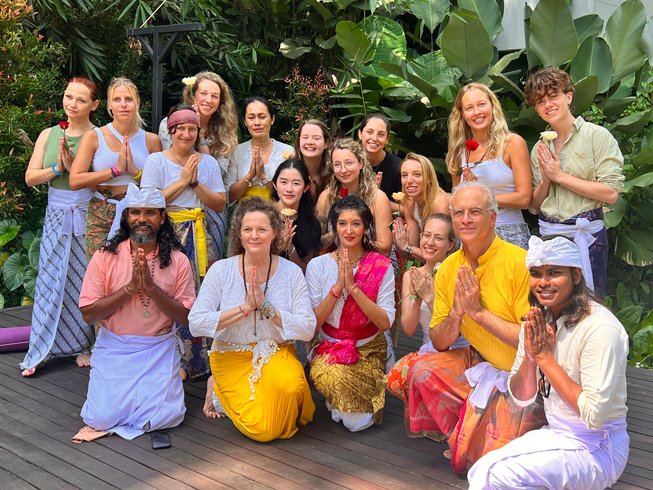
This 200-hour teacher training provides you with an immersive and thoroughly comprehensive approach to yoga in the comfort of a five-star service for 19 nights in a tropical paradise that marries luxurious comfort and eco-conscious design. They've designed this course with the objective of giving their students an opportunity to improve themselves according to their interested yoga style. This course provides a solid base of knowledge and practice about Hatha and Vinyasa yoga, pranayama, meditation, philosophy, anatomy, yoga therapy, alignment, and yoga psychology.
Meet the instructors
Highlights
- Eligible to register with Yoga Alliance upon completion
- All classes and study material
- Suitable for beginner or intermediate yoga learners
- Excursions
- Lifetime membership and discount for future courses
- Daily 3 times meal in a day (except for lunch and dinner on Sundays)
- 19 nights accommodation
Skill level
- Beginner
- Intermediate
Types
18 days with instruction in English
Accommodation
Facilities
- Swimming pool (outdoor)
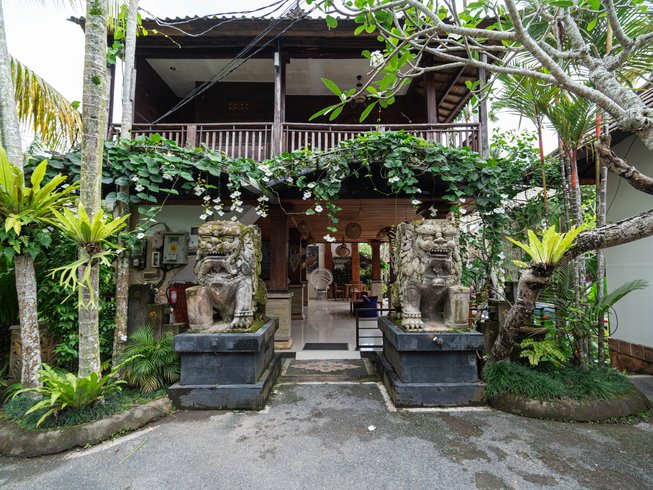
World Peace Yoga School offers 20 days of accommodation for this course in Bali. The accommodation ranges from private to shared rooms. The prices for private rooms are not included in the training fee. On the other hand, private rooms fill up quickly so you will have to complete the registration process early to get private accommodation.
Program
Certification
Students who complete the training are eligible to register with Yoga Alliance as Registered Yoga Teachers (RYT®).
200-hour multi-style yoga teacher training
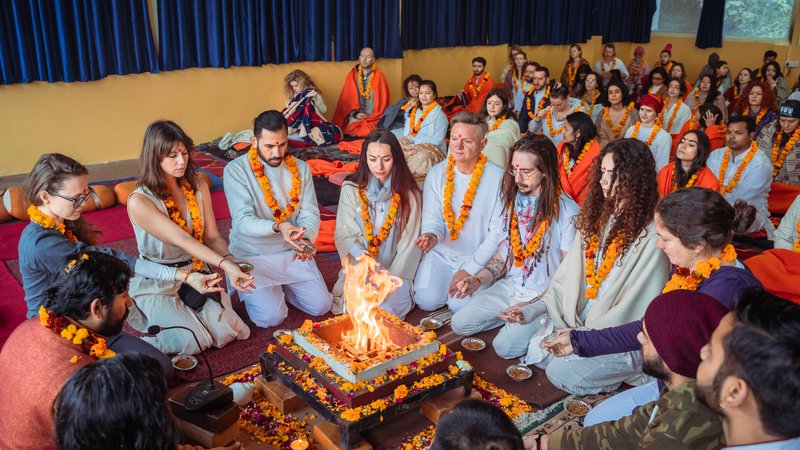
During this 200-hour multi-style yoga teacher training, there will be daily kirtan, or mantra chanting, which is one of the most fundamental yoga practices. Although the exercise is straightforward, the internal process it sparks is vast and mysterious. These lessons will be accompanied by a musician twice a week.
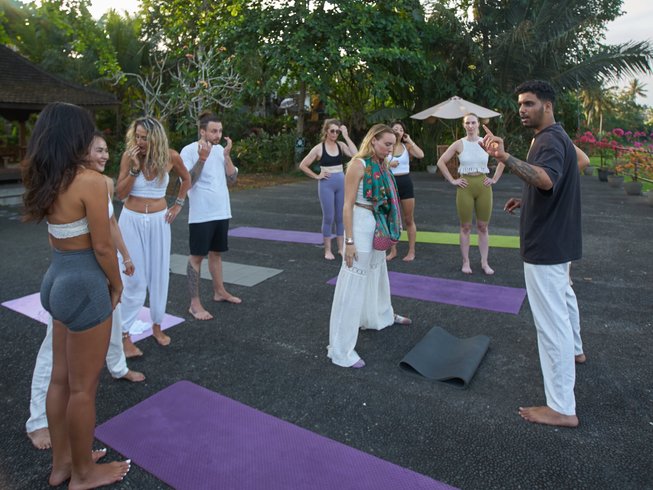
This course is specially designed to provide students with a full understanding of yogic concepts, practices, and philosophy, but mostly Hatha, Vinyasa, and Ashtanga, with some Yin, Nidra, and Kriya knowledge. You will be engaged in the ancient practice of yoga, exploring this knowledge in depth with enthusiastic instructors in a nourishing atmosphere for your heart and soul, with other spiritual searchers.
A team of experienced educators will help you improve your mindfulness. The retreat focuses on both Hatha and Ashtanga Vinyasa yoga, so you may practice true multi-style yoga, and learn more about yoga philosophy, anatomy, and physiology.
Enjoy some interesting adventures while experiencing life on the beautiful island of Bali.
Eligibility
- If you are new to yoga, then there here will be no specific background of yoga required, and just being eager to learn is enough
- If you have been practicing yoga for a long time, but don’t have knowledge of anatomy, foundation of the asanas and yoga philosophy
- If you don't want to be a yoga teacher but desire to deepen your own yoga practice and knowledge
What you will achieve from this 200-hour teacher training:
- Solid basic foundation to deepen your asana practice
- Better understand the asanas with a solid understanding of anatomy, adjustment, and alignment
- Learning pranayama, yoga philosophy, meditation, and more
- Understand traditional and authentic yogic texts to get to know more about yogic aphorisms
- Experience spirituality in Bali, Indonesia and get to know more
- Get a 200-hour yoga teacher training certificate to realize your inner consciousness and develop your practice
Benefits of attending this yoga teacher training course
- You become more controlled
- You will have more understanding in your life
- You become more emotionally balanced
- You develop a stronger personal practice
- You will be connected with the ancient yoga tradition of India and receive guidance whenever you need it
- Your family and friends can also join the ashram
Amenities on arrival
Students will receive welcome drinks upon arrival, and fruits will be at the reception desk where students can take them freely. If students arrive during breakfast, lunch, or dinner, then they are welcome to eat in the dining hall.
For students coming from other hotels, it is possible for a car or scooter to pick you up and help with anything you need. Let Bali Yoga Retreat know.
Preparations
The 200-hour yoga teacher training course is taught systematically from the basics so students do not need to prepare so much but they encourage the students to read a few books which will help them to understand the teachings easily.
Suggested books:
- Living with Himalayan Masters
- The Royal Path
- Asana Pranayama Mudra Bandha
Overview
1. Hatha yoga
Hatha yoga is the traditional method of practicing yoga postures which include aligning the body posture, getting rid of toxins, losing weight, overall health, taking away fatigue, and relaxing the mind. It leads to stillness and prepares one to meditate.
Surya namaskar (sun salutation) and asana alignment, assist and adjustment for the following asanas:
- Pawanmuktasana series 1
- Pawanmuktasana series 2
- Pawanmuktasana series 3
- Surya namaskar (sun salutation)
- Chandra namaskar (moon salutation)
- Tadasana (palm tree pose)
- Triyak tadasana (swaying palm tree pose)
- Trikonasana (triangle pose)
- Parivirtatrikon asana (revolving triangle pose)
- Uttkatasana (chair pose)
- Virbhdrasana 1 - warrior 1
- Virbhdrasana 2 - warrior 2
- Virbhdrasana 2 - warrior 3
- Ardha chandrasana (half-moon pose)
- Vriksasana (tree pose)
2. Vinyasa yoga
Vinyasa is a synchronized movement of body, breath and mind where the students can get warm and flexible through this practice. It is a kind of moving meditation that brings health and harmony.
Coverage: Alignment, drishti, adjustment, and options
- Surya namaskar A
- Surya namaskar B
Asanas for beginners
- Padangusthasana
- Padahasthasana
- Utthita trikonasana
- Parivrtta trikonasana
- Utthita parsvakonasana
- Parivrtta parsvakonasana
- Prasarita padottanasana A, B, C and D
- Parsvottanasana
- Eka pada padangusthasana A, B, C and D
- Ardha baddha padmottanasana
- Utkatasana
- Virabhadrasana A and B
- Dandasana
- Paschimottanasana A, B, C and D
- Purvattanasana
- Ardha baddha padma uttanasana
- Triang mukaikapada pashimottanasana
- Janu sirsasana A, B and C
- Marichyasana A, B and C
- Navasana
3. Pranayama (Breathing practices)
Pranayama contains various breathing exercises but the goal is not the breath but rather to reach the level of prana force which is the source of all existence. Through breathing practices one can achieve a deep physical, energetic and emotional cleaning.
Pranayama is an ancient yogic breathing technique that is used as preparation for meditation and is a vital aspect of practicing yoga. It improves the respiratory system and purifies the body and mind.
Introduction of pranayama
Implementing breathwork in yoga poses allows for more opening and presence. Come experience the interplay of breath, movement and energy and leave with an overall sense of wellbeing.
Benefits of pranayama
Daily pranayama trains the lungs and improves the capacity of the respiratory system immensely. Pranayama works directly on the nervous system.
Daily pranayama positively affects autonomic nervous system which controls and governs essential functions of the body like the heart rate, respiration and blood pressure etc.
Clavicular, thoracic and diaphragmatic breathing (yogic breathing)
Clavicular breathing is breathing into the top third of the lungs and no deeper. Clavicular breathing is accomplished by raising the collarbone (clavicle) and shoulders during the inbreath and keeping the rest of the torso motionless. Clavicular breathing is the shallowest type of breathing.
Ujjayi
Ujjayi breathing is a breathing technique employed in a variety of Taoist and yoga practices. In relation to yoga, it is sometimes called "the ocean breath".
Bhastrika
Bhastrikā is an important breath exercise in yoga and pranayama. It is sometimes treated as a kriya or cleansing action along with kapalabhati to clear the airways in preparation for other pranayama techniques.
Bhastrika involves a rapid and forceful process of inhalation and exhalation powered by the movement of the diaphragm. The movement of the air is accompanied by an audible sound. One inhale and exhale equal one round of bhastrika, and it may be repeated for many consecutive rounds.
Kapalbhati
Kapalabhati also called breath of fire is an important shatkarma, which is purification in Hatha yoga. The technique of Kapalabhati involves short and strong forceful exhalations and inhalation happens automatically.
There are three forms of Kapalabhati:
- Vatakrama kapalabhati - A practice similar to the pranayama technique of Bhastrika, except that exhalation is active while inhalation is passive, the opposite of normal breathing
- Vyutkrama kapalabhati - It is a practice similar to Jala neti, which involves sniffing water through the nostrils and letting it flow down into the mouth, and then spitting it out
- Sheetkrama kapalabhati - It can can be considered the reverse of Vyutkrama kapalabhati, in which water is taken through the mouth and expelled through the nose
Nadi (Sodhana)
Nadi is a Sanskrit word meaning “channel” or “flow” and shodhana means “purification.” Therefore, Nadi shodhana is primarily aimed at clearing and purifying the subtle channels of the mind-body organism, while balancing its masculine and feminine aspects.
Bhramari
Bhramari pranayama, also known as "humming bee breath" is a calming breathing practice that soothes the nervous system and helps you connect with your truest inner nature.
Surya - bhedi and chandra - bhedi
In Chandra bhedana pranayama, the left nostril is used for inhalation and right nostril is used for exhalation. It is said that on inhalation, energy passes through Ida (Chandra) Nadi and on exhalation through Pingala or Surya Nadi.
Sheetali and sheetkari
Sheetali pranayama, also known as cooling breath, is a breathing practice that very effectively cools the body, mind, and emotions. Sheetali comes from the Sanskrit root sheet, which means “cold” or “frigid.” Sheetal translates roughly as "that which is calm, passionless, and soothing".
Sheetali pranayama calms and soothes the mind-body organism by activating a powerful evaporative cooling mechanism on the inhalation, delivering a gently cooling energy to the deep tissues of the body. Remarkably, this pranayama also enkindles the digestive fire, like just as a live coal covered in ash might begin to glow under the influence of a cold wind
Sitting postures for pranayama sadhana:
- Easy pose
- Half-lotus
- Swastikasana
4. Anatomy and physiology (Sharir Vijnan)
- Digestive system
- Respiratory system
- Nervous system
- Organs
- Bodily systems
- Nadis
- Chakras
5. Yoga therapy and cleansing techniques (Shatkarma)
Yoga therapy
Yoga is a therapy and students will learn how to treat different physical, mental and emotional problems through yoga.
Cleansing techniques (Shatkarma)
This technique can help get rid of toxins and embrace a pleasant and refreshing life.
6. Mantra chanting
Mantras are powerful sound vibrations which have healing and spiritual power. Regular chanting can be healthy and peaceful.
7. Study of asana
Study of asana: proper alignment, variations, modifications with ability to minimize the risk of injuries and hands-on adjustments.
Asanas are one of the most important facets of yoga. Each asana is performed for a particular beneficial reason. The reasons can vary and may include aligning the body posture, getting rid of toxins, losing weight, overall health, taking away fatigue, and relaxing the mind.
8. Art of sequencing and improvisation in the class
One of the key elements of this teacher training in Bali curriculum is to make future yoga teachers aware of the importance of sequencing. Sequencing has a vital role to play in conducting a successful and efficient class.
A yoga class environment cannot be predicted at all times. It is in the hands of the teacher to engage the class, create a flow and share his/her teachings most suitably and effectively as possible.
9. Intelligent use of props
Intelligent use of props to help improve practice at its early stages. The course also consists of a part that teaches to enhance the effectiveness of a class with the use of props. Smart and intelligent use of props is a skill and is to be used to engage the class better.
10. Postures with their Sanskrit names and terminology
Postures along with their names and meanings are taught in detail. The meaning of a posture helps the learner understand it better and it will also have a better impact as compared to doing it for the sake of it.
11. Technique and practice of breathing (pranayama)
The practice of breathing is considered the foundation of yoga. Deep breathing combined with yoga has several benefits such as improved blood flow, detoxifying the body, and improving digestion among others.
12. Meditation (Dhyana)
A deeper level of meditation and concentration to know the truth is referred to as Dhyana. Dhyana is mostly done to reach Samadhi, meaning bliss which is the ultimate goal of yoga.
Meditation is a systematic practice that promotes physical, mental and emotional tranquility with the purpose of reaching Samadhi (self-realization).
Breathing awareness meditation
Breath awareness meditation promotes physical and mental relaxation that can significantly reduce stress on the body and mind. The most basic way to do mindful breathing is simply to focus your attention on your breath, the inhale and exhale. You can do this while standing, but ideally, you’ll be sitting or even lying in a comfortable position.
Your eyes may be open or closed, but you may find it easier to maintain your focus if you close your eyes. Experts believe a regular practice of mindful breathing can make it easier to do it in difficult situations.
Trataka
Trataka is a yogic purification and a tantric method of meditation that involves staring at a single point such as a small object, black dot or candle flame. It is said to bring energy to the "third eye" and promote various psychic abilities.
Dynamic meditation
Dynamic meditation is a fast, intense, physical and spiritual movement that helps you to release the past and clear the old patterns. It brings you peace, stillness, and freedom.
Tips for developing concentration
Through practice it's normal that your mind sometimes wanders, the thoughts will come but that's alright. But when that happens just bring your mind back to the present and bring awareness to your breath.
Silent meditation
Silent meditation is one of the most powerful meditation techniques. It helps you to connect and understand your true self.
13. Human anatomy and physiology
Fundamentals of human anatomy and physiology
- Understanding human anatomy will help people understand yoga and its aspects better. This will also help achieve holistic health and the therapeutics of yoga practices
14. Yoga philosophy, ideas and hypothesis
Yoga is an ancient philosophy. In order to be a yoga teacher, one should understand the philosophy and ideas attached to it. Apart from this, they should also be able to share these same ideologies with their students in the future. This 200-hour yoga teacher training in Bali assures you that you will be able to share this philosophy with their worldwide crowd.
15. Confidence-building through teaching-practice
Teaching a skill by itself requires confidence. This teacher training ensures that enthusiasts are open to learning the skill of teaching and can excel the same in practice.
16. Yoga Nidra (Psychic Sleep)
When a yoga practitioner moves through the various internal states of Yoga Nidra, a profound experience of relaxation occurs. This is called "Turiya" which is a sensation of pure bliss.
- Basic relaxation
- Tension relaxation
- Full Body relaxation
17. Yoga cleansing (Shatkarma)
Yogic cleansing exercises are important to learn how to incorporate your breath and meditate properly during the physical aspects of yoga. It also removes the blockages in the energy channels.
- Rubber-neti
- Jalaneti
- Kapalbhati
18. Yoga philosophy
- Introduction to yoga, its philosophy, and evolution
- Introduction to Yoga Sutras of Patanjali
- The definition of yoga
- 4 aspects of mind and its functions
- Daily schedule of a yoga student
- Principles of 5 basic elements and 10 senses
Week 2
- Yama and Niyama
- Asana, pranayama and pratyahara, dharana, dhyan, samadhi
Evaluation and certification
- Assessments will be based on written as well as practical evaluation
- Student conduct will be a part of the assessment criterion
- Evaluation will be carried out only for those students who have a minimum of 90% attendance
Code of conduct
- Discipline is an integral part of the training program and so the course routine must be strictly observed
- Disrespect for rules and regulations could result in termination of studentship with no refund of fee
- Absenting oneself from the scheduled program without prior permission of the teacher or manager concerned would be construed as a gross breach of discipline
- Students must intimate in advance if they intend to forgo a meal so that there is no wastage of food
- Bali Yoga Retreat does not make arrangements for guests or students. Any activity that is not related to the course is not permitted
- Ensure you are on time for class or you will not be permitted to enter any class once it has commenced
- Before departure from the Bali Yoga Retreat, students must pay all dues and return all library books
- Smoking and alcohol are not permitted during the training
19. Basic Yin yoga
- The history and origins of the oriental practice
- Understanding the Yin / Yang practice and its impact on the mind
- The meridians and Nadis – connecting the deep tissues
- Redirection of the Qi energy through the body
- Understanding the impact on the physical sheath
- Understanding the benefits on the subtle body
- What happens to the connective tissues
- An introduction to the key Yin asanas
- The fundamental difference in the name and intention from a Yang practice
- The technique and edge within the asana
- How to ease into the surrender of the asana through gravity
The fundamental benefits / contraindications for the top 10 asanas
- Butterfly
- Caterpillar
- Sphinx
- Shoelace
- Dragon
- Puppy
- Bridge
- Banana
- Savasana
20. Basic Kundalini yoga
- A brief insight into the ancient sacred practice
- The challenges to the self
- The dangers of blockages to prana
- A brief overview of the inner energy centers
- The Nadis
- The 7 major energy centers – Root, Sacral, Solar, Anahata, Vishuddhi, Ajna, and Sahasrara
- The benefits and blockages
- An insight into Kundalini Kriya using pranayama, asana, mudra and mantra
- Practice of a Kundalini Kirya
- The benefits of Kundalini practice
Daily schedule
In line with keeping the requirements of Yoga Alliance USA, the program follows a tight schedule where almost each of the 6 to 7 training hours in the day is assigned to some aspect of yoga. You could find the training intensive but enlightening.
Depending on the yoga school, the mornings can begin as early as 05:30 with meditation, then followed by some yoga postures and maybe some classes or lectures in philosophy or anatomy. Chanting and pranayama are also part of the schedule.
During training, you are provided with two to three yoga meals, fruit refreshments, and green tea. Daily written homework is also the norm, as it will be how you gain in-depth knowledge of the subject. Sleeping early is also encouraged, as part of the yogic practice.
- 05:00 Wake up
- 05:30 Self-practice and self awareness
- 06:15 Pranayama and Shatkarma
- 07.00 Shatkarma / yoga cleansing
- 09:00 Breakfast
- 10:45 Yoga anatomy
- 12:00 Yoga alignment and adjustment / teaching methodology
- 13:15 Lunch
- 14:30 Self-study / practice teaching
- 15:45 Yoga philosophy
- 17:00 Ashtanga yoga
- 19:00 Dinner
- 21:00 Self-reflection and meditation
- 22:00 Lights out
Free day
Sunday is a free day and there are excursions arranged which are part of the full program. All of these are included in your course fees. On Sundays, you will only receive breakfast, and you can enjoy your lunch and dinner outside in the many beautiful cafes and restaurants.
Included excursions
Saturday is a half day and students will be free after lunch and use the time to relax, self practice, massage etc.
Sunday is a free day and there are excursions arranged which are part of the full program. All of these are included in your course fees. Students will pay themselves the additional charges of the excursion like buying ticket of entrance if applicable, renting special dresses to enter temples etc. school provide only the taxi charges.
Instructors
Vishnu Panigrahi
Yogi Vishnu is the founder and visionary of World Peace Yoga School and he is an exceptionally accomplished teacher. He knows how to read the beautiful language of Sanskrit, and has extensively studied spiritual scriptures on a wide array of topics. He has his master's degree in both yoga and Sanskrit.
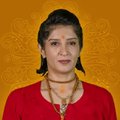
Hari Priya
Anita is a 500-hour RYT Kundalini and Tantra yoga and a 200-hour RYT multi-style yoga Vinyasa and Hatha yoga trained teacher. She is also a Level 1 and 2 cobra breath teacher, initiated through the lineage of Grand Master Sunyata Saraswati, as well as yoga Nidra and 50 hours of Ayurveda training. She passed her Reiki levels 1 and 2 and trained directly under the 10th lineage of Dr. Usui. She teaches Kundalini and Tantra styles at Kundalini Yoga Ashram, World Peace Yoga School, and Samadhi Yoga Ashram. She also teaches Kundalini and Tantra with Profit 28 and Santosha Yoga.
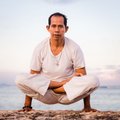
Yogi Yansa Ji
Yogi Yansa ji was born in Klungkung, Bali in 1972, discovered the transformative power of Yoga at a young age when he stumbled upon a book on the subject in the 6th grade. Intrigued, he began to experiment with the movements and breathing exercises, but without proper guidance, he hesitated to dive deeper into the practice. Prior to fully embracing Yoga, Yansa endured chronic pain, relying on multiple daily doses of medication. A turning point came when a doctor recommended a colonoscopy, leading him to explore fasting.
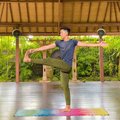
Reiza Syahputra
Reiza is a passionate and dedicated yoga teacher, whose life has been profoundly transformed through the practice of yoga. His journey as a yoga instructor in the enchanting island of Bali at the World Peace Yoga School has not only enriched his own life but also inspired countless others to embark on their transformative path. Reiza's story is one of unwavering commitment and profound focus. From the very beginning of his yoga journey, he recognized the power of yoga to bring about a positive change in one's life. This insight became the driving force behind his practice and teaching.
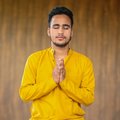
Ankit Chauhan
Ankit Chauhan is a dedicated yoga teacher, committed to guiding individuals on their transformative journey toward holistic well-being. With a deep-rooted passion for yoga and mindfulness practices, Ankit brings a unique blend of traditional wisdom and modern understanding to his teachings. Born and raised in the serene landscapes of India, Ankit's fascination with yoga began at a young age, influenced by his cultural heritage and surroundings. He embarked on his formal yoga training under renowned masters, immersing himself in the ancient teachings of Hatha, Ashtanga, and Vinyasa yoga style.
Location
Ubud, Bali
This teacher training program will take place in Ubud, Bali in Indonesia. Ubud is Indonesia’s spiritual and cultural heart on the island of Bali.
Feel the total tranquility and serenity in our place, where the sound of Ubud’s fine nature blends with the depth of the sacredness of Balinese tradition, creating powerful energies that would lighten any heart.
The course is held in a beautiful and serene location in Bali, surrounded by lush greenery and the tranquil sounds of nature.

Features
Activities
- Spa
General
- Dining area
- Garden
- Kitchen
- Terrace
- Yoga shala
Services
- Free Wi-Fi
- Internet access
- Wireless internet
Food
Vegetarian meals
Students will have nutritious vegetarian food during their course. You will be provided with breakfast, lunch and dinner daily, except for Sunday lunch and dinners as it is a free day.
The food
Bali and India are well known for their beautiful taste in food. The Yoga and Ayurveda teaches about how to balance the body through your diet. There are different foods that influence your different systems and elements. The students will enjoy the most tasty and healthy meals during this course.
The kitchen team is guided by the ashram and knows how to prepare food with spiritual feelings. They do not use any meat, eggs or alcohol in their kitchen. They also encourage students not to use them during the program.
Other dietary requirements
Vegetarian dishes will be mostly served all throughout the program, but other requirements of the students can also be provided such as:
- Vegan
- Gluten free
- Vegetarian
- Lactose free
- Fruits
- Salad
The following meals are included:
- Breakfast
- Lunch
- Dinner
- Drinks
The following drinks are included:
- Water
- Tea
The following dietary requirement(s) are served and/or catered for:
- Vegetarian
- Vegan
- Yogic
Things to do (optional)
On Sundays you can enjoy your lunch and dinner outside in the many beautiful cafes and restaurants.
Spa treatments
Spa treatment are not included in this price but can be booked for a fee.
What's included
- Certificate of completion
- All classes
- Study material
- Satsang
- Kirtan
- Excursions
- Lifetime membership
- Discount for future courses
- Daily 3 times meal in a day
- 19 nights accommodation
What's not included
- Medical expenses
- Insurance
- Ayurveda consultation
- Visa
- Panchkarma and massages
- Toiletries
How to get there
Recommended Airports
Transfer available for additional US$ 35 per person
Ngurah Rai International Airport
35 km away from your destination
Cancellation Policy
- A reservation requires a deposit of 30% of the total price.
- The deposit is non-refundable, if the booking is cancelled.
- The rest of the payment should be paid on arrival.

Reviews
For this organizer you can guarantee your booking through BookYogaTeacherTraining.com. All major credit cards supported.