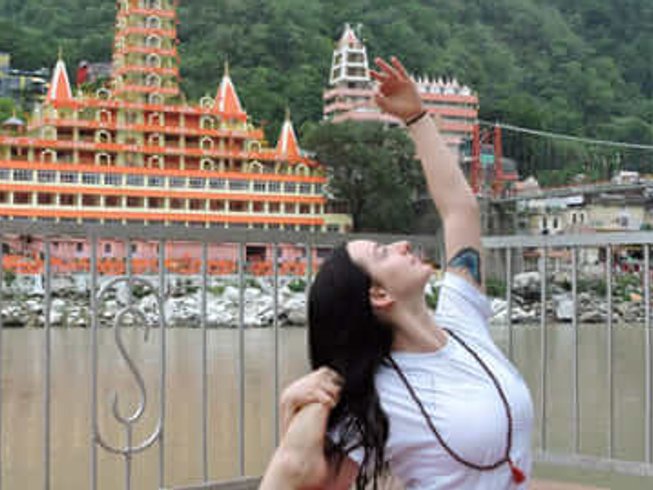
26 Day 200-Hour Traditional Best Yoga Teacher Training Course in Rishikesh, India
India Yoga Teacher Training
Yoga Ayurveda School in Rishikesh, India offers a 200-hour advanced level traditional best yoga teacher training course that provides a comprehensive deep understanding of tradition of India, yoga philosophy, asana practice, pranayama, meditation, mantra, basic sanskrit word, alignment and adjustment techniques, yogic anatomy and physiology, yoga philosophy, teaching methodology, yogic life style, kriyas, mudras and bandhas, and Ayurveda.
Meet the instructors
Read more
Highlights
- 2 yoga classes per day
- Daily guided meditation and pranayama sessions
- Yogic cleansing and mantra chanting
- Yoga anatomy and philosophy
- Teaching methodology and yoga alignment
- 25 nights accommodation
- Daily meals
- Certificate
Skill level
- Beginner
- Intermediate
- Advanced
Types
25 days with instruction in English
 Average daily hours of activity: 8.25
Accommodation
Facilities
- Health Club
- Café
- Dining area
- Environmentally friendly
- Kitchen
- Luggage room / storage
- Special menu request
- Terrace
- Yoga deck
- Yoga shala
- Yoga studio
- Bicycle rental
- Car rental
- Free Wi-Fi
- Internet access
- Laundry
- Medical assistance
- Newspapers
- Tour assistance
- Wireless internet
Yoga Ayurveda School in Rishikesh, India, is a wonderful destination for those who seek to deepen their practice of yoga and Ayurveda. One of the key factors that makes this school stand out is its clean and secure accommodation. Yoga Ayurveda School teams take great care to ensure that guests are provided with clean, comfortable accommodation with a school atmosphere so that everyone can experience the true yogic lifestyle such as described in the Vedas. Explore what makes it such a great place to stay. Firstly, the school provides a range of accommodation options to suit different budgets and preferences.
The rooms are designed to provide a comfortable and peaceful environment for students to rest and recharge after a day of practicing yoga and studying Ayurveda. The accommodation is clean, well-maintained, and equipped with all the necessary amenities such as comfortable beds, hot water, and Wi-Fi connectivity. The surroundings will leave you bursting with a feeling of spirituality, wellness, and a gentle spirit. Yoga Ayurveda School chooses the destination keeping in mind the requirements and comfort of students. For daily utility, you need not go far from the school, and everything is available within walking distance. The accommodation is managed by their responsible staff who keep it clean and maintain it on a regular basis.
You just need to support them by maintaining the cleanliness of the rooms or accommodation. In addition, the school takes safety and security seriously. The school also has a strict code of conduct to ensure that all students adhere to certain rules and regulations that promote safety and security. Moreover, the school is located in a peaceful and serene environment away from the hustle and bustle of the city. The campus is surrounded by lush greenery, and the gentle sound of the nearby river adds to the tranquility of the place. This creates a perfect atmosphere for students to immerse themselves in their yoga and Ayurveda practice. The school also places great importance on hygiene and cleanliness.
The rooms and public areas are cleaned regularly to maintain high standards of hygiene. The school provides fresh and nutritious meals that are prepared in a clean and hygienic kitchen. The meals are vegetarian, and the ingredients are sourced locally to ensure that they are fresh and of high quality. In conclusion, Yoga Ayurveda School in Rishikesh, India, offers clean and secure accommodation that provides a comfortable and peaceful environment for students to practice yoga and study Ayurveda. The school's commitment to safety, hygiene, and cleanliness ensures that students can focus on their practice without any distractions. If you are planning to visit Rishikesh to deepen your practice of yoga and Ayurveda, Yoga Ayurveda School is an excellent choice for your accommodation needs.
Program
Pre-requisites
Practice yoga regularly, study yoga basics, and maintain a disciplined mindset.
About the training
This course is designed by Yoga Ayurveda School, Rishikesh, India, to provide students with the necessary knowledge of yoga and skills to become competent and confident yoga teachers to make the whole world wise, happy, and healthy with traditional yogic knowledge. The training is taught by experienced and best-certified yoga teachers from Rishikesh, who provide personalized attention to each student. The curriculum includes in-depth knowledge of traditional Hatha yoga and Ashtanga Vinyasa yoga, asana body alignment and adjustment techniques, yogic anatomy and physiology, yoga philosophy, teaching methodology, mantra, pranayama, and ethics for yoga teachers.
In addition, the traditional best yoga course offers training in Ayurveda, the traditional Indian system of medicine, which helps students understand the relationship between yoga and Ayurveda, and how to use Ayurvedic principles to create personalized yoga practices for their students. Upon completion of the course, you will receive a 200-hour certification, which enables you to teach yoga worldwide. A life-changing program, where they promise that you will be fully satisfied with the course Yoga Ayurveda School offers. The training will help you on a day to day life and also build your confidence through this course. You will find the interconnection between the body, mind, and soul with your heart.
This is an excellent opportunity for anyone looking to deepen their practice and knowledge of yoga and become a certified yoga teacher. No prior experience is needed. The course is suitable for all levels. Yoga styles include Hatha yoga, Ashtanga Vinyasa, alignment techniques, and more. Typically, 12 to 20 students per class with a 1:5 to 1:10 teacher-student ratio. You will have limited free time in the evenings and weekends. 20. There are assessments including written tests, practicals, and final evaluations.
Objectives
This training is experimental learning, where you come as a beginner and return as an experienced yogi. The training of this 25-day yoga teacher training course appreciates different learning styles and helps in developing the essential skills and knowledge for a confident yogi. The course is the first step towards your divine aim of attaining the best in the field of yoga and to be called as a yogi. There are many aims and objectives:
- Develop your own personal daily practice
- Develop and practice daily pranayama, kriyas, mudras, and dhyana
- The beginner level of the yoga course gives you a balanced life
- The course will set and fulfill your goals as a yoga teacher
- This course will assist you in attaining vast knowledge of multiple styles of yoga
- You will feel the effectiveness of yoga asanas and poses in your body
- Besides building physical ability, the 200-hour yoga teacher training course also strengthens your mental power
Syllabus
The 200-hour traditional best yoga teacher training course at Yoga Ayurveda School in Rishikesh, India covers a wide range of topics related to yoga. The syllabus is designed to provide students with a comprehensive understanding of yoga philosophy, asanas, pranayama, meditation, teaching methodology, mantra, anatomy, and ethics for yoga teachers, and much more. The following is an overview of the course syllabus:
1. Yoga philosophy
The main philosophy of yoga is simple: mind, body, and spirit are all one and cannot be clearly separated. Yet there is a multitude of philosophical ideas developed by looking into the deeper dimensions of the body, mind, and spirit. Yoga is a set of spiritual practices but in itself is not an institutionalized religion.
- Introduction to the history and evolution
- Different paths of yoga
- Study of specific yoga sutras
- Astanga yoga
- Pancha mahabhuta
- Understanding the concepts of karma, dharma, and reincarnation
- The three gunas: sattva, rajas, and tamas
- Meditation and pranayama practices related to yoga philosophy
- The subtle body: nadis, prana, and the pancha koshas
2. Yoga asana
Yoga anatomy is one of the important subjects to learn about the function of the body, to understand your body, and how to utilize it in the right way. The subject begins with the digestive system, to know what you eat to survive, the respiratory system to expand your pranic level, and the muscular system to perform the asanas with benefits. During the third week, Ayurveda class by Dr Ayurveda, learning about the types of body(doshas), the characteristics, diet, cleansing, daily routine, fasting, and finally, how to correct your problems in the body naturally. Ayurveda says prevention from disease is better than a cure.
3. Pranayama
Pranayama is the practice of breath control in yoga. 'Prana' means breath and 'Yama' stands for control or discipline. Maharshi Patanjali defines it in Yoga Sutras. It refers to breathing exercises that are used for relaxation, concentration, and meditation. In modern yoga as exercise, it consists of synchronizing the breath with movements between asanas, but is also a distinct breathing exercise on its own, usually practiced after asanas. Students will learn techniques to open vital energy centers in the body with the goal of becoming proficient enough to teach these skills to their students. Practical teaching experience will begin from the second week.
a. Types of breathing in humans
Abdominal, chest, and clavicular breathing are three types of breathing commonly used in yoga and meditation practices. Here is a brief explanation of each:
- Abdominal breathing: This type of breathing involves using the diaphragm muscle to expand the belly on inhalation and contract the belly on exhalation. It is also known as belly breathing or diaphragmatic breathing. This technique helps to reduce stress and anxiety, improve digestion, and increase oxygenation of the body.
- Chest breathing: This type of breathing involves using the intercostal muscles in the chest to expand the rib cage on inhalation and contract the rib cage on exhalation. It is also known as thoracic breathing. This technique helps to increase lung capacity, improve posture, and reduce tension in the chest and upper back.
- Clavicular breathing: This type of breathing involves using the muscles around the collarbone to lift the shoulders and expand the upper chest on inhalation and relax the shoulders and contract the chest on exhalation. It is also known as shallow breathing. This technique can help to increase oxygenation of the body but can also create tension in the neck and shoulders if done excessively.
- Natural breathing: This type of breathing works subconsciously in the human body. It is important to note that all three types of breathing should be done in a balanced way, without creating tension or strain in the body. A combination of abdominal, chest, and clavicular breathing can be used to create a smooth, deep, and natural breathing pattern.
4. Meditation
Meditation is a powerful tool for cultivating inner peace, clarity, and mindfulness. It is an integral part of the 100-hour yoga teacher training course at many yoga and Ayurveda schools in Rishikesh, India. Meditation involves training the mind to focus on the present moment, leading to a sense of calm and well-being. During the course, students will learn various meditation techniques that they can incorporate into their daily practice. Some of the techniques taught at these schools include:
- Mindfulness meditation: This practice involves focusing on the present moment, observing the breath, and bringing awareness to physical sensations, thoughts, and emotions without judgment.
- Loving-kindness meditation: This practice involves cultivating feelings of love, kindness, and compassion towards oneself and others.
- Chakra meditation: This practice involves focusing on the seven energy centers (chakras) of the body, visualizing their colors, and chanting their corresponding mantras.
- Yoga Nidra: This practice is a guided relaxation technique that involves progressively relaxing different parts of the body, cultivating a deep state of relaxation, and accessing the subconscious mind.
- Transcendental meditation: This practice involves using a mantra (a word or phrase) to quiet the mind and access deeper levels of consciousness.
- Breath awareness meditation: This practice involves focusing on the breath, counting inhalations and exhalations, and observing the quality and rhythm of the breath.
Through regular meditation practice during the course, you can develop a stronger connection with yourself, cultivate inner peace and clarity, and develop the skills to share these practices with others as yoga teachers.
5. Mantra Chanting and Kirtan
A mantra is a sacred sound, word, or phrase that is used in spiritual and religious practice. It is believed to have a powerful vibration and can be chanted or repeated during meditation or prayer to help the practitioner connect with a higher power or consciousness. Some important mantras include:
a. Om Mantra
Om Mantra is considered to be one of the most important mantras in Hinduism and is often chanted at the beginning and end of a prayer or meditation. It represents the sound of the universe and is believed to help the practitioner connect with their inner self and the divine.
b. Ganesha Mantra
Ganesha Mantra is a Hindu mantra that is dedicated to Lord Ganesha, the remover of obstacles. It is believed to help remove obstacles from one's path and bring success and prosperity.
c. Guru Mantra
Guru Mantra is a mantra that is dedicated to one's spiritual teacher or guru. It is believed to help the practitioner connect with their guru and receive their blessings and guidance.
d. Vedic Shanti
Vedic Shanti Mantra is a mantra that is used to invoke peace and tranquility. It is often chanted at the end of a spiritual or religious ceremony or event to bring peace and harmony to the environment.
e. Gayatri Mantra
Gayatri Mantra is a Hindu mantra that is dedicated to the goddess Gayatri. It is believed to have many benefits, including improving one's intellect, spiritual growth, and physical health.
f. Yog Mantra
Yog Mantra is a mantra that is used in yoga practice. It is often chanted at the beginning or end of a yoga class and is believed to help the practitioner connect with their inner self and the divine.
g. Universal Mantra
Universal Mantra is a mantra that is believed to have universal spiritual and healing benefits. It is often used in different spiritual and religious traditions and is chanted to invoke peace, harmony, and spiritual growth.
h. Sahna Vavatu
Sahna Vavatu is a Sanskrit mantra that is used to invoke peace and harmony between the teacher and student in the spiritual tradition. It is often chanted at the beginning of a spiritual or religious lesson or ceremony.
i. Maha Mrityunjaya Mantra
Maha Mrityunjaya Mantra is a Hindu mantra that is dedicated to Lord Shiva. It is believed to have powerful healing and protective properties and is often chanted to overcome fear, sickness, and obstacles.
j. Om Namah Shivaya
Om Namah Shivaya is a Hindu mantra that is dedicated to Lord Shiva. It is considered to be one of the most powerful mantras in Hinduism and is believed to help the practitioner connect with their inner self and the divine.
k. Puranm Mantra
Puranm Mantra is a Hindu mantra that is chanted to invoke completeness and perfection in one's life. It is believed to help the practitioner achieve their goals and desires and bring them spiritual fulfillment.
6. Mudras and Bandhas
Mudras and Bandhas are certain postures in yoga by which one can successfully awaken Kundalini. Mudras simply mean "Gesture or attitude". In other words, it contains the actions that give you pleasure and ultimate bliss. Bandhas are also a kind of mudra, known as "Body Lock". It is mainly done for cultivating your emotions. Bandhas are mainly used in Hatha Yoga practice for breathing and yoga asanas. Some of the benefits of practicing Mudras and Bandhas include healing and balancing of body, mind & soul; building of strong immunity power, balancing of the chakras, and so on.
- Introduction of Mudra
- Jnana Mudra
- Chin Mudra
- Hridaya Mudra
- Yoni Mudra
- Jalandhara Bandha
- Moola Bandha
- Maha Bandha
- Uddiyana Bandha
- Ling Mudra
These mudras (yogic gestures) are used to enhance concentration, awareness, and pranic flow. Additionally, the shambhavi mudra is taught to activate the third eye and facilitate inner perception. The program also covers all four bandhas, namely mula bandha, uddiyana bandha, jalandhara bandha, and maha bandha, which are used to control and redirect the flow of prana in the body. Together, these practices provide a comprehensive foundation for aspiring yoga teachers to deepen their knowledge and understanding of the traditional yoga system.
7. Kriyas (Shatkarmas)
Cleansing of various internal organs of the body is known as Kriyas or Yogic Kriyas. Being six in number, they are also termed as Shatkarmas or Shatkriyas. These six kriyas are Neti (nasal wash), Dhauti (cleansing of the whole digestive tract), Basti (colonic irrigation), Trataka (direction of the gaze at a fixed point), Nauli (self-administered abdominal massage), and Kapalbhati (skull polishing). Benefits of practicing Kriyas include healing and equalising emotional balance, energy, mental state, concentration, spiritual power, and self-awareness. The main purpose of Shatkarmas is to remove the impurities or toxins of the body so that one remains away from diseases and leads a healthy life.
- Neti (Jala Neti and Sutra Neti)
- Dhauti (Kunjal or Vamana, Vastra, Danta, Vatsara, and Agni Sara)
- Basti
- Nauli
- Trataka (Bahir Tratika and Antra Tratika)
- Kapalbhati
8. Anatomy
Yoga anatomy is a study of the subtle currents of energy that move through the layers of the three bodies. The ancient yogi held the view that you actually have three bodies: physical, astral, and causal. Asana practice is a way of imposing order on the human system and using the poses in a proper alignment. You do not live to do yoga but you do yoga in a proper way and proper sequencing so that you may live a healthy life. Basically, yoga anatomy comprises breathing exercises, muscular and skeletal adjustments, as well as correcting improper body alignment. Yoga anatomy is a valuable resource that allows you to see each movement in an entirely new light. This approach will lead you logically through a wealth of musculoskeletal anatomy, bring the academic discourse to life, and permit you to understand the body's architecture and work with its safety.
9. Teaching techniques and practice
If you are opting for a traditional best teacher training course, then this class is most important for you as it will help you in becoming a confident and professional yog-guru. The class of teaching techniques and practice will let you know about how to handle a class smartly and with utmost proficiency. With this theoretical and practical session, you will be able to develop effective skills as a teacher and learn time management. It will further let you know the suitable environment for yoga practices and meditation. You can say, this is the foundation of a yoga teacher training course, as this class is all about creating an environment where one can learn and teach without any hurdle, without any hindrance.
10. Ayurveda
Ayurveda or Ayurvedic medicine is a system of traditional Hindu medicine native to the Indian subcontinent. Contemporary practices derived from Ayurvedic traditions are a type of alternative medicine. Ayurveda is a discipline of the upaveda or "auxiliary knowledge" in Vedic tradition. The origins of Ayurveda are also found in the Atharvaveda, which contains 114 hymns and incantations described as magical cures for disease. Since then, Ayurveda has stood for the wholesome physical, mental, and spiritual growth of humanity around the world. Today, it is a unique, indispensable branch of medicine, a complete naturalistic system that depends on the diagnosis of your body's humours - vata, pitta, and kapha - to achieve the right balance.
- Introduction of Ayurveda
- Definition of health
- Three Doshas and Prakriti
- The Prakriti Analysis
- Home remedies
- Ayurveda cooking
- Ayurveda nutrition
- Fasting
- Ayurveda physiology and Kriyas
General rules
Disciplined life and a systematic lifestyle are the basic rules to be good, or, can say a real yogi. There is a certain lifestyle and ethics that a yogi can follow, as it is the key feature to be called a real yoga teacher. Yoga Ayurveda School in Rishikesh strictly focuses on the rules and disciplines and expects the same from beloved students. Some of the general rules that should be kept in mind while performing a yoga teacher training course at the yoga school in Rishikesh are:
- To maintain the dignity of the yoga school is the basic and most important rule of the yoga school, which everyone should follow
- Any type of alcoholic liquor and non-vegetarian is strictly prohibited at Yoga Ayurveda School
- Yoga students should understand the value of time and so be on time for their classes
- Besides punctuality, attendance is also an important aspect to be a good yogi, so show regular attendance
- Yogic lifestyle is certainly the best lifestyle, so try to adapt it as soon as possible
- Friends or relatives of students are not allowed to stay during the course tenure
- Show respectful behavior towards your yoga gurus
- Keep your accommodation neat and clean
Daily schedule
The schedule is designed in a very balanced way that keeps the student in contemplation of the subject throughout the day and also allows them to have personal time. The schedule is the best integration of theory and practice of yoga. It also allows the student to stay energetic for all the classes. The daily schedule of the course is as follows:
- 06:00 Wake up
- 06:30 Herbal tea
- 06:45 Yogic cleansing
- 07:00 Mantra chanting and pranayama
- 07:30 - 09:00 yoga asana
- 09:00 Breakfast
- 10:00 Yoga anatomy
- 11:30 Yoga philosophy
- 13:00 Lunch, rest, or self-study
- 15:00 - 16:00 Teaching methodology, yoga alignment
- 17:00 - 19:00 Meditation and yoga Nidra
- 19:30 Dinner
- 20:30 Self-study
- 22:00 Lights out
Please note that the class schedule may be changeable according to the season.
Instructors
Himanshu Masant
Master Hemu Masant is a highly respected traditional international yoga teacher belonging to a Brahmin family born in Almora (hills of the Himalaya) with extensive experience in the field. He holds a Master's degree in yoga with a 700-hour teacher training course and also has a nursing background, which gives him a unique perspective on the practice of yoga and its health benefits. Master Hemu Masant has been practicing yoga since 2012 and has taught many students all over the world.
Location
The training will take place in Rishikesh, Uttarakhand, India.

Food
You will be served daily vegetarian, light, nutritious, often organic, and locally sourced meals included in the price. Pamper your taste and body with traditional organic delicacies prepared by chefs in the school. Yoga ayurveda school provides three vegetarian meals a day, utterly yogic in their composition and preparation methods. In addition to appetizing, freshly prepared dishes, they also serve herbal drinks - a necessary element that fills the body with vital energy. You can taste a vast variety of spreads and sauces- from Indian to European cuisine- without having to compromise with your health. They encourage an authentic yogic lifestyle, and therefore, your diet is designed by the body constitution and the diet features prescribed for each guest.
Food is basically classified into three categories, and among them, the best for yoga is the Sattvic diet. Yoga Ayurveda School prepared the fresh and organic Sattvic diet at the center, keeping in mind the complete nourishment of students. They cooked food with utmost care. The food includes three hygienic and tasty meals, daily herbal tea, and hot water. Besides the nourishment quality of yogic food, it also has cleansing and purifying qualities. The vegetarian yogic diet at the center is designed to keep your body always prepared for the upcoming practice and challenges.
The following meals are included:
- Breakfast
- Lunch
- Dinner
- Drinks
The following drinks are included:
- Water
- Tea
- Detox juices
The following dietary requirement(s) are served and/or catered for:
- Vegetarian
- Organic
- Yogic
- Ayurvedic
What's included
- 26 days 200-hour yoga teacher training
- 25 nights accommodation
- Daily meals
- Certificate
What's not included
- Airfare
- Airport transfers
- GST
How to get there
Recommended Airports
Transfer not provided
Chandigarh Airport
158 km away from your destination
Transfer not provided
Indira Gandhi International Airport
208 km away from your destination
Cancellation Policy
- A reservation requires a deposit of 14% of the total price.
- The deposit is non-refundable, if the booking is cancelled.
- The rest of the payment should be paid 30 days before arrival.

Reviews
No reviews yet
For this organizer you can guarantee your booking through BookYogaTeacherTraining.com. All major credit cards supported.
Similar Yoga Teacher Training you might like
You recently viewed