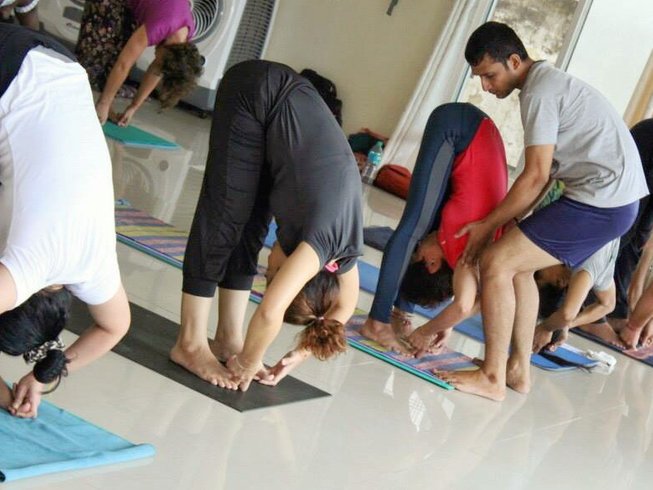
The listing is fully booked, get notified when dates are available
We’ll only ever send you one email notification and will never spam you
(No availability) 22 Day 200-Hour Hatha and Ashatanga Yoga Teacher Training in Dharamshala
Yoga Teacher Training India
This 200-hour yoga teacher training course at Yoga Vidya Mandiram is offered from a worldwide known organization, Yoga Alliance USA. After successfully completing the program, the students will receive a 200 RYS (registered yoga school), after which they can get registered at Yoga Alliance USA and become a 200 RYT (registered yoga tanner).
Meet the instructors
Highlights
- Sankhya and yoga philosophies
- Instructions to teach and guide others
- Certification to register with Yoga Alliance
- Daily yoga asanas, relaxation, and yoga Nidra techniques
- Daily guided exercises of breathing and pranayama practices
- Healthy nutritious vegetarian breakfast, lunch, and dinner
- Excursion to nearby holy temples and shrines
- 21 nights accommodation
Types
21 days with instruction in English
Accommodation
During your training, you will be accommodated at Hotel Cloud Chat, which is located in peaceful cedar covered surroundings offering an excellent view of snow-capped Dhauladhar mountains. Along with the luxury and opulence of the hotel, rooms are appointed with all the required luxury to make your stay comfortable in Dharmkot, Mcleodganj.
The rooms are well-appointed and adorned with soft warm tones and textures. Free high-speed internet connectivity and other facilities are available at the hotel as well! Relish tasty appetizing delicacies at their multi-cuisine restaurant! They provide Indian, continental, and Chinese dishes which are mouth-watering and garnished with the perfect blend of spices with aroma taken from hills.
Program
Certifications
Students who complete their subsequent trainings are eligible to register with Yoga Alliance as Registered Yoga Teachers (RYT®). This teacher training is a multi-style program for beginners with basic knowledge of yoga. After the completion of the course, the students will be given a certification of the completion of the 200-hour yoga training program at Yoga Vidya Mandiram School.
This 200-hour yoga teacher training will be held by experienced reputed meditation guides and the team of accomplished yoga teachers. The teachers and guides are including an Ayurvedic doctor who feels privileged to share his / her knowledge and practice of ancient traditions with modern elements of medical sciences (yoga anatomy and physiology).
This training program aims to provide a solid foundation in different aspects of yogic disciplines that prepare them to apply for the 300-hour yoga teacher training program. In addition, this 200-hour yoga training program includes mantra recitation (mantra - Japa), daily joints and glands practices (granthi - vimochana - kriya), yoga postures (yoga asanas), meditative steps of doing asanas, six cleansing exercises (shat karma), science of breath (pranayama), yoga energy locks (bandha).
It also includes yoga gestures (mudra), meditation (dhyana), yogic sleep (yoga Nidra), history and philosophy of yoga (yoga Darshana), yogic anatomy and physiology of human body, basic principles of Ayurveda, asana alignment practicum classes, yoga teaching practice, and teaching methodology.
Curriculum
- 60 hours yoga technique
- 25 hours teaching methodology
- 9 hours mudra, bandha technique
- 10 hours Ayurveda and yogi's lifestyle
- 15 hours anatomy and physiology
- 25 hours yoga philosophy and psychology
- 12 hours meditation and yoga Nidra
- 19 hours pranayama and satkarma
- 10 hours recitation of the mantras
- 15 hours practice teaching guidance
Hatha yoga (classical postures)
- Meditative steps of performing the Hatha yoga; centering, entering, refining, holding, coming out, and reflection
- Ashtanga Vinyasa flow - series 1
- Surya namaskar (sun salutations) - dynamic surya namaskar, surya namaskar with breathe awareness, surya namaskar with mantra chanting *Types of Hatha posture - standing poses, sitting poses, backward bending poses, forward bending poses, spinal twisting poses, fire series, inversion poses, shavasana
- Postural alignment and art of adjustment
- Counter pose
- Contraindications
Pranayama (the science of breath)
- Science of breath
- Sitting postures for pranayama practice
- How to establish diaphragmatic breathing before pranayama practice
- 1:1, 1:2 and 1:4 breathing practices
- Types of pranayama - nadi shodhana pranayama, ujjayee, kapalabhati, bhastrika, shitali, shitkari, brahmari, and anuloma viloma
Bandhas (lock)
- Jalandhara-bandha (chin lock)
- Uddiyana-bandha (abdominal lock)
- Moola-bandha (root lock)
Practice relaxation and yoga Nidra
- Relaxation in daily life
- Tension and relaxation
- Systematic relaxation
- 31 pints relaxation
- 61 points relaxation exercises
- Preparation for yoga Nidra
Meditation
- What is meditation?
- Meditation in daily life
- Sitting positions for meditation
- Two to five minutes meditations
- So-ham mediation
Anatomy and physiology
- Introduction about anatomy and physiology
- Skeletal system
- Muscular system
- Nervous system
- Digestive system
- Endocrine system
- Cardiovascular system
- Effect of yoga posture on muscles and systems
- Nadis (energy channels)
- Chakras (energy plexus)
- Pancha tatwa (five great elements)
- Panchakosha (five sheaths)
- Pancha pranas (five vital energy)
Yoga philosophy
- General introduction: six school of indian philosophy Samkhya and yoga
- Intro of Pattanjali yoga sutras
- Highlight of Ashtanga yoga: yama, niyam, asana, pranayam, pratyahara, dharana, dhyana, and samadhi
- Introduction to upanishad
- Lifestyle and yoga ethics
Ayurveda
- Basic principle of Ayurveda
- Basic doshas
- Tri-gunas
- Balance of the mind and Ayurvedic diet
Mudras
- Jnana-mudra
- Dhyan-mudra
- Vishnu-mudra
- Hridaya-mudra
Mantra chanting
- Om mantra
- Morning mantra
- Guru mantra
- Meal mantra
- Gayatri mantra and more
- Suryanamaskar mantras - 12 names of sun
Satkriya (cleaning)
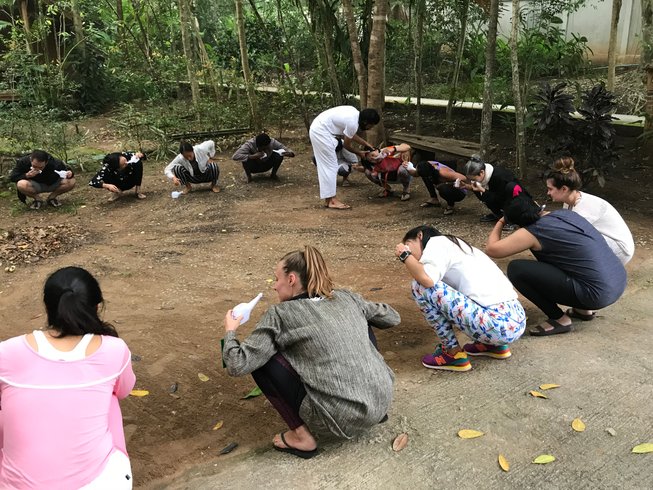
- Jala-neti
- Sutra-neti
Teaching methodology and home work
- Lesson plan
- Assignments
- Practice teaching
- Feedback
- Group discussion
- Question and answer
- Homework
Typical daily schedule
- 05:00 Wake up!
- 06:00 - 06:15 Mantra chanting
- 06:15 - 07:00 Shat-kriyas and pranayama practices
- 07:00 - 08:30 Hatha yoga (classical)
- 08:30 - 10:00 Breakfast and free time
- 10:00 - 11:15 Yoga philosophy
- 11:15 - 12:30 Yoga anatomy and physiology workshops
- 13:00 - 14:30 Lunch
- 14:30 - 15:45 Teaching methodology / Ayurveda / practice teaching
- 16:00 - 16:15 Tea break
- 15.30 - 16.00 Karma yoga
- 16:30 - 18:00 Ashtanga Vinyasa sessions
- 18:30 - 19:30 Dinner and free time
- 19:30 - 20:30 Guest lectures / Satsang / meditation
- 21:00 Go to sleep!
The schedule is subject to change. It is advised that you arrive at the yoga school one day before the program.
Instructors
Sandeep Pandey
Yogacharya Sandeep Pandey was born in a traditional Brahamna family and was sent to Gurukul at the age of 8. At the Gurukul, he studied the Yajurveda and mastered all the 16 Samskaras along with Yogasana, pranayama, and Shat Kriyas. He participated in many national-level yoga championships in India and won prizes. However, his quest for knowing the inner self through yoga lead him to Swami Rama Sadhaka Grama where under the direct guidance of H.H. Swami Veda Bharati, he studied and practiced the deeper and subtler aspect of Raja yoga.
Archarya Chandramani
Acharya Chandramani was born in a traditional spiritual family. When he was 8 years old, he became a serious practitioner of the yogic principles of Swetambara Jaina tradition. Later, he was initiated into the Vedic Sanskrit tradition by Swami Vivekananda at the age of 10 in Prabhat Ashram, UP, India. He was fully dedicated to the teachings and daily discipline of the traditional Sanskrit gurukulam from childhood to adulthood. He has been guiding worldwide yoga students into the Vedic Sanskrit literature and its philosophy and holding yoga retreats and teacher trainings for over 25 years.
Location
Nestled in the mystic tall pines forest with its picturesque natural beauty and unique mix of Indian and Tibetan cultures, Dharamshala is a conducive place for yoga and meditation. The name Dharmashala derives from the Sanskrit language which means “City of Dharma (virtues)” and so is true to its name.
This picturesque destination is not only popular among tourists but among spiritual seekers and religious travelers as well. Dharmashala boasts of jaw-dropping backdrop, stunning lakes, vibrant monasteries, colorful temples, sparkling waterfalls, and vintage forts and museums.

Food
During this yoga training, you will be served daily with three delicious and healthy vegetarian meals; breakfast, lunch, and dinner. Filtered water, herbal tea, and snacks are also available. The menu is creative and balanced with proteins so you feel full and satisfied. If you are planning to have fast in any day, please inform Yoga Vidya Mandiram for avoiding food waste.
The following meals are included:
- Breakfast
- Lunch
- Dinner
- Snacks
The following drinks are included:
- Water
- Tea
The following dietary requirement(s) are served and/or catered for:
- Vegetarian
- Vegan
- Yogic
Things to do (optional)
- Mountain hiking
- Shopping
- Visit nearby temples and shrines
What's included
- 21 nights accommodation
- Certificate of completion
- Daily vegetarian breakfast, lunch, and dinner
- Filtered water, herbal tea, and snacks
- Free use of yoga tools during the course
- Free Wi-Fi connection
- Local sightseeing exploration
- Neti pot and sutra neti
- Quality 200-hours teacher training course, internationally accredited by Yoga Alliance USA, and corresponding certificate
- Textbooks, printed study handouts, and 200-hour yoga teacher training manual
What's not included
- Airfare
- Laundry
- Additional meals and activities
- Personal expenses
How to get there
Recommended Airports
Transfer available for additional US$ 0 per person
Gaggal Airport
10 km away from your destination
Arrival by airplane
The nearest airport is Kangra Airport (DHM), about 13 kilometers away from Dharamshala. The airport connects Dharamshala to Delhi. Tourists from other parts of India would find it easier to take a flight to Chandigarh and book a taxi for their onward journey to Dharamshala, which is about 275 kilometers away.
Arrival by bus
Dharamshala is well-connected to Delhi and other parts of North India via a network of state operated buses as well as private tour operators. The journey is almost 520 kilometers from Delhi. Most buses stop at the main bus terminal in Lower Dharamshala, but there are also some public Haryana Road Transport Corporation (HRTC) buses that go all the way to the main square of McLeod Ganj. An overnight journey from Delhi takes about 13 hours. You can book HRTC tickets online.
Arrival by train
An overnight train journey is a good option to reach Dharamshala. The nearest major railway station is at Pathankot, 85 kilometers away. There are numerous trains that go to Jammu and Kashmir that stop by in Pathankot. You can take a taxi or bus from Pathankot to reach Dharamshala. There is also a smaller railway station, Kangra Mandir, just 22 kilometers from Dharamshala but none of the important trains halt here.
Cancellation Policy
- A reservation requires a deposit of 30% of the total price.
- The deposit is non-refundable, if the booking is cancelled.
- The rest of the payment should be paid on arrival.