24 Day 200-Hour Multi-Style Yoga Teacher Training in Kerala, India
Yoga Teacher Training in India
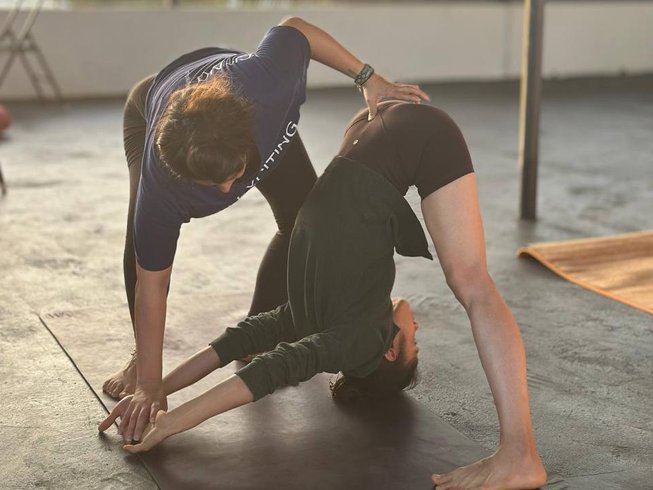
Yogakulam Academy offers beginners an extensive 200-hour yoga teacher training course in India. It provides training in multi-style yoga, with Hatha yoga and Ashtanga Vinyasa yoga as primary domains. The yoga institution delivers well-rounded yoga education guided by expert trainers who focus on giving individual attention to students to enrich their learning. They will help you master proper techniques, alignment, and modifications to build a strong foundation and enhance your yoga practice.
Meet the instructors
Highlights
- Certificate of completion
- Engage with professional yoga teachers
- Explore a thorough curriculum and experience focused learning
- Participate in an invigorating yoga class
- Immerse yourself in a peaceful environment and foster positive experiences
- Enjoy the scenic beauty with beautiful beach view/ lake view, and do some local sightseeing
- 23 nights accommodation
Skill level
- Beginner
- Intermediate
- Advanced
Types
24 days with instruction in English
 Average daily hours of activity: 9.5
Accommodation
Facilities
- Spa
- Steam room
- Temazcal
- Air-conditioned rooms
- Dining area
- Garden
- Kitchen
- Meditation garden
- Smoke-free property
- Yoga deck
- Yoga shala
- Convenience / grocery store
- Free parking
- Free Wi-Fi
- Internet access
- Laundry
- Wireless internet
- Outdoor shower
Yogakulam Academy believes that a comfortable and cozy environment is essential for your overall well-being during your yoga retreat in Kerala. The well-appointed rooms are equipped with all the amenities you need for a restful stay. From comfortable beds to spacious wardrobes, they have taken care of every detail to ensure your comfort.
Kerala Retreat believes in giving you the most comfortable experience during your stay with them. They offer accommodations in clean, spacious, and well-ventilated rooms with optional air conditioning. Kerala Retreat also offers three types of accommodation packages.
Program
Learn authentic ancient wisdom from the masters
The yoga sutras were written by the ancient Indian sages 5000 years ago to end the suffering of the mind. Patanjali, who wrote the yoga sutras, is the compilation of answers to an enquiring mind. You’ll find answers to all the hard life questions on the journey of enlightenment. That’s the promise of the ancient sages!
What better way to begin this journey than in the heart and tranquility of nature? With the company of like-minded people. The 200-hour yoga teacher training course will give you the strength and flexibility of the body and the mind! You become limitless, just like water; nothing can break you!
About the 200-hour yoga teacher training course
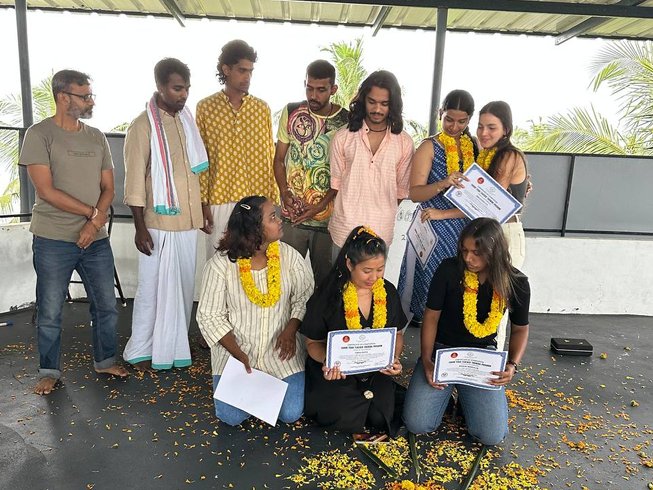
This yoga teacher training course is designed to give you a strong foundation. A perfect start for your Yoga journey. This course takes into consideration your time. Hence, they have created a course that will not only give you all the necessary knowledge to begin as a yoga teacher but also do so in a very short period of time. This program will transform you into an efficient and certified yoga teacher. It will help you discover your physical and psychic capabilities. This course will award you with an internationally recognized certificate that’ll allow you to teach yoga anywhere in the world!
You’ll learn the basics of Ayurveda, practical tips on how to run a yoga class, teaching tips, and tricks. They will give you the plan to start your own yoga class and implement all the learning. They believe in providing special training, hence they have subject matter experts for each class. So that you can learn from the best. The course will leave you with enough confidence to start your own yoga class.
The course includes basics of classical Hatha yoga, Ashtanga yoga primary series, Anatomy and physiology of yogic science, Mantra chantings, the science of Breathing, shat kriyas, yoga philosophy, foundational text Patanjali yoga sutras, meditation, Yoga Nidra, and yoga teaching methodology. You follow the daily routine of a yogi, waking up at sunrise, with a fresh breakfast, followed by lunch, and then dinner. You have tea breaks and supper. This will give you a holistic Yogi experience.
Curriculum
Welcome to the 200-hour yoga teacher training course! The curriculum is meticulously designed to meet the standards, ensuring that you receive comprehensive and high-quality training to become a skilled and confident yoga teacher. Below is a detailed syllabus outlining the educational categories, minimum contact hours, and specific topics covered in each category.
Techniques, training, and practice
- Minimum contact hours:75 hours
- Minimum contact hours with lead trainer(s):50 hours
This category forms the foundation of your training, focusing on the practical aspects of yoga techniques. You'll receive analytical training and guided practice to deepen your understanding and teaching ability.
Topics include:
- Asanas: Learning and practising key poses across various categories.
- Pranayamas: Techniques for breath control and regulation.
- Kriyas: Purification practices for body and mind.
- Chanting and Mantra: Exploring the power of sound in yoga.
- Meditation: Techniques for mindfulness and concentration.
Teaching methodology
- Minimum contact hours:7.5 hours
- Minimum contact hours with lead trainer(s):5 hours
This category focuses on the art and science of teaching yoga. You'll develop essential skills for effective communication, class management, and understanding student needs.
Topics include:
- Group dynamics and communication skills.
- Addressing individual needs in a group setting.
- Principles of demonstration, observation, and correction.
- Teaching styles and qualities of a good teacher.
- Understanding the business aspects of teaching yoga.
Anatomy and physiology
- Minimum contact hours:10 hours
- Minimum contact hours with lead trainer(s):0 hours
In this category, you'll delve into the physical and energetic aspects of the human body as they relate to yoga practice.
Topics include:
- Human physical anatomy and bodily systems.
- Energy anatomy, including chakras and nadis.
- Applying anatomy to yoga practice, including benefits and contraindications.
Yoga philosophy, lifestyle, and ethics for yoga teachers
- Minimum contact hours:20 hours
- Minimum contact hours with lead trainer(s):0 hours
This category explores yoga's philosophical and ethical foundations, guiding you towards a holistic understanding of yoga beyond the physical practice.
Topics include:
- Study of yoga philosophies and traditional texts.
- Yoga lifestyle and ethical principles (e.g., ahimsa, dharma, karma).
- Ethics for yoga teachers and maintaining professional boundaries.
- Service through yoga (seva) and being of benefit to others.
Practicum
- Minimum contact hours:5 hours
- Minimum contact hours with lead trainer(s):5 hours
This hands-on category allows you to put theory into practice by teaching under supervision and receiving feedback.
Topics include:
- Practice teaching as the lead instructor.
- Giving and receiving feedback on teaching.
- Observing and assisting during yoga classes.
- Remaining Contact Hours and Elective Hours
Contact hours vs non-contact hours
Contact hours involve physical presence with faculty and advanced trainees' education, while Non-Contact Hours are learning without faculty present.
Non-contact hours must align with the educational categories and can include:
- Assigned readings, videos, or online resources.
- Webinars and written assignments.
- Group activities and outside yoga class evaluations.
- They are committed to providing a comprehensive and enriching yoga teacher training experience. The syllabus ensures a well-rounded education in yoga philosophy, techniques, teaching methodology, anatomy, and practical teaching experience. Prepare to start a transformative journey towards becoming a certified yoga instructor!
Syllabus
Classical and traditional practice of Hatha yoga
Topics include:
- What is Hatha yoga? And its various sequence styles of practice
- Surya and Chandra Namaskar and Its Mantra Awareness Practices
- Six steps of doing Asana consciously
- Joints and glands as preparatory practice
- Deep study of classical Hatha yoga with adjustments and alignments
- Core understanding of the practice of Kundalini yoga.
- Practical idea of Iyengar Yoga and its tools of implementations
- Standing series of asana methods
- Kneeling series of asana Methods
- Sitting series of asana
- Lying on stomach series of Asana
- Supine series of asana
- Inversion series of asana
- Asana benefits and its contraindications
Ashtanga Vinyasa yoga - Primary series - structure and sequential methods
Topics include:
- Understanding the idea of Mysore Ashtanga practices vs Krishnamacharya’s Ashtanga practices
- Idea of teaching the Ashtanga yoga sequence
- Four modules of Ashtanga yoga
- What is Vinyasa?
- How many Bandhas are there in Ashtanga?
- Importance of Ujjayi practice
- Its benefits and side effects
Pranayama and its cleansing and expansions
Topics include:
- Chest breathing vs diaphragmatic breathing
- What do Prana and Pranayama mean?
- Types of Pranayama practice
- What is Nadi?
- What are Ida, Pingala, and Sushmana?
- Seven main practices of Pranayama
- Four qualities of yogic breathing
- 1:1, 1:2 and 1:4 breathing for emotional purification
- Psychological effect of yogic breathing
- Stress and stress-relieving breathing techniques
Mudra and its sparks
- Minimum contact hours:20 hours
Topics include:
- Yogic gesture for stress-related problems
- Internal mudras
- Healing gestures for physical blockages
- Pranic gestures for awakening energy
- Importance of Mudra according to Hatha yoga
- Types of Mudra
- Practicum of Gyana and Chin Mudra
- Practicum of Ashwini Mudra
- Physical, mental, and spiritual benefits of Mudra
Mantra and its vibrations
Topics include:
- Introduction of Mantra yoga
- Significance of (OM)-AUM
- Mantra for meal purification
- Mantra for obstacles
- Mantra for universal masters to bless
- Mantra for realization
- Mantra for well-being
Meditation and its transformations
Topics include:
- Breath awareness meditation
- Inner light meditation
- Chakra awareness meditation
- Body-less meditation
- Mantra Awareness meditation
- Walking meditation
- Full moon meditation
- Third eye meditation
Yoga Nidra and its deep silence
Topics include:
- What is Yoga Nidra?
- What is sleep?
- Four states of consciousness
- Benefits of deep sleep
- Yoga Nidra practices from the Himalayan tradition
- How Yoga Nidra practices cure the insomnia problem
- Adjusting in Shavasana
Adjustment and alignment practices
Topics include:
- The fundamentals of practicing side extension, forward extension, backwards extension, and revolving action
- How to correct postures verbally and by hands-on adjustments
- Modifying the asana with different tools
- Various limitations, contraindications, and benefits of yoga asana
- Workshop on hip opening
- Workshop on back bending
- Workshop on forward bending
- Workshop on twisting postures
Teaching methodology and its confidence
Topics include:
- Disciplines of yoga teachers and students
- How important to ensure the safety of students while teaching
- Understanding the demand of students before starting the class
- The scope of listening, presence, directive, and non-directive dialogue
- How important is demonstration
- What are the preparations for the classroom
- How to sequence the class
- How to describe the practice, techniques, and delivery in teaching a class
- Discussion on different types of lesson planning
Yoga philosophy and its unknown realities
Topics include:
- History and origin of yoga
- Why do we have a disturbed mind, a distracted mind, and a stupefied mind in yogic science?
- What is yoga?
- What is celibacy and sex in yogic science?
- Why do we suffer?
- What is Ashtanga Yoga? ( eight limbs of yoga)
- What caused us to get the disease?
- What is Raja Yoga?
- How to bend the body to bend the mind?
- What is ignorance?
- Three states of consciousness in yogic science
- What is the mind?
- Four foundational pillars of life
- Four faculties of the mind field in yogic science
- What does practice mean in yogic science?
- Five layers of the body in yogic science
- What does Ekagrah mean?
- What is knowledge and wisdom in yoga?
- What is kundalini?
- What is karma?
- What is a chakra?
- What does Nirodhah mean in yoga?
- What is Fear and Love in yogic science?
- What is enlightenment and liberation in yoga?
Yoga anatomy and its safety and precautions
Topics include:
- What is Yogic Anatomy and physiology?
- Introduction of the respiratory system and yogic breathing
- How do shat kriya practices give benefits to the body?
- How do Pranayama practices give connection to the digestive and immune system?
- How do asana practices give various effects on joints, spine, and the muscular system?
- The structure of the spine and its movement in yoga
- Types of contraction in the muscular system
- Know the basic studies and types of joints to avoid injury during Asana classes
- Studies and discussions about the spine according to a yogic point of view
Yoga for health
Topics include:
- Yogic counselling for a healthy life.
- Yogic techniques to use in daily lifestyle.
- Yoga cures common diseases like Headaches, migraines, colds, sinus, etc.
- Yoga tools for back issues like backache, slipped disk, sciatica, diabetes, thyroid, spinal deformities, obesity, etc.
Evaluation and certification
Topics include:
- Performance during the course
- Attendance
- Practical asana demonstration test
- Written test (Objective and subjective type)
- Behaviour
Daily schedule
- 05:30 - 06:00 Wake up
- 06:00 - 07:30 Hatha yoga
- 07:30 - 08:00 Karma yoga
- 08:00 - 09:00 Pranayama
- 09:00 - 10:00 Breakfast
- 10:30 - 11:30 Philosophy
- 12:00 - 13:00 Adjustment & alignment
- 13:00 - 14:00 Lunch
- 14:00 - 15:00 Rest time
- 15:00 - 16:00 Anatomy
- 16:30 - 18:00 Ashtanga
- 18:00 - 19:00 Meditation
- 19:00 - 20:00 Dinner
- 20:00 - 21:00 Self-study
Instructors

Lakshmi Gowda
Lakshmi Gowda, a former IT professional who is now seeking spiritual enlightenment, was raised in a religious and conservative family. She left the corporate world in search of embarked a spiritual journey. She traveled while seeking knowledge towards yogic life in different parts of India (Karnataka to Rishikesh). She specialized in Pre and Postnatal yoga, pranayama, yoga anatomy, Yin yoga, Face yoga and meditation.
Shivakumar
Shivakumar is a highly skilled and knowledgeable Yoga Instructor at Yogakulam Academy, specializing in a range of yoga disciplines. With deep expertise in Ashtanga, Vinyasa, Hatha Yoga, Pranayama, Yoga Nidra, and Yoga Philosophy, he combines physical practice with spiritual teachings to guide students toward holistic well-being.
Location
Nestled along the enchanting coastline of Kerala beckons with its captivating blend of natural wonders and cultural allure. The town's idyllic backwaters, like glistening ribbons woven by nature, offer a serene escape that allows one to drift away from the cares of the world.
Kerala's historical tapestry is interwoven with tales of ancient trade routes and colonial echoes, evident in the remnants of the Dutch Fort that stand as silent witnesses to time's passage. With its diverse religious sites and vibrant festivals, the town celebrates its spiritual heritage, inviting travelers to partake in its cultural tapestry. As the aroma of traditional Kerala cuisine mingles with the coastal breeze, Kerala truly becomes a haven for those seeking to lose themselves in the embrace of nature, history, and the warm hospitality of Kerala's soulful charm.

Food
Every meal is crafted to nourish not only the body but also the mind and soul, creating a complete sense of well-being. Yogakulam Academy sources ingredients from local farms, ensuring that each bite is bursting with the flavors of Kerala's rich and diverse produce. The chefs infuse every dish with mindfulness and positive energy, enhancing the overall dining experience. Drawing from the principles of Ayurveda, the meals are thoughtfully balanced to promote harmony within the body's natural constitution.
From traditional Kerala dishes to international flavors, the menu offers a wide range of options to cater to different preferences. Dining at Yogakulam Retreat Center, Kerala, is more than just eating; it's a connection to nature and a celebration of the Earth's bounty. They take dietary preferences and restrictions into account, ensuring that everyone can enjoy a nourishing meal tailored to their needs.
Healthy food
Kerala has over 100 different castes of people, each with its typical cuisine, costumes, and culture. The cultural variation of Kerala is visible in its rich gastronomy as well. Food offered at Yogakulam Academy is typical of Kerala's cuisine. Good food is good health; that is the cooking mantra at Yogakulam. Mornings and evenings are welcomed by a refreshing herbal tea. The three-time meal is enriched with cereals, spices, pulses, and grains cooked with love by the qualified chefs.
The following meals are included:
- Breakfast
- Lunch
- Dinner
- Snacks
- Drinks
The following drinks are included:
- Water
- Coffee
- Tea
The following dietary requirement(s) are served and/or catered for:
- Vegetarian
- Organic
- Yogic
- Other dietary requirements on request
- Ayurvedic
What's included
- Certificate of completion
- 23 nights accommodation
- Daily meals
- Hot water
- Fun activities
- Study materials
What's not included
- Roundtrip airfare
- Personal expenses
- Airport transfer
- Visa fee
- GST
How to get there
Recommended Airports
Transfer available for additional US$ 95 per person
Cochin International Airport
154 km away from your destination
Transfer available for additional US$ 30 per person
Trivandrum International Airport
43 km away from your destination
Arrival by airplane
Please book your flight to the nearest airport, Trivandrum International Airport (TRV), which operates several international and domestic flights. You may hire a prepaid taxi or an AC Volvo bus to Paravur or Varkala. You may also take a train from Trivandrum to Paravur. Yogakulam Academy also provides transportation from the Airport to the Academy at an additional cost. For more information, please send an inquiry.
Cancellation Policy
- A reservation requires a deposit of 30% of the total price.
- The deposit is non-refundable, if the booking is cancelled.
- The rest of the payment should be paid on arrival.

Reviews
No reviews yet
For this organizer you can guarantee your booking through BookYogaTeacherTraining.com. All major credit cards supported.
Similar Yoga Teacher Training you might like
You recently viewed