24 Day 200-Hour Yoga Teacher Training Course in Mysore, India
Yoga Teacher Training Course in India
Yogakulam Academy offers beginners an extensive 200-hour yoga teacher training course in Mysore. It provides training in multi-style yoga, with Hatha yoga and Ashtanga, Vinyasa yoga as primary domains. The yoga institution delivers well-rounded yoga education guided by expert trainers who focus on giving individual attention to students to enrich their learning. They will help you master proper techniques, alignment, and modifications to build a strong foundation and enhance your yoga practice.
Meet the instructors
Highlights
- Engage with professional yoga teachers
- Explore a thorough curriculum and experience-focused learning
- Participate in an invigorating yoga class
- Immerse yourself in a peaceful environment and foster positive experiences
- Enjoy the scenic beauty with beautiful beach view/ lake view and do a local sightseeing
- 23 nights accommodation
- Daily full-board vegetarian meals with tea
- Certificate of completion
Skill level
- Beginner
- Intermediate
- Advanced
Types
24 days with instruction in English
Accommodation
Facilities
- Garden
- Terrace
- Yoga shala
- Laundry
- Wireless internet
Yogakulam Academy believes that a comfortable and cozy environment is essential for your overall well-being during your yoga retreat in Mysore. The well-appointed rooms are equipped with all the amenities you need for a restful stay. From comfortable beds to spacious wardrobes, they have taken care of every detail to ensure your comfort.
They believe in giving you the most comfortable experience during your stay with them. They offer accommodations in clean, spacious, and well-ventilated rooms. They also offer three types of accommodation packages: dormitory, shared room, and private room.
The facilities
Yogakulam Academy feels proud to offer the best place to learn yoga in India, where students love to stay. They offer a perfect learning atmosphere to the students by offering comfortable accommodation facilities that are inspired by the ancient teaching system. They don’t simply focus on yoga practice and offering theoretical knowledge, but we focus on the overall growth and development of the students as a yoga teacher. Equipped with large halls, our accommodation provides enough space to practice yoga at ease.
Yoga shala
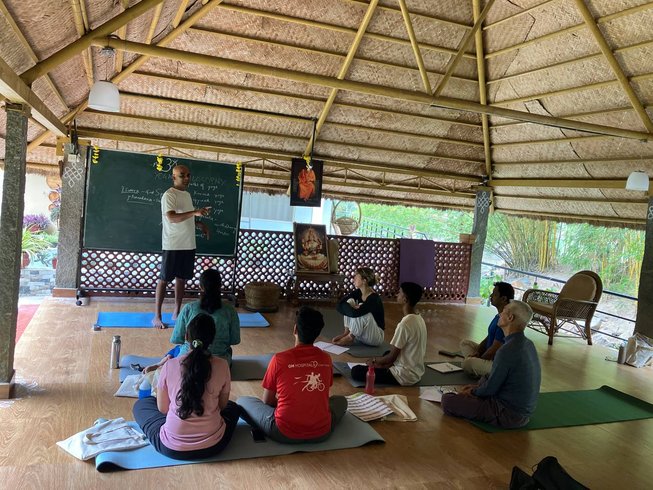
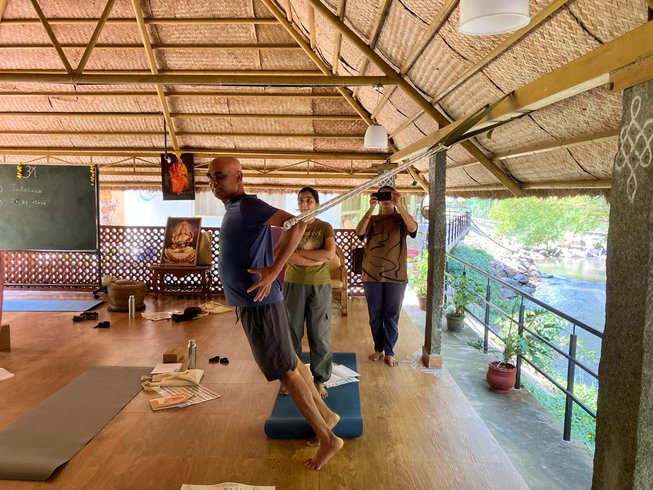
They have one open shaala, one enclosed shala, one huge terrace and open gardens. The open-air hall, which is on the banks of the river, is built using natural stones, bamboo mats and layers of dry grass, giving it an organic and traditional touch. The enclosed halls built with light materials, are soundproof and have luminous lighting used for
A small shop
You can buy the required stuff, such as washing powder, pens, toothbrushes,s etc, for your daily life from the store in the office. The brands of the products may vary. If you are particular about a specific brand, please bring it along. Online delivery through e-commerce platforms is also available in the location.
Laundry
Washing machine can be used by a student twice a week. There is plenty of space for drying clothes. They request students to minimize the use of chemical soaps, washing powders, and shampoos in the bathrooms, as they are keeping the land free from all chemicals.
Electricity (UPS battery backup)
There are days when there can be power cuts. However, they have UPS battery backup for all rooms and teaching shalas (halls), besides a silent diesel generator for emergencies. They request students not to waste power, especially when they are on batteries during the daytime.
Kaveri River view
The yoga shala and the stay facility are situated right on the pristine banks of the Cauvery River, offering a tranquil and picturesque setting. Some Pranayama and meditation classes are held by the river to deepen your practice and foster introspection. A small island on the river provides a perfect spot for meditation and relaxation. The serene river and the small island have given a transforming and soul-awakening perspective to the ashram and its activities.
Garden
In front of the rooms lie beautiful gardens with numerous pathways where you can walk barefoot and connect with nature. Stroll on the lush green carpet amidst royal palms and coconut trees, rejuvenating your body and mind with the fresh air. With a keen eye, you will find nature itself becoming an intuitive teacher.
WIFI facilitiy
They have a specially equipped leased line Wi-fi facility which makes internet usage hassle-free. You can browse anytime apart from the sessions. Please bring your own devices for browsing.
Accommodations
There are 12 rooms and all the accommodations are offered as "Private", "Twin-Sharing" & "Triple occupancy"
24/7 hot water
The accommodations are equipped with a 24*7 Hot Water facility.
Program
Experience a Life-Changing 200-Hour Yoga Teacher Training in Mysore
Mysore, often regarded as the spiritual capital of yoga, offers a perfect blend of traditional teachings and serene surroundings, making it an ideal destination for those seeking to deepen their practice and become certified yoga teachers.
Situated on the peaceful banks of the Kaveri River, the 200-hour Yoga Teacher Training Course (YTTC) in Mysore provides a truly unparalleled setting for personal growth and professional development.
This unique program harmoniously combines the transformative power of yoga with the beauty and tranquility of the river, offering a holistic approach to both self-discovery and career training. Whether you're a beginner or an advanced practitioner, the 200-hour YTTC in Mysore promises an immersive, life-changing experience, guiding you every step of the way toward becoming a certified yoga instructor.
About the 200-Hour YTTC
The 200-hour YTTC in Mysore is designed to give you a deep, well-rounded understanding of yoga and provide the skills necessary to teach with confidence and authenticity. Over the course of this comprehensive training, you will gain proficiency in key areas of yoga, including asanas (yoga postures), pranayama (breath control), meditation, anatomy, philosophy, and teaching methodology.
You will learn not only the technical aspects of yoga practice but also how to connect with your students, deliver effective classes, and cultivate the spiritual elements of yoga that go beyond physical postures. This training is suitable for those who wish to teach yoga professionally as well as those who want to deepen their personal practice and understanding of yoga.
The program is structured to help you evolve both physically and mentally, offering a blend of theory, practice, and experiential learning. You'll be supported by experienced, certified instructors who bring deep wisdom and understanding of traditional yoga teachings, ensuring that you receive
an authentic and transformative educational experience.
Daily schedule
Whichever duration you choose for your yoga TTC in Mysore, they schedule each day your activity filled with wholesome and rejuvenating yoga experiences that will make you look forward to another exciting day.
- 05:30 - 06:00 Wake up
- 06:00 - 07:30 Hatha yoga
- 07:30 - 08:00 Karma yoga
- 08:00 - 09:00 Pranayama
- 09:00 - 10:00 Breakfast
- 10:30 - 11:30 Philosophy
- 12:00 - 01:00 Adjustment and alignment
- 13:00 - 14:00 Lunch
- 14:00 - 15:00 Rest time
- 15:00 - 16:00 Anatomy
- 16:30 - 18:00 Ashtanga
- 18:00 - 19:00 Meditation
- 19:00 - 20:00 Dinner
- 20:00 - 21:00 Self study
Curriculum and syllabus:
Curriculum of 200-hour YTTC
- Techniques, training, and practice
- Minimum contact hours: 75 Hours
- Minimum contact hours with lead trainer(s): 50 hours
This category forms the foundation of your training, focusing on the practical aspects of yoga techniques. You'll receive analytical training and guided practice to deepen your understanding and teaching ability.
Topics include:
- Asanas: Learning and practicing key poses across various categories.
- Pranayama's: Techniques for breath control and regulation.
- Kriyas: Purification practices for body and mind.
- Chanting and mantra: Exploring the power of sound in yoga.
- Meditation: Techniques for mindfulness and concentration
Teaching Methodology
- Minimum contact hours: 7.5 hours
- Minimum contact hours with lead trainer(s): 5 hours
This category focuses on the art and science of teaching yoga. You'll develop essential skills for effective communication, class management, and understanding student needs.
Topics include:
- Group dynamics and communication skills.
- Addressing individual needs in a group setting.
- Principles of demonstration, observation, and correction.
- Teaching styles and qualities of a good teacher.
- Understanding the business aspects of teaching yoga.
Anatomy and Physiology
- Minimum contact hours: 10 hours
- Minimum contact hours with lead trainer(s): 0 hours
In this category, you will delve into the physical and energetic aspects of the human body as they relate to yoga practice.
Topics include:
- Human physical anatomy and bodily systems.
- Energy anatomy, including chakras and nadis.
- Applying anatomy to yoga practice, including benefits and contraindications.
Yoga philosophy, lifestyle, and ethics for yoga teachers
- Minimum contact hours: 20 hours
- Minimum contact hours with lead trainer(s): 0 hours
This category explores yoga's philosophical and ethical foundations, guiding you towards a holistic understanding of yoga beyond the physical practice.
Topics include:
- Study of yoga philosophies and traditional texts.
- Yoga lifestyle and ethical principles (e.g., ahimsa, dharma, karma).
- Ethics for yoga teachers and maintaining professional boundaries.
- Service through yoga (seva) and being of benefit to others.
Practicum
- Minimum contact hours: 5 hours
- Minimum contact hours with lead trainer(s): 5 hours
This hands-on category allows you to put theory into practice by teaching under supervision and receiving feedback.
Topics include:
- Practice teaching as the lead instructor.
- Giving and receiving feedback on teaching.
- Observing and assisting during yoga classes.
- Remaining Contact Hours and Elective Hours
Contact hours vs. non-contact hours
Contact Hours involve physical presence with faculty and advance trainees' education, while non-contact hours are learning without faculty present.
Non-contact hours must align with the educational categories and can include:
- Assigned readings, videos, or online resources.
- Webinars and written assignments.
Group activities and outside yoga class evaluations.
- They are committed to providing a comprehensive and enriching yoga teacher training experience. The syllabus ensures a well-rounded education in yoga philosophy, techniques, teaching methodology, anatomy, and practical teaching experience. Prepare to start a transformative journey towards becoming a certified yoga instructor!
Syllabus of 200-hour YTTC:
Classical and traditional practice of Hatha yoga
Topics include:
- What is Hatha yoga? And its various sequence style of practice
- Surya and Chandra Namaskar and its mantra awareness Practices
- Six steps of doing Asana consciously
- Joints and gland as preparatory practice
- Deep study of Classical Hatha yoga with adjustments and alignments
- Core understanding of practice of Kundalini yoga.
- Practical idea of Iyengar yoga and its tools of implementations
- Standing series of asana methods
- Kneeling series of asana Methods
- Sitting series of asana
- Lying on stomach series of Asana
- Supine series of asana
- Inversion series of asana
- Asana benefits and its contra-indications
Ashtanga Vinyasa yoga: Primary series- structure and sequential Methods
Topics include:
- Understanding the idea of Mysore Ashtanga Practices Vs Krishnamacharya’s Ashtanga Practices
- Idea of teaching ashtanga Yoga sequence
- Four modules of Ashtanga Yoga
- What is Vinyasa?
- How many Bandhas are there in ashtanga?
- Importance of Ujjayi practice
- Its benefits and side effects
Pranayama and its cleansing and expansions
Topics include:
- Chest breathing v/s diaphragmatic breathing
- What are Prana and Pranayama mean?
- Types of Pranayama practice
- What is Nadi?
- What are Ida, Pingala and Sushmana?
- Seven main practices of Pranayama
- Four qualities of yogic breathing
- 1:1, 1:2 and 1:4 breathing for emotional purification
- Psychological effect of yogic breathing
- Stress and stress less related breathing techniques
Mudra and its sparks
- Minimum contact hours: 20 hours
Topics include:
- Yogic Gesture for stress related problems
- Internal mudras
- Healing Gestures for physical blockages
- Pranic gestures for awakening energy
- Importance of Mudra according to Hatha yoga
- Types of Mudra
- Practicum of Gyana and Chin Mudra
- Practicum of Ashwini Mudra
- Physical, Mental and Spiritual Benefits of Mudra
Mantra and its Vibrations
Topics include:
- Introduction of Mantra yoga
- Significance of (OM)-AUM
- Mantra for meal purification
- Mantra for obstacles
- Mantra for universal masters to bless
- Mantra for realization
- Mantra for well-being
Meditation and its transformations
Topics include:
- Breath awareness meditation
- Inner light meditation
- Chakra awareness meditation
- Body less meditation
- Mantra awareness meditation
- Walking meditation
- Full moon meditation
- Third eye meditation
Yoga Nidra and its deep silence
Topics include:
- What is yoga Nidra?
- What is sleep?
- Four states of consciousness
- Benefits of deep sleep
- Yoga Nidra practices from Himalayan tradition
- How yoga Nidra practices cure insomnia problem
- Adjusting in Shavansana
Adjustment and alignment practices
Topics include:
- The fundamentals of practicing side extension, forward extension, backwards extension and revolving action
- How to correct postures verbally and by hands on adjustments
- Modifying the asana with different tools
- Various limitation, contra-indications and benefits of yoga asana
- Workshop on hip opening
- Workshop on back bending
- Workshop on forward bending
- Workshop in twisting postures
Teaching methodology and its confidence
Topics include:
- Disciplines of yoga teachers and students
- How important to ensure the safety of student while teaching
- Understanding the idea of the demand of student before start the class
- The scope of listening, presence, directive and non-directive dialogue
- How important is demonstration
- What are the preparations for classroom
- How to sequence the class
- How to describe the practice, techniques, and delivery in teaching a class
- Discussion on different types of lesson planning
Adjustment and alignment practices
Topics include:
- The fundamentals of practicing side extension, forward extension, backwards extension and revolving action
- How to correct postures verbally and by hands on adjustments
- Modifying the asana with different tools
- Various limitation, contra-indications and benefits of yoga asana
- Workshop on hip opening
- Workshop on back bending
- Workshop on forward bending
- Workshop in twisting postures
Teaching methodology & its confidence
Topics include:
- Disciplines of yoga teachers and students
- How important to ensure the safety of student while teaching
- Understanding the idea of demand of student before start the class
- The scope of listening, presence, directive and non-directive dialogue
- How important is demonstration
- What are the preparations for classroom
- How to sequence the class
- How to describe the practice, techniques, and delivery in teaching a class
- Discussion on different types of lesson planning
Yoga philosophy and its unknown realities
Topics include:
- History and origin of yoga
- Why do we have disturbed mind, distracted mind, and stupefied mind in yogic science?
- What is yoga?
- What is celibacy and sex in yogic science?
- Why do we suffer?
- What is Ashtanga Yoga?( eight limbs of yoga)
- What caused us to get disease?
- What is Raja Yoga?
- How to bend body to bend mind?
- What is ignorance?
- Three states of consciousness in yogic science
- What is mind?
- Four foundational pillars of life
- Four faculties of mind field in yogic science
- What does practice mean in yogic science?
- Five layers of body in yogic science
- What does Ekagrah mean?
- What is knowledge and wisdom in yoga?
- What is kundalini?
- What is karma?
- What is chakra?
- What does Nirodhah mean in yoga?
- What is fear and love in yogic science?
What is enlightenment and liberation in yoga?
Yoga anatomy and its safety and precautions
Topics include:
- What is Yogic Anatomy and physiology?
- Introduction of the respiratory system and yogic breathing
- How do shat kriya practices give benefits to the body?
- How Pranayama practices give connection to a digestive and immune system?
- How asana practices give various effects on joints, spine and muscular system?
- The structure of the spine and its movement in yoga
- Types of contraction in the muscular system
- Know the basic studies and types of joints to avoid injury during Asana classes
- Studies and discussion about spine according to a yogic point of view
Yoga for health
Topics include:
- Yogic counselling for a healthy life.
- Yogic techniques to use in daily lifestyle.
- Yoga cures common diseases like Headaches, migraines, colds, sinus, etc.
- Yoga tools for back issues like backache, slipped disk, sciatica, diabetes, thyroid, spinal deformities, obesity, etc.
Evaluation and certification
Topics include:
- Performance during the course
- Attendance
- Practical asana demonstration test
- Written test (Objective and subjective type)
- Behavior
Throughout the 4 weeks of your course, you will be trained by efficient and experienced teachers with a prime motive to mould you into a better practitioner and an expert teacher. The evaluation is the final step of your journey. Every day is in fact, a preparation for the final evaluation.
Over the course period, the teachers would ensure that you are all set to be a certified yoga teacher. It is mandatory that you complete all 6 modules of the course. The assessment will be conducted in 3 segments: oral, written and practical. Though they call it ‘evaluation’, the process does not have the stress of an examination. It is all about knowing how much you have learned during your journey.
Included excursions
There are activities you can enjoy:
- Backwaters floating meditation
- Lake visit
- Small hike
- Yoga near the lake
- Opening and closing ceremony
Instructors

Abin Sur
Initiated into the Tantric Kaula tradition and later into Kriya Yoga, Abin has spent nearly three decades immersed in the study and practice of Tantra, Samkhya, and Yoga, integrating ancient wisdom into both his personal sadhana and teaching. A 500-Hour Certified Yoga Teacher, Abin’s teaching is rooted in the classical yogic sciences. He offers in-depth guidance in asana, pranayama, mudra, bandha, and kriya, always emphasizing subtle awareness, energetic refinement, and spiritual integration. His approach is practical, direct, and steeped in tradition—making profound teachings accessible with

Lakshmi Gowda
Lakshmi Gowda, a former IT professional who is now seeking spiritual enlightenment, was raised in a religious and conservative family. She left the corporate world in search of embarked a spiritual journey. She traveled while seeking knowledge towards yogic life in different parts of India (Karnataka to Rishikesh). She specialized in Pre and Postnatal yoga, pranayama, yoga anatomy, Yin yoga, Face yoga and meditation.

Shivakumar
Shivakumar is a highly skilled and knowledgeable Yoga Instructor at Yogakulam Academy, specializing in a range of yoga disciplines. With deep expertise in Ashtanga, Vinyasa, Hatha Yoga, Pranayama, Yoga Nidra, and Yoga Philosophy, he combines physical practice with spiritual teachings to guide students toward holistic well-being.

Triveni M B
Highly experienced yoga instructor and women's health advocate, dedicated to empowering expectant mothers through comprehensive prenatal and postnatal yoga programs. Certified RPYT, childbirth educator, and infant massage instructor.
Location
Why choose Mysore, on the banks of the Kaveri River?
Professional YTT with traditional roots: Mysore is synonymous with authentic yoga teachings, especially Ashtanga yoga, making it the perfect location to deepen your knowledge and understanding of yoga. This program emphasizes a strong foundation in traditional yoga practices while also incorporating modern methodologies, ensuring a well-rounded and professional approach to becoming a yoga teacher.
- Spiritual and tranquil environment: Mysore is world-renowned for its deep-rooted connection to traditional yoga, particularly Ashtanga Yoga. Training here allows you to immerse yourself in this rich legacy while benefiting from the serene and spiritually charged atmosphere of the Kaveri River. The gentle flow of water, surrounded by lush greenery, creates an ideal environment for yoga practice and meditation, fostering a deep sense of inner peace and reflection.
- Connection with nature: The riverbank setting encourages a unique bond with nature, enhancing your physical, mental, and emotional growth. The natural surroundings offer grounding and alignment, allowing you to fully absorb the teachings of yoga in a restorative and calming environment.
- Authentic yoga instruction: Mysore is home to some of the most esteemed yoga schools and teachers in the world. The instructors leading this program are experienced practitioners and certified yoga masters who have dedicated their lives to the study and practice of yoga. Their deep knowledge and expertise ensure that students receive the most authentic and comprehensive training available.
- Cultural immersion in Mysore with yoga: Mysore is not only the birthplace of Ashtanga yoga but also a vibrant cultural hub that enriches your spiritual and personal journey. During your yoga teacher training, you’ll experience more than daily asana and philosophy classes—you’ll dive into Mysore’s rich traditions. Visit ancient temples, participate in local festivals, learn the art of incense and sandalwood carving, and explore bustling markets filled with colors and flavors. This immersive experience harmonizes yoga practice with real-world spirituality, allowing you to live yoga both on and off the mat. Mysore’s rich cultural heritage, deeply intertwined with yoga, provides an inspiring backdrop to your training. From the ancient temples to the bustling markets, the city offers endless opportunities for cultural exploration, enriching your yoga journey and giving you a deeper connection to the heart of India’s spiritual traditions.
- City of Palaces, rich in tradition: Known as the "City of Palaces," Mysore is a city steeped in history and culture, making it an enticing destination for travelers and spiritual seekers alike. Its royal architecture, including the iconic Mysore Palace, and its deeply rooted traditions offer an enriching experience for anyone looking to explore a place that truly embodies India’s heritage. The city’s timeless charm and spiritual energy provide the perfect setting for yoga practitioners to connect deeply with their practice. Their deep knowledge and expertise ensure that students receive the most authentic and comprehensive training available. Mysore offers an enriching experience for those seeking a deeper connection to the practice of yoga and to themselves. Whether you're here for personal transformation or professional development, the 200-hour TTC in Mysore offers an unforgettable and life-changing experience that will attract and inspire all who embark on this journey.

Food
You are what you eat. Keeping in mind the health and well-being of students, 40% of the vegetables and fruits are organically grown by Yogakulam Academy, and the other 60% is locally sourced from the nearby farmers' market. An overall balanced and nutritious yogic food has been curated, which is full of taste and satisfaction.
When it comes to yoga, the importance of a proper diet is extremely significant. The meals cooked here are purely vegetarian, prepared by highly skilled professional cooks and pleasant staff. The meals are not only cooked using Ayurvedic herbs and seasonal ingredients, but also with passion and love. Along with nutritional meals, refreshments and juices are also provided to the students to keep them energetic and hydrated all day long. A simple vegan diet can also be availed on request.
The following meals are included:
- Breakfast
- Lunch
- Dinner
- Drinks
The following drinks are included:
- Water
- Coffee
- Tea
The following dietary requirement(s) are served and/or catered for:
- Vegetarian
- Organic
- Yogic
- Other dietary requirements on request
- Ayurvedic
What's included
- 200-hour YTT course
- Certificate of completion
- Yoga materials and props
- Tours to local attractions and refreshing activities
- Fun activities
- Study materials
- Hot water
- 23 nights accommodation
- All meals with tea daily
What's not included
- Roundtrip airfare
- Personal expenses
- Airport transfer
- Visa fee
- GST
How to get there
Recommended Airports
Transfer available for additional US$ 50 per person
Kempegowda International Airport
142 km away from your destination
Transfer available for additional US$ 10 per person
Mysore Airport (Mandakalli Airport)
19 km away from your destination
Arrival by Airplane
Please book your flight to Kempegowda International Airport (BLR), which operates several international and domestic flights. You may hire a prepaid taxi or an AC Volvo bus to Srirangapatna, Mandya, Mysore.
Yogakulam Academy also provides transportation from the airport to the academy at an additional cost. For more information, please send an inquiry.
Arrival by train
You may also take a train from Kempegowda International Airport (BLR) to Srirangapatna, Mandya, Mysore.
Cancellation Policy
- A reservation requires a deposit of 30% of the total price.
- The deposit is non-refundable, if the booking is cancelled.
- The rest of the payment should be paid on arrival.

Reviews
No reviews yet
For this organizer you can guarantee your booking through BookYogaTeacherTraining.com. All major credit cards supported.
Similar Yoga Teacher Training you might like
You recently viewed