
21 Day 200-Hour Ashtanga and Vinyasa Yoga Teacher Training Course in Goa, India
Transformative Yoga Teacher Training in India
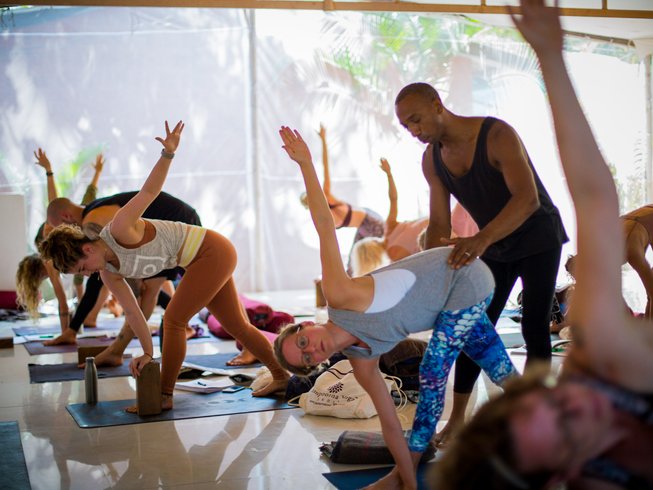
At the Sampoorna Yoga India 200-hour Ashtanga Vinyasa yoga teacher training, you will learn to teach and to practice a broad range of yoga asanas, experience how to draw on the physical, emotional, energetic, and spiritual benefits of yoga, learn the appropriate and correct alignments for each posture, explore the modifications and variations of the most common asanas, learn and practice the art of hands-on-adjustment, understand the basic concepts of functional yoga anatomy, and experience and practice different types of pranayama and meditation techniques.
Meet the instructors

Read more
Highlights
- Eligible to register with Yoga Alliance upon completion
- Ashtanga or Vinyasa Flow (2-3 times a week)
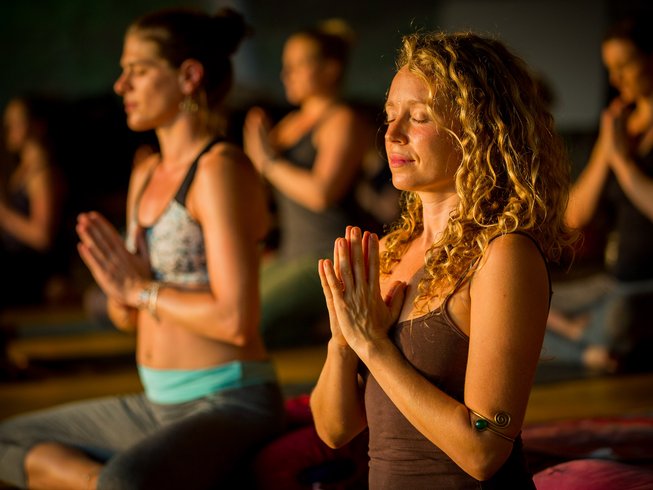
- Chanting, pranayama, and meditation
- Yoga philosophy/anatomy/alignment and adjustment workshops
- Workshop on teaching techniques
- Daily breakfast, lunch, dinner, and mid-day snacks
- 20 nights accommodation
Skill level
- Beginner
- Intermediate
- Advanced
Types
21 days with instruction in English
Accommodation
Sampoorna and Anaya are the types of accommodation you can choose. The colorful Sampoorna cottages are made from wood, while Anaya rooms are made from concrete and wood. All the cottages and rooms are spacious, well–ventilated, and have private bathrooms, air conditioning, free Wi-Fi, comfortable beds with mosquito nets, and big wardrobes. They provide the service of housekeeping twice a week, and supply bath towels, hand towels, and swimming pool towels.
Program
Certification
Students who complete the training are eligible to register with Yoga Alliance as Registered Yoga Teachers (RYT®).
Overview
Sampoorna Yoga is an internationally renowned Yoga Alliance registered yoga teacher training school located in one of the most beautiful beaches of Goa, India. They have graduated more than 10,000 yoga teachers in their world-renowned 200-hour yoga teacher training program since its inception.
Sampoorna Yoga was founded in 2008 with the intention to teach yoga in its totality, emphasizing all eight limbs of yoga, but not just on asana. This totality, also known as ‘wholeness’, ‘absolute’, or ‘fullness’ in English, is translated as Sampoorna in the Sanskrit language. That’s why they named their yoga teacher training school Sampoorna Yoga, i.e., yoga in its completeness. Their 200-hour Ashtanga Vinyasa yoga teacher training course is an intensive program designed to give you the knowledge, skills, and confidence to practice and teach yoga based on the Ashtanga Yoga Primary Series and Vinyasa Flow.
The 200-hour yoga teacher training course is based on the traditional Ashtanga Yoga system established by Sage Patanjali more than 3000 years ago. The asana part is mainly derived from the Ashtanga Vinyasa Primary series and Vinyasa Flow. Their comprehensive YTTC curriculum covers asana, pranayama, meditation, philosophy, alignment, adjustment, and a lot of teaching practice. Apart from the Ashtanga Yoga Primary series, you will also learn a lot of Vinyasa flows and how to create your own Vinyasa Flow sequences during your yoga teacher training with them.
Although they are traditional in their teachings, they are modern and unorthodox in their approach. They strongly encourage you to bring your own creativity, intuition, and spiritual experiences into your learning and teaching styles. They don’t follow any religion or dogma in their teachings.
The 200-hour Ashtanga Vinyasa yoga teacher training course is for you if:
- You want to become a qualified yoga teacher with an internationally recognized Yoga Alliance-approved 200-hour yoga teacher training school.
- You are looking for a yoga teacher training school with a tremendous amount of experience and a long history of a successful track record.
- You are looking for a yoga teacher training school that can provide extremely delicious meals, safe and comfortable accommodation in a great location near the beach in Goa, India.
- You want to develop a deeper understanding of yoga, yogic philosophy, and the yogic lifestyle.
- You want to take your asana, pranayama, and meditation practice to the next level.
- You want to learn and practice in a compassionate, non-competitive yet challenging environment.
- You are looking for a comprehensive, safe, well-structured, anatomically precise yet intuitive approach.
- You want to share the teachings of yoga with others and help them lead a happy, content, and meaningful life.
Course details
Ashtanga yoga
- Introduction to and history of the Ashtanga Vinyasa system.
- The four elements of Ashtanga yoga: Vinyasa, Ujjayi pranayama, bandhas, and drishti.
- Modified Ashtanga yoga primary series: Standing asanas, seated asanas, finishing asanas.
- Ashtanga yoga practice (modified version): 90-minute class, three times a week.
- Alignment and modification workshops: Two-hour daily workshops. In this class, we teach you how to practice all the asanas with proper alignment and how to modify them when necessary.
- How to use props in various postures.
- Teaching practice: This class is all about learning and practicing how to teach Ashtanga yoga and Vinyasa flow classes. You will start practice teaching from day one, starting from one-to-one to larger groups. You will be supervised and guided by senior teachers.
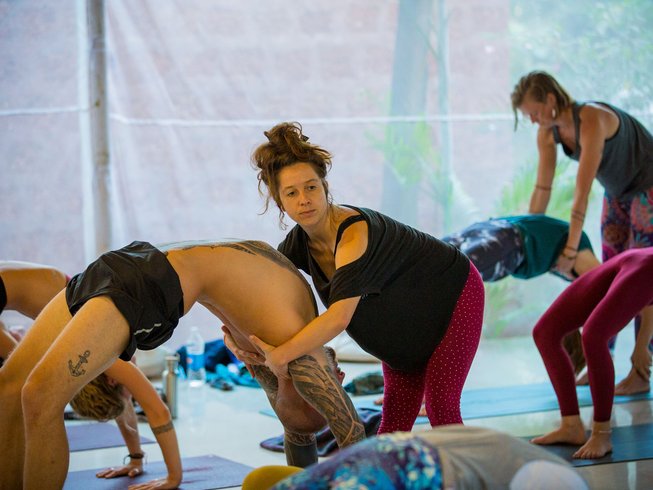
- Hands-on adjustment workshops: In these classes, they will teach you the art of hands-on adjustment.
Vinyasa Flow, Yin yoga, Partner yoga
- 90-minute long intermediate Vinyasa Flow practice thrice a week in the morning
- 60-minute long intermediate Vinyasa Flow practice thrice a week in the afternoon
- Two Yin classes during the course
- Two to three partner yoga classes during the course
- Principles and art of sequencing
- Learning how to create your own Vinyasa flow classes
- Receiving and sharing feedback on your classes as well as others
- Student teaching practice starting from day two and teaching every alternate day. This means a lot of teaching practice opportunities and feedback.
Pranayama
- Introduction to pranayama
- Prana, breath, and pranayama
- The science and anatomy of pranayama
- Pranic body and spiritual significance of pranayama
- Types of pranayama you will practice in this course: Nadi Shodhana, Kapalbhati, Bhastrika, Ujjayi, Bhramari, Surya Bheda.
- How to practice and teach pranayama
Meditation
- Meditation: Introduction, definition, and aim
- Science of meditation
- Effects of meditation on the brain and mind
- How to meditate
- How to teach meditation
- Types of meditation to be covered: Chakra meditation, Kundalini meditation, Om meditation, Nada meditation, Mantra meditation, Antara mauna, Chidakash Dharana, Vippassana, and insight meditation.
Philosophy
- Yoga: History, meaning, and lifestyle
- Four paths of yoga: Jnana Yoga, Raja Yoga, Bhakti Yoga, Karma Yoga
- Ashtanga yoga and Patanjali yoga Sutra
- The eight limbs of Ashtanga Yoga
- The yogic lifestyle
- Obstacles on the path of yoga and means to overcome them
- Importance of satsang and sangha
- Concepts of the three gunas: Satva, Rajas, Tamas.
- Lifestyle and ethics for a yoga practitioner and teacher
Anatomy
The specially designed practical anatomy classes are the backbone of the yoga teacher training course. While most yoga teacher training schools in the world fail in even touching the basics of anatomy, they can proudly say that they excel in this department. Their functional anatomy classes ensure an understanding of the key muscles and bones involved in asana practice and their associated health benefits and contraindications. Substantial emphasis is placed on analytic training, muscular and skeletal anatomy, individual physical limitations, and differences. Not only will you be taught these lectures in the classroom, but you will also be given access to their pre-recorded anatomy module taught by their co-founder Eli Aguilar. They highly encourage you to finish this module before coming to the course. Their anatomy module covers the following:
- The basics: Skeletal system, muscular system, connective tissue, nervous system, and movements of the major joints of the body
- Functional anatomy: Concepts of functional anatomy and physiology related to movement.
- Application of anatomical principles to yoga practice: Mechanics of yoga asana and healthy patterns of movement
- Muscular and skeletal differences, i.e., compression, tension, and proportion and orientation theory.
- Study of different regions of the body: The foot, knee, hips, spine, and shoulder
Teaching practice, methodology, and technique
“The best way to learn is to teach” – Frank Oppenheimer
Broadly speaking, all the yoga teacher training aspirants can be divided into two categories. While some take these 200-hour yoga teacher training courses to become highly skilled yoga instructors so that they can go back and start teaching yoga, others take this training simply to immerse themselves in the yogic environment for a month for their personal growth. Although they have observed over the course of the last 12 years that even those who take the yoga teacher training simply for their personal growth also go back with a divine desire to help others with the tools they acquired.
Since the whole purpose of the YTTC is to give you enough knowledge for personal spiritual growth as well as skills and tools to help others by teaching them yoga, they provide you with a lot of opportunities to practice teaching yoga from the very second day of your yoga teacher training cours,e instead of waiting for the same till the end. This ensures that you let go of all the fears of teaching from day one and receive feedback from your fellow students and teachers alike so that you can continue to improve your teaching skills throughout the course.
The 200-hour yoga teacher training course will help you to deepen your connection with your emotions and feelings, which will empower you to teach from your heart. The yoga teacher training program is a practical training designed to help you become a confident and effective yoga teacher for all levels of students.
The teaching practice classes during your YTTC will cover the following:
- Ashtanga Yoga: How to teach Ashtanga Yoga Primary Series class or classes based on Ashtanga.
- Principles of sequencing a Vinyasa Flow class
- How to create your own yoga sequences
- How to teach a vinyasa flow class
- Finding your voice as a teacher
- Class and floor management
- Your presence in the class as a teacher
- Dos and don’ts in the classroom
- Teaching practice: You will start practicing teaching from day one or two under the guidance of your teachers. In your first teaching class, you will teach one-on-one for 5-10 minutes, but as the course progresses, the group size and the length of class will gradually increase. Your final class will be approximately 45-60 minutes.
- Teaching feedback: You will receive feedback on your teaching from your classmates and teachers, to help you improve your teaching skills and to find your unique voice and style as a teacher
In addition, you will learn
- Principles of demonstration.
- Teaching styles and Qualities of a good yoga teacher.
- Voice projection, floor presence, safety.
- Hands-on adjustments
- Ethics of a good yoga teacher and much more.
By the end of the course, you will be able to teach Ashtanga Yoga classes, Vinyasa flow classes, and mixed-level open yoga classes confidently.
Online pre-study module (non-contact hours)
- Although this pre-study online module is not mandatory to finish before you join this 200-hour yoga teacher training course, it is highly recommended.
- Once you have booked your place in the YTTC, they will give you access to an online module which covers the bonus non-contact hours of the training.
- This online module is a combination of pre-recorded classes and the teacher training manual.
- This module covers a big portion of yoga anatomy as well as a few classes on pranayama, meditation, and philosophy. It also has a few Ashtanga and Vinyasa classes so that you can start practicing at home if you don’t have access to a yoga studio.
- They strongly encourage you to watch and finish the anatomy section before starting the in-person training at Goa with them as this will enhance the quality of your in-person yoga teacher training with them at Sampoorna Yoga, Goa.
Daily schedule
- 06:30 - 08:00 Modified Ashtanga primary series or Vinyasa Flow
- 08:00 - 08:15 Tea break
- 08:15 - 09:15 Chanting, pranayama, and meditation
- 09:15 - 10:15 Breakfast
- 10:15 - 11:30 Philosophy/anatomy/alignment and adjustment workshops
- 11:30 - 13:00 Yoga philosophy/workshops on alignment, adjustment, or teaching techniques/anatomy
- 13:00 - 15:00 Lunch break
- 15:00 - 16:45 Workshops on alignment, adjustment, techniques, and student teaching
- 16:50 - 17:00 Tea break
- 17:00 - 18:00 Vinyasa Flow (every day)
- 18:00 - 19:00 Optional posture clinics on Mondays and Wednesdays
- 19:00 - 20:00 Dinner
- 20:00 - 21:00 Optional philosophy classes on Tuesdays and Thursdays
Weekends: Saturday classes will finish at 16:45 and Sundays are a day off.
Instructors
Eli Aguilar
Eli joined Sampoorna Yoga as a teachere of the 200-hour Yoga Teacher Training Course. And that experience was the non-return point. She felt in love with India, with its culture and with her passion: teaching. In Sampoorna Yoga, she has taught almost all the topics of the syllabus and she is particularly passionate about functional anatomy, how different bodies express the asanas in different ways, and she is very keen on respecting everyone’s unique body and practice. Along with Deepak has co-founded Sampoorna Yoga Costa Rica.
Location
The beautiful and breathtaking Agonda beach is just a 1-minute walk away.

Food
All meals, snacks, tea, and filtered water are included in the price. There is no dinner on Saturday and no meals on Sundays unless it is specifically announced by the school or if it is the day of your welcome meeting or the first or last day of the course.
The following meals are included:
- Breakfast
- Lunch
- Dinner
- Snacks
- Drinks
The following drinks are included:
- Water
- Coffee
- Tea
The following dietary requirement(s) are served and/or catered for:
- Vegetarian
- Vegan
- Gluten Free
- Fruitarian
- Lactose Free
- Ayurvedic
Things to do (optional)
- Surfing: Agonda is not a surf beach exactly, but it does get some waves consistently in certain parts of the beach. The waves can be anything between 1 and 1.5 meters high. There are also a couple of surf shops near Sampoorna Yoga.
- Kayaking, dolphin watching, boat, and backwater trips.
- Light trekking
What's included
- Eligibility to register with Yoga Alliance upon completion of the course
- Tuition fee
- 20 nights accommodation in single or twin sharing packages
- All meals (Snacks, tea, free filtered water)
What's not included
- Travel
- Insurance (any other liability, etc.)
- Airport transfers
- Dinner on Saturday and meals on Sundays unless it’s specifically announced by the school or if it is the day of your welcome meeting or the first / last day of the course
- GST
How to get there
Recommended Airports
Transfer available for additional US$ 41 per person
Goa International Airport (Dabolim Airport)
41 km away from your destination
Transfer available for additional US$ 35 per person
Manohar International Airport
78 km away from your destination
Goa is easily accessible by plane, train, and bus. Goa International Airport (GOI) and (GOX) are well connected by daily flights from Chennai, Mumbai, New Delhi, Hyderabad, Cochin, Bangalore, and many international cities. You can also reach Goa by train from all major cities in India.
Cancellation Policy
- A reservation requires a deposit of 15% of the total price.
- The deposit is non-refundable, if the booking is cancelled.
- The rest of the payment should be paid on arrival.

Reviews
No reviews yet
For this organizer you can guarantee your booking through BookYogaTeacherTraining.com. All major credit cards supported.
Similar Yoga Teacher Training you might like
You recently viewed