
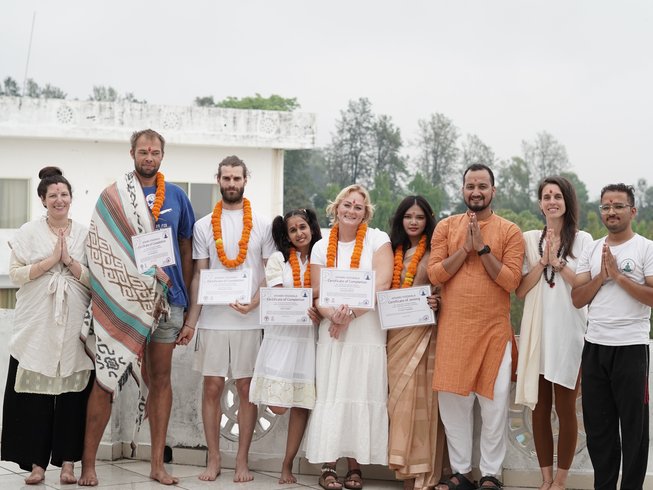
26 Day 200-Hour Holistic and Traditional Yoga Teacher Training in Rishikesh, India
Holistic and Traditional Yoga Teacher Training in Rishikesh
Are you ready to dive deeper into the ancient wisdom of yoga and share its light with the world? Atharv Yogshala invites you on a 26-day transformational journey through this 200-hour certified yoga teacher training course in the heart of Rishikesh—the birthplace of yoga. Step away from distraction. Step into purpose. Awaken, align, and transform at Atharv Yogshala.
Meet the instructors
Highlights
- Authentic Classical Hatha and Ashtanga Vinyasa Yoga
- Learn pranayama, meditation, philosophy, and anatomy, adjustment and alignment, yogic cleansing
- Introduction to Ayurveda and Yoga Therapy
- Three excursions on Wednesdays plus Sundays off to explore and refresh your body mind and soul
- Eligible to register with Yoga Alliance upon completion
- 25 nights accommodation with three daily vegetarian meals
- Free pickup from DED airport
- Free Ayurvedic massage - 60 minutes
Skill level
- Beginner
- Intermediate
- Advanced
Types
25 days with instruction in English
Accommodation
Facilities
- Air-conditioned rooms
- Dining area
- Environmentally friendly
- Garden
- Kitchen
- Lounge
- Luggage room / storage
- Meditation garden
- Multilingual staff
- Smoke-free property
- Terrace
- Yoga shala
- ATM / banking
- Car rental
- Convenience / grocery store
- Free parking
- Free Wi-Fi
- Internet access
- Laundry
- Library
- Medical assistance
- Wireless internet
For your stay, you'll be given comfortable, pleasant, and hygienic rooms. Every room has a private attached bathroom coupled with both cold and hot water and a western toilet.
Apart from this, the rooms will be endowed with free Wi-Fi and essential amenities for daily needs. You can pick a shared room or opt for a solo one too.
Equipped with proper furniture:
- Attached bathrooms with western toilet
- Both running cold and hot water
- Free Wi-Fi
- Filtered water throughout the day
The accommodation is provided in the same building as the classes so it is convenient for the students.
It also includes common areas, and a lounge area wherein students can sit, relax, and study amidst magnificent views.
Wi-Fi, water, filtered drinking water, and laundry services are available in the building itself as well as the big garden which is open for the students.
Facilities
- Air-conditioned room
- Dining area
- Garden
- Kitchen
- Sunrise and Sunset view from the rooftop terrace
- Yoga shala
- ATM (5-minute distance)
- Free Wi-Fi
- Laundry Service (chargeable)
- Clothes line
- Library
- Medical assistance
- Smoke-free property
- Parking lot
Program
Certification
Students who complete the training are eligible to register with Yoga Alliance as Registered Yoga Teachers (RYT®).
Program
This 200-hour teacher training course is a basic training program for those who are aspiring to become a yoga teacher and are looking for their first-level certification or have done other certifications and are looking to build upon their existing foundations or just looking to deepen their knowledge and practice. You are invited to join this extensive, intensive, and nourishing teacher training course. In this course, you will learn the history of yoga and its philosophy, human physiology, anatomy, teaching methodology, adjustments, and other nuances of teaching yoga.
Here, yoga is not just exercise – it’s a way of life. Rooted in traditional Indian teachings, our training blends Hatha, Ashtanga-Vinyasa, Pranayama, Meditation, Yoga Philosophy, Anatomy, Ayurveda, and more into a holistic path of self-discovery and spiritual growth. Whether you’re a beginner or looking to refine your practice, our course is designed to meet you where you are and guide you beyond.
The faculty includes highly experienced Indian and Western teachers, bringing together ancient tradition and modern insight. With their diverse backgrounds and deep dedication, you’ll receive a well-rounded education that bridges East and West, tradition and innovation.
Led in a supportive, ashram-style environment, you’ll gain the tools, confidence, and insight to not only teach yoga – but live it fully.
Course composition and framework
The following are the standards and framework of the course, as designed by Yoga Alliance under five educational categories:
- 100 hours of techniques training and practice - This category includes asanas, pranayama, kriya, chanting, mantras, meditation, and other traditional yoga techniques. These hours are a mix of analytical training in how to teach and practice the techniques, and guided practice of the techniques themselves.
- 25 hours of teaching methodology - This category includes principles of demonstration, observation, assisting and correcting, instruction, teaching styles, qualities of a teacher, the student’s process of learning, and business aspects of teaching yoga.
- 20 hours of anatomy and physiology - This category includes both human physical anatomy and physiology (bodily systems, organs, and so on) and energy anatomy and physiology (chakras, nadis, and so on). It is necessary to include both the study of the subject and the application of its principles to yoga practice to understand the benefits, contraindications, healthy movement patterns, and so on, of yoga
- 30 hours of studying yoga philosophy, yoga lifestyle, and ethics for yoga teachers
- 10 hours of practicum - This includes practicing teaching, receiving feedback, observing others' teaching, and receiving and giving feedback. This section also includes assisting students while others are teaching.
This 200-hour yoga teacher training course comprehensively meets the standards defined by the Yoga Alliance, and exceeds in all respects, as Sarvaguna Yoga has enhanced the program with other activities, including Mantra yoga, the science of sound vibrations and its role in spiritual practices; Buddhi yoga, yogic cognitive therapy; and yogic personality theory; the comparative study of yogic and modern psychology, and so on.
What will you gain from this course?
- Learn authentic yoga from an indigenous yoga school
- Get comprehensive knowledge of yoga, both theoretical and practical
- Get trained in traditional yoga but in the latest scientific way.
- Instruction from highly qualified teachers who are well-versed in both theory and practice
Who is eligible for this course?
This course is open for all, and it has a range of asanas from moderate to intermediate with many variations to reach some advanced poses in order to open up new dimensions of yogic learning, exploring the deep understanding of traditional yoga. The student applying for the online 200-hour yoga teacher training course should be at least 18 years old and have made sure that they do not have recent or new surgery, or any chronic problems because, during the course, they will do various asana, pranayama, and shatkriya that will stretch multiple muscles and body parts and will challenge their body limit.
This course is also open for those who do not want to be a yoga teacher but have a desire to deepen their yoga practice and knowledge.
Ayurveda yoga course
- Definition and importance of Ayurveda
- Ayurvedic approach to a healthy life
- Concept of health and hygiene
- Know your body's nature by understanding the five elements
- Tri doshas
- Different branches of Ayurveda
- What to eat and what not to eat according to your body
- Physical strength
- Nature of material substances
- The seven fundamental tissues
- Managing waste matter in your body
- Digestion and metabolism
- Prakriti - know your constitution
- Supporting pillars of the body
- Body channels
Overview
Yoga Union has been delivering yoga teacher training courses (YTTCs), based on Atharv Yogshala, an internationally accredited program for over a decade now. Based on thousands of hours of experience from all over the world, Kulddep has carefully created and shaped the course to deliver the most educational, life-changing experience. The training is designed to challenge and develop individuals at all levels.
Pre-requisites
- All body types are welcome
- Ability to give and receive feedback skillfully
- Read, speak, and comprehend English because right now our yoga classes are in English only
- Dedication and discipline
- The consumption of meat, fish, eggs, alcohol, tobacco, and drugs is prohibited on the school premises.
- Nudity is strictly prohibited.
- Recommended readings before the course
About the course
Rishikesh, the yoga capital of the world, is the best place to learn and understand yoga from its place of origin and become an accomplished yoga instructor. It does not matter if you are an experienced yogi looking for a rich yoga community or a solo traveler enthusiastic about checking for a beautiful destination on your bucket list. Rishikesh has a lot to offer to anyone and everyone, no matter if you are a yogi, a person trying to figure out the purpose of your life, a traveler who wants to admire and experience the beauty of nature, or just someone who needs a little break from the chaos.
This 200-hour YTT program is designed for beginner, intermediate, and advanced levels. Practitioners take their foundation from Hatha and Ashtanga yoga and emphasize a thorough understanding of all yoga concepts as well as the science underlying them.
Atharv Yogshala created the schedule in a manner that not only assists your learning but also your individual spiritual growth, making you more disciplined and grateful. The classes are planned in a way that is critical to your development and is expected to be attended regularly and religiously. You may only take leave with the approval of the respected teachers in the event of an emergency or illness. Wednesday will be half day and Sundays will be days off.
Brief overview
- Yoga foundation and its importance in life
- Traditional Hatha yoga practices
- Ashtanga Vinyasa flow
- Alignment and adjustment
- Anatomy of yoga
- Science and underlying meaning of over 150+ yoga poses
- Teaching methodology
- Introduction to Himalayan yoga practices
- Various yoga traditions from around the world
- Over 150+ yoga postures
- Mindfulness
- Yoga philosophy
- A holistic approach toward life
- Pranayama, bandha, mudra and mantra
- Meditation and yoga Nidra
- Contemplation techniques
Through this course, the qualified teachers at Atharv Yogshala, led by Kuldeep Bisht, impart their knowledge of ancient yogic and Vedic practices so you can get the opportunity to participate in the transformative yoga learning experience and meet a new version of your rejuvenated personality. The 200-hour yoga teacher training program is designed to assist the students with walking on the path of yoga and self-realization along with equipping themselves with the best of yogic knowledge and experience.
Atharv Yogshala is one of the finest and is recognized by the highest certified bodies’ that aim to provide you with the best yoga teacher training experience with a deep understanding of the ancient and modern practices of yoga and to become a certified and motivated yoga teacher. You will be learning from great yoga masters and certified teachers. The quizzes, assignments, and exams ensure better learning. This one-month life-changing course is guaranteed to give you the knowledge of a lifetime.
Curriculum
1. Mantra and mantra chanting
A. Mantra
A mantra is made up of specific sounds and vibrations that ancient yogis and seers received after years of dedication and disciplined spiritual practice. The effects of mantras are on a physical, mental, and spiritual level. There are a variety of mantras for various specific purposes.
You will be learning:
- Mantra: art and science
- Power of mantra
- How is a mantra created?
- Is mantra considered a religion?
- Sound vibrations and their significance
B. Mantra chanting:
- The proper way to chant
- Aum: meaning and importance
- Shiva mantra (peace)
- Ganesha mantra (removal of obstacles and stillness)
- Krishna mantra (joy)
- Durga mantra (energy awakening)
- Kundalini mantra (chakra stimulation)
- Pavanaman mantra (lead towards light and immortality)
- 12 mantras from the surya namaskar series
- Guru Brahma (guru mantra).
- Twameva mata (surrender mantra)
- Tryambakam (save life and safe journey)
- Gayatri mantra (purification of the mind)
- Sahana bhavatu (guru-disciple study mantra)
- Yogena cittasya (patanjali mantra)
2. Hatha yoga
In this course, you’ll be taught the classic ancient Hatha yoga techniques that have been passed down for thousands of years by great Himalayan gurus. The practices can be done as per the strength and flexibility of the student since the major goal is optimum mental and physical health, and not trying to achieve unattainable standards of perfection.
Following is the list of postures (asanas) to be practiced:
- Surya namaskar (12 asana series)
- Chandra namaskar (12 asana series)
- Pavan muktasana series 1, 2, and 3
- Standing postures series
- Centering postures series
- Kneeling postures series
- Sitting postures series
- Forward bending postures series
- Backward bending postures series
- Supine postures series
- Prone postures series
- Fire series
- Inversions series
- Twisting postures series
- Balancing postures series
- Relaxing postures series
- Meditative postures series
There are about 140 yoga exercises. Theory is considered as significant as practicing because one cannot do them well without proper understanding. Everything is taught from the base level. With dedication and self-motivation, it becomes easier to get deeper into the postures.
Here are some of the theories that will be taught:
- Philosophy of Hatha yoga
- Ancient scriptures
- Aim and objectives
- Yoga therapy
- Balancing through yoga
- Hatha yoga and its connection with nadis, chakras, Kundalini, and the subtle body
3. Ashtanga yoga
In the mid-twentieth century, K. Pattabhi Jois developed a modern-day form of classical Indian yoga called Ashtanga Vinyasa. This was taught by his guru Krishnamacharya as an energetic practice of mindful movements with breath awareness.
In a 200-hour yoga teacher training course, the first series of Ashtanga yoga is taught systematically and a manual will be provided to the school containing more details.
The following will be taught in the Ashtanga class:
- Ashtanga yoga: introduction
- History of Ashtanga yoga
- Awakening of the inner fire
- The breath of life (kapalbhati)
- Prana (life force energy)
- Chakras
- Bandhas and their application
- Eight limbs of yoga
- Drishti (focused attention)
- Cleansing and purification
- Creating a sacred practice space
- Use of yoga props and instruments
- Week 1: Sun salutations A and B
- Week 2: Standing series
- Week 3: Sitting series
- Week 4: Finishing series
- Teaching practices (traditional as well as Mysore style - week)
Following are the postures to be taught:
- Padangustasana or big toes posture
- Pada hast-asana or hand-under-foot posture
- Utthita trikonasana or triangle posture (A + B)
- Utthita parsvakonasana or extended side angle pose (A + B)
- Prasarita padottanasana or intense wide leg stretch (A, B, C, D)
- Parsvottanasana or intense side stretch posture
- Utthita hasta padangustasana or hand-to-big-toe posture
- Ardha buddha padmottānāsana or half-bound lotus forward bend
- Utkatasana or fierce pose
- Vīrabhadrasana or warrior pose (A + B)
- Dandasana or staff poses
- Pascimattanasana or intense west stretch or sitting forward bends
- Purvattanasana or intense east stretch
- Ardha baddha padma pascimattanasana or half-bound lotus forward bends
- Tiryaṅgmukha eka pada pascimattanasana or reverse the leg, one leg intense stretch
- Janusirsasana or head-to-knee pose
- Maricasana or sage marichi pose
- Navasana or boat pose
- Bhujapidasana or shoulder pressure poses
- Kurmasana or tortoise pose
- Supta kurmasana or sleeping tortoise
- Garbha pindasana or embryo posture
- Kukkutasana or rooster posture
- Baddha konasana or bound angle poses
- Upavistha konasana or seated angle posture
- Supta konasana or lying down angle posture
- Supta padangustasana or reclining big toe posture
- Ubhaya padangustasana or both big toes posture
- Urdhva Mukha pascimattanasana or upward-facing full forward bend
- Setu bandh asana or bridge posture
- Finishing postures
Finishing postures:
- Urdhva dhanurasana or upward bow posture
- Salaṁba sarvangasana or shoulder stands posture
- Halasana or plow posture
- Karṇa piḍasana or ear pressure posture
- Urdhva padmasana or upward lotus
- Pindasana or embryo posture
- Matsyasana or fish posture
- Uttana padasana or extended leg posture
- Cakrasana or wheel posture
- Sirsasana or headstand
- Baddha padmasana or sealed lotus poses
- Yoga mudra or sealed yoga posture
- Padmasana or lotus posture
- Utpluthih or uprooting posture
- Savasana or corpse pose
4. Pranayama (breathing practices)
Pranayama, often misunderstood as just a breathing practice, uses breath as a medium to reach the highest state of consciousness. According to yoga, people are born with a certain number of breaths, and a person who has mastery over his breath has mastery over his life.
In this class, you will learn the significance of pranayama in a yogi's life and how it leads you to live a life full of peace, happiness, and good health and can also help awaken the Kundalini. Every week, different techniques of Pranayama will be practiced to achieve different states of experience.
- Week 1: Strength building and understanding pranayama step-by-step
- Week 2: A deeper understanding of pranayama and different practices
- Week 3: Advance practices that involve holding breath and breathing with chakra awareness
- Week 4: Mastery of breath and practice teaching
The topics you will be covering in pranayama:
- Prana and its meaning
- What is pranayama?
- Breath and its connection with the prana
- Pranayama: importance and benefits
- Preparation
- Ancient texts
- Aspects of breathing
- Activation of nostrils
- Secrets of pranayama
- The flow of breath in five elements
- Unit and function of prana
- Levels of prana
- Three gunas or qualities of material nature
- How does the flow of prana take place?
- Quality of breath quality
- Pranic imbalance
- Breath retention
- Sitting positions for practices
- Breathing patterns
- Connection of prana with chakras and Kundalini
Beginners, intermediate, and advanced practices:
- Diaphragmatic pranayama
- Thoracic pranayama
- Clavicular pranayama
- Yogic pranayama
- Pranava pranayama
- Surya phedi pranayama
- Chandra bhedi pranayama
- Nadi shodhana pranayama
- Shitali pranayama
- Shitkari pranayama
- Bhastrika pranayama
- Bhramari pranayama
- Murcha pranayama
- Ujjayi pranayama
5. Meditation (dhyana)
Yoga asanas make the body stable, and pranayama soothes the nervous system, thus preparing the flow of prana to be channelized effectively and making it easier for the mind to focus. Practicing pratyahara, or the controlling of senses, further facilitates control of the mind which is the preparation for meditation.
In this course, start with meditating through concentration, and with more practice, and development of high- level awareness and concentrating on various other techniques will be introduced from basic to intermediate level. The right way of practicing the techniques and their benefits will also be explained in the course.
- Week 1: Foundation of meditation
- Week 2: One-pointed focus, types of visualization exercises, and concentration techniques
- Week 3: Different meditation techniques
- Week 4: Kundalini meditation and chakra awareness
Here is the list of what you will be learning:
- Meditation: history and introduction
- Preparation for meditation
- What meditation is and what it’s not
- Aim and objectives of meditation
- Why - how - where - when
- Philosophy of meditation
- Meditation traditions
- Meditation scriptures
- Preliminary practices before practicing meditation
- 6 Sitting positions for meditation
- Correct sitting posture
- Role of diaphragmatic breathing
- Correct breathing during mediation
- Relaxation meditation rules meditation regarding lifestyle, diet, sleep, sex, and job
- Styles of meditation practices
- Breathe awareness (anapana)
- Mindfulness
- Mantra chanting
- Trataka meditation
- Nada meditation
- Aum meditation
- Active meditation
- Osho meditation (dynamic)
- Buddha walking meditation
- Karma yoga
- Sufi and music meditation
- Tantra and Kundalini meditation
- Chakra awareness
- Ajna or third eye chakra awakening meditation
- Vipassana and passive meditation practices
- Japa (recitation) and ajapa meditation
- Gaurishankar meditation
- Natraj meditation
- Kirtan meditation evening
- Silence meditation
6. Yoga Nidra (psychic sleep)
Yoga Nidra (psychic sleep) is sleeping in awareness in such a way that takes you from a conscious state to a superconscious state of awareness. This is the most natural way of sleeping, for all the birds and animals sleep in yoga Nidra, and so does a yogi.
The goal is to shut out the five senses so the mind can attain pratyahara. You will be guided to let you experience the pure consciousness that you are.
- Week 1: Basic practices for relaxation
- Week 2: Visualization Yoga Nidra
- Week 3: Yoga Nidra with Yoga Nidra
- Week 4: Inner flame yoga Nidra.
You will be learning:
- Meaning and basics of yoga Nidra
- Purpose of yoga Nidra
- Various schools and traditions of yoga Nidra
- Tantric origin
- Lifestyle and rules for practitioners
- Benefits and risks
- Difference between meditation and yoga Nidra
- Yoga Nidra experience
- Healing with yoga Nidra
- Three-body awareness
- The four states of consciousness
- Different stages of yoga Nidra
- Stress relaxation
7. Yoga cleansing (shatkarma)
A sound mind lives in a sound body. You can only focus your mind on something when your body is at ease. With time, due to many factors, especially diet and lifestyle, people tend to accumulate a lot of toxins in the body. Cleansing the body is a fundamental step toward working on your yoga journey.
Shatkarma is a series of six types of cleansing activities that help with physical, emotional, mental, and spiritual cleansing. You will be taught these practices in your 200-hour yoga teacher training course.
The basic theory of the following is also included:
- What is shatkarma?
- Benefits and risks of shatkarma
- Who should practice and who should not
- Preparation for shatkarma
- Practices post shatkarma
- Nadi cleansing
- Jala neti
- Rubber neti
- Kapalbhati
- Jihwa dhauti
- Danda dhauti
- Karna dhauti
- Agnisara kriya
8. Yoga philosophy (yoga darshana)
Yoga philosophy is the real essence of yoga. One can simply change his life by understanding the philosophy behind yoga. Hundreds of yogic texts will be introduced to you, a few important ones being the Yoga Sutra, Bhagwat Geeta, and Upanishad.
In this course, the yoga philosophy explained to you will take you on a great journey of knowledge and understanding of life. Kirtans with iskcon and satsangs are organized for students to have a spiritual experience.
Week 1: Enter the realm of wisdom
- Introduction to spirituality, Indian culture, and the Himalayan tradition
- Introduction to the ancient scriptures
- Meaning and purpose of Indian philosophy
- Nine major Indian philosophies
- Why is yoga philosophy the most important among all other aspects?
- History of yoga
- Different types of yoga
Week 2: Patanjali - external limbs; Patanjali and his teachings
- Introduction to yoga sutras
- Eight limbs of yoga yamas and niyamas
- Philosophy of asana and pranayama
- The science behind karma
Week 3: Inward journey of philosophy - internal limbs
- Philosophy of dhyana, dharana, and samadhi
- Overview of the first, second, third, and fourth chapters of Patanjali
- Mind and how to control it
- Introduction to Upanishad and Bhagavat Geeta
- Week 4: Introduction to the wisdom of yoga nadi
- Chakras
- Kundalini three-fold pain
- Three bodies (sharia)
- Panchakoshas (layers)
- Tri-gunas (qualities of material nature)
- Theory of Mahabhutas (elements)
9. Anatomy and physiology (Sharir vijnan)
Yoga anatomy is the study of how yoga affects the anatomy of the human body, both on a physical and spiritual level and is one of the most important subjects for yoga practitioners.
Physical anatomy:
- Introduction to the Body and body structure
- Different body planes
- Anatomical Movements
- Bones of the skull
- Cervical vertebrae
- Shoulder girdle, arm bones, and pelvic region
- Spine deformities
- Lower extremities
- Tendons and ligaments
- Respiratory system
- Muscular system
- Nervous system
- Spiritual anatomy
- Nadis (energy channels)
- Chakras (energy centers)
- Kundalini (prime energy and the source of all creativity)
- Panchakoshas (five layers)
- Pancha mahabhuta (five elements of the body structure)
- Tri-guna (three qualities)
10. Yoga therapy
Yoga is not limited to the body but also affects the mind and the soul and hence is a holistic science. Through yoga, the body uses its natural healing energy to keep the practitioner healthy and free of illness of any sort, be it, physical, mental, emotional, or spiritual.
In this course, you will be taught to use yoga as a therapy to heal naturally and how to use the therapeutic qualities of yoga through pranayama, asana, meditation, and anatomy. These will be taught in the respective classes and no separate class will be taken for the same.
The following will also be taught about yoga therapy:
- Rules and regulations
- Healing through pranayama, asana, and meditation
- Therapy for various common diseases
11. Ayurveda
Ayurveda, the sister science of yoga, believes that the human body is made up of panchamahabhutas or five elements (earth, water, fire, air, and ether) which create three doshas (vata, pitta, and kapha).
It is the balance and imbalance of these doshas that make a person either healthy or ill. A yoga teacher must have these basics clear so that they can help the students with proper health management, so one Ayurveda workshop will be provided in the course.
The following is what you will learn in the Ayurveda class:
- Introduction to Ayurveda
- Features of Ayurvedic treatment
- Ayurveda and its various diversified areas
- Ashtanga Ayurveda
- Ayurveda and its fundamentals
- Panchamahabhutas (five elements)
- Kapha
- Vata
- Pitta
- Know your Prakriti (constitution)
12. Mudra
Mudras are the divine gestures that channel and distribute prana in the body. Most of the mudras are performed by hand. There are hundreds of different mudras and one can have extraordinary benefits if they are performed in the right manner and with proper knowledge.
You will be learning and understanding:
- The secret of mudras
- The position of different elements in your hands
- The importance of mudra
- The advantages of mudras
- Special guidelines
- Gyan mudra (wisdom)
- Purn gyan mudra (complete wisdom)
- Vairagya mudra (dispassion)
- Abhaya mudra (blessing, fearlessness)
- Dyan mudra (meditation)
- Vayu mudra (air)
- Pran mudra (prana)
- Prithvi mudra (earth)
- Surya mudra (sun)
- Varun mudra (god of water)
- Shoonya mudra (openness and space)
- Pran-apan mudra (prana and apana)
13. Bandha (energy lock)
While doing yoga, your body generates a lot of energy or prana. With mudra, channel this energy, and with bandhas, control and maintain it in the body to prevent it from draining. When done right, the bandhas can also help awaken the Kundalini.
In yoga, there are only three bandhas and in this course, you will be learning about them in detail and proper preparatory techniques will be shared so you can properly perform the bandhas.
Here are the things that you will learn:
- Meaning of energy lock and its importance
- How the prana gets drained
- Energy knots and the way to open them
- Understanding the chakras: muladhara, manipura, vishuddhi
- Experiences with energy locks
- Benefits and risks of the practices
- Practices (for beginners and intermediate level)
- Agnisar (for uddiyana preparation)
- Bahir kumbhaka (external retention)
- Anta kumbhaka (internal retention)
- Ashwini mudra
- Vajroli mudra
- Mula bandha
- Uddiyana bandha
- Jalandhara bandha
- Maha bandha
14. Teaching methodology
It is not enough to learn and practice yoga to be a great yoga teacher. Teaching yoga is an art as it can change lives so a lot of preparation and skills go into it. A proper teaching methodology will help you with:
- The sequence
- How to avoid injuries
- Keeping a positive attitude during and after the practice
- Levels of yoga
- How to give a meditative experience
- Balancing and managing the energy
- Proper demonstration of the practices
- The proper way of instructing and guiding a lesson
- Proper alignment of asanas
- Proper adjustments with and without yoga props
- Establishment of yogic personality
15. Alignment
- Understanding alignment
- Role in daily practice
- Balancing prana and chakras
- Alignment in five koshas
- Importance
- Aspects of alignment
- Decreasing the risk of injuries
- Increase movement in joints
- Alignment based on different body regions
- Upper and lower limb alignment
- Alignment of the torso - thorax - abdomen and pelvis region
- Head and neck alignment
- Alignment of the spine
- Basic alignment postures
- How to make the body feel at ease
- Finding the balance between mind and body
16. Adjustment
- Understanding the meaning and importance of yoga adjustment
- Level of yoga adjustment
- Need and role of adjustment in yoga asana
- Right techniques of adjustment
- How and when to apply bandhas
- Dynamics of asanas
- Self-adjusting in a posture
- Adjust others in postures
- Pre-required methods
- How to use tools and props to adjust postures
- Body weight management during performing the postures
- Rules and preparations for safety
17. Evaluation and certification
You will get the certification at the end of the course after proper evaluation.
The evaluation will be based on:
- Performance throughout the course
- Attendance
- Conduct
- Practical demonstration of the postures (test)
- Written tests (objective and subjective)
Atharv Yogshala 200-hour YTTC schedule
Instruction on YTTC batch starts every month from the seventh with a course duration of 25 days. On the seventh will be the opening ceremony after breakfast and orientation in the afternoon.
Students must arrive one day earlier as Atharv Yogshala prefers that all the students arrive a day before so they wouldn't be in rush.
Daily schedule:
- 05:00 - Wake up
- 05:30 - 06:00 - Morning tea
- 06:00 - 07:30 - Hatha yoga
- 07:45 - 08:45 - Pranayama
- 09:00 - 10:00 - Breakfast
- 10:30 - 11:30 - Yoga philosophy
- 11:30 - 12:00 - Tea time
- 12:00 - 13:00 - Yoga anatomy / alignment class
- 13:00 - 13:45 - Lunch
- 15:00 - 16:00 - Mantra / Ayurveda / teaching methodology
- 16:15 - 17:45 - Ashtanga Vinyasa
- 18:00 - 19:00 - Meditation / yoga Nidra
- 19:00 - 19:45 - Dinner
- 22:00 - Lights off
Schedule on Wednesday
- 06:00 - Shatkriya - cleansing practice
- 07:30 - Self-practice
- 08:30 - Breakfast
- 10:30 - Self-practicum
- 12:00 - 13:00 - Rest
- 13:30 - Lunch
- 14:00 - Free / rest / self-study
- Excursions will be in the morning or afternoon / evening time.
Schedule on Sunday:
- Holiday / field visits
- Includes breakfast on campus
Study materials / giveaway
- Manual
- Notebook
- Jal neti pot, rubber neti
- School bag
- T-shirt
Included excursions
Excursions are a meaningful part of your yoga journey at Atharv Yogshala, offering a chance to explore the sacred land that nurtures the yogic tradition. They provide not just a break from the mat, but a deeper connection to the culture, nature, and spiritual essence of Rishikesh.
Every Wednesday is thoughtfully structured to include half a day for excursions and half a day for self-study, reflection, or rest. This balance allows you to integrate what you’ve learned while also experiencing the beauty and spirit of the Himalayas.
Possible excursions include:
- Ganga Aarti at Parmarth Niketan or Triveni Ghat
- Visit to the sacred Kunjapuri Temple at sunrise
- Nature walks and waterfall hikes
- Trips to Vashishta Cave or nearby holy sites
- Other cultural experiences
Please note: Excursion schedules may vary based on weather conditions, seasonal access, and group preferences, ensuring each experience remains safe, relevant, and enriching.
Instructors
Kuldeep Singh Bisht
Kuldeep Bisht started his journey at a young age an unknown sense of karma yoga was within him from his schooling days; coming from a nuclear family Kuldeep is the elder child for which he had great responsibilities on him. after completing his schooling when everyone of his friends was moving to earn money and getting good jobs he was curious about spirituality and purpose of life, so he traveled towards the Himalayas and after visiting many temples, places and communicating with Gurus he moved towards the south and started his yogi journey.

Lisa Marie Veit
Lisa is deeply immersed in the world of yoga, having completed both a 200-hour and a 300-hour yoga teacher training in Rishikesh in 2022. These intensive experiences not only deepened her personal practice but also empowered her to guide others on their own yoga journey. In the tranquil haven of Varkala, she further dedicated 50 hours to pranayama, exploring the art of breath control and discovering a profound sense of inner calm. Simultaneously a teacher and a student, Lisa continues to find joy in both sharing and expanding her knowledge.
Location
Atharv Yogshala School is nestled within a serene ashram setting, providing a peaceful and conducive environment for deepening one's yoga practice and study. Surrounded by lush greenery, with panoramic views of the Himalayas and the gentle flow of the Ganges river nearby, our ashram provides a sanctuary for you to retreat from the hustle and bustle of everyday life and immerse fully in the yogic lifestyle.
Here, amidst the tranquil surroundings and sacred atmosphere, you can connect with your inner selves, cultivate mindfulness, and experience a profound sense of peace and rejuvenation.
By choosing Atharv Yogshala for your Yoga Teacher Training Course, you're not just embarking on a training program; you are embarking on a life-changing journey of self-discovery, growth, and transformation in the yoga capital of the world, amidst the serene setting of an ashram.
Do not miss out on this unparalleled opportunity to deepen your practice, expand your horizons, and awaken your highest potential.
Join Atharv Yogshala in Rishikesh and embark on the journey of a lifetime. In the ashram, you can find a small café and store to buy some books, incense, oils, etc. Nearby you will also find a small teashop and pharmacy.

Features
Activities
- Massage
General
- Air-conditioned rooms
- Dining area
- Kitchen
- Lounge
- Smoke-free property
- Yoga shala
Services
- Free Wi-Fi
- Laundry
- Library
- Medical assistance
- Newspapers
- Parking lot
Food
Special attention is given to food. You would be given proper breakfast, lunch, and dinner. These foods will be vegetarian with fresh and nutritious ingredients. The meals would be catered with fresh fruits, salad, and healthy beverages.
Yoga gives a lot of importance to the food. Ayurveda, the sister science of yoga, believes that what you eat and how you eat affects how you function in your actions and thoughts.
Atharv Yogshala provides Sattvic meals, which are the highest pranic food and is meant to be full of purity and goodness, allowing you to feel satiated and more energized than lethargic. The meals are delicious and planned perfectly by the six tastes recommended by Ayurveda, making the meal balanced and provided at proper intervals. An Indian vegetarian diet usually includes fresh fruits, vegetables, lentils, rice, chapatti bread, porridge, oatmeal, and plant-based oils to help you become more peaceful, conscious, and feel lighter.
On Sundays, the students can explore local cuisines and food culture or eat in the ashram.
The importance of a holistic diet and mindful eating will be explained in detail by the teachers. You also have the ease of opting for vegan and gluten-free food too. It would be as per the needs of the aspirants. Please note you have to inform Atharv Yogshala as well ahead of time about your choices.
The following meals are included:
- Breakfast
- Lunch
- Dinner
- Snacks
- Drinks
The following drinks are included:
- Water
- Tea
The following dietary requirement(s) are served and/or catered for:
- Vegetarian
- Vegan
- Whole food
- Yogic
Things to do (optional)
- A variety of massages at a discounted price
- Healing sessions
- Kayaking or River Rafting
- Exploring local markets and ghats
- Traveling around the Himalayas
- Trekking
- Visiting famous temples and ancient caves
Spa treatments
The package includes one Ayurvedic full-body massage (wellness or deep tissue)
What's included
- Yoga Training
- Certificate of completion to register with Yoga Alliance
- Printed manual and book
- School shirt and bag, Notebook, Pen, Neti Pot and Sutra Neti
- Family-operated school for a family environment and safety
- Daily three fresh and healthy organic vegetarian /vegan meals
- One Ayurvedic full-body massage - 60 min.
- Pick up from Dehradun airport to Atharv Yogshala
- View of the forest and majestic mountains
- Excursions
- 25 nights accommodation
- Filtered water, tea, fruits, snacks
- Access to a comprehensive library
- GST included
What's not included
- Airfare
- Visa fee
- Personal expenses
- Drop off from the school back to the airport
- Accommodation after the course completes (additional charges)
How to get there
Recommended Airports
Transfer included
Jolly Grant Airport
17 km away from your destination
Transfer available for additional US$ 75 per person
Indira Gandhi International Airport
194 km away from your destination
Arrival by airplane
Taxi pick-up from Jolly Grant Airport (DED) is included. Just let Atharv Yogshala know about your flight details in advance.
For the flights arriving at Indira Gandhi International Airport (DEL), please inform Atharv Yogshala a week before your journey and they will arrange pick-up for an additional cost of 75 USD (one-way fair).
Arrival by train
There is an option to travel by train from Indira Gandhi International Airport (DEL). The train station can be reached by car and a train can be taken to Haridwar. Upon reaching there, you can hire a taxi to get you to Rishikesh.
Arrival by bus
A bus, preferably an overnight one is another convenient option to travel from Delhi to Rishikesh. The Rishikesh bus stand is merely 30 minutes away from school.
Cancellation Policy
- A reservation requires a deposit of 30% of the total price.
- The deposit is non-refundable, if the booking is cancelled.
- The rest of the payment should be paid on arrival.

Reviews
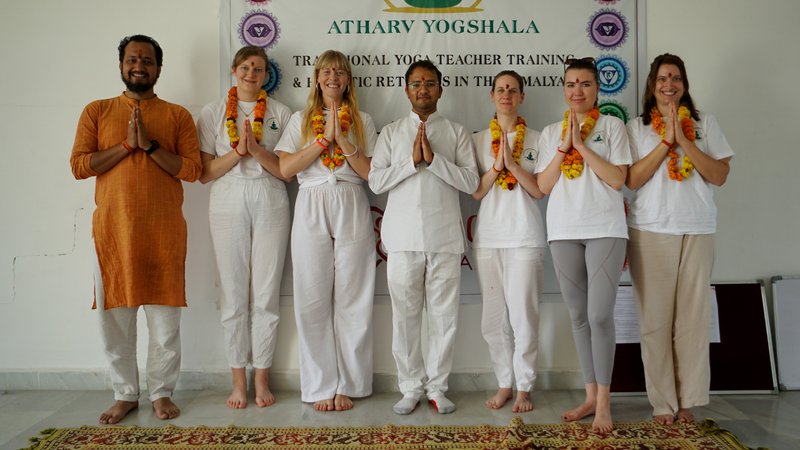
For this organizer you can guarantee your booking through BookYogaTeacherTraining.com. All major credit cards supported.
Similar Yoga Teacher Training you might like
You recently viewed