23 Day 200-Hour Ashtanga Yoga Teacher Training in Goa, India
Ashtanga Yoga Teacher Training in India
This is a unique experience by Oceanic Yoga and not just another yoga teacher training in India. It is designed for beginners and intermediate practitioners of Ashtanga yoga. In this training, you will learn from authentic and lifetime-committed people. Experience a yogic lifestyle in a dedicated ashram for international community of yogis, yoginis, and meditators.
Meet the instructors
Highlights
- Learning the fundamentals of Ashtanga yoga
- Yoga philosophy, anatomy and physiology, and teaching methodology
- Naturopathy and yoga detox, learning how to release emotional blockages
- Eligible to register with Yoga Alliance upon completion
- 22 nights accommodation
- Daily meals
Skill level
- Beginner
- Intermediate
- Advanced
Types
21 days with instruction in English
Accommodation
Facilities
- Environmentally friendly
- Restaurant
- Smoke-free property
- Yoga studio
- Free parking
- Free Wi-Fi
- Parking lot
All rooms have an attached bathroom with running hot water and a shower. Rooms have double and twin beds, mattresses, and sheets. All rooms are air-conditioned and have a wardrobe, clothes hangers, a table, and chairs. The school has also taken care of the lighting of each room to support meditativeness. They welcome you to enjoy the stay in their Goa yoga retreat center with all comforts, the luxury of nature, and yoga with highly established yoga practitioners who are committed to yoga for life.
Program
Certification
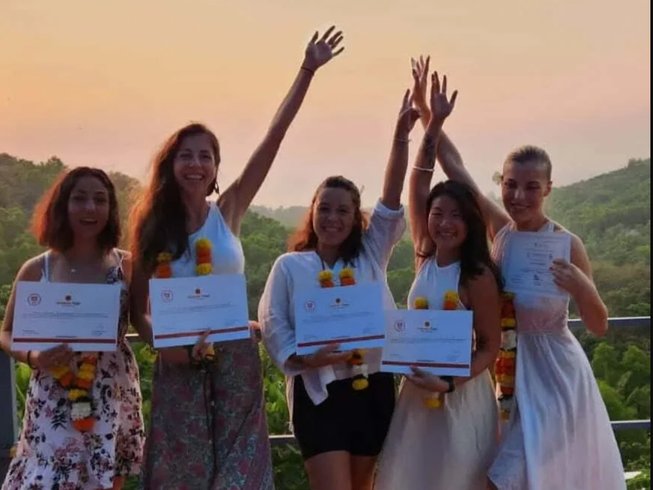
Students who complete the training are eligible to register with Yoga Alliance as Registered Yoga Teachers (RYT®).
Course information
This yoga teacher training in India will act as a foundation course for you to become an internationally certified Ashtanga yoga teacher. During the course, participants experience life in a community of yogis, learn about Ashtanga yoga, yoga clinic on Ashtanga yoga asanas, alignment and adjustments, Ayurveda, and anatomy. Additionally, they become knowledgeable about the ethical responsibilities of a yoga teacher. The yoga teacher training at Oceanic Yoga School in Goa, India, provides a solid foundation for your yoga and meditation journey. This yoga teacher training is focused on Ashtanga yoga teacher training. This means you will be learning Ashtanga yoga, delving into Ashtanga yoga asana and clinical aspects, along with other subjects.
To enhance the depth of the meditation and self-healing, there are many sound healing sessions included in the program. In addition to teaching yoga asanas, these courses include applied anatomy, yoga philosophy, meditation, various kriyas, pranayamas, and detox techniques that can support your emotional healing, along with body cleansing methods. A yoga teacher who has completed this course is eligible for certification. Other trainings also include a yoga retreat, which allows participants to practice yoga and meditation away from the distractions of everyday life. Participants in these retreats enjoy early morning yoga classes in India, healing meditations, Ayurvedic massages, naturopathy, and mud therapies in the ashram.
This training is designed for students who are willing to apply themselves totally to their transformation. In ancient times, yoga teaching was given in the way of a guru-disciple environment as transmission. A similar opportunity is presented to the world in such a way that comfort and convenience are provided to include the scientific advancement of humankind, and yoga includes all and everyone. Yoga means union; it includes all. All are welcome.
Curriculum
- Ashtanga yoga
- Yoga asana clinic
- Vinyasa flow
- Shat kriyas
- Pranayam
- Mantra chanting
- Yoga philosophy
- Yoga anatomy and physiology
- Teaching methodology
- Emotional detox
- Ayurveda and naturopathy
- Meditations
What you will learn
Module 1: Yoga Asanas
- Primary series of Ashtanga yoga
- Yoga asana clinic
- Vinyasa Flow
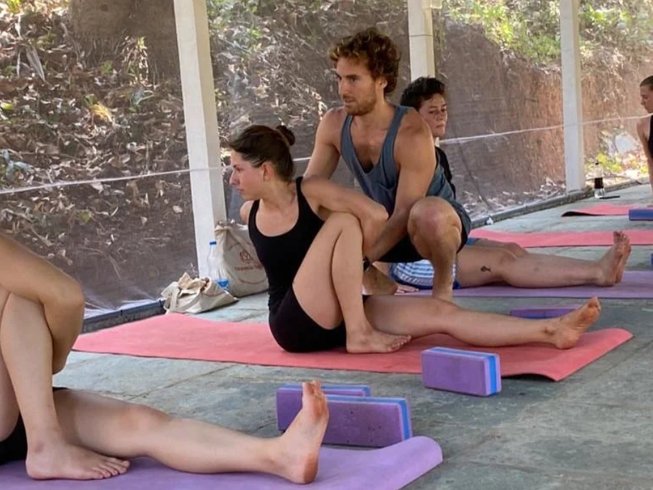
- Alignments and adjustments
- Modifications and corrections as per individuals
- How and when to modify asanas?
- Yoga Nidra - Deep relaxation
- Pranayamas
- Learn to chant mantras
- Bandhas and purification kriyas
- Meditations
- The four paths of yoga
Module 2: Anatomy and physiology
- Body systems
- The difference between yoga and other physical exercises
- Injury prevention and cures
- Alignments, adjustments and modifications through the understanding of Anatomy
- Yoga and Lifestyle
- What is Ayurveda?
- Yogic diet
Module 3: Yoga philosophy
- Aim and meaning of yoga
- Five principles of yogic practice
- Four paths of yoga
- Eight limbs of Raja yoga
- Three gunas – sattva, rajas, tamas
- Three bodies: physical, astral, spiritual
- Working of the mind
- Chakras and their relation to systems
- History, origin of Hatha yoga, and other forms of Yoga
- Evolution of the Hatha yoga tradition
- How spiritual systems evolved through time
Module 4: Teaching techniques
- Psychology of a teacher
- Correction and guidance techniques
- Communication techniques
- How to create a proper class environment?
- The basic structure of a yoga class
- The basic structure of the beginner’s course
- Ethical Guidelines
- Ethical guidelines for a yoga teacher
Module 5: Meditations
- Different meditations devised by Osho
- Meditations from the tradition of Buddha
- Cyclic meditation, Yog Nidra
- Meditation inspired by George Gurdjieff
- Mantra chanting and breathing meditations.
- Note: Choice of meditations varies based on group energy
Module 6: Naturopathy and Emotional Detox
- Mud detox therapy
- Healing diet for the body-mind
- Special breathwork and healing sessions for emotional release
- Meditation techniques focused on emotional healing
- Techniques for cleansing different elements
Syllabus
- Suryanamaskar: You will warm up your body with simple movements and Surya Namaskar before doing the asanas. It warms up fundamental body components, including muscle, organs, and tissue.
- Standing poses: Standing poses are meant to provide you with strength and confidence while providing balance to your body. These help in alignment as well.
- Sitting poses, forward bends, and hip openers: These asanas are designed to open up your joints and provide flexibility to your body while increasing strength and tolerance. In addition, these asanas highly impact your body’s postures and internal organs.
- Sitting twists poses: The twist asanas are designed to benefit your spine. These asanas impact the whole framework of the body.
- Backbends and hand-balancing: Challenge your shoulders, legs, and back with backbend asanas, as your body needs them for performing hand-balances. These poses aim to increase the strength of your shoulders, legs, and hands so that they can lift the body as and when required.
- Prostrate and restorative asanas: Improve your back flexibility and increase adaptability with this asana. These postures give serenity and relaxation to the whole body, and stances can be held long-term with no stress.
- Introduction to the history of yoga, different paths of yoga: understand yoga history with our best yoga teacher training program in India. The point is to understand the benefits of living the yogic way of life.
- Yoga Sutras of Patanjali: Yoga Sutras are separated into four parts: Samadhipada, Vibhutipada, Sadhanapada, and Kaivalyapada. Patanjali was the one who presented yoga postures in a volume.
- Morals for yoga teachers: meditation assists with decreasing pressure and brings harmony and a feeling of bliss. Therefore, learning the correct meditation practice is essential to make the most out of it.
- Yogic lifestyle and yogic diet: the food we eat tremendously affects our physical, mental, and passionate states. Thus, vegan food is served in the course.
- Prologue to Ayurveda for a healthy lifestyle: doshas portray a blend of mental, physical, and passionate highlights. Your body will stay healthy if vata, pitta, and kapha are well balanced. Comprehend your dosha and adjust a reasonable eating regimen for your dosha.
- Life structures: Yoga joins the brain and body. A yoga teacher should know about the body’s inward functioning to understand the effects of postures. The essential frameworks comprise the skeleton framework, muscle framework, respiratory framework, digestive framework, sensory system, hormonal framework, and immunity framework. Life structures include the study of this load of frameworks to make yoga safe.
- Physiology: Three nadis are nerves in the body. Antiquated yoga messages say that there are 72,000 nadis in the body; the three most important nadis are Ida, Pingla, and Sushumna Nadi. Five Kosha’s and 5 Pranas Understand five koshas, particularly annamaya, pranamaya, manomaya, vijnanamaya, and anandamaya, and how to get to them with yoga. Likewise, think about the usefulness of the 5 Pranas for accomplishing total prosperity.
- Seven Chakras and Kundalini Energy: In and out, the flow of subtle energies happens through chakras, as they are energy channels. Learn their location and function, as every chakra has a unique color, bija mantra, and animal ruler. Kundalini is a spiritual power at the base of the spine. When Kundalini awakens, it passes through the first six chakras and merges into the seventh chakra.
- Jalenti: It implies cleaning the nose with water.
- Vamana: Purify the upper stomach with Vamana to restore abdominal health. It helps with clogging, gastritis, dyspepsia, incapacitations of the stomach and spleen, mucus, and bile problems.
- Kapalabhati: Clean your respiratory framework and nasal section, and eliminate phlegm in bronchial cylinders. Kapalabhati dispenses with blood contaminations through the exhalation of carbon dioxide in a critical sum.
- Basti: It balances Vata and fixes the lower digestive system, colon, stomach, intestinal issues, gastric issues, rheumatic joint torments, and persistent migraines.
- Nauli: Stimulate and control your stomach-related framework with Nauli. It rubs the entire mid-region and stomach by rolling and contracting muscular strength.
- Shankhaprakshalana: Practice this profound cleaning method as it includes synergistic cleaning asanas in succession. It cleans the whole gastrointestinal tract with saltwater.
- Yoga as a business: Introduction on how to start one’s own yoga studio and yoga classes.
Get a deeper understanding
This 200-hour ashtanga yoga teacher training course in India will provide you with a deeper understanding of the following subjects and skills:
- Yoga philosophy: Understanding the ancient philosophy of yoga, concepts like prana, chakras, mind, karma, etc., in an analytical and non-sectarian way.
- Hatha yoga and Ashtanga yoga: Gain a deep understanding of the alignments, instructions, benefits, contraindications, and physiology of Hatha yoga poses.
- Anatomy and energy anatomy: You’ll be learning how yoga poses affect our physical and astral bodies and can help improve the health, flexibility, and overall function of our organs. Understanding the advanced principles of human anatomy and physiology enables you to avoid injuries in your practice.
- Teaching methodologies: You will learn expert teaching techniques and the art of instruction, correction, and modification that develop the skills and confidence to teach others. You will understand how and when to assist a student and the principles of sequencing.
General yogic practices
You will be learning the ancient practices of yogis, consisting of classical asanas (physical poses) along with:
- Pranayamas (breathing practices)
- Mudras - Hand gestures to channelize the energy
- Bandhas - Physical locks to direct the energy
- Shatkriyas - Purification techniques to remove toxins and emotional release
- Mantra chanting
- Meditations
Ashtanga yoga and yoga asana clinic
You will learn about the primary series postures of Ashtanga Vinyasa yoga, including the Sun Salutation A and B, and the principles and theory behind the Ashtanga Vinyasa sequence. You will also learn about proper alignment, breathing, corrections, and modifications of the postures. Clinical perspective of ashtanga yoga asanas will also be covered in detail.
Yoga anatomy and physiology
To enhance the understanding of the human body and the functional movements of yoga asanas. You will study yoga anatomy and physiology of fundamental systems of the human body, including skeletal system, muscular system, joints and movements, circulatory system, digestive system, respiratory system, etc.
Teaching methodology
It includes daily subject-specific asana sessions and methodology sessions and is designed to help you develop your practice. The Yoga Alliance endorses this training program. The teaching methodology used in this teacher training course is based on a wide range of sources, including The Yoga Sutras by Patanjali, Hatha Illustrated by Martin Kirk, and Light on Yoga by B.K.S. Iyengar. As a graduate, you will be qualified to teach yoga anywhere in the world.
Yoga philosophy
In addition, you will learn about the yoga philosophy through the Yoga Sutras outlined by Patanjali that comprise postures, concentration, meditation, and ethical and moral guidance - eight limbs (ashtanga) to enlightenment. Through this understanding, you will become more aware of your inner self. This will lead to a greater sense of inner peace and well-being. Yoga philosophy is an excellent choice for those who want to deepen their yoga practice.
Naturopathy and yoga detox
The naturopathy and yoga detox brings science, tradition, and spirituality together. The emphasis is on healing the body, mind, and soul. It incorporates the five elements of nature, which have been used to treat various ailments throughout the ages. Students are taught techniques for utilizing these elements in their daily lives and will have to follow strict instructions.
Participants will also experience an emotional detox program. It stimulates the body’s natural self-healing system and helps you achieve optimum health. It enables you to improve your overall well-being and helps you maintain a positive outlook on life. It can help you overcome problems like weight and fatigue and boost your energy and vitality.
Releasing emotional blocks
Emotional blockages can be harmful to your body and mind. They lead to physical aches and pains, mental disorders, and even depression. However, the proper treatment can help you overcome these blockages. This program focuses on releasing emotional blocks with the help of yoga poses, meditations, and other detox methods. In addition to removing physical blockages, it can also improve your overall health.
Sample schedule
- 06:00 - 08:15 Asana, kriya, mantra chanting, pranayama, or naturopathy
- 08:45 - 09:15 Breakfast
- 10:00 - 11:00 Anatomy
- 11:15 - 12:15 Adjustment and Alignment
- 12:30 - 13:30 Lunch break
- 15:00 - 16:00 Yoga philosophy or Patanjali’s Yoga Sutras
- 16:15 - 17:30 Ashtanga or Vinyasa and practice classes
- 17:30 - 18:00 Tea break
- 18:15 - 19:15 Meditation, yoga Nidra, emotional detox, or Yin
- 19:45 - 20:30 Dinner
Note
The schedule mentioned above is a sample and can change on a batch-to-batch basis. Sundays will be holidays, and only breakfast will be served. Check-in is after 2:00 p.m. on the arrival date. Check-out is after breakfast on the departure date, before 10:00 a.m. For male participants, they offer only a single room accommodation option unless someone tags along.
Instructors
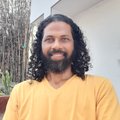
Yogi Abhay
Abhay started practicing asana when he was twelve years old. He did his Yoga Teacher Training at Kaivalyadham Yoga Institue India in 2004. Since 2006 he began teaching Yoga. Up to now, he has trained thousands of students in India and Thailand. During years of regular Meditation and silent retreats, he had many blissful experiences. By studying many modern and ancient Yoga texts, he was able to make the philosophical component of the teacher training courses easy to understand for the students.

Girish Sompura
In Girish’s eyes, yoga is the gateway to learning and understanding your true self, seeing beyond the physical, and discover the subtitles of your authentic character. Girish has been teaching yoga anatomy since 2014. He has N.D.(Doctor of Naturopathy) and Y. D. (Doctor of Yoga) degree. He believes that the beauty of yoga for him is that it always gives satisfaction and joy, in every form. On his unique path, he has developed qualities allowing him to enjoy each moment within society, and these qualities he carries with him into his teaching.
Location
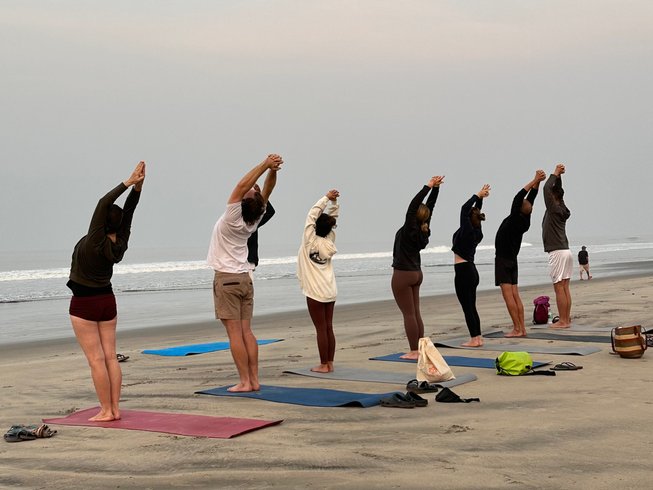
Goa, the beach capital of India, welcomes you. Oceanic Yoga was established in Goa in 2007. It is located near Morjim Beach, one of the most beautiful beaches in Goa. The beach is spacious and long, very good for swimming and sunbathing, and convenient for walking to nearby beaches. Ideal and safe for single women, families, and yoga practitioners. Oceanic Yoga offers a peaceful atmosphere to practice yoga and meditation.
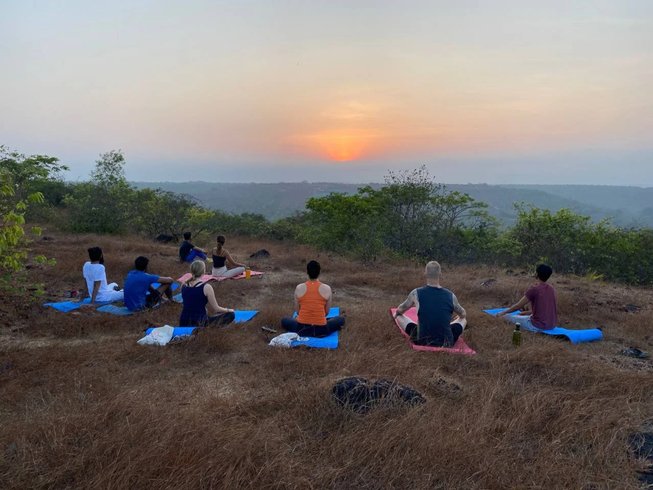
The beach is five to 10 minutes away from Oceanic Yoga. The yoga retreat center in Goa is on a small hillock with a view of the ocean. One will feel like staying in a pleasant green garden with lots of trees and flowers, and, at the same time, a view of the ocean. You will certainly enjoy the serenity of the place, the ocean, the garden, and the greenery, all merging with a mystical beauty.
Distances
- Beach - 5 to 10 minutes

Food
The package includes three vegetarian meals a day. Sundays only breakfast.
Delicious pranic food
The training offers healthy, hygienic, vegetarian food that supports the body during the yoga practices. The kitchen team uses local fresh ingredients and vegetables for cooking. They ensure that the kitchen staff approaches the entire cooking process with love and care. During the training, you are recommended to avoid tamasic food and encouraged to have more pranic food during your stay.
The following meals are included:
- Breakfast
- Lunch
- Dinner
The following dietary requirement(s) are served and/or catered for:
- Vegetarian
What's included
- Training
- 22 nights accommodation
- 3 vegetarian meals a day
- Study materials provided at the beginning of the course
- Yoga teacher training manual
- Yoga mat and props
- 200-hour Oceanic Yoga certificate
- Eligibility to register with Yoga Alliance upon successful completion of the course
- Access to a swimming pool
- Free Wi-Fi
- Access to a washing machine
What's not included
- Airfare
- Transfer from Goa Dabolim Airport or North Goa-Mopa Airport (30 USD)
- Other meals
How to get there
Recommended Airports
Transfer not provided
Goa International Airport (Dabolim Airport)
31 km away from your destination
Transfer not provided
Manohar International Airport
18 km away from your destination
Arrival by airplane
Goa Dabolim International Airport is famous, and most international airplanes land there. The accommodation is around 40 kilometers from the airport; the school can help arrange taxis for students. The New Airport Manohar International Airport (GOX) is almost 18 kilometers from the school. You may also choose this airport based on your convenience. Transfers from and to the airports are available upon request for an additional charge of 20 to 25 USD. This will be paid on actual.
Cancellation Policy
- A reservation requires a deposit of 14% of the total price.
- The deposit is non-refundable, if the booking is cancelled.
- The rest of the payment should be paid 30 days before arrival.

Reviews
For this organizer you can guarantee your booking through BookYogaTeacherTraining.com. All major credit cards supported.
Similar Yoga Teacher Training you might like
You recently viewed