
28 Day 300-Hour Transformational Yoga Teacher Training in Rishikesh, India
Muti-style Yoga Teacher Training in India
Among the best certified and reputed yoga schools in India; Sanskriti Yogpeeth is one of them. After completing a 200-hour yoga TTC; you might be searching for something to expand your yogic knowledge and practice in the world of yoga; Here is that course for you – 300 Hours Yoga Teacher Training Course in Rishikesh. You have established a stiff foundation of yoga with a 100-hour or 200-hour yoga course, now it’s time to put a yoga practice on this foundation. Sanskriti Yogpeeth, an affiliated yoga school in Rishikesh offers an advanced level of yoga course, i.e., 300 Hours Yoga Teacher Training Course that will simply expand or elaborate your knowledge about yoga and its aspects.
Meet the instructors
Highlights
- Expand your yoga knowledge and refine your teaching skills
- Study multi‑style yoga: Hatha, Ashtanga, Vinyasa, and Iyengar
- Teaching materials and modules
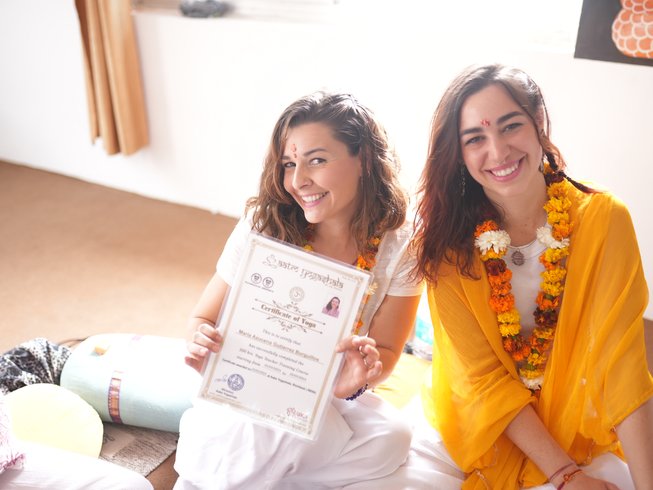
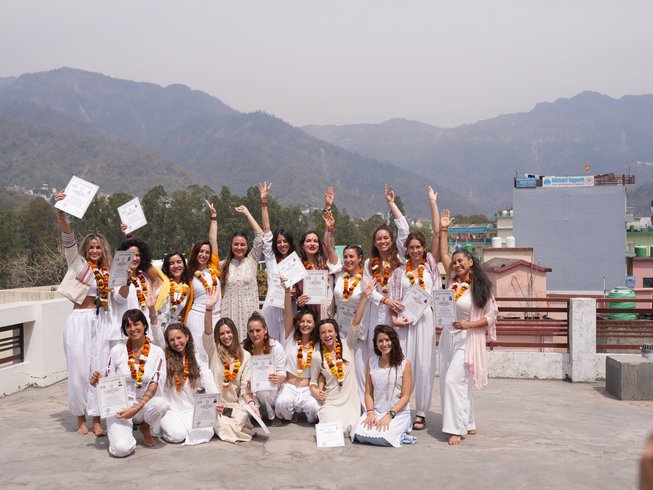
- Certificate of completion
- Explore excursions: Ganga Aarti, Himalayan sunrise temple visits, outdoor Ganges yoga, fire hawan, and more
- 27 nights ashram‑style accommodation
- Daily 100% organic sattvic meals, and raw / vegan / gluten‑free options
- Free taxi pick-up (from Dehradun (DED) Airport)
Skill level
- Intermediate
- Advanced
Types
27 days with instruction in English
Accommodation
Facilities
- Health Club
- Spa
- Steam room
- Air-conditioned public areas
- Air-conditioned rooms
- Café
- Concierge desk
- Dining area
- Environmentally friendly
- Fireplace
- Garden
- Kitchen
- Lobby
- Lounge
- Luggage room / storage
- Meditation garden
- Multilingual staff
- Restaurant
- Smoke-free property
- Special menu request
- Terrace
- Yoga deck
- Yoga shala
- Yoga studio
- ATM / banking
- Baby sitting
- Bicycle rental
- Car rental
- Child care
- Conference room
- Convenience / grocery store
- Currency exchange
- Free parking
- Free Wi-Fi
- Internet access
- Ironing / ironing board
- Laundry
- Library
- Medical assistance
- Meeting room
- Newspapers
- Wireless internet
The yoga courses and programs offered by Sanskriti Yogpeeth include a peaceful and comfy stay for their beloved yoga students. The rooms are spacious and airy, replete with almost all the necessary facilities and requirements. Hygiene is their priority in every aspect, and so the rooms at the stay are cleaned daily and maintain a state of proper hygiene.
Airy rooms
All rooms are equipped with an air purifier. Sanskriti Yogpeeth provides a cleaner, healthier, more enjoyable in-room environment.
Attached washroom
Hygiene is Sanskriti Yogpeeth's priority in every aspect, so all rooms are attached to a personal washroom.
24 hours of power supply
Here you have a 24/7 power supply for your gadgets and any other work.
Personal cupboard
For your luggage, you are provided with a personal cupboard.
24/7 free Wi-Fi
High-speed Wi-Fi internet is available free of charge in all rooms. Get work done or catch up with friends on social media.
Program
Why 300-Hour Yoga Teacher Training Course Necessary?
This is the question, most of the yogis or yoginis might think! There are many reasons to opt for 300-Hour Yoga TTC; some of them are:
- One can expand one’s knowledge of yoga
- One can become habitual to the strict yet peaceful life of yoga
- One can become a great yoga teacher with this yoga teacher training program in Rishikesh
- One can become more experienced in the field and get to learn more and more about yoga
Learning in a Friendly Atmosphere
It will be fun to learn and when you get such a friendly environment while learning, then there is surely nothing better than this! The friendly atmosphere of our yoga teacher training institute in Rishikesh is the biggest strength of the yoga school. One will get the homely environment at our school that will make your learning more interesting and enjoyable.
Be quick and join the registered yoga school in Rishikesh for an advanced-level yoga program!
Course Syllabus: 300-Hour YTTC
- 30 hours - Anatomy and Physiology
- 45 hours - Yoga Humanities History/Philosophy/Ethics
- 60 hours - Professional Essentials teaching methodology/professional development/practicum
- 165 hours - Techniques, training, and practice asana/assignment/Pranayama/meditation
Pranayama (Yogic Breathing Techniques)
Pranayama is a breathing practice or breath regulation technique. "Prana" means "Life Energy" and "Yama" means "Control" meaning the control of breath or life energy. It comprises physiology, methodology, and practicum. Pranayama is the process of controlling breathing or vital energy in the body. In this subject, students learn methods to control their breath and function with vital energy in the central body part. It is an important subject for our students to make them professionally sound for their yogic future.
- Introduction of Pranayama
- Natural breathing
- Abdominal breathing
- Clavicular breathing
- Thoracic breathing
- Yogic breathing
- Nadi Shodhana
- Bhastrika
- Kapalbhati
- Bhramari
- Shitali
- Shitkari
- Surya Bhedi
- Chandra Bhedi
Mudra (Gestures)
In simple terms, Mudra is a sign language or gesture to express the state of mind through the actions of fingers. It awakens the internal and dormant energy of the yogi's body. Some of the yoga mudras are Jnana/Gyan Mudra, Chinmaya Mudra, Vayu Mudra, Agni Mudra, Varun Mudra, Prana Mudra, and Surya Mudra.
- Jnana Mudra
- Chin Mudra
- Yoni Mudra
- Bhairava Mudra
- Hridaya Mudra
- Nasikagra Mudra
- Khechari Mudra
Bandha (Locks)
Bandha means to hold, tighten, bind, or lock. Practicing it regularly helps the prana energy to be stored in a particular part of the body. It also awakens Kundalini by controlling Prana.
- Introduction of Bandha
- Moola Bandha
- Uddiyana Bandha
- Jalandhara Bandha
- Maha Bandha
Meditation (Dhyana)
Meditation is a peaceful state of mind. It is a mental exercise that involves relaxation, focus, and awareness. This exercise is usually done individually while sitting in a calm position and with eyes closed. It is an important subject for students to make them professionally sound for their yogic future.
- Introduction of meditation
- Benefits of meditation
- Om meditation
- Mantra chanting meditation
- Soham meditation
- Shiva meditation
- Yoga Nidra meditation
- Tratak (candle) meditation
- Chakra meditation
- Buddha meditation (Vipassana)
- Inner light meditation
- Prana meditation
- Kundalini meditation
Mantra Chanting (Shlokas, Sutras, Bhajan and Keertan)
Mantra chanting is a spiritual practice. But besides this, it is highly recommended for emotional and mental balance. While chanting the mantras, you release stress and enter into a happy space.
- Guru Stotram - Akhanda Mandalakaram
- Patanjali Prayer - Yogena Chittasya Padena Vacham
- Shanti Mantra - Om Sahana Vavatu
- Pavamana Mantra - Asato Mā Sadgamaya
- Food Prayer - Brahmarpanam Brahma
- Completeness Mantra - Om Purnamadah Purnamidam
Yoga Philosophy
Yoga philosophy is also dualistic. The purpose of yoga Darshan or Philosophy is to show the path on which one can walk and enjoy the whole life i.e. attain salvation. It covers basic yoga Philosophy, history, and concepts of yoga. It is a combination of both traditional Yogic practices along a modern lifestyle.
Yoga Anatomy and Physiology
Yoga deals with the body structure and parts. It is important to know about the structure and function of the body before performing a particular yoga asana. It covers Anatomy. Learning and explanation of aspects of physiology and anatomy for increasing efficiency of classroom explanations, asanas corrections, and cues.
Ayurveda (Nutrition and Diet)
The ancient medicinal science that originated years ago in India is Ayurveda. India is home to many herbs and natural medicines which not only cure the body but also prevent it from further upcoming diseases or illnesses.
Shatkarma/Kriya (Yogic Cleansing)
Shatkarma is a cleansing technique that consists of six yogic purity kriyas (or actions), which are also mentioned in ancient texts of yoga. Its other name is Shatkriya. Through these six actions, the entire human body is purified. The class of Shatkarma gives a detailed description of all the six kriyas namely, Dhauti, Basti, Neti, Trataka, Nauli, and Kapalbhati. Shatkarma involves the sanctification of a body in the early morning in association with the practices of various Asanas.
- Neti (Nasal cleansing technique)
- Trataka (Gazing practice)
- Kapalbhati (Cleansing the lungs)
- Dhauti (Vomiting practice)
- Nauli (Intra-abdominal massage)
- Basti (Reverse enema)
Teaching Methodology (Teaching Practice Student's Practicum, and Ethics)
Yoga deals with the body structure and parts. It is important to know about the structure and function of the body before performing a particular yoga asana. It covers Anatomy. Learning and explanation of aspects of physiology and anatomy for increasing efficiency of classroom explanations, asanas corrections, and cues what you learn is important but in a teaching training course, how you learn and how to convey the teachings to others are equally important. The class on teaching methodology is important as it helps broadly to make you a successful yoga teacher.
Asana Alignment and Adjustment (Posture Correction)
The class of yoga alignment and adjustment holds great importance as it corrects the posture and provides you with the right understanding of each pose or asana.
Yoga Therapy (Therapeutic Yoga)
The prevention of disease through yogic actions is called Yoga Therapy. The purpose of yoga therapy is to treat various diseases by using all yogic processes like asanas, pranayama, etc. All these processes have a specific effect on the subtle to the gross functions of the body.
Asanas (Multi-style Yoga Asana Practice i.e. Hatha, Ashtanga, lyengar)
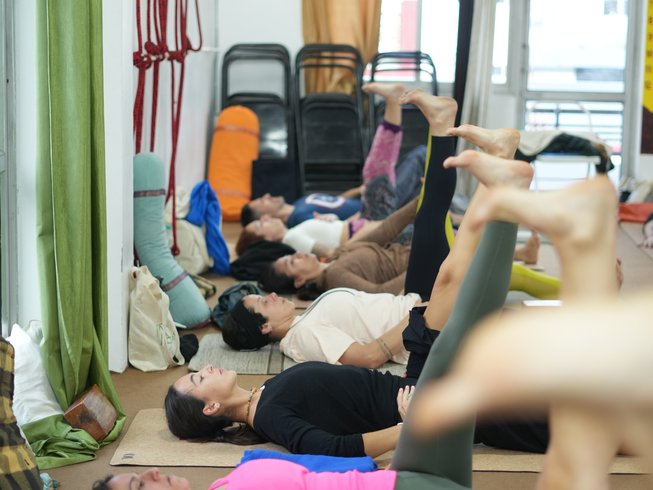
Asana is the starting step of yoga. Also termed the Seated posture, it allows other asanas to be performed. It is done in all styles of yoga, i.e. Hatha, Ashtanga, Vinyasa, and Iyengar. It comprises methodology and asana practice. Daily 3-4 hours of practice of yogic postures are to be done. The introduction of students to the different types of yogic postures is done methodically by increasing the difficulty level step by step. After your basic practice of Asana is done then students encounter asana flows, adjustments, and awareness and breathe of subtle aspects.
Sitting Meditative Postures
- Padmasana
- Sukhasana
- Vajrasana
- Bhadrasana
- Swastikasana
- (and all sitting asana variations)
Standing Postures
- Padmasana
- Tadasana
- Triyaka Tadasana
- Kati Chakrasana
- Trikonasana
- Utkatasana
- Veerbadhrasana (I, II and III)
- (and all standing asana variations)
Balancing Postures
- Natrajasana
- Garudasana
- Uttitha Hasta Padangusthasana
- Pada Angushthasana
- Vriskshasana
- Vatayanasana
- Eka Padasana
- Eka Pada Pranamasana
- Baka Dhyanasana
- Dwi Hasta Bhujasana
- (and all balancing asana variations)
Inverted Postures
- Sirsasana
- Sarvangasana
- Padma Sarvangasana
- Urdhva Padmasana
- Moordhasana
- Salamba Sirsasana
- Halasana
- Viparita Karani
- (and all inverted asana variations)
Twisting Postures
- Ardha Matsyendrasana
- Astavakrasana
- Supta Udarakarshanasana
- Meru Vakrasana
- Parivritti Janu Sirsasana
- (and all twisting asana variations)
Forward Bend Postures
- Janu Sirsasana
- Paschimottasana
- Pada Prasar Paschimottanasana
- Ardha Padma Paschimottanasana
- Padahastanasana
- Koormasana
- Supta Pawanmuktasana
- (and all forward bend asana variations)
Back Bend Postures
- Chakrasana
- Dhanurasana
- Bhujangasana
- Gomukhasana
- Matsyasana
- Supta Vajrasana
- Ustrasana
- Setuasana
- Vrischikasana
- Sarpasana
- Shalabhasana
- (and all back bend asana variations)
Dynamic Postures
- Surya Namaskar
- Chandra Namaskar
- Pawanmuktasana
- Marjariasana
- Vinyasa Flow Asanas Series
- (and all dynamic asana variations)
Relaxing Postures
- Balasana
- Savasana
- Makarasana
- Shashankasan
- Supta Baddha Konasana
- Supta Vajrasana
- (and all relaxing asana variations)
Daily Schedule
- 06:00 - 06:45 Pranayama
- 07:00 - 08:30 Hatha yoga asana
- 08:30 - 09:45 Breakfast and rest
- 10:00 - 11:00 Philosophy
- 11:15 - 12:15 Ayurveda and anatomy
- 12:30 - 13:30 Adjustment-alignment
- 13:30 - 15:30 Lunch and rest
- 15:30 - 17:00 Ashtanga-Vinyasa asana
- 17:15 - 18:30 Mantras and meditation
- 18:30 - 19:30 Self-study
- 19:30 - 20:00 Dinner
- 21:00 Lights off
Included excursions
- Opening Hawan (Fire Ceremony)
- Ganga Aarti (Parmarth Niketan Ashram)
- Sunrise View (Kunjapuri/Balkumari Temple)
- Outdoor Yoga (Yoga by the Ganges)
- Meditation Cave Tour (Mouni/Vashishtha)
- 13 floors Bhootnath Temple (Sunset view)
- Classical Music Concert (with Gurukul students)
- Dance Class (Bollywood, Classical)
Instructors

Amit Deshwal
(Lead Trainer (E-RYT 500), Ashtanga Yoga, Adjustment-Alignment) (Experience: 18+ years) (Level: E-RYT 500 Hour). Being born in the holy land of Rishikesh, his vision of following the path of yoga came naturally as health and spirituality were always subjects of his interest. It all began with doing a Hatha Yoga Teachers Training Course at the renowned yoga School Kevalyadham in Pune and then followed with practice at the Sivananda Ashram in Rishikesh.

Ravi Bisht
(Hatha & Iyengar, Alignment-Adjustment, Teaching Practice) (Experience: 16+ years) (Level: Hatha / Iyengar). - Ravi Bisht is a registered yoga teacher of 500 Hours from the Yoga Alliance USA commenced his yogic journey 15 years back after completing his graduation in Uttarakhand (Rishikesh). To spread yoga as a tool for overall well-being, Ravi Bisht started his yogic path 16 years ago in the spiritual city of Rishikesh where he was born and brought up, he had a keen interest as a child in pursuing this 5000-year-old traditional science which was widely practiced in his city.

Siddhartha Veer
(Yoga Philosophy, QNA, Meditation) (Experience: 16+ years) (Level: Yoga Philosophy). Born in a traditional Indian family, Siddhartha Veer grew up around temples and ashrams of great sage Neem Karoli Baba. The childhood touch with these ashram visits and wanderings in the Himalayan foothills gave him a deep spiritual connection and a thorough understanding of the ancient Vedic wisdom.

Dr. Rakesh
(Yoga Anatomy, Ayurveda, Therapeutic Yoga) (Experience: 1 year) (Level: Anatomy & Ayurveda). Yogi Rakesh believes beauty is held in every moment, and a smile can connect, create, and calm. And that we all can leave a mark, no matter how small, to help make the world a better place. Yogi Rakesh is an Anatomy Teacher. He has earned his Diploma in Anatomy and Philosophy and also a Diploma in Ayurveda. He has been serving his knowledge of Yoga Anatomy and Yoga Therapy for the last two years. His experience of teaching several types of students and people has taken him to another level of teaching.

Shankar Dey
(Meditation, Pranayama and Shatkarma (Kriyas)) (Experience: 1 year) (Level: Meditation, Pranayama and Kriyas). Born and raised in the traditional Brahmin Family in the holy city of Rishikesh. Yogi Shankar Ji was introduced to yoga and ancient scriptures in his early childhood by his father, a Sanskrit scholar. He decided to pursue his studies further, travelling to the Bihar School of Yoga in Munger to complete a certificate course, before studying Vedanta at the Yoga Vedanta Forest academy at Sivananda Ashram, Rishikesh.

Neeraj Rayal
(Ashtanga Vinyasa Yoga Asana, Alignment-Adjustment) (Experience: 1 year) (Level: Ashtanga). Yogi Neeraj Ji was born and raised in a very traditional Brahmin family within the City of God of Rishikesh. He was introduced to yoga and ancient scriptures in his childhood by his Guru Ji. He went on to study Yoga at Uttarakhand Sanskrit University, Haridwar, India where he earned "Yog Shastri" (Graduate or Bachelor degree) in Sanskrit.

Jagjeet Singh
(Meditation, Pranayama and Mantra Chanting) (Experience: 16+ years) (Level: Mantra Chanting). "Jaggi" Ji was born in Haridwar, the holy city of Uttarakhand, and has practiced yoga since he was a little child. He was aware of the advantages of yoga from a young age because most of his family members are practitioners. He begins to practice it thoroughly and attentively. His pure insight came from Hindu texts like the Bhagavad Gita. He became an adept student of yoga with practice and guidance from his wise grandfather, a yogi.

Kalpendra Chauhan
(Shatkarma, Yoga Philosophy, Meditation) (Experience: 16+ years) (Level: Shatkarma). - At Uttarakhand Sanskrit University in Haridwar, Yogi Kalpendra Chauhan Ji earned a master's degree in yoga science in 2008. He also holds a post-graduate diploma in yoga and holistic health from HNB Garhwal University from 2005 and is a certified yoga teacher (ERYT 500 from Yoga Alliance USA). With over 20 years of experience teaching yoga philosophy, pranayama, yoga nidra, and meditation, he has a unique expertise in his field and places a greater emphasis on application than on theoretical knowledge.

Khushbu Verma
Sometimes you need to give yourself some time and care to live your life to the fullest."Miss Khushbu knows it better; an enthusiast of Yoga from a young age, it did not take her long to realize that there is more to her in life to gain happiness and peace than a pocket-filling corporate desk job. Considering that, she embraced the art of Yoga to don the cape of a Yoga professional with an MA degree (Yogacharya), as well as gained years of experience to add to her credentials. Her classes are Yoga Anatomy focused in helping the students acquire
Location
The course will take place in Uttarakhand, India. Near the dense forest area and in the tranquil setting where the yoga school is located, it offers a pure environment to study and practice yoga. Away from the busy life of the city, your stay is in the serene atmosphere of the Swargashram area of Rishikesh. It will be wonderful to get the pure freshness of motherly nature from the rooms of the school. More than this, the other aspect to cherish during the stay at the school is the breathtaking view of the flowing Ganges and the beauty of the splendid Garhwal Himalayas.

Food
Sattvic and Healthy
What you eat, not only influences your physical well-being but also your emotions and thoughts. Yoga does not dissect food into proteins, carbohydrates, or fats, instead, it classifies them according to the effect they have on the body and mind, into three types.
- Sattvic food is the kind that makes you feel energetic and enthusiastic.
- Rajasic food is that which brings about activity or restlessness.
- Tamasic food is the kind of food that makes us lethargic or sluggish.
The following meals are included:
- Breakfast
- Lunch
- Dinner
- Drinks
The following drinks are included:
- Water
- Tea
- Soda
- Detox juices
The following dietary requirement(s) are served and/or catered for:
- Vegetarian
- Vegan
- Gluten Free
- Raw food
Things to do (optional)
To further enrich your yoga journey, Sanskriti Yogpeeth offers a range of add-on services and experiences at affordable additional costs. These are designed to support your wellness, deepen your practice, and enhance your comfort during your stay in Rishikesh.
Ayurvedic Treatments
Enjoy traditional Ayurvedic therapies such as Abhyanga (oil massage), Shirodhara (third-eye oil flow), and Panchakarma detox treatments for physical and energetic balance.
Spa and Wellness Services
Rejuvenate with relaxing spa sessions, steam therapy, and herbal scrubs provided by trained therapists in a serene, natural setting.
Private Yoga or Meditation Classes
Book one-on-one sessions for personalized guidance in Hatha, Ashtanga, Vinyasa, Pranayama, or Meditation to deepen your individual practice.
Laundry Service
Daily or weekly laundry options are available for your convenience to keep your stay hassle-free and comfortable.
Customized Ayurvedic Consultations
Meet with certified Ayurveda doctors for personalized health consultations, diet planning, and herbal remedies tailored to your body type (dosha).
Sightseeing and Excursions
Optional cultural and nature excursions including Ganga Aarti, Himalayan temple treks, Vashishta cave meditation, and local market tours.
Spa treatments
Spa Treatments at Sanskriti Yogpeeth (optional add-on)
During your stay at Sanskriti Yogpeeth, rejuvenate your body and mind with our soothing and revitalizing spa therapies. Blending traditional Ayurvedic knowledge with holistic wellness practices, our spa services are available at an additional cost for those seeking deeper relaxation and healing alongside their yoga training.
Abhyanga (Herbal Oil Massage)
A full-body massage using warm herbal oils to stimulate circulation, calm the nervous system, and eliminate toxins—ideal for relieving fatigue and muscle tension.
Shirodhara (Third-Eye Oil Flow)
A continuous stream of warm medicated oil poured over the forehead to reduce anxiety, improve sleep, and promote mental clarity.
Steam Therapy (Swedana)
Herbal steam treatment that opens pores, flushes toxins, and aids in respiratory health and deep tissue relief.
Herbal Body Scrub and Wrap
Gently exfoliate and nourish your skin with natural herbs and oils, leaving you feeling refreshed and renewed.
Foot and Head Massage
Targeted therapies to release blockages, enhance pranic flow, and ground your energy—perfect after a long day of training.
All treatments are performed by experienced therapists using organic oils and herbs tailored to your body type (dosha). These therapies are highly recommended for promoting physical healing, restoring energy, and enhancing your yogic lifestyle.
What's included
- Certificate of completion
- Free taxi pick-up (from Dehradun (DED) Airport)
- 27 nights accommodation with attached washroom
- Yogic food (100% vegetarian meals)
- Special dietary (raw, vegan, gluten-free)
- 24/7 free WiFi
- 2 tea a day (Indian / Ayurvedic / Herbal)
- Teaching materials and modules
What's not included
- Visa fee
- Airfare
- Taxi pick-up from Delhi and Haridwar
- Ayurvedic Panchakarma and treatment
- Air-conditioner (on additional charges)
- GST
How to get there
Recommended Airports
Transfer included
Jolly Grant Airport
15 km away from your destination
Arrival by airplane
Take a direct flight from Delhi to Dehradun Airport (DED). From the airport, Rishikesh is just a 45–60 minute drive by taxi or pre-arranged pickup service.
Arrival by bus
Regular direct buses from Delhi to Rishikesh are available from ISBT (Kashmiri Gate). Both government (Volvo, AC, non-AC) and private options are available throughout the day and night.
Arrival by train
Board a train from Delhi to Haridwar Railway Station, the nearest major railhead. From Haridwar, you can easily reach Rishikesh via local bus, shared auto, or taxi (approximately 1-hour journey).
Arrival by taxi
You can book a private taxi directly from Delhi to Rishikesh, offering comfort and flexibility for those preferring a more direct route.
Cancellation Policy
- A reservation requires a deposit of 30% of the total price.
- The deposit is non-refundable, if the booking is cancelled.
- The rest of the payment should be paid on arrival.

Reviews
For this organizer you can guarantee your booking through BookYogaTeacherTraining.com. All major credit cards supported.
Similar Yoga Teacher Training you might like
You recently viewed