
34 Day 300-Hour Hatha & Vinyasa Yoga Teacher Training in Kerala, India
India Kerala Yoga Teacher Training
The Shiva Rishi 300-hour advanced yoga teacher training course is for those highly devoted to the path of yoga. It is designed for students and teachers who have already successfully completed their 200-hour yoga teacher training and want to take their education to the next level.
Meet the instructors
Highlights
- Hatha, Vinyasa, and Restorative yoga classes, including the art of teaching and sequencing of yoga sessions
- Daily yoga philosophy, ancient tantric and Vedantic knowledge, pranayama, meditation and yoga Nidra
- Introduction to Ayurveda
- Eligible to register with Yoga Alliance upon completion
- Understanding of the physical and energetic anatomy of the human body
- Field trips and eco-tours in nearby villages, temple visits, beach tours, and sightseeing around Varkala
- 33 nights accommodation and 3 sattvic meals 6 days a week – healthy and vital, vegan and vegetarian food
- Free pickup from Trivandrum Airport
Skill level
- Intermediate
- Advanced
Types
25 days with instruction in English
 Average daily hours of activity: 8
Accommodation
During the yoga teacher training, you will stay in a comfortable room of your choice in one of our guesthouses:
Ganesha Palace
This house hosts the core of the school - the dining hall and rooftop yoga shala. All rooms are the same size and have a private balcony and a bathroom.
Shiva Mandala
This beautiful house is located at the back of the road, with a serene garden, only a 2-minute walk from the school. Both are ideal locations, just a 2-4 minute walk from the beach, Varkala cliff, restaurants, and shops.
Program
Overview
Shiva Rishi Yoga strives to create a warm, welcoming, comfortable, inclusive, and relaxing space and community. When you arrive, you feel like you are coming home. The month spent in this program is a transformational turning point in your life, allowing you to delve into the yogic lifestyle and practice. They are here to provide a supportive and nurturing community for your personal growth.
Their yoga teacher training programs focus on learning and integrating essential elements of teaching yoga. We prepare new teachers to teach with confidence and competence, and experienced teachers to deepen, refine, and expand their repertoire of skills and knowledge.
Deepen your practice
By attending the Shiva Rishi 300-hour yoga teacher training course program, you:
- Build more confidence through more teaching practice
- Have daily practice as well as practical sessions which focus on standing poses, forward bends, twists, backbends, inversions and balances
- Learn how to cue and adjust students while they are practicing asanas.
- Learn about and practice meditation and pranayama
- Explore in-depth Hatha / Vinyasa, sequencing, and alignment
- Understand physical and energetic anatomy of the human body
- Use vegetarian and vegan diet as a practice of ahimsa and a means to enlightenment
- Practice and teach healing, purifying, and detoxifying Hatha yoga kriyas
- Practice Bhakti yoga, Bhajans, mantras, and mudras
- Get a holistic view of disease prevention and proper lifestyle choices through the basic knowledge of Ayurveda
- Study anatomy, including chakras, nadis, prana, granthi, and bandha
Deepening the integration of asana
Each practice is potentially a movement into deeper self-transformation. This movement occurs within each breath, each asana, and each sequence and extends across all the practices a person does in a lifetime. Cultivating a gradual, simple, expanding awakening in this process of self-transformation revolves around continuously coming back to a sense of samasthihi–equanimity in body, breath, mind, and spirit. Create space for meditation. While the entire practice is ideally a meditative experience, students can deepen this experience when you create the space in class for moving into a deeper sense of stillness. This can be done at the beginning of class, during the flow of asanas, or at the conclusion of the asana practice (before or after Savasana). Moving off the mat. Rising from one’s mat, the next Vinyasa starts with being conscious and present in the next transition—back out into the world. Encourage students to pay attention to how they are moving, breathing, thinking, and feeling. Consider concluding class with a moment of reflection with the palms and fingertips together at the heart and forehead to symbolize and feel a sense of connecting the head and the heart in setting intention in moving out into the rest of the day. You must understand the whole of life, not just one little part of it. That is why you must read, that is why you must look at the skies, that is why you must sing and dance, and write poems and suffer and understand, for all that is life.
The art and science of yoga sequencing
Doing yoga and teaching yoga are inextricably intertwined. The experiences you have on your yoga mats help you to refine your personal practice and provide insights into how you might best share yoga with others. The farther you go in your practice, the more you discover the vast universe of elements that are at play in yoga’s incredible potential for enhancing your lives.
In the interrelation of these elements you come to specific practices—sequences of actions—that have different effects depending on how it all flows together. This brings you to several questions: What are the elements of a complete practice? How are they best structured to make the practice most accessible, sustainable, and transforming? What are the best ways to begin a yoga practice session? What should each session include? What are the best ways to sequence different asanas, breathing practices, and meditations? What is the relationship between this asana and that asana? How does this asana affect that asana? What are the effects of asanas ordered in a particular way compared to the same asanas ordered differently? What are the relationships within and between families of asanas—standing asanas, core asanas, arm balances, back bends, twists, forward bends, hip openers, and inversions? What about pranayama (conscious breathing) and meditation practices? What affects them, and how in turn do they affect what follows? On what basis—other than habit, intuition, or whim —should one determine the overall structure and sequence of a complete class? What about moving from one class to the next across the span of a week, a month, a year, or a lifetime? What are the best ways to design classes for a lifetime of yoga?
Philosophy and principles of sequencing
- Traditional approaches to yoga sequencing
- Parinamavada and Vinyasa Krama
- Principle one: moving from simple to complex
- Principle two: moving from dynamic to static exploration, or moving into stillness
- Principle three: cultivating energetic balance
- Principle four: integrating the effects of actions
- Principle five: cultivating sustainable self-transformation
- The general properties of asanas
- Simple relaxation class for beginning–intermediate students
- Chakra sequences
- Muladhara chakra
- Muladhara chakra class
- Svadhisthana chakra
- Svadhisthana chakra class
- Manipura chakra
- Manipura chakra class
- Anahata chakra
- Anahata chakra class
- Vishuddha chakra
- Vishuddha chakra class
- Ajna chakra
- Ajna chakra class
- Sahasrara chakra
- Sahasrara: an integrated chakra class
Refine teaching of asana, pranayama, and meditation
Learn to teach over 100 postures, adapted for various ability levels and conditions, using a combination of clear verbal instructions, visual demonstrations, and hands-on adjustments. Explore seven pranayama techniques, understanding their appropriate application and benefits. Delve into a variety of meditation practices, catering to diverse intentions and experiences. Daily practice teaching is integral to the training program, fostering your skills and confidence as a yoga instructor.
Creative sequencing
General class design plus in-depth exploration of how to design classes for different styles of yoga, levels of students, student conditions, energetic or postural focus, themes, and seasons, or for workshops and retreats.
Practical yoga anatomy and physiology
A comprehensive introduction to human anatomy and physiology as they relate to yoga. This includes understanding the basics of joints, movement, and stability in postural practice. It will also tackle energetics and basic organ systems of human beings, as well as its application to yoga therapy.
Kriya yoga
Kriya enables constant soul awareness in every breath, every thought, and every movement. Happiness, peace, bliss, and joy will be the constant companions of the one who practices Kriya yoga with asana, pranayama, and mantra
What to look forward
This yoga teacher training in Varkala combines classical Hatha yoga and Vinyasa Kriya Flow yoga, blending ancient techniques with a unique, authentic approach developed by Shiva over many years. Vinyasa Kriya yoga integrates gentle asana flows, pranayama, and traditional bija mantras, creating balance in the physical, astral, and causal bodies. With comprehensive education in techniques, teaching methodology, anatomy, yoga philosophy, and practical teaching experience, you'll gain the confidence and skills to teach yoga to a general adult population. This training enables you to teach yoga globally upon successful completion.
Learning system
Shiva Rishi Yoga follows a system that advocates for Svadyaya (self-study) so that at the end of the training the student has adhikara (qualification of the learning) to carry on the yoga journey as a teacher and continued self-practitioner.
Yoga is the process of self-discovery, and through this, the school encourages the students to employ the tools of the various paths of Karma, Bhakti, Jnana, and Raja yoga.
Taking roots in ancient knowledge and making a bridge to modern life, this yoga teacher training will guide you through the practical, philosophical, and mythological aspects of yoga. By practicing classical Hatha yoga with devotion, you will be able to follow any style of your choice in the future and reap physical, mental, and spiritual fulfillment from this life-supporting practice.
Yoga environment
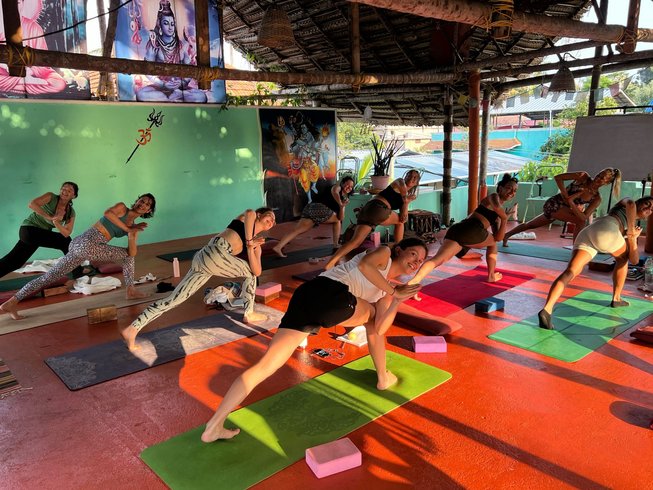
In a serene and ambient rooftop studio surrounded by a tropical garden, you will deepen your self-practice and experience the true principles of yoga. Years of practice and experience have allowed teachers to work their way into the shaping of the Shiva Rishi Yoga program. The school takes care in addressing your needs by providing a serene atmosphere for your stay and practice, supportive and knowledgeable teachers, and a thoughtful, sattvic yogi diet to optimally enhance your practices.
Shiva Rishi also invites you to join spiritual trips into the gorgeous landscapes of Kerala. Prepare to be attuned to nature through walks, mantras, music, and bhajan singing.
Ultimately, yoga is more than physical exercise or stress release. These benefits all come as side effects of regular practice, yet the ultimate aim of yoga is to transcend the limited and egoistic self and connect with the unlimited eternal. Beyond education, Shiva Rishi will provide a proper spiritual environment for your journey.
Curriculum
According to the standards set by Yoga Alliance the training divides into five blocks.
I: Techniques
Herein you will receive training in asanas, pranayama, kriyas, mantras, and meditation in a practical and analytical way. Following a scientific approach, physical and energetic health benefits will be discussed. Subsequently, you will learn to recognize practice mistakes to focus on alignment. Find some syllabus examples for this block outlined in the following:
Standing asanas
Standing asanas stretch and strengthen back, shoulders, and leg muscles. This is especially important to face stiffness and back pain difficulties increasingly arising in modern times through long hours of sitting. In this section, you will learn common standing postures, how to explain their benefits, and experience their balancing effects on the root chakra. You will further discuss how to provide effective verbal cues to direct practitioners coming in and out of the poses, how to verbally adjust them, and how to breathe properly.
Bending postures
Bending asanas loosen the back by separating vertebras and improve blood circulation around the spine. This brings vitalizing and overall health-improving effects on all organs and the brain. You will receive analytical training through demonstration, conversation, and the use of the teacher training course guidebook on how to teach, practice and adjust bending postures. The learning objectives include explaining bending postures, discussing their benefits, communicating proper alignments through verbal instructions and demonstrations, identifying common misalignments and risk factors, guiding practitioners in entering and exiting the poses, and teaching the appropriate breathing techniques for these positions.
By following along with the instructor in this course you can expect:
- Better range of motion
- Strong feet/balance and grounding (in life)
- More endurance in standing
- Improvement in the arches
- More agility (in both mind and body)
- Improved sense of well being
Pranayama
Pranayama is considered to be the foundation of yoga. It is perhaps the most essential aspect of yoga and life. Pranayama is the best precursor for calming and centering the mind for meditation.
Pranayama regulates prana flow in the nadis of the pranamaya kosha. Through practice, observation, and discussion you will learn the most common breathing techniques, how to explain benefits, and how to direct practitioners through these exercises.
You will also practice pranayama on occasional spiritual trips and breathe the fresh air in the mountains or on the rocks by the seashore. Learning objectives are to get an overview and practice experience of multiple pranayama techniques. You will also learn to use powerful breath workout and pranayama techniques to: detoxify your body, balance hormones, boost immunity and energy, calm the mind, awaken your full potential to discover the true nature of the self, and bring you deeper into the yoga practice.
When the mind is focused on the breath, the nervous system gets calmed down, and there is less stress on the body, allowing for better digestion and elimination. Regular practice of pranayama trains the lungs and improves the capacity of the respiratory system immensely, which can especially be important during COVID times.
These are some of the most common hand mudras in pranayama practice:
- Nasikagra mudras (nose tip position)
- Jnana mudra (psychic gesture of knowledge)
- Chin mudras (psychic gesture of consciousness)
- Chinmaya mudra (gesture of manifest consciousness)
- Aadi mudra (primal or first attitude)
Mantra yoga sadhana
According to Samkhya, one of the schools of Hindu philosophy, the very first element that manifested itself in this plane was sound, and that the element of sound itself originated from Lord Shiva’s Drum.
Sanskrit mantras are energy-based sounds that have the power to vibrate and resonate throughout the entire body. Sound travels five times more efficiently through water than through air, and as the human body is comprised of more than 70% water, it is, therefore, an excellent conductor for both sound and vibration. The regular practice of mantras balances the agitations of manomaya kosha.
Once a week, you will practice Yajna yoga in the evening time, coupled with puja, meditation, mantras, breathing techniques, and offerings.
Meditation
- What meditation is, and why it’s practiced
- Variety of meditation techniques and tools
- Quieting the mind to develop deeper levels of awareness
- Connecting with nature and the world you live in
- Connecting with the true self
II: Teaching methodology
In this section, classes will address how to use verbal and physical hands-on adjustments, how to give clear and coherent instructions, how to sequence classes, how poses interact, and how to integrate breathing exercises.
The art of teaching curriculum includes:
- Teaching clinics
- How to address a group of students
- How to use your own body as a teaching tool
- How to use your voice, volume, tempo, and pacing
- How to correct postures
- Choosing the right words
- Energy, passion, confidence, and humor
- Using your own presence and self-awareness as a transformative teaching tool
- The business of yoga
- Teacher guidelines and etiquette
- Appropriate conduct inside and outside the yoga room
- How to apply for a teaching position
- Teacher expectations
- Student interaction
- Role playing
- Feedback
III: Anatomy and physiology
Here you will broaden your understanding of the physical anatomy of the human body and combine important aspects of postures and anatomy with contemplative and internal facets of yoga. Next to physical anatomy, you will go deeper into the realms of energy anatomy such as: chakras, Kundalini, gunas, tattwas, koshas, nadis, and Vayus.
Yoga posture and alignment:
- How your bones determine the range of motion in all the yoga postures
- How and why everyone does yoga postures differently and what they can do about it
- How joint compression and muscle tension or resistance plays role in all the yoga asana
- Learn muscular and skeleton restrictions for proper alignment
- How to improve yoga posture for individuals
IV: Yoga philosophy, lifestyle ethics, and Ayurveda
This teacher training places an emphasis on studying the vast heritage of yoga philosophy. By introducing the Samkhya system of evolution and discussing traditional texts (such as the Yoga Sutras by Patanjali), you will explore the eight limbs of Ashtanga yoga in more detail and take a glimpse beyond the first limbs towards the ultimate goal of yoga.
Drawing inspiration from these sacred texts, you'll gain a deeper understanding of the importance of establishing a strong foundation in the initial limbs as a prerequisite for progressing on the path of liberation. As prospective yoga teachers, you will learn how to guide others on this transformative journey.
Shiva Rishi Yoga is looking forward to inspiring conversations about the precept of non-violence (ahimsa), the concepts of dharma and karma, and finally the value of teaching yoga while being of service to others (seva).
Ayurveda
Ayurveda is the science of living. Your practice depends on you being in balance. Through an understanding of Ayurveda, you learn about your bodily constitution, and what kinds of diets and lifestyles are most suitable to one’s character.
The Ayurvedic doctor will teach you about the theoretical basics of Ayurveda, helping you to discover a diet fitting to your type of body and individual needs. This will allow you to intellectually understand the positive effects of the high qualitative sattvic yogi diet you are served throughout the program.
If you like to relax from the training, you will be delighted to find the yoga studio surrounded by several skilled Ayurvedic massage salons.
V: Practicum
In this section, you will be slowly prepared to lead a yoga class yourself. In the beginning, you will start to teach sun salutation and simple sequences to each other. In the progress of your training, you will then start to observe and correct and finally practice teaching as the lead instructor or observe others teaching.
Use of props
The training also gives lots of contact with props to aid in the skill-based mobility (for a range of motion), and Restorative (for calm and recovery) practices. Yoga props are extremely useful in helping to create sthira (steadiness) and sukha (comfort) in your yoga practice.
By no means limited to beginners, props help to accommodate anatomical differences, tight muscles/joints, and limited ranges of motion. If you’ve ever wondered how to efficiently use props in your home or studio practice, they provide an introduction to the accouterments that could bring your asana practice, the union of body, mind, soul, and spirit.
Targeted outcome
Awaken your practice to this 29-day yoga challenge that will inspire you to step on your mat every day. The benefits of practicing yoga every day can be felt almost immediately.
At the end of the month, you’ll complete the challenge feeling stronger, more connected, and more empowered in your practice. You will gain an understanding of the specific teaching skills needed to make the learning experience for your students as easy as possible.
Continuing the journey of yoga
- Reflection on the process of becoming a yoga teacher
- Discussion on what certification provides
- Code of ethics
- Group conversation about options for teaching and sharing
- Discussion about how to maintain appropriate skill and inspiration
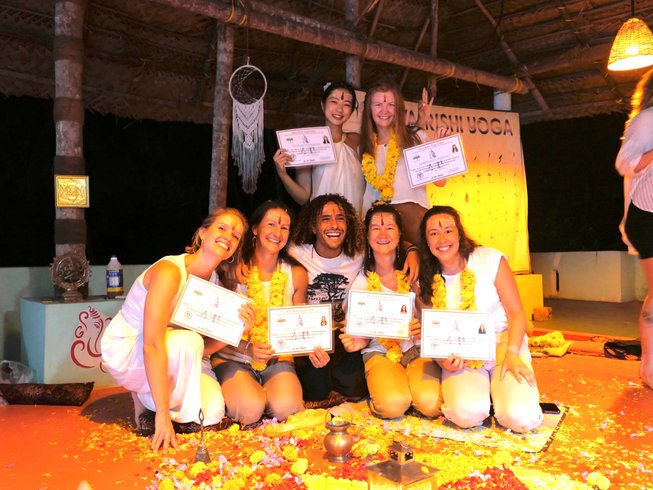
You've graduated! What's next?
- You are now proficient in 300-hour level teaching skills
- You still have much to learn!
- You become great teachers by teaching. So go teach.
- Practice greatly improves your skills
- Integrate and share what you’ve learned in your own voice
- Your practice is your best friend. The best teachers are the best practitioners.
Daily schedule
- 06:30 Asana
- 8:00 Pranayama
- 09:15 Breakfast and break
- 11:30 Theory or Alignment
- 13:15 Lunch and break
- 14:30 Theory
- 16:30 Asana
- 18:00 Meditation
- 19:15 Dinner and free time
Included excursions
Golden Island
We visit the beautiful golden island lovated in the middle of the backwaters through a boat trip. On the island there is a small Shiva temple we receive blessings and sit to meditate and chant mantras
Kappil Beach
We go by taxi to a beautifil small fishermen village right at the beach. From there we walk around 20min alongside the beach to reach a quite spot at the beach where ther eis noonw else to swim in the sea and meditate
Instructors
Shiva
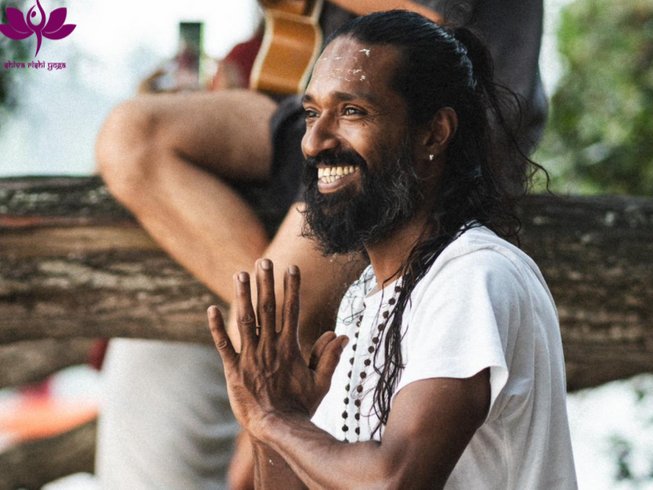
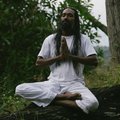
Shiva is the founder of Shiva Rishi Yoga. He is a yogi who has trained in various styles including Bihar School, Sivananda, and the teachings of Patanjali, and his sadhana (life practice) reflects one fully dedicated to the yogic way of life. By placing practice within the context of Indian culture and philosophy, Shiva's classes are an ever-deepening experience of the true tradition of yoga. Shiva says, "only when the mind is focused in its subtlest form, you can realize your true self and the ultimate aim of yoga is accomplished."
Anish
Dr. Anish is an Ayurvedic doctor (BAMS) and he will teach you anatomy classes. Here you will also discuss the benefits of asanas, how to address specific problems, or what to avoid during that time. Moreover, he will introduce you to the ancient healing science of Ayurveda, which ideally complements the yogic practices.
Location
This yoga teacher training takes place in Varkala, Kerala, India. Varkala is located 51 kilometers north of Thiruvananthapuram city in Thiruvananthapuram district, and 37 kilometers south of Kollam in southern Kerala. Varkala is a serene and tranquil hamlet situated on the outskirts of the district. The area boasts several tourist attractions, including a beautiful beach, a 2000-year-old Vishnu Temple, and the Sivagiri Mutt Ashram, which is a short distance from the beach.
Papanasam beach (also known as Varkala beach), located ten kilometers away from Varkala, is famous for its natural spring, which is believed to have medicinal and curative properties. A dip in the sacred waters at this beach is thought to cleanse the body of impurities and the soul of all sins, thus earning its name.
Varkala is also home to the Samadhi, the final resting place of the Guru, attracting thousands of devotees annually during the Sivagiri Pilgrimage (Dec 30-Jan 1). The Guru's unifying ideology of "one caste, one religion, and one god" has transformed this once caste-divided society. With its picturesque beaches, hills, lakes, and Ayurvedic massage centers, Varkala is a captivating destination for tourists seeking relaxation and spiritual enrichment.
Attractions
- Beach
- Mineral water springs
- Sivagiri Mutt
- 2000-year-old Vishnu Temple
Nearby places
- Kollam, 37 kilometers south

Food
Experience the authentic flavors of South India with traditional Keralan cuisine. All meals are vegetarian or vegan. Meals are freshly prepared by Shiva Rishi Yoga at Varkala Cliff's wonderful cook every day and presented as a buffet. You'll feel like your Keralan mother is cooking for you!
Three vegetarian meals per day for 6 days of the week will be provided. The menu includes gluten-free dishes such as dosa (flat bread made with rice flour, similar to chapati) along with salads, fruits, beans, and a wide variety of vegetables.
They do not use chili to keep the stomachs of European guests happy and the diet sattvic. They accommodate special dietary needs and allergies, just let them know in advance.
The following meals are included:
- Breakfast
- Lunch
- Dinner
- Drinks
The following drinks are included:
- Water
- Tea
The following dietary requirement(s) are served and/or catered for:
- Vegetarian
- Vegan
- Gluten Free
- Organic
- Yogic
- Other dietary requirements on request
- Ayurvedic
Exclusive Gifts
Shiva Rishi Yoga at Varkala Cliff has prepared a few special surprises for you, including unique experiences and thoughtful extras to make your journey even more memorable.

Airport drop off

Ayurvedic Massage
Things to do (optional)
Ayurvedic massages and treatments
Beauty treatments
Surfing
Kayaking / boating
Spa treatments
Any type of Ayurvedic massage is available at an additional cost.
What's included
- 33 nights accommodation
- 6 days of class and one free day per week
- Eligible to register with Yoga Alliance upon completion
- Free pickup from Trivandrum Airport
- Full vegetarian sattvic yogi diet (breakfast, lunch, and dinner) 6 days a week
- Daily yoga asana classes
- Puja ceremonies and bhajans
- 300-hour guidebook and additional study material
- Backwater trip to Golden Island and a visit to Kapil Beach
- Free Wi-Fi
- free tea and water
- CCTV security
- 5% GST
Included Exclusive Gifts
Airport drop off
In case you travel back home or fly to your next destination right after the training, we offer you free airport drop off
Ayurvedic Massage
Relaxation for your body after an intense week of training. Enjoy a full body ayurvedic oil massage!
What's not included
- Flight
- Insurance
- Visa
- AC room supplement (120 EUR)
- Transportation during the training program
- Sunday meals (plenty of cafes and restaurants)
How to get there
Recommended Airports
Transfer included
Trivandrum International Airport
37 km away from your destination
Cancellation Policy
- A reservation requires a deposit of 20% of the total price.
- The deposit is non-refundable, if the booking is cancelled.
- The rest of the payment should be paid on arrival.

Reviews
For this organizer you can guarantee your booking through BookYogaTeacherTraining.com. All major credit cards supported.
Similar Yoga Teacher Training you might like
You recently viewed