26 Day 300-Hour Yoga Teacher Training in Goa, India
Yoga Teacher Training in India
A continuation of 200 hours of yoga teacher training (Level 1) at an advanced level. The 300-hour yoga teacher training covers all the advanced syllabi of traditional Hatha yoga and Ashtanga yoga and is ideal for those who have already completed their level 1 i.e. 200-hour yoga teacher training course. It is a 26-day course that provides 300 contact and non-contact hours required for RYT-500.
Meet the instructors

Read more
Highlights
- Hatha and Ashtanga Vinyasa yoga
- Pratyahara, shatkarma, and Yoga Nidra
- Yoga teaching methodologies
- Mudras and bandhas
- Incorporates Ayurvedic principles
- 3 veg meals / day (Sunday excluded)
- Shuttle pick-up from Goa Airport (GOI)
- 25 nights accommodation
Skill level
- Advanced
Types
26 days with instruction in English
Accommodation
Facilities
- Environmentally friendly
- Garden
- Kitchen
- Multilingual staff
- Smoke-free property
- Yoga shala
- Free parking
- Free Wi-Fi
- Internet access
All rooms are equipped with basic amenities such as Western toilets, mosquito nets, toilet paper, bath towels, spacious beds, showers, and fans. All rooms are well equipped for students' comfort. They offer a range of accommodations. Choose from single, twin shared, dormitory, or couple rooms. Their ashram is a budget-friendly place.
Program
Join the 300 hours yoga teacher training course not only to receive the certificate but to live yoga, take the practices of self to an advanced level, and spread them to others to transform multiple lives.
The Level 2 Course differs in its concept from the beginner’s course wherein the trainee teachers get the opportunity to opt for an optional elective subject which will allow them to evolve their body into an entity that not only learns but also teaches. Also, it will help them build a portfolio around a particular specialized branch of yoga they intend to pursue. All this will be done under the professional guidance of certified yoga experts.
Tapas Yoga India’s 300-hour YTT focuses on Hatha and Ashtanga-Vinyasa yoga’s physical and spiritual benefits. The course is designed to introduce students to Patanjali’s yoga sutras, yoga psychology, the nature of breath and thought manifestation, as well as human anatomy and body functions as they relate to ancient and modern yoga practices. It will also cover spiritual anatomy, meditation techniques, Ayurveda, and tracing the workings of prana energy in each of the yoga postures we’ll be doing during this course.
The 300-hour TTC is a meticulous compilation of practices from some of the oldest schools of yoga. It took Tapas Yoga India a lot of thought and introspection to come up with a curriculum that includes the information, techniques, and wisdom available to them through the Bhagavad Geeta, Yoga sutras, and other yogic texts. Through this course, they aim to make you interrogate and question better, and practice effortlessly, and a researcher of this experiential science will emerge within you.
Yoga isn’t a stranger to change. It’s continuously evolving and so are the teaching methodologies. A uniform blend of both modern and traditional methodologies, discover what it takes to become more than just a yoga instructor and how to be an inspiring yoga teacher. Practice and learn how to teach the theoretical classes and to take the asanas sessions.
The teaching method is based on the well-known Gurukula tradition in India. The Guru (teacher) and the Shishya (student) have a sacred relationship that imparts knowledge (the student).
Course highlights
Embarking on a spiritual journey can bring a sense of fulfillment and purpose to one’s life. And what better way to enhance this journey than through the ancient practice of yoga? With its roots in India, yoga has been around for thousands of years and has been known to improve physical, mental, and spiritual health. It is highly recommended that students start practicing yoga before enrolling in the 300-hour yoga teacher training in Goa, India course, as this will enable them to establish a consistent routine.
During the course, students will not only delve into the various advanced practices of asanas, pranayama, philosophy, anatomy, and other disciplines but also explore the depths of human consciousness. The asana practice will be incredibly challenging and tough but will eventually lead to a stronger connection between one’s mind, body, and spirit. To balance the physical demands of yoga, meditation and pranayama practices will be equally imperative and will help students relax and rejuvenate their minds and bodies. Join in for the journey towards spiritual growth and discover the true potential through the practice of yoga.
What does this course cover?
It is strongly advised that students begin practicing yoga before the start of the course, as this will make it simpler for them to remain consistent during the program. The course covers all advanced asanas, Pranayama, philosophy, anatomy, and other disciplines.
Become committed to improving your spiritual path by practicing yoga and seeking greater and deeper realms of human consciousness. The asana practice will be incredibly demanding and rigorous in the 300-hour yoga teacher training in Goa, India course, but meditation and Pranayama will be equally crucial to balance the exhaustion.
In addition to learning about the fundamentals of yoga asanas, pranayama, and meditation, they also dedicate a significant portion of the curriculum to the vital topic of mental health. You will gain insight into the root causes of depression and anxiety and learn how yoga can be used as a powerful tool for healing.
The team is comprised of experienced and compassionate teachers who are dedicated to helping you develop a strong foundation in yoga and prepare you for a career in teaching or personal practice. Come and join in to experience the transformative power of yoga in a nurturing and supportive environment.
Brief syllabus
Yoga philosophy and physiology
- Deeper study of yoga philosophies and traditional texts such as the Yoga Sutras of Patanjali, Hatha Yoga Pradipika, and Srimad Bhagavad Gita. Study of Pancha Klesha (5 causes of suffering) and the concept of siddhi (supernatural power).
- Yoga lifestyle, including the precept of non-violence (ahimsa), the concepts of Dharma, Kama, Artha, and Moksha, body types and Gunas, Pancha Koshas (sheaths), and Granthis (psychic knots), as well as the spiritual and physiological aspects of Chakras.
- Asanas and muscles, the skeletal system and asana (yoga posture), Dharana (concentration), Dhyana (meditation), deeper exploration of the nervous system, Pranayama (breath control), and Kumbhaka (breath retention).
- Ayurveda and diet according to Ayurveda, the evolution of yoga, and "Tapas" – its meaning and application.
- Energy anatomy and physiology (chakras, nadis, etc.), including the study of anatomy and physiology along with its application to yoga practice (benefits, contraindications, healthy movement patterns, etc.).
Techniques, training, and practices
- Analytical training in how to teach and practice the Asanas, guided practice of the Asana techniques, with substantial emphasis on Hatha yoga, Ashtanga Vinyasa Yoga (Primary or Intermediate Series), and advanced yoga postures.
- Study of Prakriti (body constitution), Surya Namaskar – origin and sadhana (meditative practice), and Chandra Namaskar – origin and sadhana (meditative practice).
Level 2
- Study of Mudras (Jnana and Chin Mudra, Yoni Mudra, Bhairava/Bhairavi Mudra, Shambhavi Mudra, Nasikagra Mudra, Mudra for concentration, and common mudras for daily practices).
- Study of Bandhas (Uddiyana Bandha, Jalandhara Bandha, Mula Bandha, and Maha Bandha).
- Pratyahara (control of the senses), Shatkarma and detoxification, Yoga Nidra, and self-awareness.
Teaching methodologies
- Introduction to communication skills, including group dynamics, time management, and the establishment of priorities and boundaries.
- How to address the specific needs of individuals (students) and different groups.
- Principles of demonstration, observation, assessment, and correction.
- Learning teaching styles, qualities of a teacher, and understanding the student's learning process.
- Business aspects of teaching yoga, including marketing and legal considerations.
- Hands-on alignment, class instructions, and verbal adjustments.
- Professional approach, advanced art of teaching, and teaching ethics.
- Understanding the origin of asanas and how every pose category shares a common foundation, building upon this foundation.
Practicum
Evaluation is based on discipline, attendance, behavior, teaching a class as an individual, and a written examination covering the topics discussed throughout the course.
Yoga training schedule
- 06:30 - 07:00 Self practice: Warm-up / pranayama / shatkriya
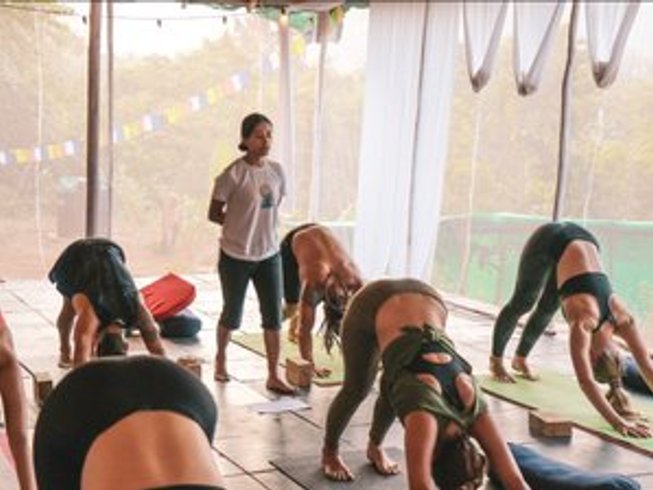
- 07:00 - 08:30 Asana class ( Hatha/ Ashtanga- Vinyasa)
- 08:30 - 09:30 Breakfast / leisure
- 09:30 - 11:15 Asana alignment / adjustment / practicum
- 11:30 Theory I
- 13:00 - 15:15 Lunch / rest / leisure
- 15:15 - 17:00 Theory II
- 17:00 - 18:30 Asana class ( Hatha / Ashtanga- Vinyasa)
- 18:30 - 18:45 Refresh / tea
- 18:45 - 19:30 Meditation / kirtan / mantra chanting / group discussion
- 19:30 onwards Dinner / study / free time / movie
Instructors
Arushi Negi
Arushi comes from India, residing in a town called Rishikesh which is also known as the world capital of yoga. She was born and brought up in Rishikesh so she started yoga at a very young age. She started her journey from an ashram in Rishikesh, where she got introduced to the yogic way of living and the reality of yoga. Her area of expertise includes asana alignment, meditation or pranayama, mantra chanting, Shatkarma, asana classes (Ashtanga Vinyasa, Hatha, and Vinyasa flow) and yogic philosophy.
Location
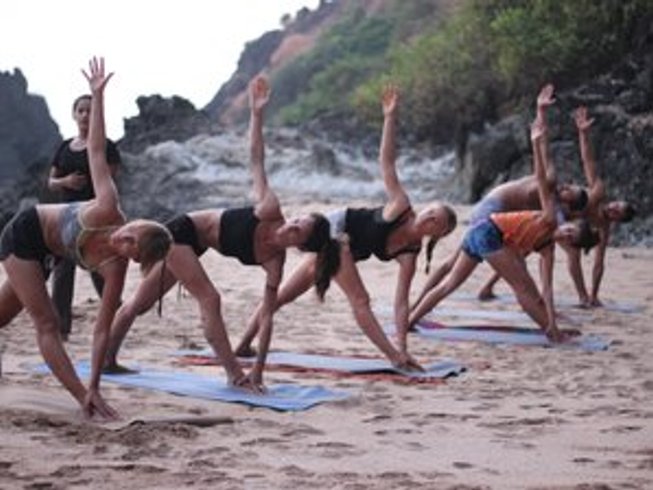
When the waves crash against your feet, disturbing the sand green makes your eye trace the path of it. Waves when splashing against the rock and in no time turn calm as if the ocean is breathing and doing pranayama. It makes Goa a perfect location to practice meditation and pranayama with the sound of the ocean traveling to you and with occasional classes on the beach.
The school is located in South Goa, which is not only famous for its small, secluded beaches but also for the greenery, vegetation, wildlife, and rich culture. This yogic ashram environment is away from crowds and noise and 10 minutes away from the beach, surrounded by nature and greenery.

Food
The following meals are included:
- Breakfast
- Lunch
- Dinner
- Drinks
The following drinks are included:
- Water
- Coffee
- Tea
The following dietary requirement(s) are served and/or catered for:
- Vegetarian
Exclusive Gifts
Tapas Yoga India has prepared a few special surprises for you, including unique experiences and thoughtful extras to make your journey even more memorable.

A trip to the spice Farm
Kayaking

Free Indian Cooking Class

Full body Masssage
What's included
- Course manual and materials
- Certificate of completion
- Course fee
- 25 nights accommodation
- Shuttle pickup from Goa Airport (GOI)
- Course kit
- 3 veg meals / day (Sunday excluded)
- Tea / coffee / filtered water
- WiFi access
Included Exclusive Gifts
A trip to the spice Farm
A trip to the spice farm for exploring Indian Spices
Kayaking
A Kayaking session in the Ocean
Free Indian Cooking Class
Free Indian Cooking class for learning Indian Cuisines
Full body Masssage
A full body ayurvedic masssage
What's not included
- Flights
- GST
How to get there
Recommended Airports
Transfer included
Goa International Airport (Dabolim Airport)
53 km away from your destination
Arrival by airplane
Please book your flight to arrive at Goa International Airport (Dabolim Airport) (GOI). Only pick-up from the airport (pickup) is included.
Cancellation Policy
- A reservation requires a deposit of 30% of the total price.
- The deposit is non-refundable, if the booking is cancelled.
- The rest of the payment should be paid 30 days before arrival.

Reviews
For this organizer you can guarantee your booking through BookYogaTeacherTraining.com. All major credit cards supported.
Similar Yoga Teacher Training you might like
You recently viewed