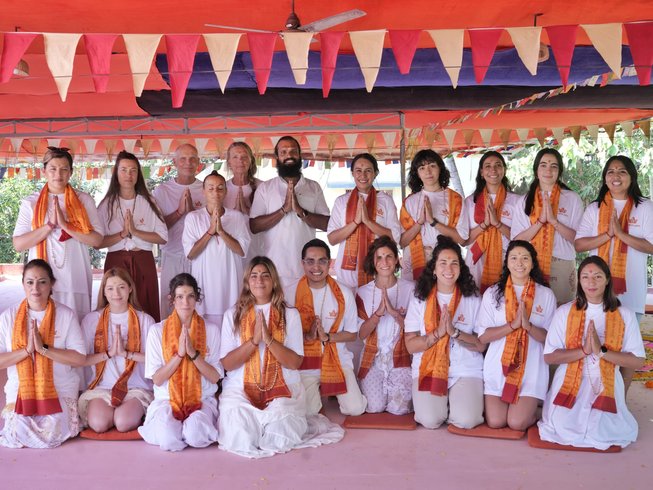
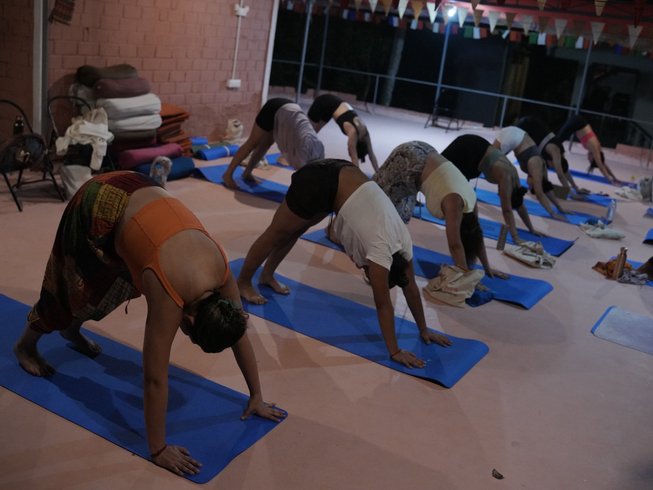
28 Day 200-Hour Kundalini, Hatha, Yin, Ashtanga Vinyasa Yoga Teachers Training in Varkala, India
Multi Style Yoga Teacher Training in India
This yoga teacher training is a comprehensive certified program, it covers 200 hours of curriculum. Vijith Pavi teaches the art of teaching yoga (how to instruct, demonstrate, observe, and give hands-on assistance in a yoga asana class), anatomy (how yoga sees the human body and how the human body functions about yoga asana), philosophy (the roots of yoga as a philosophical and spiritual discipline, particularly about contemporary life), asana, pranayama, and meditation practice (focus on alignment and making every asana available to everyone by the use of props and modifications).
Meet the instructors
Read more
Highlights
- Certificate of completion or eligible to register with Yoga Alliance upon completion
- 200-hour teacher training course manual
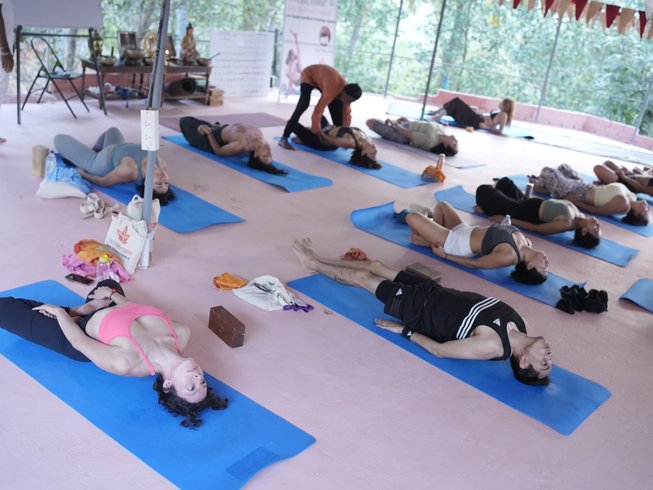
- Daily Hatha yoga and Ashtanga Vinyasa primary series (led class, Mysore class)
- Weekly 1 asanas workshops (advanced yoga session)
- Focus on adjustment and alignment to avoid injuries, asanas sequencing (90 minutes)
- Daily practice of shatkarmas, chakras balancing Yin yoga, Pranayama, Mudra mahabanda, and meditation
- 27 nights accommodation
Skill level
- Beginner
- Intermediate
- Advanced
Types
27 days with instruction in English
Accommodation
Facilities
- Dining area
- Environmentally friendly
- Fireplace
- Garden
- Kitchen
- Free Wi-Fi
- Internet access
- Laundry
- Wireless internet
Tattvaashramyogshala School of Yoga is situated in a quiet place near the beach where you get a real ashram experience. It’s away from the congested area and surrounded by a big garden with an abundance of coconuts, mangoes, cashews, jackfruit, papaya trees, and herbal plants. This is the place where you can learn to relax your mind, body, and soul completely.
Rooms
The rooms are twin bedded sharing rooms with private bathroom and balcony, kitchen facility, surrounded by a beautiful garden with a large terrace. Single rooms are available at request.
Please note that for men, please book only a single occupancy room unless you come with another participant or a group.
Program
Certification
Students who complete the training are eligible to register with Yoga Alliance as Registered Yoga Teachers (RYT®).
Yoga Teacher Training Program Introduction
Experience the yogic lifestyle in Varkala, the spiritual hub of yoga. Connect with like-minded individuals on the yoga journey, fostering personal growth and development. Through Tattvaashram Yogshala, 200-hour yoga teacher training, your practice will significantly improve. Acquire the skills, knowledge, and confidence needed to start teaching.
Affordable 200-hour yoga teacher training in Varkala
Tattvaashram Yogshala offers an affordable 200-hour yoga teacher training course accredited by Yoga Alliance USA, covering Hatha yoga, mantra chanting, shatkriya, Ashtanga Vinyasa yoga, anatomy, yoga philosophy, Kundalini yoga, and Ayurveda. The 28-day course includes accommodation and meals.
Join this training course to improve your yoga practice and teaching skills. After finishing the course, you'll get a diploma from Tattvaashram Yogshala and can register with Yoga Alliance as an RYT 200. This respected certification lets you teach yoga anywhere. Tattvaashram Yogshala will give you a full yoga kit and all the props you need, like mats, bolsters, bricks, and belts. Just bring your luggage when you join. Enroll now to boost your practice.
Training program
If you want genuine 200-hour yoga teacher training in Varkala, choose Tattvaashram Yogshala. Their program is for beginners, intermediate yogis, and seekers of spirituality. organic vegetarian food, and exposure to south Indian Hindu traditions. This course is a chance for personal growth. Learn self-discipline, stamina, and resilience through spiritual and physical techniques. Gain life and career skills as a yoga instructor too.
Tattvaashram Yogshala focuses on yoga teaching techniques, principles, and proper asana alignment. Learn to prepare and lead a class, adjust students, and maximize technique benefits. Their course is comprehensive, including Kundalini yoga and the Ayurveda module also teaches a healthy diet based on your body type. Expect improved fitness, flexibility, and balance.
200-hour yoga teacher training in Varkala - yoga styles:
What is Ashtanga yoga?
Ashtanga yoga, a dynamic Hatha yoga form, emphasizes synchronizing breath with movement and is rooted in vinyasa, flowing movements between postures. Created by T. Krishnamacharya, it demands physical strength, flexibility, and endurance, incorporating various postures, breathing techniques, and meditation. Despite being a physical practice, Ashtanga yoga promotes mental clarity and inner peace, making it a challenging workout.
What are the benefits of practicing Ashtanga yoga?
Ashtanga yoga has several mental and physical benefits, including enhanced strength and flexibility, reduced stress, greater cardiovascular fitness, improved focus and attention, mindfulness promotion, and immunity boost. It combines postures, breathing methods, meditation, and breath synchronization with movement to promote a more present and attentive state.
What is Vinyasa yoga?
Vinyasa yoga, commonly known as "flow" yoga, is a modern form that emphasizes the relationship between movement and breath. It's a broad category that covers Ashtanga and Power yoga. Vinyasa yoga is beneficial to one's health since it reduces stress, promotes heart health, and is suitable for people of all fitness levels. According to research, Vinyasa yoga reduces arterial stiffness, and the risk of high blood pressure, lowers blood sugar and cholesterol levels, enhances mood, and lowers the risk of anxiety and depression.
What are the benefits of practicing Vinyasa yoga?
Vinyasa yoga is a modern type of yoga that focuses on linking movement with breath. It boosts strength, heart health, balance, core strength, flexibility, and movement range. It eases stress and anxiety with breath techniques and meditation, eases tension for relaxation, and enhances sleep by reducing stress and promoting calmness. In short, Vinyasa yoga is a valuable tool for your overall well-being.
What is Kundalini yoga?
Kundalini yoga, which began in India, is a kind of yoga that awakens dormant energy at the bottom of the spine using the body's seven chakras. It combines physical poses, breathing techniques, meditation, and chanting to boost physical, mental, and spiritual health while enhancing focus, concentration, and mindfulness.
What are the benefits of Kundalini yoga?
Kundalini yoga is a potent method that improves your physical, mental, and spiritual health by harnessing kundalini energy. This practice includes different poses, breathing exercises, meditation, and self-awareness. It also supports spiritual growth by guiding kundalini energy through your body's seven chakras, which can lead to enlightenment. Moreover, it enhances immunity by increasing blood flow and reducing inflammation.
What is Hatha yoga?
Hatha Yoga is a widely practiced form of yoga that relies on physical methods to conserve and direct vital energy. It includes different poses, breathing exercises, hand movements, cleansing practices, and meditation. Hatha yoga boosts physical strength, flexibility, and relaxation, and it's suitable for people of all ages, genders, and fitness levels.
What are the benefits of practicing Hatha yoga?
Hatha yoga is a potent system for enhancing your physical, mental, and spiritual health. It includes different poses, breath work, mindfulness, better sleep, core muscle strengthening, and healing the body. Hatha yoga increases flexibility, reduces stress, sharpens mindfulness, betters sleep, strengthens core muscles, and bolsters immunity, reducing inflammation.
What is Nidra yoga?
Nidra yoga is an ancient meditation practice that fosters overall well-being by balancing energy and boosting self-awareness. It combines physical poses, breathwork, meditation, and chanting to induce profound relaxation and enhance self-awareness. This method can assist people in addressing issues such as sleep problems, trauma, burnout, or anxiety, delivering the same advantages as four hours of sleep. Consistent practice can lead to substantial benefits.
What are the benefits of practicing Nidra yoga?
Nidra yoga, also called yogic sleep, is a meditation practice that brings about deep relaxation, lowering stress and anxiety. It boosts sleep quality, emotional stability, and cognitive function, and sharpens focus and concentration. Through the use of breathing techniques and meditation, Nidra yoga encourages a state of heightened consciousness and awareness.
What is Bhakti yoga?
In Bhakti yoga, the personal deity worshipped can vary, and it's an integral part of religious practices in Vaishnavism, Shaivism, and Shaktism. It's one of the three classical paths in Hinduism leading to moksha (liberation), alongside Jnana yoga (the path of knowledge) and Karma yoga (the path of selfless action).
What are the benefits of practicing Bhakti yoga?
Bhakti yoga diminishes ego by promoting actions that go beyond personal desires. It purifies emotions, supports emotional healing, reduces stress and anxiety through breathwork and meditation, and nurtures inner peace and contentment, leading to inner fulfillment.
Training syllabus
Pranayama
Pranayama is a set of yogic techniques and practices generally defined as breath control and is on its own considered a science. Here is what you’ll learn on the subject:
- Introduction of pranayama
- Benefits of pranayama
- The pranic body
- Prana and lifestyle
- Breath, health, and pranayama
- Pranayama and spiritual development
Bandha (energy lock)
Bandhas are energy locks provoked by the contraction of certain groups of muscles and are widely used in yoga practice. Here's a glimpse of what you’ll learn on the subject:
- Preparation for bandha
- Benefits of bandha
- Mula bandha
- Jalandhara bandha
- Uddiyana bandha
Mantra Chanting
Mantras play a big role in daily yogic life. Mantras are sounds and prayers that carry huge energy and vibration. You'll be taught to sing:
- Opening mantra
- Om chanting
- Gayatri mantra
- Guru vandana (prayer to guru)
- Student and master mantra
- Patanjali mantra (Ashtanga mantra)
- Completeness mantra
Kriya and Shatkarma (the six purification methods of Hatha yoga)
Shatkarma is the Sanskrit term for one of the six yogic purification techniques (kriyas) as outlined in the "Hatha Yoga Pradipika." The purpose of these cleansing techniques is to keep the body strong, clean, and healthy. They remove toxins and anything blocking the flow of prana in the body. Practicing Shatkarmas internally purifies the body and makes pranayama and meditation practice easier by preparing the body to perform these practices without distraction, discomfort, or fatigue. These are traditional yogic cleansing techniques, which are very effective to remove many illnesses and open the body blockages. You'll learn to use and perform:
- Jal neti
- Rubber neti
- Kunjal
Hatha yoga
Indian traditional yoga style is called "Hatha" (“ha” means sun while “tha” means moon), unifying the sun and the moon within (Yin and Yang). It's a physical method for preparing and maintaining the body, providing stamina, flexibility, balance, and strength. This is the most traditional, popular, and beneficial yoga style. What you’ll practice:
- Joints warm-ups (Pawanmuktasana series A, B, and C)
- Surya namaskara (sun salutation) and chandra namaskara (moon salutation)
- Yoga mudrasana
- Matsyasana
- Gupta padmasana
- Baddha padmasana
- Kukkutasana
- Garbhasana
- Backward bending asanas
- Saral bhujangasana (Easy cobra pose)
- Bhujangasana (Cobra pose)
- Tiryaka bhujangasana (Twisting cobra pose)
- Sarpasana (Snake pose)
- Ardha shalabhasana (Half locust pose)
- Shalabhasana (Locust pose)
- Saral dhanurasana (Easy bow pose)
- Kandharasana (Shoulder pose)
- Ardha chandrasana (Half moon pose)
- Setu asana (Bridge pose)
- Gomukhasana (Cow’s face pose)
- Forward bending asanas
- Paschimottanasana (Back stretching pose)
- Gatyatmak paschimottanasana (Dynamic back stretch pose)
- Pada prasar paschimottanasana (Legs spread back stretch pose)
- Janu sirsasana (Head to knee pose)
- Ardha padma paschimottanasana (Half lotus back stretching pose)
- Hasta padangusthasana (Finger to toe stretch)
- Padahastasana (Hand to foot pose)
- Sirsha angústia yogasana (Head to toe pose)
- Utthita janu sirsasana (Standing head between knees pose)
- Spinal twisting and advanced asanas
- Ardha matsyendrasana (Half spinal twist)
- Parivrtta janu sirsasana (Spiraled head to knee pose)
- Poorna bhujangasana (Full cobra pose)
- Kurmasana (Tortoise pose)
- Poorna salabhasana (Full locust pose)
- Poorna dhanurasana (Full bow pose)
- Dhanur aakarshan-asana (Archer’s pose)
- Chakrasana (Wheel pose)
- Hanumanasana (Leg splitting pose)
- Poorna matsyendrasana (Full spinal twist pose)
- Mayurasana (Peacock pose)
- Padma mayurasana (Lotus or bound peacock pose)
- Gorakshasana (Yogi gorakhnath’s pose)
- Astavakrasana (Eight-twists pose)
- Vrschikasana (Scorpion pose)
- Inverted pose, balancing pose, and core pose
Teaching Methodology and Adjustment
During these classes, you will learn how a perfect posture should be. You will also learn how to connect with your future students through correct class verbal guidance and touch adjustment, and about recurrent yoga injuries and how to prevent them. Teaching methodology is one the most important parts of the course, as students will learn the following:
- How to conduct a class
- Classroom management
- How to get in and come out from the posture
- How to assist and help while teaching the class
- Leading and cueing - how to use speech in a class environment What makes you different from other teachers
- Which asanas you should recommend for different health conditions
- How to use belts, bolster, bricks, and chairs to assist in your classes.
Yoga philosophy
The history of yoga, the sutras of Patanjali, and the importance of yoga and its origins in India are the subjects of these classes and lectures. A question and answer session is performed in every class so doubts can be addressed, and students can deepen their knowledge about yoga. Topics in this class include:
- The study of yoga philosophies and traditional texts (such as the Yoga Sutras, Hatha Yoga Pradipika or Bhagavad Gita)
- Yoga lifestyle, such as the precept of non-violence (ahimsa), and the concepts of dharma and karma
- Ethics for yoga teachers, such as those involving teacher-student relationships and community
- Understanding the value of teaching yoga as a service and being of service to others through yoga (seva)
Yoga Anatomy
Anatomy classes expose how the body, bones, inner systems, and respiration are affected by asanas and the flow of breath. To know the basic structure and function of the organs and systems is very important to practitioners so that their work as a yoga teacher can be safe and beneficial to future students. These are what you’ll learn:
- Complete body anatomy
- Skeleton system
- Muscular system
- Circulatory system
- Nervous system
- Respiratory system
- Endocrine system
- Joints and movement
Kundalini yoga
Although Kundalini yoga is practiced around the world, its origin is unknown. The concept of Kundalini energy has been around for centuries and was mentioned in ancient Vedic texts from 1,000 B.C. Kundalini yoga is practiced to activate this energy, which allows it to move up and through the chakras along your spine. Some of the topics you’ll learn include:
- Fundamentals of Kundalini
- Tantras as the philosophical background of Kundalini yoga
- Concept of Kundalini shakti
- Concept of chakras
- Their location and psycho-physical significance.
Practices you’ll learn:
- Muladhara chakra activation: mula bandha, vazroli / sahjoli mudra, ashwini mudra, chakra and kshetram (trigger-point) location session, nasikagra drishti
- Swadhisthana chakra activation: swadhisthana chakra ksetram (trigger point) location, ashwini mudra, vajroli and sahjoli mudra
- Manipura chakra activation: incorporating relevant asanas for manipura chakra, manipura chakra and ksetram (trigger point) location session, manipura shuddhi (purification), agnisara kriya, uddiyana bandha
- Anahata chakra activation: Incorporating relevant preparatory asanas for anahata chakra activation, anahata chakra and ksetram (trigger point) location session, anahata chakra purification, ajapa japa and intensive heart chakra and heart space harmonization technique (dharana practice)
- Vishuddhi chakra activation: incorporating relevant preparatory asanas and mudras for vishuddhi chakra activation, vishuddhi chakra and ksetram (trigger point) location session, vishuddhi chakra purification
Ayurveda
Ayurveda, a natural system of medicine, originated in India more than 3,000 years ago. The term Ayurveda is derived from the Sanskrit words 'ayur' (life) and 'veda' (science or knowledge). Thus, Ayurveda translates to knowledge of life. Based on the idea that disease is due to an imbalance or stress in a person's consciousness, Ayurveda encourages certain lifestyle interventions and natural therapies to regain a balance between the body, mind, spirit, and the environment. Some of the subjects in this module include:
- Ayurveda - basic concepts
- The body matrix
- Panchamahabhutas
- Health and sickness
- Diagnosis
- Treatment
- Types of Treatment
- Diet and Ayurvedic treatment.
- Improving the flow of energy around the body can enable relaxation, relieve pain, speed healing, and reduce other symptoms of illness.
- Human anatomy and physiology
- Health nutrition
- Yoga
- Indian system of medicine
- Biochemistry
- Disease treatment
- Herbal drugs
Ashtanga Vinyasa
An intensive and integral part of yoga, Ashtanga yoga style requires deep commitment and self-practice to achieve the goal. tattvaashram Yogshala’s yoga instructors are experienced teachers Yogi Vijith Pavi and advanced practitioners of the Ashtanga style, and will guide you safely through the hardest postures. You’ll learn the complete Led primary series:
Standing poses:
- Hasta padangusthasana and pada hastasana
- Utthita trikonasana
- Parivrtta trikonasana
- Utthita parsvakonasana
- Parivrtta parsvaKonasana
- Prasarita padottanasana A, B, C, and D
- Utthita parsvottanasana
- Utthita hasta padangusthasana
- Utthita parsvasahita
- Utthita eka padasana
- Ardha baddha padmottanasana
- Utkatasana
- Virabhadrasana A, B, and C
- Paschimottanasana A, B, and C
- Purvottanasana
- Ardha baddha padma paschimottanasana
- Tryang mukha eka pada paschimottanasana
- Janu sirsasana A, B, and C
- Marichyasana A, B, and D
- Navasana
- Lolasana
- Bhujapidasana
- Kurmasana
- Garbha pindasana
- Kukkutasana
- Baddha konasana A and B
- Konasana A and B
Intermediate asanas:
- Salabhasana A and B
- Dhanurasana
- Ustrasana
- Kapotasana A and B
- Supta vajrasana
- Bakasana A
- Bakasana B Jump
- ArdhaMatsyendrasana
- Yoga Nidrasana
- Tittibhasana
- Pincha mayurasana
- Vatayanasana
- Gomukhasana A and B
- Hasta sirsasana (head stand)
- Advanced A (optional)
- Kasyapa asana
- Bhairava asana
- Urdhva kukkutasana A
- Galavasana
- Eka pada viparita dandasana
- Viparita salabhasana
- Ganda bherundasana
- Hanumanasana
- Natarajasana
- Raja kapotasana
Rules or tapas which you have to follow:
- Do not lie in the whole process of learning.
- Discipline is an integral part of the training program so the course routine must be strictly observed.
- No negative communication or speech
- No consumption of non-veg food
- No alcohol
Final exams
- Attend 100% of the course.
- Pass yoga theory oral and written exams.
- Pass anatomy physiology and philosophy.
- Pass all the practical exam teaching including all the poses and asana.
- Complete all the given assignments.
- Practical and theoretical classes of yoga
Classes will begin class with warm-up exercises, then sun salutation or surya namaskar in all 12 poses in sequence, and then the practice of asanas. You will be taught how to comfortably hold the pose for a longer period. Tattvaashram Yogshala Yoga offers yoga teacher training in Varkala, 200-hour yoga teacher training, Yoga Alliance certified training, mantra chanting classes, yoga anatomy courses, kundalini and Ayurveda modules, and Yoga Alliance RYT-200 certification.
Tattvaashram Yogshala is a certified yoga school from Yoga Alliance. They offer top-quality yoga education in Varkala. Their main focus is delivering excellent 200-hour yoga teacher training in Varkala. They also provide a 500-hour course. Their training covers traditional yoga styles, yoga philosophy, asanas, breathing exercises, anatomy, meditation, mantra chanting, and teaching methods., Ayurveda, sound healing. Their skilled teachers study and practice yoga thoroughly. They build a strong foundation based on scriptures, personal experience, and the yoga tradition. Their 200-hour training classes are small, with around 20 students. This ensures personalized attention and a lively learning environment.
Students from around the world come to their welcoming atmosphere, forming special connections. Tatvaashram Yogshala is a highly regarded yoga certification institute in Varkala, known for its successful approach. Join them today and start your yoga journey.
The duration of the course is 28 days or 200 hours. It includes theory and practical sessions from Monday to Saturday. Sunday no classes yoga and yogic practice
Brief Introduction to the Origin and Development of Yoga
- Yoga – Aims and Objectives
- General Introduction to Darshanas with special reference to Sankhya and Yoga
- General Introduction to Four Paths of Yoga
- Principles of yoga and Yogic Practices
- Guiding Principles for Yogic Practices
- Introduction to Hatha yoga
- The Benefits of various Asanas on different parts of the Human Body
- Yoga and Stress Management
- Human psyche: Yogic and modern concepts, behavior, and consciousness
- Relationship between mind and body
- Mental hygiene and the role of yoga in mental hygiene
- Mental health: a yogic perspective
- Prayer and meditation for mental health
- Psychosocial environment and its importance for mental health (Yama and Niyama)
- Introduction to Yoga
- *History and evolution of yoga
- Principles and philosophy of yoga from traditional
- Tantra yoga
- Ashtanga yoga
- Hatha yoga
- Mantra yoga
- Nada yoga
- Laya yoga
- Krya yoga
- Yantra yoga
- Kundalini yoga
- Swara yoga
- Manta chantings
- Pathanjali yoga sutras
- Tatwas
- Asanas
- Bandhas
- Shatkriyas- the cleansing procedures
- Relaxation techniques
- Yoga Nidra
- Meditation techniques
- Different styles of contemporary yoga
- Yoga and mental health
- Yogic diets and nutrition
- Yoga and mental health
- Human anatomy, physiology,
Asana Sequencing
- Yogic concept of health and disease
- Yogic diagnosis
- Yogic psychology
- Teaching methods of yoga
- Precautions of yoga practices
- Adjustments and alignments of yoga practice
- Yoga and Ayurveda
Reference books
- Lights on Yoga by BKS Iyengar
- Asana Pranayama Mudra Banda by Swami Satyananda Saraswai
- Pathanjali Yoga Sutra
Sample Daily Schedule
- 05:00 Wake up
- 05:30 Ashtanga Vinyasa
- 07:15 Pranayama, Meditation, Shat Karma
- 08:30 Breakfast
- 10:00 Yoga Philosophy
- 11:30 Adjustment and Alignment
- 12:30 Lunch
- 14:30 Anatomy
- 15:30 Ayurveda
- 16:30 Yin Yoga, Hatha Yoga, Kundalini Yoga
- 18:00 Meditation and Mantra Chanting
- 19:30 Dinner
- 21:00 Light off
This schedule changes on a weekly basis. The final weekly schedule will be provided at the beginning of the course.
Instructors
Yogi Vijith Pavi
Yogi Vijith Pavi an experienced yogi and qualified yoga teacher, guide therapist. Vijith Pavi has been a yoga practitioner since 2000, teaching since 2006, he intensively practiced over the years in Hatha yoga, Ashtanga Vinyasa,Yin yoga, Feminine yoga, Iyengar yoga, Alignment Adjustment, Therapeutic yoga, he established, ran and taught in a yoga studio Tattvaashramyogshala for over 14 years, running workshops in India and guided many yoga conventions. He is a senior therapist, Thai yoga therapy, deep tissue, shiatsu and Ayurveda Panchakarma, marma (pressure point)and chavittithirunnu (kalari).
Location
Varkala, Kerala
This program will take place in the municipality of Varkala which is in the Thiruvananthapuram District of the State of Kerala in South India.
About the Location
Located in Varkala, a 6-minute walk from Varkala Beach, Tattvaashram homestay provides accommodation. Among this property's facilities are room service, a 24-hour front desk, and free Wi-Fi throughout the property. The homestay features family rooms.

Food
Daily Meals
All meals during the stay (27 breakfasts, 27 lunches, and 27 dinners) are included in the price. The ingredients are organically grown in the villages hygienically cooked and spiritually vibrated.
Enjoy morning and evening herbal teas with unlimited use of pure spring mineral water.
The following meals are included:
- Breakfast
- Lunch
- Dinner
- Drinks
The following drinks are included:
- Water
- Tea
The following dietary requirement(s) are served and/or catered for:
- Vegetarian
- Vegan
- Yogic
- Ayurvedic
Spa treatments
Treatments available at an extra cost:
Ayurvedic Massage
You will be going through a lot of changes, physically, emotionally, and mentally and it can be a little draining. An Ayurvedic doctor or therapist will be in the school to help you with maintaining balance and feeling calm through rejuvenation.
You can choose a massage according to your need, that will help you feel relaxed:
- Abhyangam
- Rejuvenize the entire body
- Reflexology
- Deep tissue massages
- Thai yoga massage
- Swedish massage
- Shiatsu massage
What's included
- Eligibility to register with Yoga Alliance upon completion of the course
- 200-hour teacher training course manual
- Yoga and meditation practices
- Asana and pranayama practices
- Yoga philosophy, anatomy, and physiology
- Introduction to Ayurveda and yoga therapy
- Chanting and self-study
- Teaching practices and preparations
- Beach yoga
- 27 nights accommodation
- Daily full-board vegetarian meals
- Herbal tea
- Neti pot
- Notebooks and pens
- Belts, pillows, and blocks
- GST included
What's not included
- Flights
- Drop off at Trivandrum International Airport (TVM) (available for 2100 INR)
How to get there
Recommended Airports
Transfer not provided
Trivandrum International Airport
35 km away from your destination
Arrival by airplane
Please book your flight to arrive at Trivandrum International Airport (TRV). Please note that only pick-up is included in the price, and availing the drop-off will cost 2000 INR.
The airport caters to over 40 international and national flights, and over a thousand passengers every day. Flights connect Thiruvananthapuram to many major Indian cities like Delhi, Mumbai, Kochi (Cochin), Chennai, Bengaluru, and Hyderabad. It is also connected by flight to several destinations in the Middle East. Pre-paid taxis are available from the airport to Varkala.
Arrival by bus
The state-government-run KSRTC plies buses regularly from Thiruvananthapuram. Tourists coming from Kochi can board a bus to Thiruvananthapuram and get down at Attingal to catch a connecting bus to Varkala. Buses can get crowded and the journey can get a tad tedious.
Arrival by train
Varkala lies on the rail line connecting Thiruvananthapuram to Ernakulam. However, all trains do not stop at the station. Thiruvananthapuram is the major railhead close to Varkala. Thiruvananthapuram is connected by rail to several Indian cities like Mumbai, Delhi, Chennai and Bengaluru. Taxis can be hired from the railway station to Varkala.
Cancellation Policy
- A reservation requires a deposit of 15% of the total price.
- The deposit is non-refundable, if the booking is cancelled.
- The rest of the payment should be paid on arrival.

Reviews
For this organizer you can guarantee your booking through BookYogaTeacherTraining.com. All major credit cards supported.
Similar Yoga Teacher Training you might like
You recently viewed