
26 Day 200-hour Hatha and Vinyasa Yoga Teacher Training in Rishikesh, India with Yoga Therapy Basics
Yoga Teacher Training in India
Welcome to Akshi Yogashala's 200-hour yoga teacher training course in Rishikesh, India, the birthplace of yoga. Their comprehensive program is designed to provide you with the skills and knowledge necessary to become a confident and competent yoga teacher. Their experienced teachers will guide you through the fundamental principles of yoga, including asanas (postures), pranayama (breathing techniques), meditation, anatomy and physiology, philosophy, and teaching methodology.
Meet the instructors
Highlights
- Eligible to register with Yoga Alliance upon completion
- Alignment-oriented classical Hatha yoga
- Revealing the secrets of mystic pranayama
- Focusing on mind control in yoga Nidra
- Meditation taught according to the classical text “Vijnana Bhairava Tantra"
- Basics of yoga therapy
- 25 nights accommodation
- Meals included
Skill level
- Beginner
- Intermediate
Types
25 days with instruction in English
Accommodation
Facilities
- Health Club
- Spa
- Steam room
- Café
- Dining area
- Environmentally friendly
- Fireplace
- Garden
- Lounge
- Luggage room / storage
- Meditation garden
- Multilingual staff
- Smoke-free property
- Terrace
- Yoga shala
- ATM / banking
- Board rental
- Car rental
- Convenience / grocery store
- Currency exchange
- Free Wi-Fi
- Internet access
- Ironing / ironing board
- Laundry
- Meeting room
- Wireless internet
You will find that the ashram has a modern touch without overlooking Indian tradition. The school has been set up in a way that offers a heightened experience with the space and airiness needed to practice yoga. The infrastructure is very simple but Akshi Yogashala never misses out on anything their students require. When you practice yoga and meditation, you require space, which is why student rooms are ventilated, airy, and spacious.
Each room is equipped with a coffee table, a cupboard, and ensuite bathroom. They are also equipped with a locking door. Each student will be responsible for their own key. All other facilities like a washing machine, Internet, etc. are also available.
- Hot and cold running water 24/7
- Filtered water available 24/7; you just have to bring a water bottle or purchase one at the market
- Campuswide Wi-Fi
- 5-minute walk away from the market
- Ensuite washroom with a Western toilet
- Spacious and well-ventilated yoga hall
- Yoga props
- Washing machine available for a very small monthly fee
- Coffee table and a cupboard in the room
- Proper ventilation in student rooms
- Pick and drop facilities to the airport or nearby locations (by request)
Program
Certification
Students who complete the training are eligible to register with Yoga Alliance as Registered Yoga Teachers (RYT®).
Akshi Yogashala's program is internationally recognized and certified by Yoga Alliance, ensuring that you will be able to teach yoga anywhere in the world. Their course also includes opportunities for self-reflection, personal growth, and spiritual development, as they believe that teaching yoga is not just about physical postures, but also about cultivating a deeper understanding of oneself and the world around you.
Traditional 200-hour yoga teacher training
During your time with Akshi Yogashala, you will have the opportunity to immerse yourself in the rich culture and traditions of India, as well as connect with a supportive community of like-minded individuals from around the world. They offer comfortable accommodation and delicious meals, as well as excursions to nearby sacred sites and natural wonders.
This 200-hour yoga teacher training in Rishikesh, India, the world capital of yoga, awaits your presence and participation. Nestled in the enchanting Himalayas, Rishikesh, dubbed as the adobe of gods, has drawn yogis and seekers since ancient times. As a historical center for traditional, holistic yogic education, the land of yoga gives students access to the knowledge and wisdom passed down by generations of gurus.
This residential yoga teacher training course in the land of Ganga will provide participants with a transformative experience in one of the world’s most peaceful destinations.
Join them for this life-changing experience and take the first step on your journey to becoming a yoga teacher.
About training and teaching tradition
Discover the true essence of yoga and embark on a life-changing journey with Akshi Yogashala's yoga teacher training program in the heart of Rishikesh, India. Their immersive 200-hour course is meticulously designed to empower you with the knowledge and skills needed to become an inspiring and motivational yoga teacher.
Step into the footsteps of ancient Vedic teachings as they take you on a profound exploration of yoga’s rich traditions. Delivered in English for global accessibility, the progressive program sets the perfect foundation for your yogic evolution.
Feel the gentle embrace of the serene and supportive environment, carefully curated to nurture and guide you towards self-discovery and growth. You’ll be encouraged to challenge yourself both mentally and physically, pushing your limits to unearth your hidden potential.
About the 200-hour yoga teacher training
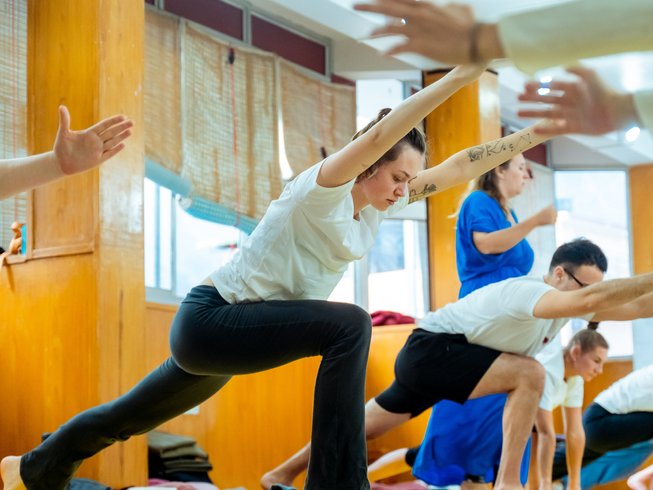
During this 200-hour yoga teacher training program in Rishikesh, you will learn about Hatha, Vinyasa, and many other styles of yoga. Akshi Yogashala's curriculum is presented in sync with both day and night cycles, and the energy cycle of the universe, so their students can experience physically what they are learning theoretically during their lectures on yogic theory and spirituality.
Asana practices should be done with an empty stomach, so daily physical practice sessions are scheduled for before breakfast and several hours after lunch and before dinner. This will ensure that your body has time to digest food properly.
Eligibility for YTTC
- Yoga Alliance USA certificate is open for yogis who are keen to deepen their yoga practice.
- Candidates above 16+ are allowed admission in the training. Those who are under 16 can also take admission but will be trained under parental observation.
- Student should have been self-practicing yoga for at least five months before joining the program.
- The school is a Registered Yoga School (RYS) which ensures that higher standard of education is imparted to the students and once they have completed the course, they will be eligible to get registered with Yoga Alliance.
- To get the certificate, students need to complete the whole course and appear for the written as well as theoretical examination for evaluation.
Highlights
- Detailed teachings of Vinyasa yoga and Vinyasa flow
- Alignment-oriented classical Hatha yoga
- Revealing the secrets of mystic Pranayama
- Understanding how the breath is connected to the mind and body
- Focusing on mind control in yoga Nidra
- Meditation taught according to the classical text “Vijnana Bhairava Tantra”
- Detailed anatomy of respiration, human spine, and joints with relation and effect of yogic practices
- Basics of yoga therapy
- Dive deep into the ancient wisdom of yoga and its profound philosophies.
- Learn from experienced and passionate yoga instructors dedicated to your growth.
- Master the art of asanas, pranayama, meditation, and more.
- Cultivate a strong and authentic teaching style that resonates with your future students.
- Immerse yourself in the vibrant culture and spirituality of Rishikesh, the yoga capital of the world.
Prepare to blossom into the best version of yourself as you embrace this transformative experience. Join in Rishikesh and set yourself on the path to becoming an extraordinary yoga teacher. Your journey starts here!
Curriculum
The practice of Hatha yoga is deemed to be a crucial component of yoga and therefore must be included in this program. Its numerous benefits make it an integral part of any yoga practice. However, it is strongly advised to practice Hatha yoga under the guidance of an experienced instructor. The yoga postures that are encompassed in Hatha yoga include:
Hatha yoga
- The fundamentals of Hatha yoga such as its history, principles, and other related aspects.
- The techniques and methods of Hatha yoga.
- How to effectively teach Hatha yoga to students, including how to apply it appropriately
- Sequencing the postures and structuring each pose for optimal practice
- Asana: In this module, you will learn about the various postures or asanas that are an integral part of Hatha yoga. You will be introduced to the different types of asanas, their benefits, and the techniques required to perform them correctly.
- Asana with breath: This module will focus on the importance of breath in Hatha yoga practice. You will learn about the different types of breathing techniques, their benefits, and how to synchronize your breath with your movements during asana practice.
- Posture awareness: In this module, you will learn how to develop awareness of your body posture during asana practice. You will learn about the correct alignment of your body, the common mistakes to avoid, and how to maintain your posture for optimal practice.
- Sequence of asanas: This module will cover the sequencing of asanas in Hatha yoga practice. You will learn about the different types of sequences, their benefits, and how to design a sequence based on the needs and abilities of your students.
- Core principles of Hatha yoga practice: In this module, you will learn about the core principles that underpin Hatha yoga practice. You will explore the concepts of balance, strength, flexibility, and relaxation and how they relate to Hatha yoga practice.
- Benefits of asana: This module will focus on the benefits of asana practice. You will learn about the physical, mental, and emotional benefits of asanas, and how to adapt your practice to suit individual needs.
- Traditional sun salutation: In this module, you will learn about the traditional sun salutation or Surya Namaskar. You will learn about the benefits of this sequence, the correct technique, and how to incorporate it into your practice or teaching.
Standing asanas
The name of the asanas itself indicates that they are standing postures that can be easily performed with little effort and in a short amount of time. The Akshi Yogashala 200-hour teacher training course covers several standing postures, which we will explore shortly.
- Tadasana or Mountain pose – strengthens the body
- Tiryaka tadasana or Swaying palm tree pose – building strength
- Trikonasana or the Triangle pose – stretches and lengthens the spine
- Utthita Trikonasana or Extended Triangle Pose – strengthens your legs, feet and ankles
- Parivritta trikonasana or Revolved Triangle Pose -activates your core muscles, which aids in balance and stability
- Virabhadrasana 1 or Warrior 1 pose – enhances your circulation
- Virabhadrasana 2 or Warrior 2 pose – improves circulation and respiration
- Prasita Padottanasana A, B, C, D or Wide-Legged Forward Bend – provides rest to the heart
- Hasta uttanasana or Raised arm pose – gives the body a nice shape
- Padahastasana or Hand to foot pose – eliminating pain and inflammation in the joints and muscles
Balancing asanas
Balancing asanas involve postures where one balances on a single leg or uses their arms to maintain balance. These poses can help strengthen various muscles such as hamstrings, calves, quads, glutes, and abs. Balance training is an important yet often overlooked tool to prevent falls and injuries.
- Dandayamana Baddha Konasana or Balancing Bound Angle pose – activates the deep core muscles to help open the hips
- Dandayamana bharmanasana or Balancing table pose – improves balance and core strength
- Vrikshasana or Tree pose – increases balance, focus, memory and concentration and strengthens the ankles and knees.
- Utthita Ashwa Sanchalanasana or High Lunge Pose – opens the hips and chest, stretches the groin and legs, lengthens the spine and strengthens the lower body.
- Eka hasta vyaghrasana or One handed tiger pose -improves immune function
- Prapadasana or Toe balance pose – alleviates joint pain, especially in the knees.
- Virabhadrasana 3 or Warrior 3 – improves balance and strengthens core.
- Hasta Padangusthasana or Standing hand-to-big-toe pose -strengthens the legs and ankles.
- Natarajasana or Dancer Pose – improves concentration.
- Garudasana or Eagle pose – helps relieve sciatica and rheumatism.
- Bakasana or Crane pose – strengthens the arms and the shoulders with the balance.
- Utthita Hasta Padangusthasana or Extended hand-to-toe pose – coordinates the muscular and nervous balance.
- Urdhva Upavistha Konasana or Upright Seated Angle Pose – strengthens the core, thighs, and calves by integrating them into the movement.
- Ardha Chandrasana or Half Moon Pose – improve balance and calms the mind.
- Vasisthasana or side plank – Strengthens and tones your arms and shoulders
Sitting asanas
The name of the asanas itself indicates that they are sitting postures that can be easily performed with little effort and in a short amount of time. The Akshi Yogashala 200-hour teacher training course covers several sitting postures, which we will explore shortly.
- Gomukhasana (Cow Face pose) – Stretches shoulders, chest, and hips, improves flexibility, and relieves tension in the upper body
- Baddha Konasana (Butterfly pose) – Opens hips and groin, stimulates abdominal organs, and improves flexibility in the inner thighs.
- Paschimottanasana (Seated Forward Bend) – Stretches the entire back of the body, stimulates abdominal organs, and helps to relieve stress and anxiety.
- Merudandasana (Spinal Column pose or Balancing Bear pose) - Strengthens the core muscles, including the abdomen and back
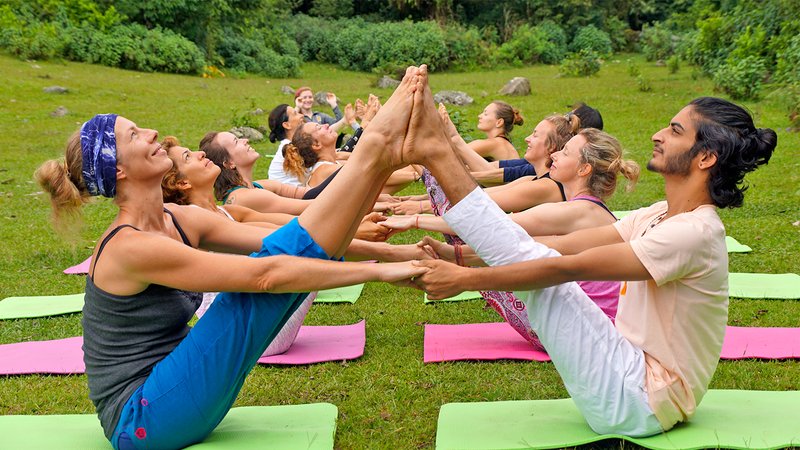
- Navasana (Boat pose) – strengthens the core muscles and improves digestion
- Krounchasana (Heron pose) – stretches the thighs and improves flexibility in the hips.
Kneeling asanas
Kneeling asanas offer multiple benefits, such as aiding digestion and increasing flexibility. These asanas are easy to perform and can help keep the body fit and healthy. You will explore different kneeling asanas shortly.
- Virasana (Hero Pose) – Stretches thighs and ankles, improves digestion, reduces swelling in legs, and helps to relieve tired legs.
- Vajrasana (Diamond Pose) – Strengthens the lower back, aids digestion, calms the mind, and improves blood circulation in the pelvic area.
- Balasana (Child’s Pose) – Relieves stress and fatigue, stretches hips, thighs, and ankles, and gently stretches the spine.
- Ustrasana (Camel Pose) – Opens the chest and shoulders, stretches the front of the body, improves flexibility in the spine, and stimulates the digestive organs.
- Supta Virasana (Reclining Hero Pose) – Stretches thighs and ankles, opens the chest, and improves digestion.
- Anjaneyasana (Low Lunge) – Stretches the hips and thighs, strengthens the legs, and improves balance.
- Ardha Virasana (Half Hero Pose) – Stretches the knees and ankles, improves digestion, and helps to relieve gas and bloating.
Backward bending asanas
Backward bending poses are designed to release stress and anxiety while also being beneficial for those who suffer from back pain. This form of yoga can be particularly useful for individuals with back issues. Let’s explore the various asanas involved in backward bending asanas
- Bhujangasana (Cobra Pose) – Strengthens the back muscles, improves spine flexibility, stimulates abdominal organs, and alleviates stress.
- Urdhva Mukha Svanasana (Upward-Facing Dog Pose) – Stretches the chest and shoulders, tones the arms and legs, improves posture, and opens the heart.
- Dhanurasana (Bow Pose) – Stretches the entire front body, including the chest and hip flexors, improves digestion, and strengthens the back muscles.
- Ustrasana (Camel Pose) – Stretches the entire front body, stimulates the organs in the abdomen, opens the chest, and improves posture.
- Setu Bandhasana (Bridge Pose) – Strengthens the back and glutes, opens the chest and shoulders, stimulates the thyroid gland, and reduces fatigue.
- Urdhva Dhanurasana (Wheel Pose) – Opens the entire front body, including the shoulders, chest, and hip flexors, strengthens the back muscles, and boosts energy.
- Natarajasana (Dancer’s Pose) – Stretches the shoulders and chest, improves balance and concentration, strengthens the legs, and opens the hip flexors.
- Kapotasana (Pigeon Pose) – Stretches the thighs, groins, and psoas muscles, opens the chest and shoulders, and releases tension in the hips and lower back.
Forward bending asanas
Forward bending asanas involve postures that primarily target the upper body. These poses can be extremely beneficial and effective. Let’s explore the different asanas or poses involved in forward bending asanas.
- Uttanasana (Standing Forward Bend) – Stretches the hamstrings and calves, relieves tension in the spine, calms the mind, and improves digestion.
- Paschimottanasana (Seated Forward Bend) – Stretches the entire back body, including the spine and hamstrings, stimulates abdominal organs, and reduces anxiety.
- Balasana (Child’s Pose) – Relaxes the back and neck, stretches the hips and thighs, calms the mind, and promotes a sense of surrender and introspection.
- Janu Sirsasana (Head-to-Knee Forward Bend) – Stretches the hamstrings and groins, massages abdominal organs, improves flexibility in the spine, and calms the nervous system.
- Ardha Uttanasana (Half Forward Bend) – Lengthens the spine and hamstrings, activates the core muscles, improves balance, and relieves lower back tension.
- Marichyasana (Marichi’s Pose) – Stretches the shoulders, spine, and hamstrings, massages the abdominal organs, improves digestion, and stimulates the liver and kidneys.
- Upavistha Konasana (Wide-Angle Seated Forward Bend) – Opens the hips and groins, stretches the hamstrings and inner thighs, improves flexibility in the spine, and stimulates the abdominal organs.
- Padangusthasana (Big Toe Pose) – Stretches the hamstrings and calves, improves flexibility in the hips, relieves tension in the lower back, and enhances blood circulation to the brain.
Twisting asanas
One of the easiest asanas is the spinal twisting pose, which involves lying on the floor and twisting the spine to the opposite side of the head. This pose is both simple to execute and highly relaxing. Let’s explore the various types of spinal twisting asanas
- Bharadvajasana (Bharadvaja’s Twist) – Improves spine flexibility, massages abdominal organs, relieves lower back pain, and aids in digestion.
- Ardha Matsyendrasana (Half Lord of the Fishes Pose) – Enhances spine mobility, stimulates the digestive system, stretches the shoulders and hips, and detoxifies the body.
- Parivrtta Trikonasana (Revolved Triangle Pose) – Increases spinal rotation, stretches hamstrings and hips, stimulates abdominal organs, and improves balance and concentration.
- Marichyasana III (Marichi’s Pose III) – Opens shoulders and hips, stretches the spine, massages abdominal organs, and improves digestion.
- Sukhasana Twist (Easy Sitting Twist) – Gently stretches the spine and hips, aids in digestion, and promotes relaxation.
- Ardha Matsyendrasana (Half Fish Pose) – Stretches spine and shoulders, massages abdominal organs, improves digestion, and relieves stiffness in the upper back.
- Jathara Parivartanasana (Revolved Abdomen Pose) – Twists the spine and abdomen, stimulates digestive organs, relieves gas and bloating, and strengthens core muscles.
- Parivrtta Janu Sirsasana (Revolved Head-to-Knee Pose) – Increases spinal flexibility, stretches hamstrings and hips, stimulates abdominal organs, and calms the mind.
Core asanas
Yoga poses that target core strengthening are designed to strengthen the abdominal muscles and other muscles that support the lower back and pelvis. Including these asanas in your yoga practice is essential, as the core muscles help maintain stability and balance throughout the body.
- Navasana (Boat Pose) – Strengthens the abdominal muscles, improves balance, and stimulates the digestive organs.
- Kumbhakasana or Plank Pose – Engages the core muscles, builds core strength, and improves posture.
- Bhujangasana (Cobra Pose) – Strengthens the back muscles and core, increases flexibility in the spine, and opens the chest.
- Dhanurasana (Bow Pose) – Tones the abdominal muscles, stretches the entire front body, and improves digestion.
- Naukasana (Boat Pose Variation) – Further strengthens the core muscles, improves balance, and stimulates the abdominal organs.
- Chaturanga Dandasana (Four-Limbed Staff Pose) – Develops core stability, builds arm strength, and prepares for more advanced arm balances.
- Ardha Navasana (Half Boat Pose) – Focuses on lower abdominal strength, improves balance, and engages the hip flexors.
- Virabhadrasana III (Warrior III Pose) – Engages the core muscles for balance, strengthens the legs and back, and improves focus and concentration.
Inverted asanas
Inversion asanas are any poses in which the heart is positioned higher than the head.
- Sirsasana (Headstand) – Increases blood flow to the brain, improves focus and concentration, strengthens the upper body, and promotes balance.
- Sarvangasana (Shoulder Stand) – Stimulates the thyroid and parathyroid glands, improves digestion, relieves stress and anxiety, and enhances circulation.
- Halasana (Plow Pose) – Stretches the spine and shoulders, massages the abdominal organs, and calms the nervous system.
- Adho Mukha Vrksasana (Handstand) – Strengthens the arms and shoulders, improves balance and coordination, and boosts confidence.
- Viparita Karani (Legs Up the Wall Pose) – Relieves tired legs and feet, reduces swelling, calms the mind, and promotes relaxation.
Relaxation asanas
Relaxation asanas , also known as restorative poses, are aimed at reducing tension in the body and promoting both physical and mental relaxation.
- Savasana (Corpse Pose) – Promotes deep relaxation, reduces stress and anxiety, calms the nervous system, and rejuvenates the body and mind.
- Balasana (Child’s Pose) – Stretches the back and hips, releases tension in the shoulders and neck, and provides a sense of surrender and comfort.
- vMakarasana (Crocodile Pose) – Relieves lower back pain, opens the chest, relaxes the body, and encourages deep breathing.
- Viparita Karani (Legs Up the Wall Pose) – Relieves tired legs and feet, reduces swelling, calms the mind, and promotes relaxation.
- Supta Baddha Konasana (Reclining Bound Angle Pose) – Opens the hips and groin, releases tension in the lower back, and soothes the nervous system.
- Supta Matsyendrasana (Supine Spinal Twist) – Stretches the spine, shoulders, and hips, aids in digestion, and releases tension in the back.
Meditative asanas
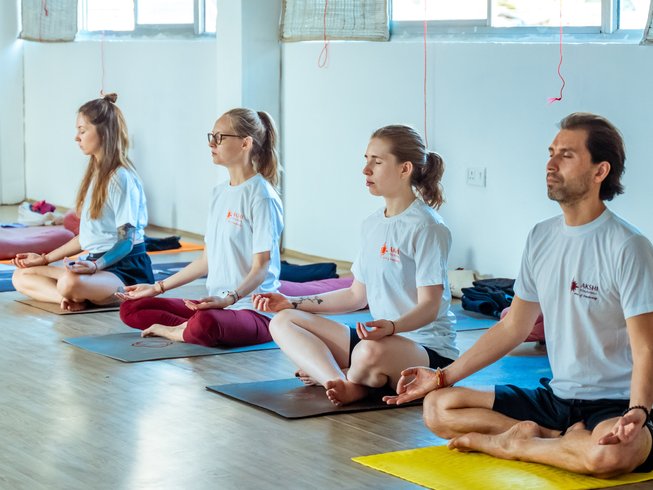
Meditative asanas are postures specifically designed to support a calm and focused mind during meditation. They provide a stable and comfortable foundation, allowing the practitioner to sit with an erect spine, relaxed muscles, and an open chest. These asanas encourage a sense of inner stillness and aid in turning the attention inward. The practice of meditation cultivates mindfulness, self-awareness, and a deep connection to the present moment.
- Sukhasana (Easy Pose) – Promotes comfort and stability for meditation, opens the hips, lengthens the spine, and fosters a peaceful state of mind.
- Padmasana (Lotus Pose) – Enhances concentration and focus, stimulates the spine and pelvis, calms the mind, and aids in deep breathing.
- Vajrasana (Thunderbolt Pose) – Provides a stable base for meditation, aids digestion, relieves sciatica and lower back discomfort, and promotes grounding.
- Ardha Padmasana (Half Lotus Pose) – Similar to Padmasana, but with a bit less intensity, offering many of the same benefits for meditation and focus.
- Siddhasana (Adept’s Pose) – helps to stabilize the body and mind, promoting inner balance and tranquility. It stimulates the pelvic region, improves blood circulation to the abdomen and pelvic organs, and enhances focus during meditation.
- Swastikasana (Auspicious Pose) – aids in digestion, reduces anxiety, and promotes a sense of groundedness. It helps to lengthen the spine, opens the hips, and provides a comfortable base for pranayama and meditation practices.
Joints and glands exercises
This practice is a traditional way of preparing the body for meditation by gently moving various parts, mainly the joints. These movements target the deeper tissues like tendons, ligaments, and fascia, improving flexibility and supporting comfortable meditation postures.
The sequence starts from the head and moves down to the toes, focusing on opening the joints and glands throughout the body. This stimulates the immune system and cleanses the body of negative prana, promoting better health.
Benefits include improved joint range of motion, stability, and balance, as well as better circulation and a more efficient lymphatic system. It also contributes to better posture and supports comfortable meditation positions
Vinyasa yoga or Vinyasa flow
Vinyasa Yoga Vinyasa Yoga is a dynamic style of yoga that synchronizes breath with movement, flowing through various poses to create a fluid and meditative practice.
Preparation for Vinyasa: Before starting Vinyasa Yoga, it’s essential to warm up the body with preparatory movements and stretches to avoid injuries and improve flexibility.
- Dynamic Sun Salutation: Sun Salutation is a dynamic sequence of poses that serves as a foundational flow in Vinyasa Yoga, combining breath and movement to energize the body and mind.
- Vinyasa Series-1: It refers to a sequence of asanas linked together in a continuous flow, promoting strength, balance, and increased body awareness.
- Vinyasa Series-2: It builds upon the first series, incorporating more challenging poses and transitions to further enhance flexibility and endurance.
- Sukshma Vyayam (Preparatory Movements): It involves subtle stretching and warm-up exercises to prepare the body for more intense yoga practices, improving joint mobility and circulation.
- Pavan Muktasana Series: These series comprises a set of postures that focus on releasing tension from various body parts, especially the abdomen and digestive system.
Structuring and Sequencing of Postures: In Vinyasa Yoga, structuring and sequencing of postures are essential to create a balanced and harmonious flow, ensuring a safe and effective practice.
Ashtanga Vinyasa as a part of Vinyasa classes
- Utthita Hasta Padangushthasana – Extended Hand-to-Big-Toe Pose
- Utthita Parshvasahita – Extended Side Angle Pose
- Utthita Hasta Padangushthasana B – Extended Hand-to-Big-Toe Pose B
- Ardha Baddha Padmottanasana – Half Bound Lotus Intense Stretch Pose
- Utkatasana – Chair Pose
- Virabhadrasana A, B – Warrior Pose A, B
- Dandasana – Staff Pose
- Paschimottanasana A, B, C, D – Seated Forward Bend A, B, C, D
- Purvottanasana – Upward Plank Pose
- Ardha Baddha Padma Paschimottanasana – Half Bound Lotus Seated Forward Bend
- Tiryam-Mukha Eka-Pada Paschimottanasana – Reverse the Face One Leg Seated Forward Bend
- Janu Shirshasana A, B, C – Head-to-Knee Pose A, B, C
- Marichyasana A, B, C, D – Sage Marichi’s Pose A, B, C, D
- Navasana – Boat Pose
- Bhuja-Pidasana – Shoulder-Pressing Pose
- Kurmasana – Tortoise Pose
- Supta-Kurmasana – Reclining Tortoise Pose
- Garbha Pindasana – Embryo in the Womb Pose
- Kukkutasana – Rooster Pose
- Baddha Konasana A, B, C – Bound Angle Pose A, B, C
- Upavishtha Konasana A, B – Seated Wide-Angle Pose A, B
- Supta Konasana – Reclining Angle Pose
- Supta Padangushthasana – Reclining Hand-to-Big-Toe Pose
- Supta Parshvasahita – Reclining Side Angle Pose
- Ubhaya Padangushthasana – Both Big Toes Pose
- Urdhva-Mukha Paschimottanasana – Upward Facing Seated Forward Bend
- Setu Bandhasana – Bridge Pose
- Urdhva Dhanurasana – Upward Bow Pose (Wheel Pose)
- Chakrasana – Wheel Pose (Full Wheel)
- Paschimottanasana – Seated Forward Bend
Pranayama - science of breath
- Definition of Prana
- Connection of Prana and the breath
- Definition of Prana
- Importance of Pranayama
- Benefits of Pranayama
- Preparing ourselves to practice pranayama
- Ancient Texts of Breathing
- General understanding of breath
- Knowledge of nostrils
- Activating nostrils for pranayama
- Secrets of Pranayama
- Function of Prana
- Flow of Prana
- Imbalance of Prana
- Retention of breath
- Aspects of Breathing
- Quality of breath
- Breathing patter
- Sitting postures for Pranayama practices
- Five sub pranas in yogic science
- Ida, pingala, and sushumna
- Nadi
- Importance of diaphragmatic breathing
- Four qualities of yogic breathing
- Stress and stress-less related breathing techniques
- 1:1, 1:2, and 1:4 breathing for emotional purification
- Psychological effect of yogic breathing
- Diaphragmatic Breathing
- Bhastrika Pranayama (Bellows Breath)
- Bhramari Pranayama (Humming Bee Breath)
- Surya Bhedi Pranayama (Right Nostril Breathing)
- Chandra Bhedi Pranayama (Left Nostril Breathing)
- Nadi Shodhana Pranayama
- Anulom Vilom Pranayama (Alternate nostril Breath)
- Sheetkari Pranayama (Hissing Breath)
- Sheetali Pranayama (Cooling Breath)
- Ujjayi Pranayama (Ocean or Victorious Breath)
- Pranava Pranayama (Om Meditation Breathing)
- Kapalbhati Pranayama (Skull Shining Breath)
Yoga philosophy
- Exploring the History and Origins of Yoga: Tracing the Evolution of a Timeless Practice
- Diving into the 6 Core Schools of Yoga: Unveiling the Pathways – Ashtanga, Hatha, Raja, Karma, Bhakti, and Jnana Yoga
- Unraveling the Essence: The 5 Fundamental Elements and *Three Gunas in Yoga Philosophy
- Navigating the Nadis: Understanding the Vital Channels and *Introducing the Primary Nadis
- The Mind Unveiled: Decoding the Nature of Mind and Its Multifaceted Dimensions
- Unveiling the Wisdom: Introduction to Yoga Sutra by Patanjali – Exploring the Essence of Yoga and Chitta-Vrittis
- Easing Suffering: Identifying the Roots of Pain and Learning How to Alleviate Them
- Embarking on the Ashtanga Yoga Journey: A Holistic Exploration of Yama, Niyama, Asana, Pranayama, Pratyahara, Dharana, Dhyana, and Samadhi
- Navigating the Realm of Emotions: Understanding the Nature of Emotion and Practicing Emotional Management in Yoga
Yoga anatomy
- Yogic skeletal and joints system
- Yogic physiology
- Yogic respiratory system
- Yoga safety while doing asana and pranyama practices
- Muscular system and usage of some important muscles in yogic exercise
- Nature of lunar energy, solar energy and neutral flow energy.
- Yogic anatomy of spinal cord and its importance
Yoga therapy
- Yogic counseling for therapy
- Yogic therapy like back problems, slip disk problems, diabetes
- Usage of yogic techniques as therapy
- Spinal deformation, thyroid and obesity.
- Yoga therapies on common disease like – Headache, cold, sinus, migraine
Meditation and concentration
- Breath awareness meditation
- Inner light meditation
- Chakra awareness meditation
- Body less meditation
- Mantra Awareness meditation
- Walking meditation
- Full moon meditation
- Third eye meditation
Relaxation
- Point to point full body relaxation technique
- Yoga Nidra for insomnia
- Emotional body relaxation
- Minor and major chakra relaxation
- Deep causal body relaxation
Note:
- Yoga practicum includes Alignment and Adjustments, Teaching Methodology.
- On half days, classes go until lunch and the rest of the day is for self-study.
- Please note that the daily schedule is subject to change according to the availability of lecturers, holidays, inclement weather and extraneous circumstances.
Schedule
- 05:30 - 06:00 Ginger / herbal tea
- 06:00 - 07:30 Hatha yoga
- 07:45 - 08:45 Pranayama - breathing practices
- 09:00 - 10:00 Breakfast
- 10:30 - 11:30 Yoga anatomy
- 11:45 - 12:45 Mantra / Adjustment and alignment
- 13:00 - 14:00 Lunch
- 14:00 - 15:00 Rest
- 15:00 - 16:00 Yoga philosophy / Ayurveda
- 16:15 - 17:45 Vinyasa yoga
- 18:15 - 19:15 Meditation and relaxation
- 19:30 - 20:30 Dinner
- 20:30 - 22:00 Self-study
- 22:00 Gates closed, time to rest
Included excursions
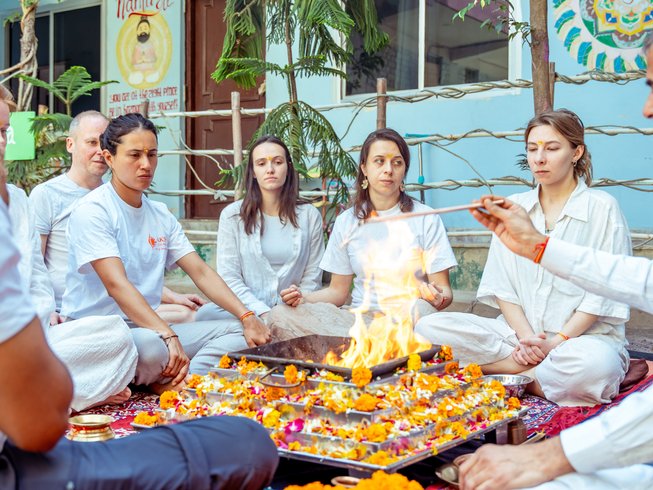
To provide a day away from the busy schedule of teacher training, Excursion Day was established for students to witness Indian culture and relax with bhajans, mantras and sight seeing. After extensive week-long learning, it is a time to enjoy and relax on excursion day.
Students will enjoy excursions and cultural interaction programs where they will see and experience rich Indian culture. They will have the opportunity dive into the spirituality and experience the holistic nature of the Indian religion, culture, and universe.
- Visit to the Himalayan caves
- Himalayan sunrise tour
- Rafting on the river Ganga / Ayurveda massage
- Local sightseeing
- Ganga Arti
- Music concert
Instructors
Vivek Arya
As a young boy, Sri Vivek’s passion for yoga was quickly obvious to father, who started him on the path to understanding. His thirst for knowledge led him to 15 years of living in an ashram, and into the Himalayas to study yoga and philosophy. Inspired by his burning desire to learn, the sages welcomed him and taught him mystic ways unknown to many. Today, Sri Vivek is pursuing his Ph.D. in yoga, with a goal to never stop learning and dedicate himself to humanity.

Sandeep Pandey Ji
Yogacharya Sandeep Pandey Ji is a master of meditation and pranayama. He had learned meditation and relaxation techniques from the different ashrams of Rishikesh which made him have a deeper insight into the many aspects of this art. He started his yogic journey as a disciple of Guru Swami Veda Bharti Ji in the Rama Sadhaka Ashram when he was only 11 years old. He is now pursuing Ph.D. in Yoga and is also now teaching the meditation and pranayama to the aspiring yogis.
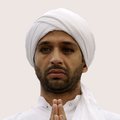
Karamjit Sihag
Karamjit was born into yoga. His ancestors built a monastery for wandering monks and yogis to stay and practice yoga, and he was immersed in the teachings of yoga from childhood by his mother and father. Since then, his curiosity to go deeper has led him to Rishikesh, Mysore, the Himalayas, and even China, and he was determined to absorb the spiritual truth from each of these stages of life. Today, Yogi Karamjit is among the most respected practitioners of yoga and meditation, and he brings both intense willpower and a gentle touch to his teachings.

Deepak Bhatt
Deepak Ji is a dedicated yoga teacher from Rishikesh with a deep-rooted background in traditional yogic and Vedic culture. He holds a Master’s in Yoga and is a 500-hour certified Yoga Alliance instructor. Teaching since 2013, he specializes in Hatha, Vinyasa, and Ashtanga, with a focus on alignment. He also explores Vedic astrology, adding depth to his guidance. Calm and insightful, Deepak helps students grow both on and off the mat.

Maya Om
Maya Om offers satsang and yoga for women.

Mukesh Sevda
Mukesh has been a part of our yoga family since 2016, beginning his journey as a manager and gradually evolving into a dedicated yoga practitioner and teacher. He started practicing yoga and attending classes at our school in 2018, laying a strong foundation for his path ahead. In 2020, Mukesh earned his Master’s degree in Yoga from Uttarakhand Sanskrit University. After completing his studies, he began teaching private students and, since 2023, has been guiding groups in retreats and Yoga TTCs. Currently, Mukesh is pursuing a Ph.D. in Yoga and Pranayama at Shri Khushal Das University.
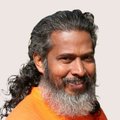
Swami Atmajnanananda Giri
Swami Atma (Swami Atmajnanananda Giri) was born in 1970 in Kerala. He first studied homeopathy and practiced naturopathy before his path turned deeply spiritual. In the early '90s, he met two influential masters who inspired him to fully embrace the spiritual life. After being initiated at Kailash Ashram in 2006, he lived as a wandering monk and studied Vedanta at Sivananda Ashram. Today, he shares wisdom on natural living, mindful hygiene, environmental harmony, and inner growth through meditation.
Location
Akshi Yogashala enjoys the privilege of being situated in the yoga capital of the world. The calm breeze of the Holy Ganges purifies every cell and pore in the body. The sanctity of the sages and seers meditating near the banks of Ganges bless every soul in their vicinity. Ideal for pursuing yoga teacher training courses, the school is proud of its association to The Land of the Gods.
People from various parts of the world flock there to find inner peace and enjoy a tranquil time. Akshi Yogashala endeavors to accommodate their wanderlust and be a courteous host. They receive hundreds of students and guests every year and are accustomed to understanding the needs of their students no matter where they are from. In order to accommodate students, they have amalgamated and constructed a modern yet ashram-like infrastructure.

Food
Any yoga teacher training course is incomplete if not enough focus is laid on the food the practitioner is eating. Akshi Yogashala is committed to carry out an all-around growth of the students and with this intent, they have undertaken Ayurvedic cooking methodologies.
Each body type varies from one another. While it is important to understand one’s constitution, the school extends holistic diet beneficial for all their students. Intensive workout requires balanced and invigorating diet which is why they’ve hired experienced Ayurvedic chefs.
Light and healthy vegan food complementing the demands of Ashtanga Vinyasa and Hatha yoga is the reason why teachers emphasize eating only ashram-cooked food. This is significant in detoxifying the body during your stay with Akshi.
Moreover, at Akshi, they prepare food in a way which is not too spicy and not too light in taste. They keep a balance of spices in their food and prepare it according to the needs of their students. Daily meals include breakfast, lunch, dinner, tea, juices, and other needs if need be.
- 09:00 Breakfast and tea
- 13:00 Lunch
- 19:30 Supper
The following meals are included:
- Breakfast
- Lunch
- Dinner
- Drinks
The following drinks are included:
- Water
- Tea
The following dietary requirement(s) are served and/or catered for:
- Vegan
- Ayurvedic
What's included
- Eligibility to register with Yoga Alliance upon completion of the course
- All classes
- Excursions
- Study material
- Laundry
- Wi-Fi
- T-shirt
- Rubber neti
- Bag
- Pen and notebook
- Neti pot
- GST
- 25 nights accommodation
- Food
- Pick up from Jolly Grant Airport (DED)
What's not included
- Airport pickup and drop off
- Personal expenses
- Overstay at the ashram
- Flights
- Visa
- Doctor consultation
- Insurance
How to get there
Recommended Airports
Transfer included
Jolly Grant Airport
15 km away from your destination
Transfer available for additional US$ 80 per person
Indira Gandhi International Airport
208 km away from your destination
Arrival by bus
You can reach Rishikesh by bus from Interstate Bus Terminus in Delhi. Take a Volvo or any luxurious coach from Delhi to Rishikesh but keep in mind that the bus journey can be very tiring. Akshi Yogashala can also send their taxi to receive you from the bus terminal, or you can also hire an auto-rickshaw for RamJuhla, but then you will have to walk across the bridge to the school premises.
Arrival by train
You can take a train from Delhi to Haridwar which is 25 kilometers away from Rishikesh. Haridwar is linked to many major cities in India. From Haridwar, you can hire a taxi or they can also send their taxi to receive you on request in advance. The taxi charges from Haridwar to Rishikesh will be 20 USD.
Arrival by taxi
From Indira Gandhi International Airport (DEL) or Jolly Grant Airport (DED), you can hire a taxi or if requested, Akshi Yogashala can also send a taxi to pick you. The cost of which will be 80 USD for Delhi
Cancellation Policy
- A reservation requires a deposit of 30% of the total price.
- The deposit is non-refundable, if the booking is cancelled.
- The rest of the payment should be paid on arrival.

Reviews
For this organizer you can guarantee your booking through BookYogaTeacherTraining.com. All major credit cards supported.
Similar Yoga Teacher Training you might like
You recently viewed