26 Day 200-Hour Yoga Teacher Training and Himalayan Hiking Retreat in Rishikesh, India
Yoga Teacher Training and Hiking Retreat in India
Take your yoga practice to a new level with this 26-day program combining a Yoga Alliance Certified 200-Hour Teacher Training and a 6-day Himalayan Hiking Yoga Retreat. The first 20 days focus on intensive training at Atharv Yogshala, covering Hatha and Ashtanga yoga, pranayama, meditation, philosophy, and anatomy. After building a strong foundation, embark on a 6-day guided retreat to practice yoga and meditation amidst the holy Himalayan mountains. This unique program offers both professional certification and an immersive spiritual adventure.
Meet the instructors
Highlights
- 20 days of Yoga Teacher Training (200-hour YTTC)
- 6 days of Himalayan hiking and yoga retreat
- Yoga materials provided
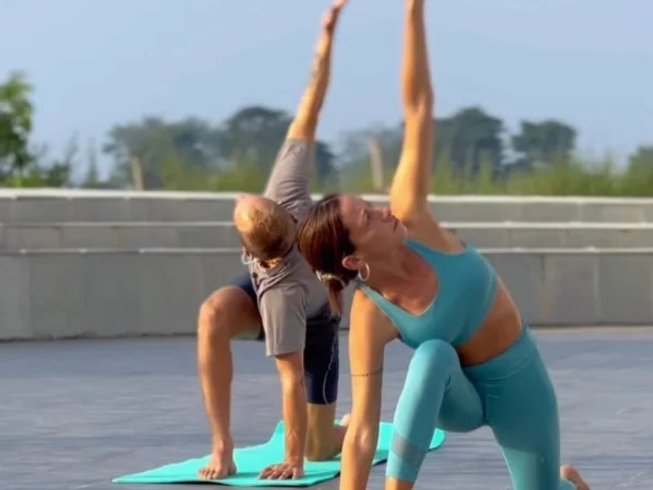
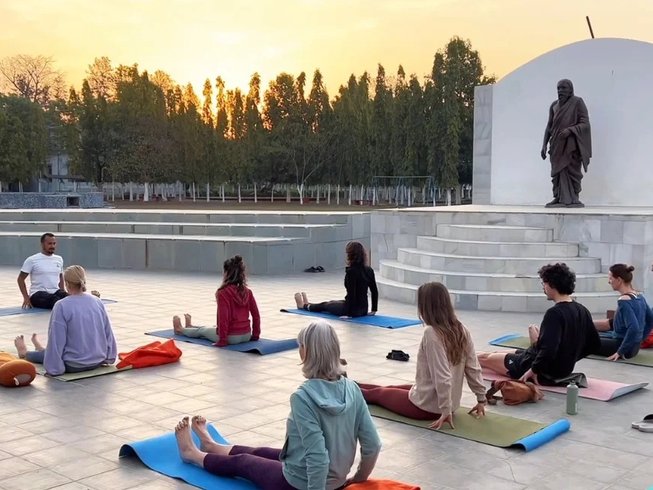
- Outdoor yoga session
- One free Ayurvedic massage and Kirtan night
- Nutritious vegetarian meals and herbal tea
- Eligible to register with Yoga Alliance upon completion
- 25 nights accommodation
Skill level
- Beginner
- Intermediate
Types
25 days with instruction in English
 Average daily hours of activity: 7
Accommodation
The retreat offers a beautiful and peaceful ashram lifestyle, creating the perfect space to focus and embark on a spiritual journey. Clean and comfortable accommodations are provided, with the choice of private rooms or double-sharing rooms, all equipped with attached Western-style bathrooms. Guests will enjoy a calm, safe, and supportive environment throughout their stay, along with complimentary Wi-Fi access.
- Private room and double sharing room
- Western-style attached bathroom
- Free Wi-Fi access
- Filtered hot and cold water available 24 hours
- Bed sheets, blankets, pillows, and towels provided
Program
Certification
Students who complete the training are eligible to register with Yoga Alliance as Registered Yoga Teachers (RYT®).
20 days yoga TTC and 6 days Himalayan Retreat
Day 1 - Arrival in Rishikesh
- Welcome ceremony with traditional havan (fire ceremony)
- Program orientation with group introduction and itinerary briefing
- Evening Ganga Aarti at Parmarth Niketan / Triveni Ghat
- Dinner in Rishikesh
- Overnight stay at Atharv Yogshala / Aurovelly Ashram
Day 2 to 20 - Yoga Teacher Training Course in Rishikesh
- Morning tea
- Asana classes (Hatha, Ashtanga Vinyasa)
- Meditation / Yoga Nidra / Pranayama
- Mantra / Ayurveda / Teaching methodology
- Yoga anatomy / Alignment class / Yoga philosophy
- Breakfast / lunch / dinner
Daily yoga schedule
- 05:00 Wake up
- 05:30 - 06:00 Morning tea
- 06:00 - 07:30 Hatha yoga
- 07:45 - 08:45 Pranayama
- 09:00 - 10:00 Breakfast
- 10:30 - 11:30 Yoga philosophy
- 11:30 - 12:00 Tea time
- 12:00 - 13:00 Yoga anatomy / Alignment class
- 13:00 - 13:45 Lunch
- 15:00 - 16:00 Mantra / Ayurveda / Teaching methodology
- 16:15 - 17:45 Ashtanga Vinyasa
- 18:00 - 19:00 Meditation / yoga Nidra
This program is for you if you want to have both:
- An internationally recognized RYT-200 certification.
- In the holy Himalayas, a thrilling and completely spiritual journey.
Phase 1: 200-Hour Yoga TTC in Rishikesh
You will receive 20 days of tough training at Atharv Yogshala (Aurovelly Ashram, Rishikesh) throughout the program's first phase. You will be learning the traditional ways of the yogic lifestyle within the philosophies of Hatha and Ashtanga, anatomy, and teaching methodology. To guarantee that you gain the fundamentals of yoga as well as the capacity to become a competent and self-assured yoga instructor, the skilled yoga teachers will lead you through asanas, pranayama, and meditation.
Phase 2: Himalayan Hiking Retreat
After your training is complete, you will be taken on a 6-day guided retreat to places where yoga meets sacred heights. This will take the learning you just received in class and apply it in a pristine natural habitat. You will hike to several spiritual destinations such as Tungnath Temple, Chandrashila, Deoria Taal, and Kartik Swami.
You will also visit the amazing and powerful Dhaari Devi Temple and the Devprayag Sangam, to name a few. Each day will begin with yoga, followed by breathtaking hikes, a lunch along the trail, and evenings spent enjoying a peaceful night at the base camp hotel.
Who can join this course?
Anyone who enjoys yoga and seeks adventure can enroll in this course! Potential participants include anyone seeking an amazing experience, yoga practitioners seeking to learn more, and those who want to teach yoga! No experience trekking is necessary; the guides have a wealth of experience to ensure your trip is safe and enjoyable!
All you need to bring is your eagerness to learn, an open heart, and your adventurous spirit! The discipline and exploration in this course are beautifully balanced.
How will this course change your life?
This course is a process of self-discovery that goes beyond the yoga mat, challenging your personal limits - physically and mentally - in a breathtaking natural setting.
- Develop your personal practice - Expand your understanding of yoga, including philosophy, asanas, and practice.
- Become a certified teacher - You will become globally certified, recognized by Yoga Alliance.
- Improve mental and physical resilience - The treks will build your strength and stamina whilst clearing your mind.
- Connect with nature - Feel the spiritual energy of the Himalayas and the Ganges River.
- Find inner peace - With the combination of meditation, yoga, and nature, you will feel an intense calmness of mind.
What will you gain after finishing the 200-hour Yoga TTC with Himalayan Hiking Retreat?
After you finish this life-changing journey, you will obtain an internationally recognized Yoga Alliance RYT-200 certification, allowing you to teach yoga anywhere you like in the world. With or without the certification, you will leave with an increased knowledge of yogic philosophy and a strengthened personal practice.
As an additional benefit, hiking in the Himalayas will enhance your mental and physical fortitude. You will leave with a deeper connection to nature, a still mind, and the confidence to share the gift of yoga and wisdom with others. This course is a life-changing journey towards a more mindful, disciplined, and balanced you.
What does the 200-hour YTTC cover?
- Hatha and Ashtanga yoga
- Pranayama and meditation
- Yoga philosophy and anatomy
- Teaching methodology and practicum
- Adjustment and alignment techniques
- Yogic lifestyle and ethics
Curriculum
The well-rounded curriculum will give you a holistic and deeper understanding of yoga. It is aimed to give you the best teacher training course in Rishikesh by honoring the ancient traditions of yoga and linking them to modern teacher training course delivery.
- Hatha and Ashtanga Vinyasa: Understand the foundations and sequences of Hatha and Ashtanga Vinyasa. During this training, you will learn enough knowledge to safely take a class.
- Embodied yoga: At Atharv Yogshala, they do not just teach yoga as posers; it is about finding the felt sense of yoga and your relationship to the postures and to the practice.
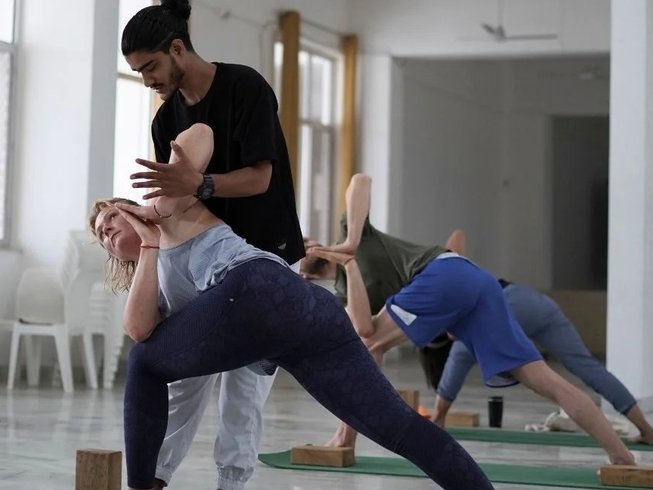
- Adjustment and alignment: Build confidence in manual and verbal adjustments. Learn to see misalignment and skillfully guide your students toward safe, deepened postures.
- Functional yoga anatomy: Understand the biomechanics of movement, how the body works in yoga postures, how to avoid injuries, and how to teach with anatomical accuracy.
- Meditation and mantra: Learn simple meditation and chanting techniques. Quiet your mind, reduce stress, and feel deep inner peace through powerful ancient practices.
Traditional pranayama
Master ancient breathing exercises. Control your breath to boost energy, calm your nervous system, and improve your overall health.
Ayurveda
Discover Ayurveda, yoga's sister science. Learn about your body type and how to live a balanced, healthy life naturally.
- Yoga philosophy: Explore the ancient wisdom of yoga. Learn how its teachings can bring more peace and happiness to your modern life.
- Teaching methodology: Learn how to plan and lead a great yoga class. Gain the skills to teach safely, clearly, and with confidence.
- Excursions: Join peaceful trips to sacred sites. Experience the beautiful nature and spiritual culture of Rishikesh, the world's yoga capital.
- Yoga cleansing (Shatkarma): Learn gentle yoga cleansing techniques. These simple practices purify your body and mind for better health and clarity.
- Outdoor yoga: Practice yoga in nature. Feel the benefits of doing postures and meditation outside in the fresh air and sunshine.
Course syllabus
To students who are willing to learn the best in the field of yoga and meditation. The curriculum is entirely based on Yoga Alliance standards. Residential courses are provided with extra classes in Ayurveda.
With the course, the aim is to balance lives and transform them in a positive way. The belief is that the world is one family. Through the courses, it is considered a duty to meet the needs of every individual.
110 hours: Techniques, training, and practice
- Asana | assignment | pranayama | meditation
20 hours - Anatomy and physiology
- Introduction to body and more
30 Hours - Yoga humanities
- History | philosophy | ethics
40 hours - Professional essentials
- Teaching methodology | Professional development | practicum
Mantra chanting
Art of mantra
- Science of mantra
- Power of mantra
- Formation of mantra
- Mantra chanting
Mantra chanting is a powerful tool which develops a spiritual connection inside you. It, in turn, creates a balance between the body, mind, and spirit.
- How to chant the mantra properly?
- Om mantra
- Peaceful Shiva mantra
- Energetic Durga mantra
- Joyous Krishna mantra
- Gayatri mantra for the purification of the mind
- Sahana mantra for guru-disciple study
- Guru mantra for paying homage to the guru
Traditional Hatha yoga
Traditional Hatha yoga sessions conducted by the school are a positive workout for one's physical and mental wellness. It originated years ago with the aim of attaining health and peace. The practice also benefits you with strength and flexibility.
- Pavan Muktasana series 1 (Antirheumatic exercise series 1)
- Pavan Muktasana series 2 (Antirheumatic exercise series 2)
- Pavan Muktasana series 3 (Antirheumatic exercise series 3)
- Centering postures series (Yoga sequence builder)
- Surya Namaskar (Sun salutation)
- Standing postures series
- Kneeling posture series
- Sitting posture series
- Forward bending posture series
- Backward bending posture series
- Supine posture series
- Prone postures series
- Fire series
- Inversion series
- Twisting postures series
- Balancing postures series
- Relaxing postures series
- Meditative asana series
- Theory of Hatha yoga
- Ancient scriptures and texts of Hatha yoga
- Aim and objectives
- Yoga as a therapy
- Yoga as balancing
Mysore-style Ashtanga yoga
More than a teaching session conducted by yog gurus, Mysore-style Ashtanga yoga is a self-assisted and practice class. All students are doing the same sequence and postures, supported by experienced teachers.
- Introduction
- History
- Awakening the inner fire
- The breath of life (Prana)
- Chakras
- Eight limbs of yoga (Ashtanga yoga)
- The practice of K. Pattabhi Jois
- Bandha practice
- Drishti (focusing the attention)
- Use of yoga props and instruments
- Sun Salutation A & B (week 1) - Surya Namaskar series A & B
- Standing asana series (week 2)
- Sitting asana series (week 3)
- Finishing asana series (week 3)
- Teaching practices (Traditional and Mysore style - week 4)
- Asana practice
- Padangustasana (Big toes posture)
- Pada hastasana (Hand under foot posture)
- Utthita trikonasana (A+B) (Triangle posture)
- Utthita parsvakonasana (A+B) (Extended side angle pose)
- Prasarita padottanasana (A, B, C, D) (Intense wide leg stretch)
- Parsvottanasana (Intense side stretch posture)
- Utthita hasta padangustasana (Hand to big toe posture)
- Ardha bandha padmottanasana (Half-bound lotus forward bend)
- Utkatasana (Fierce pose)
- Virabhadrasana (Warrior pose) A+B
- Dandasana (Staff pose)
- Pascimattanasana (Intense west stretch or sitting forward bend)
- Purvattanasana (Intense east stretch)
- Ardha bandha padma pascimattanasana (Half bound lotus forward bend)
- Tiryangmukha eka pada pascimattanasana (Reverse the leg, one leg intense stretch)
- Janusirsasana (Head-to-knee pose)
- Marichyasana (Leg binding pose)
- Navasana (Boat pose)
- Bhujapidasana (Shoulder pressure pose)
- Kurmasana (Tortoise pose)
- Suptakurmasana (Reclining turtle pose)
- Garbhapindasana (Womb pose)
- Kukkutasana (Cockerel pose, or rooster posture)
- Baddha konasana (Bound angle pose, butterfly pose)
- Upavistha konasana (Seated angle posture)
- Suptakonasana
- Supta padangustasana
- Ubhaya padangustasana
- Urdhvamukha pascimattanasana
- Setubandhasana (Bridge pose)
- Finishing postures
- Urdhva dhanurasana (Upward bow posture)
- Salamba sarvangasana (Shoulder stand posture)
- Halasana (Plough posture)
- Karna pidasana (Ear pressure posture)
- Baddha padmasana (Sealed lotus pose)
- Yoga mudra (Sealed yoga posture)
- Padmasana (Lotus posture)
- Savasana (Corpse pose)
Pranayama
Prana, the life energy, Yama means control. It is the foundation practice of the traditional form of yoga. It is not just a breathing practice but much more than this. The class of pranayama reveals its secrets and the power of pranayama to gain the right health, peace, and balance.
The four-week course offers a different experience, such as;
- Week 1: Step-wise knowledge of pranayama and building strength.
- Week 2: From the beginning to the deep core of pranayama.
- Week 3: Advance practice by holding the breath and manifesting chakra awareness.
- Week 4: Teaching practice while moving to the master level of the breath.
Pranayama topics:
- Definition of prana
- Definition of pranayama
- Definition of breath
- Connection of the prana and the breath
- Importance of pranayama
- Benefits of pranayama
- Preparing ourselves to practice pranayama
- Aspects of breathing
- Ancient texts of breathing
- General understanding
- Knowledge of nostrils
- Activating nostrils for pranayama
- Secrets of pranayama
- Breath flow in 5 elements
- Unit of prana
- Function of prana
- Three levels of prana
- Three gunas
- Flow of prana
- Quality of breath
- Imbalance of prana
- Retention of breath
- Preparatory aspects
- 6 sitting postures for pranayama practices
- Breathing pattern
- Chakras and kundalini connection with prana
- Beginners and intermediate practices of pranayama
- Types of pranayama practices
- Clavicular pranayama
- Thoracic pranayama
- Diaphragmatic pranayama
- Yogic pranayama
- Pranava pranayama (Om meditation breathing)
- Nadi shodhana pranayama / Anulom vilom pranayama
- Bhastrika pranayama (Bellows breath)
- Kapalbhati pranayama (Skull shining breath)
- Bhramari pranayama (Humming bee breath)
- Ujjayi pranayama (Ocean breath)
- Sitali pranayama (Cooling breath)
- Sitkari pranayama (Hissing breath)
- Murcha pranayama (Swooning breath yoga)
- Surya bhedi pranayama (Right nostril breathing)
- Chandra bhedi pranayama (Left nostril breathing)
Meditation (Dhyana)
Just like you involve your body in physical exercise for its benefits, in the same way, meditation is an exercise for mental health. With the power of meditation, you can control your mind and block negative and unnecessary thoughts. You enter into a deep state of relaxation where peace is the ultimate goal.
During the meditation class, you are advised to sit quietly by keeping your focus on a single thing. It helps you in eliminating tension and stress. With the 200-hour yoga teacher training course, you get to learn basic and intermediate meditation.
The four-week program works as;
- Week 1: Introducing meditation and building a foundation
- Week 2: Developing concentration through focus exercises
- Week 3: Meditation techniques
- Week 4: Chakra awareness and Kundalini meditation
What you'll learn
- What is meditation?
- History and origin of meditation
- How to prepare yourself for meditation?
- What meditation actually is
- What meditation is not
- Why meditate?
- How to meditate?
- Where to meditate?
- When to meditate?
- Philosophy of meditation
- Meditation traditions
- Meditation scriptures
- Aim and objectives of meditation
- Sitting positions
- How to sit correctly
- Preliminary practices before practicing meditation
- Diaphragmatic breathing in meditation
- Correct breathing in meditation
- How to relax in meditation?
- Lifestyle in meditation
- Diet of meditation
- Why does one sleep while meditating?
- Rules of meditation
- Styles of meditation practices
- Himalayan meditation practices
- Basic foundation meditation practice
- Breath - mind - mantra awareness
- Trataka meditation
- Nada meditation practices
- Music meditation
- Om meditation
- Mantra power meditation
- Active meditation practices
- Dynamic moving meditation (Osho)
- Buddha walking meditation
- Karma yoga meditation
- Natraj meditation
- Sufi meditation
- Gaurishankar meditation
- Ajna chakra awakening meditation
- Kundalini active meditation
- Vipassana and passive meditation practices
- Breath awareness (Anapana)
- Mindfulness and sensation
- Total awareness practice
- How to do Japa (recitation)
- Kirtan event and creating a spiritual vibe
- One-day silence meditation
- Silence practice
Yoga Nidra (Psychic sleep)
Yoga Nidra is also known as Psychic Sleep. The practice creates a state between waking and sleeping. It is a state of consciousness. One can go into this deep and conscious sleep with the practice of guided meditation.
Yoga Nidra can also be termed as the victory over sleep. You can relax your mind and get off for 8 hours in just a short practice of yoga nidra. When you go through the epic, the Mahabharata, you get to know that Arjuna (one of the Pandavas) was associated with yoga Nidra.
The four-week program of yoga Nidra includes;
- Week 1: Basic relaxation practices
- Week 2: Visualisation yoga Nidra
- Week 3: Chakra awareness yoga Nidra
- Week 4: Inner flame yoga Nidra
What you'll learn
- Basics of yoga Nidra
- Meaning of yoga Nidra
- Purpose of yoga Nidra
- Different schools of yoga Nidra
- Traditions of yoga Nidra
- Tantric origin of yoga Nidra
- Lifestyle for yoga Nidra practitioners
- Rules for yoga Nidra practitioners
- Benefits of yoga Nidra
- Risks of yoga Nidra
- Difference between Yoga Nidra and meditation
- Yoga Nidra experience
- Yoga Nidra and healing
- 4 states of consciousness
- 3 body awareness
- Tension relaxation
Yoga cleansing (Shatkarma)
"Shat" means "Six" and "Karma" means "Actions". Thus, as per yogic science, Shatkarma is six cleansing actions that help to clean your body and mind. It is well described in the Hatha Yoga Tradition.
Shatkarma is an important practice to maintain a balance between body and mind and also promote well-being. The practice eliminates toxins from the body and unblocks energy channels.
With the 200 Hours Yoga TTC, you will learn;
- Introduction to Shatkarma
- Benefits of Shatkarma
- Risks of Shatkarma
- Who should practice it?
- Who should not practice it?
- Experiences
- Preparation for Shatkarma
- Practices after completing it
- Cleansing of nadis or energy channels
- Jihwa Dhauti (Tongue cleansing)
- Danta Dhauti (Teeth cleansing)
- Karna Dhauti (Ear cleansing)
- Jalaneti (Cleansing with water)
- Kapalbhati (Mind cleansing)
- Agnisara (Cleansing with fire)
Yoga philosophy (Yoga Darshana)
Yoga philosophy is a powerful subject that can change one's life. Many are confused that it only exists in Patanjali's Yoga Sutras, but this is not true. It is the philosophy of life which can also be found in the Bhagwat Geeta, Hatha Yoga Pradipika, and Upanishads.
The basic and main philosophy of yoga is simple: body, mind, and soul are one, and one can not separate them.
During the 4 weeks of the 200-hour yoga course, the yoga philosophy will explain to you the motive of life.
Week 1: The world of wisdom
- Introduction to Indian culture
- Spirituality and the Himalayan tradition
- Introduction to the ancient scriptures of yoga and spirituality
- Meaning of Indian philosophy
- Purpose of Indian philosophy
- Introduction to 9 major Indian philosophies
- Why is yoga philosophy the most important among all
- History of yoga
- Types of yoga
Week 2: Yoga Sutras of Patanjali
- Patanjali and his work
- Introduction to the Yoga Sutras text
- Eight limbs of yoga (Ahimsa, Satya, Asteya, Brahmacharya, Aparigraha, Saucha, Santosha, Tapas)
- Yamas and niyamas
- Philosophy of asana and pranayama
- Karmic science
Week 3: Internal limbs
- Concentration, meditation, and samadhi
- First chapter
- Second chapter
- Third and fourth chapters of Patanjali
- Mind and its control
- Introduction to Bhagavad Gita and Upanishad
Week 4: Exploring the wisdom of yoga
- Chakras
- Nadi
- Kundalini
- Three-fold pain
- Three bodies (Sharira)
- Pancha kosha
- Tri-guna
- Mahabhuta (Theory of elements)
Anatomy and physiology (Sharir Vijnan)
In yoga, anatomy is a crucial subject for yoga teachers and learners. In the class, you will get to know physical anatomy and spiritual anatomy.
- Physical anatomy
- Introduction to body
- Bodily structures
- Body planes
- Anatomical movements
- Bones of the skull
- Cervical vertebrae
- Shoulder girdle / Arm bones / Pelvic region
- Deformities of the spine
- Lower extremity
- Tendons and ligaments
- Muscular system
- Nervous system
- Respiratory system
- Spiritual anatomy
- Nadi (Energy channels)
- Chakras (Energy centres)
- Kundalini (Prime energy and source of all creativity)
- Pancha kosha (5 layers)
- Pancha mahabhuta (5 elements and body structure)
- Tri-guna (Three attributes)
Ayurveda
Ayurveda is the oldest and most natural system of medicine that originated in India years ago. It is approximately 3000 years old in medicinal science. Ayurveda is derived from two words: "Ayur" means "Life" and "Veda" means "Science", thus Ayurveda describes the meaning "Science of Life" or 'Knowledge of Life'.
As per Ayurvedic Science, the body is made up of five elements, i.e., Akash (Ether), Vayu (Air), Agni (Fire), Apas (Water), and Prithvi (Earth). These 5 elements create 3 doshas, namely, Kapha, Vata, and Pitta. When these are balanced, then an individual remains healthy, and when these are imbalanced, an individual remains ill. Ayurveda helps in balancing all of these to give you a healthy lifestyle.
The 200-hour yoga course explains:
- What is Ayurveda?
- Ayurvedic treatment and its unique features
- Ayurveda and its diversified areas
- Ashtanga Ayurveda
- Fundamentals of Ayurveda
- Panchamahabhuta [Earth (Prithvi), Water (Jal), Fire (Agni), Air (Vayu), Aether/Space (Akasha)]
- Kapha
- Vata
- Pitta
- Prakriti - Know your constitution
Mudras
Mudra is a symbolic gesture. It is normally practiced with hands and fingers, explaining the flow of energy in the subtle body. It brings a wondrous change in body and mind.
The 200-hour yoga course explains:
- The secrets of mudra
- The position of elements in the hands
- The need for mudra
- Advantages of mudras
- Special guidelines about mudra
- Gyan mudra (Gesture of wisdom)
- Purn gyan mudra (Gesture of complete wisdom)
- Vairagya mudra (Gesture of dispassion)
- Abhaya mudra (Gesture of fearlessness)
- Dhyana mudra (Meditation mudra)
- Vayu mudra (Gesture of air)
- Pran mudra (Gesture of prana)
- Prithvi mudra (Gesture of earth)
- Surya mudra (Gesture of the sun)
- Varun mudra (Gesture of water)
- Shoonya mudra (Gesture of openness, space)
- Pran-apan mudra (Gesture of prana apana)
Bandhas (Energy lock)
Bandhas is the Sanskrit word which means Lock. The aim of it is to block the energy flow from a particular part of the body. When the lock is opened, the energy flows properly throughout the body and maintains overall wellness and vitality.
- Meaning and importance of energy lock
- Why the energy lock and how our energy gets drained
- Energy knots and how to open them
- Understanding the three chakras (Muladhara, Manipura, Visuddhi)
- Experience with energy lock
- Benefits and risks of bandha practices
- Practices (Beginners and Intermediate Level)
- Agnisar (Preparation for Uddiyana)
- Vahir kumbhaka (External retention)
- Antar kumbhaka (Internal retention)
- Ashwini mudra to prepare for Mula bandha
- Vajroli mudra to prepare for Mula bandha
- Mula bandha (Root lock)
- Uddiyana bandha (Abdominal lock)
- Jalandhar bandha (Throat lock)
Teaching methodology
While being a student, it is also necessary to learn to teach. You are on a journey from being a student to a teacher.
- Proper sequence
- Avoid injuries
- Happiness during and after the practice
- Work with various styles of yoga and at all levels
- Meditative experience
- Managing the energy flow
- Balancing the energy flow
What you'll learn
- Proper demonstration of a yoga practice
- The proper way to instruct and guide a lesson
- Proper alignment of yoga postures
- Proper adjustment with/without props
- Yogic personality establishment
Alignment
In yoga, alignment is the right way to perform any asana so that one can minimise the risk of injury and reap maximum benefits from it.
What you'll learn
- Sense of alignment
- Role of alignment in daily practice
- Balancing prana and chakras
- Alignment and 5 koshas
- Importance of alignment
- A different aspect of alignment
- Minimising the risk of injuries
- Increase the movement of joints
- Alignment based on body regions
- Upper Limb alignment
- Lower Limb alignment
- Torso - Thorax - Abdomen - Pelvis alignment
- Alignment of head and neck
- Alignment of the spine
- Basic postures of alignment
- Bringing the body into a comfortable zone
- Balancing the body and mind
Adjustment
Adjustment in yoga is also about learning the correct technique of yoga. You'll learn:
- What is yoga adjustment?
- Sense of yoga adjustment
- Level of yoga adjustment
- Why is an adjustment needed in yoga asana
- Role of adjustments in yoga asana class
- The right technique for perfect adjustment
- Bandhas
- Dynamics of each asana
- How to self-adjust in a posture
- How to adjust others during the class
- Methods of adjustment
- Tools and props to achieve the peak in the posture
- Body weight management
- Safety rules
- Preparations for adjustment
Evaluation and certification
- Performance during the course
- Attendance
- Practical asana demonstration test
- Written test (Objective and subjective type)
- Behavior
Day 21 - Journey to the Himalayas
- Leaving for the Himalayas
- 1st stop: Breakfast
- 2nd stop: Devprayag (Birthplace of Mother Ganga)
- 3rd stop: Dhari Devi Temple
- Arrival at the hotel in the afternoon
- Relaxation or walk
- Dinner
Day 22 - Trek to Tungnath and Chandrashila
- Hatha Yoga Practice / cleansing / pranayama
- Break
- Leaving to Tungnath Temple (3,470 meters) and Chandrashilla Peak Hike (3,690 m)
- Trek to Tungnath: ~4 kilometers one way, elevation gain ~600 meters
- Trek from Tungnath to Chandrashilla: 1-2 kilometers one way, elevation gain ~200 meters
- Fruits and water will be carried along
- Dinner
- Bonfire
Day 23 - Trek to Deoria Taal
- Hatha yoga practice / cleansing / pranayama
- Breakfast / Tea Time
- Leaving for Deoria Tal Hike (2,438 meters) and Saari Village
- Trek: ~3 kilometers one way, elevation gain ~400 meters
- Village walk (Fruits and water will be carried along)
- Optional: Lunch at Saari Village
- Dinner
- Bonfire
Day 24 - Trek to Kartik Swami
- Hatha yoga practice / cleansing / pranayama
- Breakfast / Tea Time
- Departure to Kartik Swami Temple (3,050 meters)
- Trek: ~3 kilometers one way, elevation gain ~340 meters
- Fruits and water will be carried; optional lunch on the way
- Dinner
- Bonfire
- Prepare backpack for return to Rishikesh the following morning
Day 25 - Return to Rishikesh
- Breakfast
- Leaving for Rishikesh
- Lunch
- Dinner out in Raiwala (not included) or at the ashram
Day 26 - Closing day
- Morning yoga practice and meditation
- Breakfast
- Closing ceremony with gratitude circle and reflections
- Check-out by 12:00 PM
This is the ideal schedule for an orientation. Times and the program can change, depending on traffic, weather, or other external circumstances out of control. The yoga asana practice in the Himalayas accommodation needs to be adjusted to the weather and external conditions.
In your free time, you can explore the beauty of Rishikesh. There are several activities in nature, and also good cafes to relax and stores to buy some souvenirs for your family, friends, or yourself. Just feel the vibe of the world capital of yoga. Surely you can enjoy your time with a book, music, visiting the nearby temples, or walking on the bank of the Ganga alone or with new friends.
Learn Traditional Hatha and Ashtanga-Vinyasa yoga
What will you learn in this yoga TTC and Himalayan retreat program?
This course offers an extensive education that will prepare you to teach and live a more mindful life; it will provide you with in-depth knowledge and practical experience to become a knowledgeable and compassionate yoga teacher. In this program, you will learn to:
- Teach a complete 90-minute class with confidence, including proper sequencing from start to finish.
- Know and practice over 100 asanas (postures) from Hatha and Ashtanga Vinyasa traditions.
- Understand the philosophy of yoga and integrate it into everyday life.
- Instruct others in meditation and pranayama to support clarity and inner peace.
- Provide safe, effective hands-on adjustments suitable for all body types and shapes.
- Develop and maintain a strong personal practice as the foundation of your teaching and life.
Why choose 200-hour yoga teacher training in Rishikesh, India?
Doing your yoga teacher training in Rishikesh, the "Yoga Capital of the World," is different and extraordinary. Rishikesh is a sacred city in the foothills of the Himalayas along the banks of the holy Ganges, making it an incredible place to become fully involved in a deeper experience of your own spiritual and learning development.
- Authentic location - Immerse yourself in the culture and spiritual energy of Rishikesh, the birthplace of yoga, and study at the true source of the practice.
- Genuine gurus - Learn from lifelong practitioners and qualified teachers who embody both yogic wisdom and spiritual growth.
- Spiritual orientation - Experience the calming atmosphere of Rishikesh, where peace and stillness naturally deepen your practice and self-awareness.
- Cultural connection - Embrace the diverse traditions and simple lifestyle of the local community, learning to appreciate their authenticity and ease of living.
- Joyful nature experience - Practice yoga outdoors amid the breathtaking Himalayan mountains and the sacred Ganges River, fostering inner balance and serenity.
Included excursions
Himalayan yoga and hiking journey
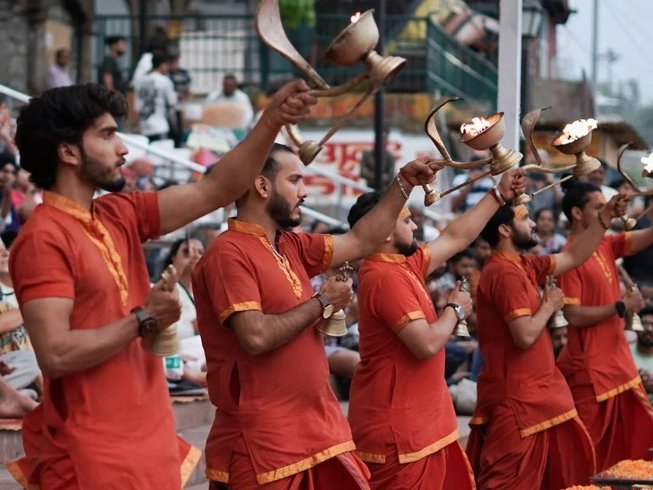
Ganga Aarti | A spiritual spectacle of light and devotion in Rishikesh
Situated at approximately 372 meters (1,220 feet) above sea level, the gateway to the Garhwal Himalayas. Known as the 'Yoga Capital of the World', Rishikesh has been a center for spiritual learning for millennia. The Ganga Aarti is a profound Vedic ritual of gratitude to the river Ganga, considered a mother and goddess, for sustaining life.
No trekking involved. This is an accessible spiritual experience, perfect for beginning or ending your yoga retreat with peace and reverence.
Participating in the Aarti is a deeply meditative experience. The synchronized chanting, the flickering flames, and the flowing river create a powerful energy field, making it one of the most profound spiritual retreat activities. It is the perfect place to practice mindfulness and absorb the sacred vibrations before embarking on your Himalayan hiking adventure.
Devprayag Sangam | Where the Alaknanda and Bhagirathi rivers unite to form the Ganga
Devprayag town in Rudraprayag district is situated at an elevation of 830 meters (2,723 feet). Devprayag is one of the five sacred confluences (Panch Prayag). It is believed that the sage Dev Sharma meditated here, giving the town its name. The distinct colors of the two rivers - bluish Alaknanda and greenish Bhagirath - are visible as they merge to form the holy Ganga.
Witnessing the birth of the Ganga is a humbling experience. The immense power and serenity here make it an ideal spot for silent contemplation and pranayama (yogic breathing exercises). The energy of this sacred geography is a powerful catalyst for the inner discovery that defines the journey.
Dhari Devi Temple | The guardian deity of Uttarakhand, where the divine is believed to reside in a floating rock
Located on the banks of the Alaknanda River between Srinagar and Rudraprayag, at approx. 760 meters (2,500 feet).
The deity Dhari Devi is revered as the protector of the Char Dham abode. The idol is naturally formed on a floating rock. Local legend states that the goddess must never be enclosed by walls, and her relocation in 2013 is mystically linked to the Kedarnath floods, underscoring her role as the region's guardian.
Easily accessible by road. A short flight of steps leads down to the temple. A quick but powerful stop to seek blessings for a safe journey into the mountains.
Visiting this powerful shrine connects you to the deep-rooted faith of the Himalayas. It's a moment to acknowledge the forces of nature and culture that shape this land, adding a layer of profound respect to your yoga trek and adventure.
Tungnath | The highest Shiva temple in the world and the start of a majestic trek
Located in Chopta, Rudraprayag district. The trek starts at 2,680 meters (8,790 feet). The temple is at a soaring 3,680 meters (12,073 feet). Part of the Panch Kedar, Tungnath is believed to be the place where the arms of Lord Shiva appeared after the Pandavas sought his forgiveness. It is the highest of the five Kedars and has been a site of worship for over a thousand years.
The trail is 3.5 kilometers (one way) with a steady, moderate incline. It takes about 3-4 hours to ascend. The path is well-defined through rhododendron and alpine meadows, making it one of the most rewarding yoga treks for all levels.
This climb is not just physical but a spiritual ascent. Yoga stops will be integrated along the way, using the pristine mountain air for rejuvenating pranayama. Reaching Tungnath is an achievement that fills the soul with bliss, a true highlight of any Himalayan hiking itinerary.
Chandrashila Peak | A summit with breathtaking 360-degree views of the Himalayas
The summit stands at 4,000 meters (13,123 feet), a further 1.5 kilometers trek from Tungnath Temple. Chandrashila means 'Moon Rock'. Mythology suggests this is where Lord Rama meditated after defeating Ravana. Another legend says it is where Shiva carried the moon (Chandra) in his hair as a penance.
The additional trek from Tungnath is 1.5 kilometers (one way) but involves a steeper, more challenging climb. The total effort is rewarded with arguably one of the best panoramic views of peaks like Nanda Devi, Trishul, and Chaukhamba. The high altitude requires a slow, mindful pace.
Standing atop Chandrashila is the pinnacle of this adventure. We will celebrate this moment of inner discovery with a session of meditation and gentle yoga asanas, feeling on top of the world - literally and metaphorically. This is the ultimate retreat location for the soul.
Deoria Tal | The crystal-clear lake mirroring the mighty Chaukhamba peak.
Located near Sari village, Ukhimath. The trek starts at 1,900 meters (6,230 feet), and the lake is at 2,438 meters (8,000 feet). It is believed that this was the place where the Devas (Gods) used to bathe. The name Deoria is derived from 'Deva', meaning God. The lake's water is exceptionally clear and is surrounded by lush forests.
A relatively short and gentle 2.5-kilometer trek (one way) from Sari village, taking about 1.5 hours. It's a perfect, mild hike for all fitness levels and is an excellent yoga trek for beginners.
The serene ambiance of Deoria Tal makes it one of the most peaceful retreat locations. The perfect reflection of the Himalayas in the still water is a natural metaphor for a calm mind. We will hold a serene yoga and meditation session by the lakeshore, allowing the profound peace and beauty to facilitate deep inner discovery.
Kartik Swami | sacred trek to a temple dedicated to Lord Kartikeya, offering panoramic vistas
Near Kanakchauri village, Rudraprayag. The temple sits at an elevation of 3,050 meters (10,000 feet). This ancient temple is dedicated to Kartikeya, the son of Lord Shiva. It is believed that he meditated here. Unlike most temples for Shiva or Vishnu, this is a significant shrine for the warrior god Kartikeya, offering a unique spiritual perspective.
A 5-kilometer (round trip) trek from the drop-off point. The path is well-paved but involves a consistent ascent. The difficulty is moderate, and the trail offers stunning views throughout, making the climb enjoyable.
Known for its spectacular sunrise and sunset views over the Garhwal Himalayas, Kartik Swami is a fantastic alternative for a shorter, yet incredibly rewarding, Himalayan hiking experience. The 360-degree views from the top are a perfect backdrop for a closing meditation, reflecting on the journey's lessons and the adventure of self-discovery.
Instructors
Kuldeep Singh Bisht
Kuldeep Bisht started his journey at a young age an unknown sense of karma yoga was within him from his schooling days; coming from a nuclear family Kuldeep is the elder child for which he had great responsibilities on him. after completing his schooling when everyone of his friends was moving to earn money and getting good jobs he was curious about spirituality and purpose of life, so he traveled towards the Himalayas and after visiting many temples, places and communicating with Gurus he moved towards the south and started his yogi journey.

Lisa Marie Veit
Lisa is deeply immersed in the world of yoga, having completed both a 200-hour and a 300-hour yoga teacher training in Rishikesh in 2022. These intensive experiences not only deepened her personal practice but also empowered her to guide others on their own yoga journey. In the tranquil haven of Varkala, she further dedicated 50 hours to pranayama, exploring the art of breath control and discovering a profound sense of inner calm. Simultaneously a teacher and a student, Lisa continues to find joy in both sharing and expanding her knowledge.
Location
The course will take place at Atharv Yogshala (Aurovelly Ashram, Rishikesh) and at the Himalayan Base Hotel for trekking and retreat activities.

Food
Meals included are three daily sattvic vegetarian meals during the training, along with herbal tea, fruits, and refreshments. During the Himalayan retreat, breakfast is served at the base hotel, lunch is provided during hikes, and dinner is served back at the base hotel.
You will nourish your body and mind with a unique yogic diet. You will be served delicious sattvic meals made with fresh, organic ingredients. The yogic diet is light and pure, keeping you feeling lighthearted, energetic, and enthusiastic throughout your retreat. They will provide suitable nourishment for your yoga moves, but they will also help you cleanse yourself from the inside out, just as Buddha and your own personal modern-day yogi recommend.
- Sattvic food is the kind that makes you feel light, energetic, and enthusiastic.
- Rajasic food is that which brings about activity or restlessness.
- Tamasic food is the kind of food that makes us lethargic or sluggish.
The following meals are included:
- Breakfast
- Lunch
- Dinner
- Drinks
The following drinks are included:
- Tea
The following dietary requirement(s) are served and/or catered for:
- Organic
- Raw food
- Yogic
What's included
- 20 days of Yoga Teacher Training (200 hours YTTC)
- 6 days of Himalayan hiking and yoga retreat
- Yoga material
- Certificate of completion
- Outdoor yoga session
- One free Ayurvedic massage
- Nutritious vegetarian meals and herbal tea
- Kirtan night
- Weekend excursions
- Airport pick-up (DED)
- 25 nights accommodation
What's not included
- Ayurvedic Panchakarma and treatments
- Air-conditioner (On additional charges)
- Visa fee
- Air fare
- GST
- Taxi pick-up from Delhi and Haridwar
- Additional foods, drinks, and snacks
- The forest entry ticket costs (1700 INR per person)
How to get there
Recommended Airports
Transfer included
Jolly Grant Airport
19 km away from your destination
Transfer available for additional US$ 100 per person
Indira Gandhi International Airport
193 km away from your destination
Arrival by airplane
Free pickup facility is available from Jolly Grant Airport Dehradun only.
Cancellation Policy
- A reservation requires a deposit of 40% of the total price.
- The deposit is non-refundable, if the booking is cancelled.
- The rest of the payment should be paid on arrival.

Reviews
For this organizer you can guarantee your booking through BookYogaTeacherTraining.com. All major credit cards supported.
Similar Yoga Teacher Training you might like
You recently viewed