77 Day 500-Hour Academic Yoga Master Teacher and Research Training in Nepal
Nepal Master Yoga Teacher and Research Program
Come and join Goniyore Yog ashram Nepal for this long yoga teacher training in Nepal to dive deep into practices, enhance your skills, meet new like-minded people, and become a certified teacher or practitioner of yoga and meditation.
Meet the instructors
Read more
Highlights
- Daily yoga classes
- Guided pranayama, meditation, and chanting sessions
- Ayurvedic massages and ceremony
- Hiking, walking, and boating
- Workshops and other lectures
- 76 nights accommodation
- Daily full-board meals
- Transfer from the airport
Skill level
- Beginner
- Intermediate
- Advanced
Types
76 days with instruction in English
Accommodation
You will stay in various accommodations: Hotel Tradition and Spa, Hotel Busy Bee Resort, Annapurna Eco Village Astham, and Shivalya Yoga Center at Pokhara (inside around Pokhara Valley).
Program
Certifications
Upon completion, you will receive a certificate.
About the training
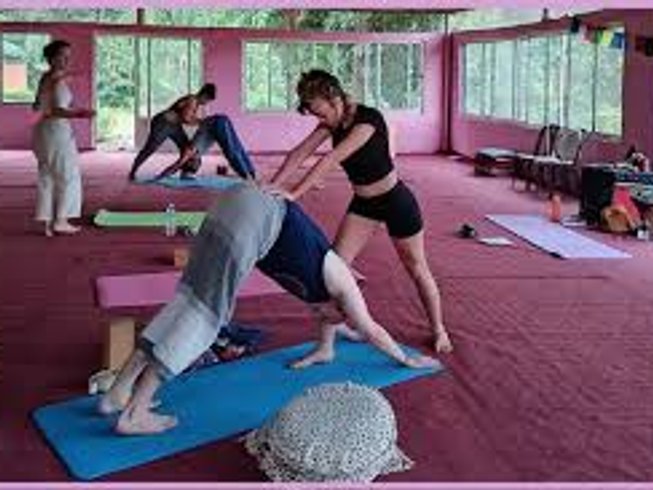
Yoga is a science of right living and as such, it is intended to be incorporated in daily life. It works on all aspects of the person's physical, vital, mental, emotional, psychic, and spiritual. When learning the practice of yoga, the guidance of a competent teacher is recommended. Individuals with specific health issues or those undergoing a period when extra care is required. When practiced faithfully under the guidance of a competent teacher, these techniques will expand your consciousness.
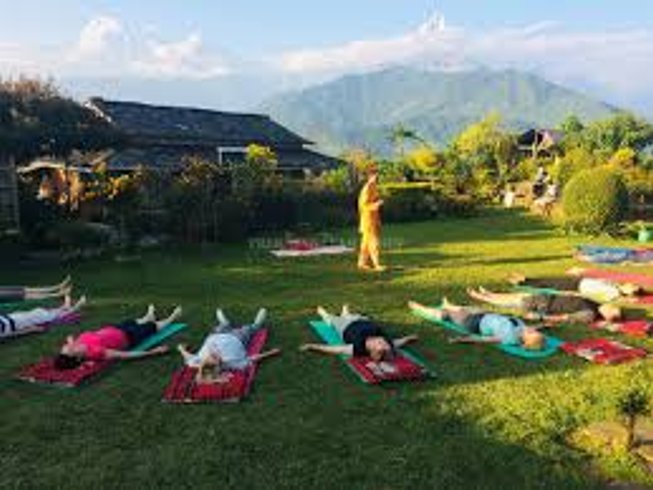
Our Yoga studio has combined both the organization and offering special courses. This training balances deep inner work with gentle immersion in Pokhara's stunning natural beauty and culture, fostering mindfulness throughout. Enjoy your trans formative journey to become a worldwide professional yoga teacher. You will be picked up from the airport, stay one day in Kathmandu, and fly to Pokhara the next day.
Breakdown
- Key focus: complete integration of yoga, meditation, Ayurveda, and panchakarma
- Outcome: practitioner and teacher of yoga, meditation, and Ayurveda
1. Understand what “yoga science” means
- Yoga is not just physical postures (asanas); yoga science includes:
- Asanas (postures)
- Pranayama (breath control)
- Dhyana (meditation)
- Yogic philosophy (from texts like the Yoga Sutras of Patanjali)
- Anatomy and physiology (Western and yogic)
- Subtle body systems (chakras, nadis, koshas)
- Ayurveda (sister science of yoga)
2. Educational path - formal training and certifications
- Start with certifications and degrees recognized internationally:
- Beginner to intermediate
- Covers: basic philosophy, anatomy, teaching methodology
- Duration: one month intensive or spread over weekends
- Advanced level
- Deeper practice, therapeutic yoga, pranayama, yoga therapy
- Includes research-based yoga approaches
3. Yoga and science integration (for research)
- Study
- Neuroscience of meditation
- Yoga therapy and psychology
- Evidence-based benefits: breathing techniques for anxiety, postures for back pain, etc.
- Use platforms like PubMed, Google Scholar, or Research Gate to explore published papers
4. Personal practice and teaching
- To master, you must:
- Meditate daily (e.g., Vipassana, Transcendental, or Kriya yoga)
- Practice asanas and pranayama consistently
- Teach others - this refines your understanding
- Keep a yoga journal - track breath, body, emotions, insights
5. Research project ideas (if you are into science)
- Effect of yoga on depression or anxiety
- Breath work and heart rate variability
- Yoga Nidra and sleep quality
- Yoga for trauma healing
- Comparative study: Yogic vs Western fitness and more
Topics covered
- Every morning starts with mantra chanting or sadhana (five hours).
1. Philosophy: 20 hours
- Yoga philosophies and traditional texts such as the Yoga Sutras and Hatha Yoga Pradipika will be studied. You will learn about yoga and its origin and history.
2. Practice: 100 hours
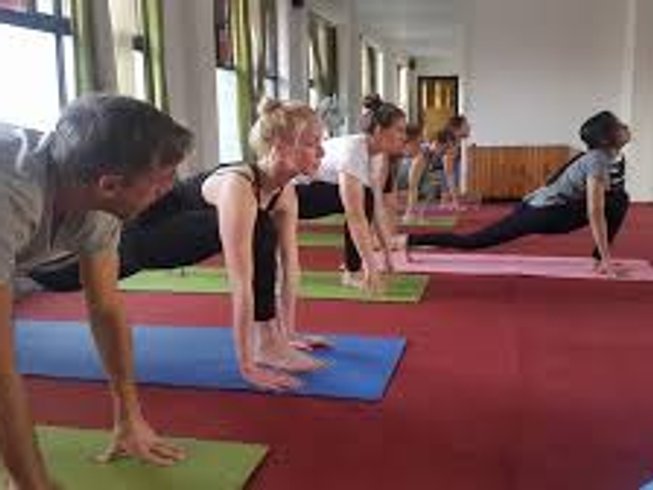
- You will practice and learn how to teach different asanas, pranayamas, kriyas, chanting, mantra, mudra, meditation, and other traditional yoga techniques.
3. Teaching methodology: 15 hours
It includes communication skills, teaching styles, teacher qualities, the learning process of the student, understanding group dynamics, class preparation, and other skills that are essential to address various group settings.
4. Anatomy and physiology: 20 hours
This will include human physical anatomy and physiology as well as energy anatomy and physiology. You will study anatomy and physiology, and their application to yoga practice.
5. Yogic diet, lifestyle, and ethics: 10 hours
You will study the yogic lifestyle such as the principle of non-violence (ahimsa), the concepts of dharma and karma, and the ethics of yoga teachers. You will be introduced to Sattvic meals and their importance for detoxifying your body.
6. Practicum: 20 hours
The 20-hour practicum will help you become a successful yoga teacher all around the world with the art of sequencing and creativity in the class. Every trainee will practice as the lead yoga teacher, observe others, and give and receive feedback.
7. Questions and answers and group discussions: 10 hours
These sessions will include a discussion of overall training, trainees’ reports on their experiences, and other training-related questions.
Syllabus and step-wise progression
Days 1 - 7: Basic learner
- Goal: Establish foundational knowledge and practice in yoga and meditation
- Day 1: Introduction to yoga - history, types of yoga, yoga Ashrama (Brahmacharya stage basics)
- Day 2: Basic asanas (postures) and breath awareness
- Day 3: Introduction to pranayama (breath control) and basic meditation techniques
- Day 4: Introduction to anatomy for yoga (skeletal and muscular basics)
- Day 5: Ethics and principles of yoga teaching
- Day 6: Simple yoga sequences for beginners and group practice
- Day 7: Patanjali Sutras - Introduction and explanation of key sutras (Yamas and Niyamas), philosophy of yoga Ashrama - From day one basics revisited in context of Sutras
Days 8 - 14: Advanced learner
- Goal: Deepen practice and understanding, enhance mental focus and body awareness
- Day 8: Intermediate asanas and alignment principles
- Day 9: Advanced pranayama techniques and introduction to Bandhas
- Day 10: Deeper meditation techniques and mindfulness
- Day 11: Anatomy - Nervous and respiratory systems
- Day 12: Yoga philosophy - deeper study of yoga Sutras (Samadhi Pada introduction)
- Day 13: Teaching methodology for advanced learners
- Day 14: Practical exam and group teaching, philosophy integration
Days 15 - 37: Basic yoga and meditation teachers
Goal: Teach and lead basic yoga and meditation classes confidently
- Days 15 - 17: Teaching asanas and sequencing principles
- Days 18 - 20: Pranayama teaching and meditation guidance
- Days 21 - 23: Anatomy for teachers - injury prevention and modifications
- Days 24 - 26: Yoga Ashrama - Understanding the four asana (Brahmacharya, Grihastha, Vanaprastha, Sannyasa) and their relevance in teaching
- Days 27 - 30: Philosophy - Study of Patanjali Sutras (focus on Sadhana Pada and Vibhuti Pada)
- Days 31 - 33: Class planning and student assessment
- Days 34 - 37: Practice teaching and final evaluation
Days 38 - 57: Advanced yoga teachers
Goal: Master teaching with deeper philosophy, therapeutic techniques, and advanced anatomy
- Days 38 - 42: Advanced asana practices and therapeutic adjustments
- Days 43 - 46: Advanced pranayama and meditation techniques
- Days 47 - 50: Detailed anatomy and physiology for yoga teachers
- Days 51 - 53: Yoga Ashrama - Living as a yoga teacher in modern life, teaching ethics
- Days 54 - 56: Deep dive into Patanjali Sutras (Kaivalya Pada and comprehensive Sutra study)
- Day 57: Advanced teacher assessment and certification
Days 58 - 77: Yoga, meditation, Ayurveda Panchakarma practitioner and teacher
- Goal: Holistic integration of Yoga, Meditation, Ayurveda, and Panchakarma for teaching and practice
- Days 58 - 62: Ayurveda Basics - Doshas, Dhatus, and Agni
- Days 63 - 67: Panchakarma procedures and yoga therapy integration
- Days 68 - 70: Ayurveda nutrition and daily routines (Dinacharya)
- Days 71 - 74: Advanced meditation and healing techniques
- Days 75 - 76: Final comprehensive review of Yoga Ashrama - embodying Sannyasa stage principles
- Day 77: Complete Patanjali Sutras study and integration - application in teaching and practice, graduation ceremony
Patanjali Sutras integration summary
- Day 7: Introduction to key Yamas and Niyamas (moral restraints and observances)
- Day 14: Introduction to Samadhi Pada (state of deep meditation)
- Days 27 - 30: Sadhana Pada (practice) and Vibhuti Pada (powers from practice)
- Days 54 - 56: Kaivalya Pada (liberation) and overall Sutra integration
- Day 77: Complete recitation, study, and application of all 195 Sutras
Yoga Ashrama overview through course
- Days 1 - 7: Brahmacharya (student life): Learning, discipline, self-restraint
- Days 24 - 26: Grihastha (Householder Life): Balancing teaching, family, and social duties
- Days 51 - 53: Vanaprastha (Retirement/Spiritual Transition): Teaching ethics and deeper self-study
- Days 75 - 76: Sannyasa (Renunciation): Full embodiment of Yoga teachings, living example
Progressive yoga asanas and exercise plan from basic (day one) to advanced (day 77)
Days 1 - 7: Basic learner - foundation asanas and Surya Namaskar
- Surya Namaskar (sun salutation A and B) - Primary warm-up sequence
- Basic standing asanas: Tadasana (mountain pose), Uttanasana (standing forward bend), Trikonasana (triangle pose), and Virabhadrasana I and II (Warrior I and II)
- Seated asanas: Sukhasana (easy pose) for meditation and Paschimottanasana (seated forward bend)
- Basic backbends: Bhujangasana (cobra pose)
- Relaxation pose: Savasana (corpse pose)
Daily schedule
Day 1
- Pick up from the airport and transfer to the Hotel Tradition and Spa
- Meet yoga teachers who will provide you instruction book and discuss the entire course
- Dinner and overnight
Days 2 - 5
- 06:30 Satkarma, chanting, and pranayama
- 07:00 Herbal tea break
- 07:15 Mantra chanting, yogasana, and pranayama
- 09:30 Breakfast
- 10:30 Theory class and yogic relaxation
- 13:00 Lunch
- 14:00 Self-study
- 15:00 Meditation and workshop
- 16:45 Tea break
- 17:00 Asana practice
- 18:30 Dinner
- 19:30 Self-study and Sadhana
Day 6
- 06:30 Satkarma, chanting, and pranayama
- 07:00 Tea break
- 07:15 Mantra chanting, yogasana, and pranayama
- 09:30 Breakfast
- 10:30 Theory class and yogic relaxation
- 14:00 Drive to Heritage Site Temple tour - Pashupatinath, Boudhanath, Swoyambhunath Stupa
- 17:00 Back to the hotel
- 17:30 Ayurvedic massage
- Dinner, self-study, and overnight
Days 7 - 12
- 06:30 Satkarma, chanting, and pranayama
- 07:00 Herbal tea break
- 07:15 Mantra chanting, yogasana, and pranayama
- 09:30 Breakfast
- 10:30 Theory class and yogic relaxation
- 13:00 Lunch
- 14:00 Self-study
- 15:00 Meditation and workshop
- 16:45 Tea break
- 17:00 Asana practice
- 18:30 Dinner
- 19:30 Self-study and Sadhana
Included excursions
- Hiking and walking in the Himalaya
- Boating at the lake with meditation
Instructors
Ram Kumar Puri
An experienced yoga teacher, which acknowledges the completion of a yoga teacher training with a Registered Yoga School (RYS). At the side of yoga and meditation; Swami is a serious meditation practitioner and Meditation Acharya at Oshodhara. A deep Sadhak and instructor Swami, recognized Vajrayana (Bardo / Jikhro / Art of Dyeing), Vipassana practitioner, and Master of Usui Reiki Ryoho Traditional Meditation System. And, Swami is a renowned music and singing bowl practitioner and instructor.
Location
The training will take place in Nepal.

Food
You will be served daily meals included in the price. Organic veteran buffet food such as boiled rice, seasonal vegetarian curry, local bread, lental and other soups, glass of milk, and more.
The following meals are included:
- Breakfast
- Lunch
- Dinner
- Drinks
The following drinks are included:
- Water
- Tea
- Detox juices
The following dietary requirement(s) are served and/or catered for:
- Vegetarian
Things to do (optional)
- Reiki courses (I, II, and III degrees)
- Singing bowl special course
- Trekking in the Himalaya (short and long)
Spa treatments
- Sauna, steam bath, and four Ayurvedic massages are included
- Extra spa treatment at additional cost
What's included
- Classes led by a psychologist teacher
- 4 Ayurvedic massages
- Hiking and walking in the Himalaya
- Boating at the lake
- Certification ceremony
- 76 nights accommodation
- Daily vegetarian breakfast, lunch, and dinner
- Airport pick-up
- Pick-up and drop off by tourist bus car, van, and others
- Advanced teachers and doctors
- Yoga mat
- Every day checked by teachers
- All transport to local sightseeing
What's not included
- International airfare
- Insurance
- Domestic flight - one way
- Entrance fee
- Personal belonging
- Any extra courses and services
- Beverage items
How to get there
Recommended Airports
Transfer included
Tribhuvan International Airport
5 km away from your destination
Cancellation Policy
- A reservation requires a deposit of 14% of the total price.
- The deposit is non-refundable, if the booking is cancelled.
- The rest of the payment should be paid on arrival.

Reviews
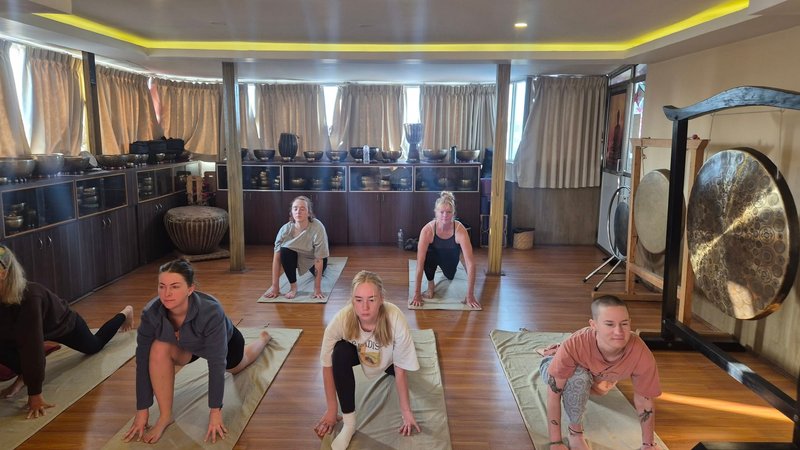
For this organizer you can guarantee your booking through BookYogaTeacherTraining.com. All major credit cards supported.
Similar Yoga Teacher Training you might like
You recently viewed