
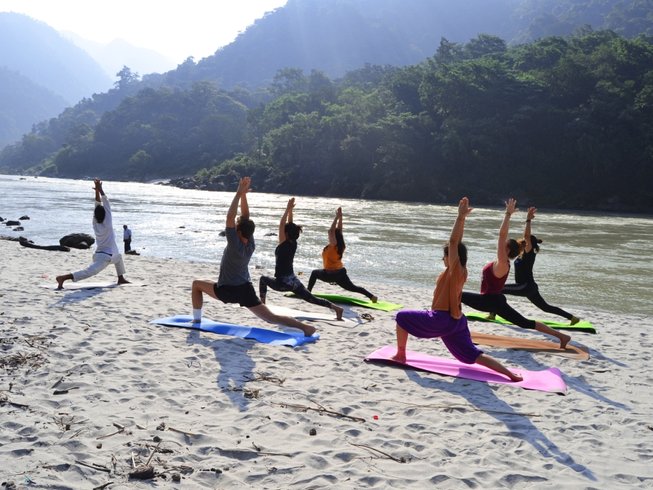
24 Day 200-Hour YTT – Transform Your Life with Authentic Himalaya in Rishikesh, India
Yoga Teacher Training in India
Join Siddhant School of Yoga, a certified Yoga Alliance school in the heart of Rishikesh, Himalayas. This 25-day immersive yoga teacher training blends ancient yogic wisdom with modern teaching techniques. Discover your true potential through transformative practices in asana, pranayama, meditation, and yogic philosophy. Experience authentic yogic living in a sacred, serene environment known as the birthplace of yoga. Begin your journey to becoming a confident, conscious, and internationally certified yoga teacher.
Meet the instructors

Read more
Highlights
- Eligible to register with Yoga Alliance upon completion
- 23-day intensive yoga teacher training
- 23 nights’ accommodation
- Daily vegetarian meals (breakfast, lunch, dinner)
- Airport pick-up from Dehradun (DED)
- Full course materials, including mat, Neti pots, mala, and bag
- Complimentary Ayurvedic massage
- Local excursions and sightseeing in Rishikesh
Skill level
- Beginner
- Intermediate
- Advanced
Types
23 days with instruction in English
 Average daily hours of activity: 10.5
Accommodation
Facilities
- Dining area
- Environmentally friendly
- Kitchen
- Multilingual staff
- Smoke-free property
- Terrace
- Yoga shala
- Yoga studio
- Currency exchange
- Free Wi-Fi
- Internet access
- Wireless internet
Siddhant School of Yoga offers single / double / triple rooms designed for comfort and cleanliness. Each room supports a peaceful and independent stay for students. The rooms are equipped with a study table, chair, two single beds, and a storage closet for personal belongings.
Fresh pillow covers and bed sheets are provided regularly to maintain hygiene. The attached washrooms feature a western toilet, wash basin, and round-the-clock hot and cold water. With all modern amenities in place and constant improvements being made, the accommodations aim to suit a Western lifestyle while offering the simplicity of yogic living.
- Single private room/double sharing/triple sharing hygienic rooms
- Western-style washrooms
- 24-hour hot and cold water
- Housekeeping service
- 24/7 Wi-Fi connection
- Close to the yoga hall
Program
Certification
Students who complete the training are eligible to register with Yoga Alliance as Registered Yoga Teachers (RYT®).
Why Siddhant School of Yoga?
If you are searching for the best yoga teacher training school in Rishikesh, India, it will be difficult. This is because Rishikesh is the yoga capital and spiritual hub of the world so there are thousands of yoga schools in Rishikesh and a number of yoga schools are built daily. Everyone is saying they are the best. Definitely, some yoga schools in Rishikesh have a good quality of yoga education but still, there are some advantages and some disadvantages.
Nowadays, yoga is commercial and one of the most profitable businesses throughout the world. Slowly, the essence of yoga has been converted into a more physical exercise in the form of asana. Almost everyone thinks that yoga is a different type of body posture with some breathing techniques to get good flexibility, strength, stamina, and a calm mind. If you think this is yoga, this is not yoga, this is the physical form of yoga to stay fit. Then what is yoga and how is yoga represented in this school and how is it different?
Sidhhant School of Yoga, Registered Yoga School (RYS-200 and RYS-300) certified by Yoga Alliance, USA was founded by Siddhant in October 2016 with a mission to provide the right and authentic yoga education to the world not only by asana but also by focusing on all the aspects of yoga and vision to create some best and unique yoga teachers who will guide the future generation.
During the last 3 years, they have done 30 yoga teacher training courses and almost 260 students have graduated here they feel proud that almost all students came to learn Hatha Yoga, Ashtanga, and meditation. They also learned more than they expected and the real essence of yoga. They succeed because they have a clear vision to make you stand and learn the right and ancient traditional knowledge of yoga, nothing else. During the last 3 years, they have made their course so strong and systematic, that you can understand the real essence of yoga. So what are the points that make their course so strong foundation for you and unique from others?
One of the world's best pranayama centers in Rishikesh
Pranayama is the foundation of life and any yogic practices. The art of perfection comes with the right practices with the right breathing techniques. If you want to master Ashtanga Vinyasa, Hatha yoga, meditation, or any healing, but without knowing the deepest part of pranayama, you will not master any yogic practice. Here, they will teach you how pranayama is the only and best yogic practice that can help you throughout your life in a situation and how it makes you master any art.
World’s first yoga and gratitude center
Gratitude is not an option, it is the only aspect that gives you peace, happiness, satisfaction, success, and so on. It is the essence of life and yoga. But you do not know how to use gratitude in your life. Here, they especially arranged a 24-day special gratitude course free along with a yoga course to make a new change in your life.
Best meditation center in Rishikesh
Meditation is the state of being. This is not the process of doing, it is the process of being, you can only experience it. Gratitude and pranayama are the two most essential tools to experience meditation. You may know or not some of the meditation techniques but here you will experience your first glimpse of meditation.
A smaller group of 10 students in each batch
They are allowing only a small group of 10-15 students in each course to make the best life-changing experience ever and give them personal attention to each student's growth. All small group is their family and will always be the happiest group ever.
How can they help you after the course?
It is observed in research that 90% to 99% of yoga students are not practicing yoga regularly after the yoga course or yoga retreat. There are many reasons but the main reason is that they somehow do not manage their time properly or they do not know the importance of yoga in their life. This is the only course throughout the world, which helps you after the course in many matters.
- Help to make your daily schedule: It is important to make a daily schedule to know how to continue your practice after the yoga course. Siddhant School of Yoga Teachers helps you to make your 100-day schedule to continue your practice after the Yoga Course. Why 100 days? How can 100 days change your life? You will find the answer during the yoga philosophy class.
- 100 Days of support after completion of the yoga teacher training course: The support team of Siddhant School of Yoga will support you for 100 days on WhatsApp and email to continue your practice as per your schedule.
- Get your global yoga family: The Siddhant School of Yoga family is growing globally day by day and they are trying to connect every student throughout the world on their platform like a family so that they can help each other to make the world better.
- Help you to be a Yoga Alliance Register Yoga Teacher (RYT): After the yoga course, if you want to register yourself as a Registered Yoga Teacher (RYT), then the support team can help you register.
- Get your answer anytime: Once you are done with the yoga course, you can ask your questions anytime, and their team and teachers can reply to your questions.
Daily schedule
- 05:00 - Wake up (Morning meditation (Optional))
- 06:00 - 06:15 Herbal tea
- 06:15 - 07:15 Pranayama/Mudra/Bandha/Yogic Purification
- 07:30 - 09:00 Hatha yoga
- 09:00 - Breakfast
- 09:45 - 10:30 Karma yoga (Optional)
- 10:30 - 11:30 Gratitude practice
- 11:30 - 12:30 Philosophy with Siddhant to discover yoga/ Patanjali/ Chakra/ Kundalini/ Samadhi
- 12:30 - 13:30 Mantra Chanting/Ayurveda
- 13:30 - Lunch
- 14:30 - 15:30 Anatomy and physiology
- 15:45 - 16:30 Yoga Nidra
- 16:30 - Tea time and snacks
- 17:00 - 18:00 Meditation/ chakra and Kundalini yoga
- 18:00 - 19:30 Ashtanga Vinyasa/ alignment and adjustment
- 19:30 - Dinner
- 22:00 - Lights off
This is an overview sample of the daily schedule. The daily schedule provided may vary according to the practice of the practitioner.
200-hour yoga teacher training syllabus
Hatha yoga
- Prarambhik sthiti (base position) – beginner
- All classified as beginner due to gentle, preparatory nature.
- Padanguli naman (toes movement) – beginner
- Goolf naman (ankle movement) – beginner
- Goolf chakra (ankle movement) – beginner
- Goolf ghooran (ankle movement) – beginner
- Janu naman (knees movement) – beginner
- Janu chakra (knees movement) – beginner
- Mustika bandhana (fingers movement) – beginner
- Manibandha naman (wrist movement) – beginner
- Manibandha chakra (wrist movement) – beginner
- Kehuni naman (elbow movement) – beginner
- Kehuni chakra (elbow movement) – beginner
- Skandha chakra (shoulder rotation) – beginner
- Greeva sanchalana (neck movement) – beginner
- Rajju karshan asana (arm pulling) – beginner
- Chakki chalanasana (torso rotation) – beginner
- Nauka sanchalanasana (rowing – forward bend) – beginner
- Kashtha takshan asana (wood chopping – dynamic) – intermediate
- Gatyatmak meru vakrasana (spinal twist – dynamic) – intermediate
- Kauva chalasana (crawling – quadrupod) – beginner
- Marjari asana (spine flexion/extension) – beginner
- Vyaghrasana (tiger pose – dynamic) – intermediate
- Surya namaskara (dynamic flow – solar) – intermediate
- Moon salutation (dynamic flow – lunar) – intermediate
- Sun salutation + variation (dynamic flow – modified) – intermediate
- Sun salutation + breathing (dynamic + breath) – intermediate
- Sun salutation + mantra (dynamic + sound) – intermediate
- Ardha titali asana (hip opener) – beginner
- Poorna titali asana (hip opener) – beginner
- Shroni chakra (hip rotation) – beginner
- Butterfly pose (hip opener) – beginner
- Hanumanasana (front split) – advanced
- Gaumukh asana (hip/shoulder opener) – intermediate
- Namaskarasana (forward squat) – beginner
- Vayu nishkasana (squatting forward bend) – beginner
- Paschimottanasana (seated forward bend) – intermediate
- Janu sirsasana (seated forward bend) – intermediate
- Kurmasana (introspective forward fold) – advanced
- Supta vajrasana (reclining backbend) – beginner
- Ardha ushtrasana (kneeling backbend) – beginner
- Ushtrasana (kneeling backbend) – intermediate
- Sarpasana (prone backbend) – intermediate
- Dhanurasana (bow pose) – intermediate
- Chakrasana (wheel pose) – advanced
- Setu bandhasana (supine backbend) – intermediate
- Supta udarkarshanasana (supine abdominal twist) – beginner
- Shava udarkarshanasana (supine spinal twist) – beginner
- Tiryak bhujangasana (prone twisting backbend) – intermediate
- Udarkarshanasana (twisting squat) – intermediate
- Garudasana (standing balance twist) – advanced
- Vrikshasana (standing balance) – beginner
- Garudasana (twist balance) – advanced
- Bakasana (arm balance forward) – advanced
- Sarvangasana (shoulder-stand) – intermediate
- Halasana (plow pose) – intermediate
- Sirsasana (head-stand) – advanced
- Vrischikasana (scorpion) – advanced
- Padotthanasana (leg raise) – beginner
- Padachakrasana (leg rotation) – beginner
- Pada sanchalanasana (cycling) – beginner
- Supta pawanmuktasana (knee-to-chest) – beginner
- Jhulan lurhakanasana (rocking – digestive) – beginner
- Naukasana (core strength) – intermediate
- Navasana (core strength) – intermediate
- Salabhasana (back strength – prone) – intermediate
- Mayurasana (arm/core balance) – advanced
- Trikonasana (lateral stretch) – beginner
- Bakasana (forward arm balance) – advanced
- Mayurasana (core arm balance) – advanced
- Vajrasana (meditative seat) – beginner
- Sukhasana (cross-leg seat) – beginner
- Ardha padmasana (half lotus pose) – intermediate
- Padmasana (full lotus) – advanced
- Siddhasana (yogic meditative seat) – intermediate
Ashtanga Vinyasa (A unique series of asana)
- What is Ashtanga (A unique series of asana)
- The importance of Ashtanga
- What is Vinyasa: A movement breathing system
- The importance of Ashtanga Vinyasa
- Access all areas
- The practice of the Ashtanga yoga series
- Surya namaskar A
- Surya namaskar B
- Padangusthasana (big toe pose)
- Padahastasana (hands under feet)
- Trikonasana (triangle)
- Parivritta trikonasana (revolved triangle)
- Parsvottanasana (side intense stretch)
- Virabhadrasana-I (warrior pose I)
- Virabhadrasana-II (warrior pose II)
- Utthita parsvakonasana (extended side angle)
- Parivritta parsvakonasana (revolved side angle)
- Prasarita padottanasana (wide leg forward fold)
- Utthita hasta padangusthasana (extended hand to big toe)
- Ardha baddha padma uttanasana (half bound lotus intense stretch)
- Utkatasana
- Dandasana (staff pose)
- Janu sirsasana (head to knee pose)
- Ardha baddha padma paschimottanasana (half bound lotus version of paschimottanasana)
- Trianga mukhaikapada paschimottanasana (one leg folded back forward fold)
- Paschimottanasana (west intense stretch)
- Purvottanasana (east intense stretch)
- Marichyasana
- Paripurna navasana (boat pose)
- Bhujapidasana (arm pressure pose)
- Adho mukha vrksasana (handstand)
- Kurmasana (tortoise pose)
- Kukkutasana (rooster pose)
- Garbha pindasana (embryo in the womb)
- Baddha konasana (bound angle pose)
- Upavistha konasana (wide-angle seated forward fold)
- Supta konasana (reclining angle pose)
- Supta padangusthasana (reclining big toe pose)
- Ubhaya padangusthasana (both big toes pose)
- Urdhva mukha paschimottanasana (upward facing paschimo)
- Setu bandhasana (bridge-building pose)
- Urdhva dhanurasana (upward bow pose)
- Paschimottanasana (intense stretch)
- Supta kurmasana (reclining tortoise pose)
- Savasana (corpse pose)
- Sirsasana (headstand)
- Balasana (child pose)
- Baddha padmasana (bound lotus)
- Yogimudrasana (energetic lock or seal)
- Salamba sarvangasana (shoulderstand)
- Halasana (plow pose)
- Karna pidasana (ear pressure pose)
- Urdhva padmasana (upward lotus)
- Pindasana in sarvangasana (embryo)
- Matsyasana (fish pose)
- Uttana padasana (intense stretched feet or legs)
- Padmasana (lotus pose)
- Tolasana (the uplifting – scales pose)
- Savasana (corpse pose)
Alignment and adjustment
- The importance of alignment and adjustment
- What is alignment?
- What is adjustment?
Pranayama
- Five kosha
- Seven chakras
- Nadis
- What is pranayama
- Aspects of pranayama
- The importance of pranayama
- The sequence of pranayama
- Preparation of pranayama
- Different types of pranayama and their precautions
- Introduction of yogic breathing
- Abdominal inhalation
- Thoracic inhalation
- Yogic inhalation
- Inner retention
- Outer retention
- Udgeeth pranayama
- Kapalbhati
- Surya bhedi pranayama
- Chandra bhedi pranayama
- Alternate breathing
- Bhastrika
- Bhamari pranayama
- Ujjayi pranayama
- Seetali
- Seetkari
- Introduction of nadi-sodhanam
- Rules and regulations of pranayama
- Teaching methodology
- Teaching practice
Bandha
- What is bandha
- Importance of bandha
- Types of bandhas
- Introduction of mool bandha
- Introduction of udiyana bandha
- Introduction of jalandhara bandha
- Introduction of maha bandha
Mudra
- What is mudra
- Implementation of mudra
- Types of mudras
- Jnana mudra
- Chin mudra
- Bhairav mudra
- Bhairavi mudra
- Nashikagra mudra
- Ashwani mudra
Shat karma (yogic purification)
- Introduction of yogic purification (shatkarma)
- Importance of yogic purification
- Jalaneti
- Kapalbhati
- Trataka
- Kunjal kriya
- Sutra neti or rubber neti
Relaxation
- What is relaxation
- The importance of relaxation
- Muscular relaxation
- Deep breathing relaxation
- Tense-relax method
- Partial body relaxation
- Full-body relaxation
- Mind relaxation
Meditation (dhyana)
- What is meditation
- Understanding of meditation
- Understanding of meditation (path of yoga)
- Understanding of meditation (path of knowledge)
- Preparation for meditation
- Practice of meditation
- Practical aspects of meditation
- Om meditation
- Active meditation
- Candle tratak meditation
- Mirror tratak meditation
- Anapana meditation
- Vipassana meditation
- Inactive meditation
- Dance meditation
- 5 senses meditation
- Spine awareness
- Spinal breathing meditation
- Introduction of chakra meditation
- Introduction of chakra balancing meditation
- Mudra meditation
- Teaching methodology of meditation
Yoga nidra
- What is yoga nidra
- The importance of yoga nidra
- Body awareness
- Finding sensation
- Finding blind spot
- Yoga nidra
Gratitude practice
- The importance of gratitude
- What is gratitude
- The right practice of gratitude
Mantra chanting
- What is mantra
- What is mantra chanting
- The importance of mantra chanting
- The different kinds of mantra
- Ganesh mantra
- Guru mantra
- Gayatri mantra
- Mahamrityunjaya mantra
- Universal prayer mantra
- Shanti mantra
Biomechanics and anatomy
- Joint movements (flexion, extension, abduction, adduction)
- Joint stabilization
- Joint stability and yoga
- Skeleton system
- Bones
- Types of joints
- Effect of asana on the skeletal system
- Types of concentration on the skeletal system
- Major muscles
Physiology
- Digestive system
- Respiratory system
- Nervous system
Yoga philosophy
- What is philosophy?
- What is the problem
- What is growth
- Introduction of panch kosha
- Panch kosha and its balance
- What is mind?
- Overall about mind
- Balanced mind
- Introduction of Indian philosophy
- Yoga philosophy
- History of yoga
- Different types of yoga
- Raj yoga (Patanjali yoga)
- All about Patanjali Yoga Sutra
- Discipline and its importance in yoga
- What is yoga?
- Supportive of yoga
- Obstacles to yoga
- Ashtanga yoga by Maharishi Patanjali (8 limbs of yoga)
- 1 - Yama
- 2 - Niyama
- 3 - Asana
- 4 - Pranayama
- 5 - Pratyahara
- 6 - Dharana
- 7 - Dhyana
Ethics
- Yoga and ethical teaching
- Relation between yoga and Yoga Alliance
- Relation between personal growth, professional growth, spiritual growth, and yoga
- Yoga ethics related to practice and teaching
Professional development
- What is professional development?
- Yoga and professional development
- Encourage the trainee to seek RYT
- 200 hours yoga TTC & the profession of yoga (yoga business)
- Continuing the yoga education
- Marketing and promotion
- Support the students for their yoga business and yoga education
Basic Ayurveda
- Introduction of Ayurveda
- What is Ayurveda?
- Fundamentals of Ayurveda
- Relation between Ayurveda and Yoga
- Relation between Ayurveda and practical life
- Introduction to 3 doshas
- All about Vata dosha
- All about Kapha dosha
- All about Pitta dosha
- Body types, body constitution
- Disease and health definition
- Introductions of basic herbs
Teaching methodology
- What is teaching methodology?
- The importance of teaching methodology
- The fundamental qualities of teaching methodology
- Sequencing
- Pace
- Environment
- Cueing
- Class management
- Classroom preparation
- Classroom organization
- Positive and conscious communication
- Clear instructions
- The tone of the voice
- How much say!
- Be concise
- Offering props
- Passive and active demonstration
- Observation of individual student
Practicum (teaching practice)
- What is a practicum
- The importance of the right teaching practice
- Teaching by students
- Support and feedback
Certification and registration
- The process of registration
- All about RYT
- All about ERYT
- All about RYS
The entire syllabus provided here may vary according to the practitioner's practicing ability.
Included excursions
You will enjoy excursions to tourist destinations in and around Rishikesh. The activities include sightseeing in Rishikesh and nearby places, a workshop near Ganga Bank, visiting the Sun Rising, and meditating on nature.
Instructors
Siddhant
Siddhant's root is deep in the spiritual and his flowering is outside. He left his house for the sake of knowledge after his graduation. After that, Siddhant came to Rishikesh and started his intense spiritual practice near the presence of holy river Ganga and the Himalaya. By the time he visited different great sadhus and yogis to unlock the secret of life and discover unique spiritual practices, those techniques have a very powerful impact on spiritual transformation. He spent years with the different spiritual masters and yogis in Himalaya and all over India.
Location
Siddhant School of Yoga, Rishikesh, India
- Nestled in the tranquil foothills of the Himalayas
- Located just steps from the sacred Ganga River
- Short walk to peaceful river ghats for reflection and meditation
- Close to Ayurvedic Panchakarma centers, organic cafes, and vibrant local markets
- Easy access to trekking trails, temples, and spiritual landmarks
Rishikesh, known as the Yoga Capital of the World, draws seekers and spiritual travelers from every corner of the globe. The neighborhood offers a rare blend of ancient yogic tradition and modern comfort, perfect for both quiet reflection and cultural immersion. Guests can attend soul-stirring Ganga Aarti ceremonies, explore nearby Himalayan trails, and connect with a global community of yoga practitioners and teachers.

Features
General
- Dining area
- Environmentally friendly
- Garden
- Meditation garden
- Terrace
- Yoga shala
Services
- Free Wi-Fi
- Library
- Local market
Food
Eating is also considered a yogic practice that nurtures balance and awareness. Siddhant School of Yoga encourages mindful eating to support your spiritual and physical growth during the course. You will receive three freshly prepared vegetarian meals each day, designed to be nutritious, pure, and in alignment with a yogic lifestyle. The meals incorporate seasonal vegetables, fruits, whole grains, Indian spices, and herbs to promote good digestion and sustained energy.
Alongside meals, herbal tea or coffee is offered two times a day to refresh and re-energize you throughout your training. All food is cooked and served with care, keeping hygiene and dietary balance in mind. No outside meals are needed.
- Three meals per day – breakfast, lunch, and dinner
- All meals are vegetarian and balanced
- Includes fruits, vegetables
- Proper yogic food prepared daily
- Herbal tea or coffee served two times a day
The following meals are included:
- Breakfast
- Lunch
- Dinner
- Drinks
The following drinks are included:
- Water
- Coffee
- Tea
The following dietary requirement(s) are served and/or catered for:
- Vegetarian
- Yogic
- Ayurvedic
Spa treatments
One complimentary Ayurvedic massage for relaxation and rejuvenation.
What's included
- Eligibility to register with Yoga Alliance upon successful completion of the course
- 23 days of intensive yoga teacher training course
- Daily vegetarian breakfast, lunch, and dinner
- 23 nights of comfortable accommodation
- Bathroom with hot shower
- RO filtered drinking water available throughout the stay
- Wi-Fi connection in accommodation and common areas
- Two cups of herbal or regular tea served daily
- One yoga mat for personal use during the course
- One Neti pot for nasal cleansing practice
- One rubber Neti for deep cleansing techniques
- One Rudraksha mala for meditation and mantra chanting
- One yoga bag for carrying your materials
- Complete course study materials
- Notebook and pen for journaling and note-taking
- One short excursion trip to a spiritual or natural site
- Local sightseeing exploration in and around Rishikesh
- Airport pick-up from Dehradun Airport (DED)
- One complimentary Ayurvedic massage for relaxation and rejuvenation
- Bonus: 1 extra night of free accommodation and meals before the course begins
What's not included
- Airfares
- Airport transfer from Indira Gandhi International Airport (DEL)
- Additional meals and optional activities outside the scheduled program
- Travel insurance or medical insurance
- Personal expenses (shopping, laundry, SIM cards, etc.)
- Visa and travel documentation costs
- Transport for personal excursions outside of scheduled trips
- Any treatments, therapies, or massages not mentioned as included
- Tips or gratuities to staff (optional)
- Goods and Services Tax (GST)
How to get there
Recommended Airports
Transfer included
Jolly Grant Airport
17 km away from your destination
Transfer not provided
Indira Gandhi International Airport
199 km away from your destination
Arrival by airplane
The nearest airport is Jollygrant Airport (DED) in Dehradun, located about 25 kilometers from Rishikesh. Siddhant School of Yoga provides free pickup from Jollygrant Airport to ensure a smooth arrival. The major international airport is Indira Gandhi International Airport (DEL) in New Delhi, approximately 199 kilometers away.
Most international travelers arrive at Delhi Airport and then either take a domestic flight to Jollygrant Airport or travel overland to Rishikesh.
Arrival by train
Rishikesh Railway Station is located nearby and is a convenient arrival point for those traveling by train. Upon arrival, you'll be assisted with directions or transportation if needed.
Arrival by car
A private taxi from Delhi to Rishikesh can be arranged on request for an additional cost. There are direct buses from Delhi (ISBT Kashmiri Gate) to Rishikesh available throughout the day and night. Buses offer an economical and widely used travel option for domestic and international travelers alike.
Once the booking is confirmed, assistance will be provided to help coordinate the arrival. Based on individual travel plans, guidance will be offered to ensure the most suitable and comfortable travel option.
Cancellation Policy
- A reservation requires a deposit of 30% of the total price.
- The deposit is non-refundable, if the booking is cancelled.
- The rest of the payment should be paid on arrival.

Reviews
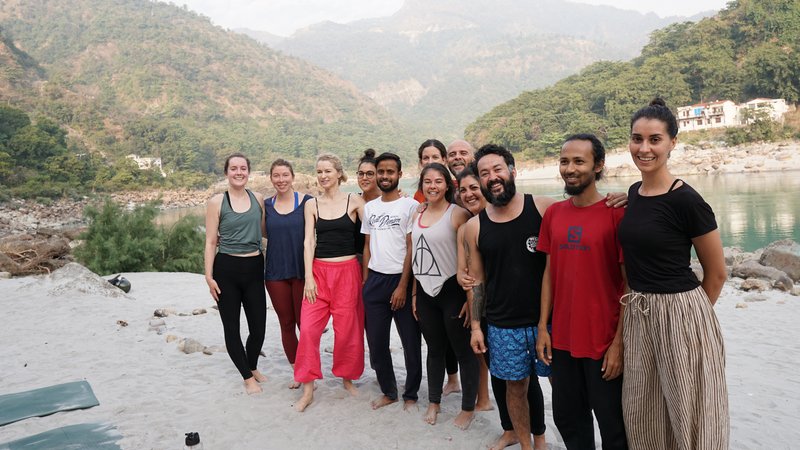
For this organizer you can guarantee your booking through BookYogaTeacherTraining.com. All major credit cards supported.
Similar Yoga Teacher Training you might like
You recently viewed