15 Day 200-Hour Yoga, Meditation, and Ayurveda Teacher Training in Rishikesh, India
Yoga, Ayurveda, Meditation, and Naturopathy Yoga Teacher Training in India
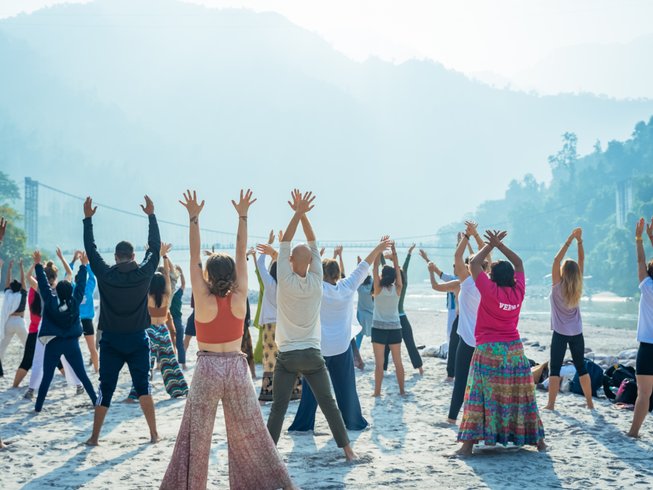
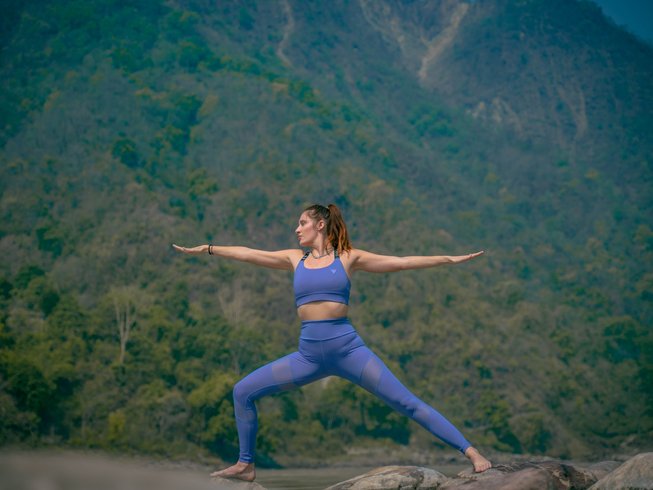
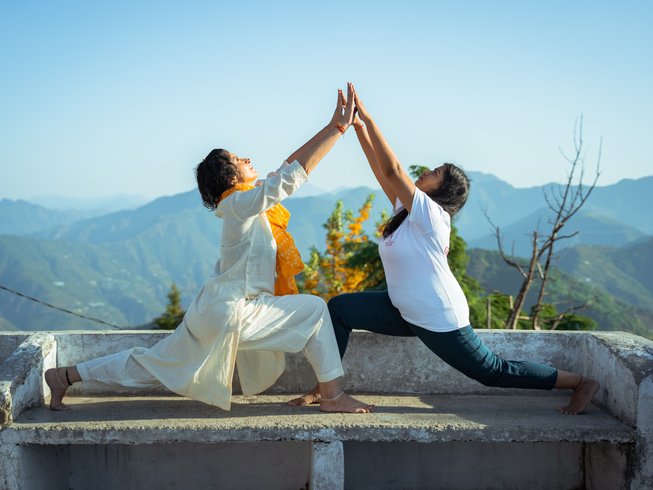
Join Vinyasa Yoga Academy's 200-hour yoga teacher training at Vinyasa Yoga Academy in Rishikesh, India, where you will immerse yourself in the practices of Hatha, Ashtanga, and Vinyasa yoga, Ayurveda, Meditation, and Naturopathy. This course provides a solid foundation in yoga, including asanas, pranayama, meditation, anatomy, and philosophy. Taught by an experienced yoga teacher, you will gain the skills to confidently teach yoga worldwide.
Meet the instructors
Highlights
- 200-hour yoga teacher training course
- Daily yoga and meditation classes
- Yoga anatomy and philosophy, yoga alignment, adjustment, and teaching methodology
- Certificate upon completion
- 14 nights accommodation
- Daily sattvic vegetarian meals
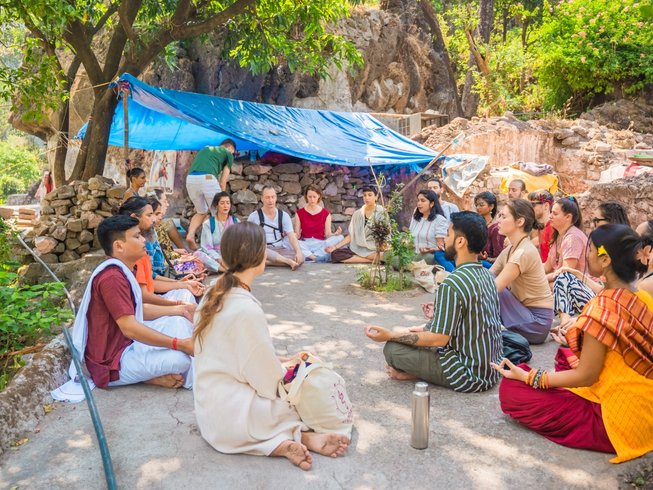
- Cave meditation, Kriya Yoga Ashram, Shivananda Ashram, sunrise tour and Ganga Aarti
- Free airport pick up from Dehradun Airport
Skill level
- Beginner
- Intermediate
- Advanced
Types
15 days with instruction in English
Accommodation
Facilities
- Dining area
- Terrace
- Yoga studio
- Free Wi-Fi
- Laundry
During your yoga teacher training, your stay will be at the Vinyasa Yoga Academy, which is located in the most peaceful area of Tapovan, Rishikesh. The Academy has magnificent views of the mountains and a peaceful, serene environment with lush green gardens and lots of nature around you. Vinyasa Yoga Academy has three yoga halls, 21 rooms, and large outdoor terraces. The large dining hall is situated on the ground floor with lovely views.
The yoga hall is situated on the top floor of the building with beautiful mountain and jungle views. It is a peaceful place that allows your mind to become completely focused on your study and practice. Students can choose single or double accommodation according to their needs. Rooms are spacious, open, and light. Bedsheets, pillows, bath towels, toilet paper, and blankets are provided. Every room has a bathroom with a western toilet and hot and cold shower. Free Wi-Fi is available on every floor.
The washing machine is free to use during certain hours of the day. People all around the world come to Rishikesh in search of knowledge and peace, and Vinyasa Yoga Academy is proud to be located in the calm foothills of the Himalayas, helping soul searchers seek knowledge. Vinyasa Yoga Academy will try its best to provide you with everything to make your stay memorable and meaningful.
Program
Certification
Upon successful completion of the evaluation, students will receive a certificate of completion, indicating that they have met the requirements of the training program.
Yoga styles
- Ashtanga
- Hatha Yoga
- Vinyasa
- Yin
- Aerial
- Kundalini
- Acro
Practices
- Pranayama
- Meditation
- Bandha
- Mudra
- Satkarma
- Alignment
Theory
- Yoga anatomy
- Yoga therapy
- Yoga philosophy
- Tantra and Kundalini
- Yoga Psychology
- Ayurveda
Healings
- Sound healing
- Kirtan and music
- Temple visit
- Mud bath
- Ice bath
- Ganga bath
- Dance meditation
- Death meditation
Discipline
Vinyasa Yoga Academy believes in Karma and Karma yoga is the true base of this course. Vinyasa Yoga Academy is not just an institution, it is more like a yoga community where you share respect, love, and self-care. You will experience the true yogic lifestyle by taking care of yourself. It is very important for a sustainable yoga practice.
Taking responsibility for your space and yourself fosters a sense of true yogi in you. The shared responsibility deepens your yogic principles and understandings other than the yoga postures. They serve no meat, fish, eggs, coffee, or tea. You are not allowed to consume alcohol, non-veg, tobacco products, or any harmful drugs during your stay.
About the training
As you explore the various elements of the yogic way of life, you will obtain a whole new perspective on the universe. Are you thinking about taking a 200-hour yoga teacher training course in India but aren't sure where to start? Yoga teacher training may be easily and properly available in your area, but most people choose to travel to India to study the same and become certified yoga instructors. Vinyasa Yoga Academy's 200-hour yoga teacher training in Rishikesh will guide you through tremendous goals for personal change.
The training will enhance your practice, provide you with the greatest yogic practices, and awaken your energy in all parts of your life, making you more confident, satisfied, and healthy. In the yoga capital of the world, connect with a real community of yoga instructors, academics, and committed yogis. The certification includes extensive instruction in asanas (yoga postures), meditation, pranayama, philosophy, anatomy and physiology, alignment adjustment, teaching methods, and the foundations of Ayurveda.
All classes are taught by well-educated accomplished yogis (Masters), leaving no room for uncertainty when students go up to teach others. Once the course material has been finished, students are allowed to teach their classmates in front of the teacher, which increases clarity and self-confidence in their teaching. Join the best yoga school in Rishikesh and complete your training. Rishikesh is a vibrant and holy city with a deep connection to the art of yoga. If you want to learn traditional yoga, then this is the place for you. You will learn the yogic path, yoga philosophy, and its origin.
You have the opportunity to learn many yoga styles, including Iyengar, Kundalini, Ashtanga, Vinyasa, and Hatha. Indian Rishi, Sages, and Gurus developed and popularised these yoga styles 5000 years ago. The modules offer well-researched and implemented yoga teachings. Professional gurus chose the modules in the best interests of students and yoga teachers after they fitted their gathered knowledge into their very nature.
The training teaches you extensively about the framework of Yoga, including, but not limited to, insights on basic and intermediate yoga asanas (postures), Dhyana (meditation), pranayama (breathing exercises), Mantra chanting, philosophy, anatomy, teaching methodology, posture alignments and adjustments, etc. The daily schedule for a yoga teacher training program in Rishikesh might begin as early as 5:30 to 6:00 a.m. and finish by 8:00 to 10:00 p.m.
You are kept occupied the entire day with challenging yoga sessions under the direction of yoga experts, theoretical lessons to complement it, and other such activities. Thus, getting into shape, adopting a good diet, and reading blogs on yoga training experiences all help one psychologically prepare before the program starts. You must have an upbeat attitude as you get ready for the day so that it permeates the entire event. Early risers frequently have very well-defined sleep schedules. This means that practicing discipline on the yoga path also entails going to bed early and most likely at the same time every day.
Benefits
- 1. You become more controlled
- 2. You will have more understanding in your life
- 3. You become more emotionally balanced
- 4. You become a certified yoga teacher
- 5. You will be able to teach asana, pranayama, meditation, etc
- 6. You gain knowledge to help you run your own yoga centers
- 7. You develop a stronger personal practice
- 8. You will be connected with the ancient yoga tradition of India and you will receive guidance whenever you need it
- 9. You will be welcome at any time to come stay in the ashram in Rishikesh and participate in their daily program on a donation basis
- 10. Your family and friends can also join the ashram and stay like family with them
Curriculum
1. Mantra chanting
Mantra chanting is a traditional spiritual practice that involves the repetition of a sacred sound, word, or phrase. The vibrations created by the mantra are believed to have the power to transform consciousness, leading to spiritual awakening and a sense of inner peace. In the mantra chanting class, students will learn about the origins of different mantras, the meaning and symbolism behind them, and the proper way to pronounce and chant them.
- Gayatri mantra
- SahanaBabatu
- Guru brahma Guru Vishnu
- Mantra Science
- The power of Mantra
- Origin of mantra
- Mantra is not a religion
- The vibration of sound
- Om Chanting
- Om NamahShivaya Chant
- Dum durgayinamah
- Kundalini mantra chant
- Om namoBhagavateVasudevaya chant
- Om Ganapati
- Asato ma sadgamaya
- Twamevamataca pita
- TrayamvakamYajamahe
- Yogenachittsya
- Suryanamaskar 12 Mantra (Om Mitraya)
2. Hatha yoga
Hatha yoga is a traditional form of yoga that focuses on physical postures or asanas, breathing techniques, and meditation. It is known for its ability to improve flexibility, balance, and strength. The main objective of Hatha yoga is to bring harmony between the body and mind and to prepare the body for deeper spiritual practices (dhyana). In this subject, students will learn the philosophy behind Hatha yoga, its benefits for physical and mental health, and how to properly breathe during asanas, and they will have the opportunity to practice Hatha yoga asanas with a solid grounding of the theory behind it.
a. Theory
- Hatha yoga with the connection of chakras and Nadis
- Hatha yoga philosophy
- Meaning of yoga therapy
- Ancient scriptures
- Aim and objectives
- Balancing
b. Practice
- AshthiGranthikriya / PavanMuktasana series 1
- AshthiGranthikriya / PavanMuktasana series – 2
- Centering postures series
- Sun salutation / surya namaskar
- Moon salutation / chandra namaskar
- Standing postures
- Kneeling postures
- Sitting postures
- Forward bending postures
- Backward bending postures
- Supine postures
- Prone postures
- Fire series s
- Inversions
- Twisting postures
- Balancing postures
- Relaxing posture
- Meditative asana
3. Ashtanga or Vinyasa yoga
Ashtanga and Vinyasa yoga are dynamic styles of yoga that focus on flowing movements and synchronized breath. Whilst being quite physically demanding practices, these are known to build strength, flexibility, and endurance over time. In Ashtanga yoga, students follow a specific sequence of postures that are repeated in the same order in every class, while in Vinyasa yoga, the teacher has more flexibility to create a unique sequence for each class.
In this subject, students will learn the foundational postures of Ashtanga or Vinyasa yoga, the importance of breath synchronization, and how to safely and effectively transition from one pose to another. They will also explore different modifications and variations of postures to accommodate different levels of experience and ability.
a. Theory or philosophy
- Introduction
- History
- Awakening
- The breath of life
- Prana
- A chakra contemplation
- How to do Bandha
- Drishti
- Cleansing and purification
- Creating a sacred place
- The challenging asanas
- Props and instruments
- Sun salutation A and B
- Standing asana series
- Sitting asana series
- Finishing asana series
- Teaching practices
b. Practices
- Pādāṅguṣṭāsana
- Pādahastāsana
- Utthitatrikoṇāsana
- Utthitapārśvakonāsana
- Prasāritapādottānāsana
- Pārśvottānāsana
- Utthita hasta pādāṅguṣṭāsana
- Ardhabaddhapadmottānāsana
- Utkatāsana
- Vīrabhadrāsana
- Dandasana
- Paścimattānāsana
- Pūrvattanāsana
- Ardhabaddhapadma paścimattānāsana
- Tiryaṅgmukhaekapāda paścimattānāsana-
- Intense stretch
- Jānuśīrṣāsana
- Marīcāsana
- Nāvāsana
- Bhujapīḍāsana
- Kūrmāsana
- Suptakūrmāsana
- Garbhapiṇḍāsana
- Kukkuṭāsana
- Baddhakonāsana
- Upaviṣṭhakonāsana
- Suptakonāsana
- Supta pādāṅguṣṭāsana
- Ubhaya pādāṅguṣṭāsana
- Urdhvamukha paścimattānāsana
- Setubandhāsana
c. Finishing postures
- Urdhvadhanurāsana
- Salaṁbasarvāṅgāsana
- Halāsana
- Karṇapīḍāsanaūrdhvapadmāsana
- Piṇḍāsana
- Matsyāsana
- Uttānapādāsana
- Cakrāsana
- Sīrṣāsana
- Baddhapadmāsana
- Yoga mudra
- Padmāsana
- Utpluthiḥ
- Savasana
4. Prana kriyas (breathing practices)
Pranayama practices aim to balance and harmonize the Prana - the vital life force. It is a set of techniques for breath control and regulations. Regular practice of pranayama improves lung function and reduces anxiety and stress. It is an important part of yoga. The class will teach you about the connection between mind and breath and how to achieve physical and mental wellness by regulating your vital energy.
a. Theory or philosophy
- What is prana
- What is pranayama
- What is breath and connection with the prana
- Importance and benefits of pranayama
- How to prepare yourselves to practice them
- Aspects of breathing
- Ancient texts of breathing
- General understanding
- Understand all about nostrils and how to activate them
- Secrets of pranayama
- Breath flow in five elements
- Unit of prana
- Function of prana
- Three levels of prana
- Three gunas
- How does prana flow
- Quality of breath
- Imbalance of prana
- Retention of breath
- Six Sitting positions for pranayama practices
- Breathing pattern
- Prana connection with chakras and Kundalini
b. Practices
- Clavicular pranayama
- Thoracic pranayama
- Diaphragmatic pranayama
- Yogic pranayama
- Pranava pranayama
- Nadisodhanam pranayama
- Bhastrika pranayama
- Kapalbhati pranayama
- Bhramari pranayama
- Ujjayi pranayama
- Sitli pranayama
- Sitkari pranayama
- Murcha pranayama
- Surya bhedi pranayama
- Chandra bhedi pranayama
5. Dhana-kriya (meditation)
Meditation is the technique to still the mind and realize your true inner being. It has been practiced in various forms by sages and gurus for thousands of years. Many scientific studies conducted have shown its efficacy in improving focus, reducing stress, and fostering a general sense of happiness. The course teaches you different methods of meditation, how to be consistent in the practice, proper posture, and breathing techniques while sitting for the session.
a. Theory or philosophy
- Introduction to meditation
- History of meditation
- Preparation to meditation
- What is meditation and what it is not
- Why - How - Where - When meditation
- Philosophy of meditation
- Meditation traditions
- Meditation scriptures
- Aim and objectives of meditation
- Sitting positions
- How to sit correctly
- Preliminary practices
- Before practicing meditation
- Role of diaphragmatic breathing in meditation
- Correct breathing in meditation
- How to relax in meditation
- Lifestyle - diet - sleep - job - rules in meditation
b. Practices
- Tratak meditation
- Music meditation
- Om meditation
- Mantra Power meditation
- Dynamic Moving meditation (Osho)
- Buddha Walking meditation
- Basics Foundation meditation
- Practice breath - mind - mantra awareness
- Karma yoga meditation
- Natraj meditation
- Seven Chakra Awareness meditation
- Ajna Chakra Awakening meditation
- Kundalini Active meditation
- Breath Awareness (anapana)
- Mindfulness and sensation
- Total awareness practice
- Mantra and Kirtan meditation practices
- How to Do Japa (recitation)
- Kirtan event and creating a spiritual vibe
- Silence practice
- One-day silence meditation
6. Nidra kriya (psychic sleep)
Yoga Nidra or psychic sleep is a practice of deep relaxation and meditation that induces a state of consciousness between waking and sleeping. It is a powerful tool for reducing stress and anxiety, improving sleep quality, and enhancing mental and emotional wellness.
In this subject, students will learn the theory behind yoga Nidra, the benefits of regular practice, and how to guide themselves and others through a complete yoga Nidra session. They will also explore different techniques for setting intentions, visualization, and body awareness to deepen their experience of relaxation and inner awareness.
a. Theory or philosophy
- Meaning and purpose of yoga Nidra
- Different schools and traditions of yoga Nidra
- Tantric origin of yoga Nidra
- Lifestyle and rules for yoga Nidra practitioners
- Benefits and risks of yoga Nidra
- Difference between yoga Nidra and meditation
- Yoga Nidra experience
- Yoga Nidra and healing
- Four states of consciousness
- Three body awareness
b. Practices
- Tension relaxation
- Full body relaxation – basic yoga Nidra
- Inner silence yoga Nidra
7. Sat-kriya and cleansing (Shatkarma)
Shatkarma, a Sanskrit term outlined in the "Hatha Yoga Pradipika," refers to one of the six yogic purification techniques known as kriyas. These techniques are designed to maintain the body's strength, cleanliness, and overall health by eliminating toxins and removing any obstructions to the flow of prana in the body. By practicing shatkarmas, the body is internally purified, which facilitates the easier performance of pranayama and meditation without discomfort, distraction, or fatigue. This preparation allows for a more effective and efficient practice of these techniques.
a. Theory or philosophy
- What is satkarma
- Benefits and risks
- Who should and should not practice it
- Experiences
- Preparation to satkarma
- Practices after completing it
- Nadi cleansing
b. Practices
- Jihwadhauti
- Danta-dhauti
- Karna-dhauti
- Rubber-neti
- Jalaneti
- Kapalbhati
- Agnisara
8. Yoga philosophy (yoga darshana)
Yoga philosophy is a rich and complex system of thought that has evolved over thousands of years. In this subject, students will learn the key principles of yoga philosophy, including the concepts of dharma, karma, and self-realization. They will also explore the various paths of yoga, including Bhakti (devotion), Karma (action), and Jnana (knowledge).
- Why is yoga philosophy the most important among all?
- Introduction to nine major Indian philosophies
- Introduction to Indian culture and spirituality and the Himalayan tradition
- Introduction to the ancient scriptures of yoga and spirituality
- Meaning and purpose of Indian philosophy
- History of yoga
- Types of yoga
- Patanjali and his work
- Introduction to Yoga Sutra Text
- Eight limbs of yoga
- Yamas and Niyamas
- Philosophy of asana and pranayama
- Science of Karma
- Philosophy of concentration, meditation, and samadhi
- Overview of the first chapter
- Overview of the second chapter
- Overview of the third and fourth chapters of Patanjali
- Mind and its control
- Introduction to Bhagavad Geeta and Upanishad
- Chakras
- Nadi
- Kundalini
- Three Fold Pain
- Three Bodies (Sharira)
- Panchakosha
- Tri-guna
- Mahabhuta (theory of elements)
9. Anatomy and physiology (Sharirvijnan)
Understanding the human body is essential for a safe and effective yoga practice. In this subject, students will learn the basic anatomy and physiology of the human body, with a specific focus on how it relates to yoga postures and movements. They will learn how to identify and avoid common injuries and how to modify yoga postures to accommodate different body types and abilities.
- Introduction to the body and its structure
- Body planes
- Anatomical movements
- Bones of the skull
- Cervical vertebrae
- Shoulder girdle, arm bones, or pelvic region
- Deformities of the spine
- Lower extremity
- Tendons and ligaments
- Muscular system
- Nervous system
- Respiratory system
- Nadi (energy channel)
- Chakras (energy centers)
- Kundalini (prime energy and source of all creativity)
- Panchakosha (five layers)
- PanchaMahabhuta (five elements and body structure)
- Tri-Guna (Three Attributes)
10. Yoga therapy and Ayurveda
Ayurveda is a traditional Indian system of medicine often integrated with yoga therapy to enhance its healing benefits. Ayurveda emphasizes a holistic approach to wellness that considers the unique needs of each individual and includes practices such as diet, lifestyle, and herbal remedies to support overall health and healing. You will also learn certain rules and regulations that govern the delivery of yoga therapy, including professional and ethical standards, scope of practice, informed consent, and confidentiality, among others.
a. Yoga therapy
- What is yoga therapy
- Rules and regulations of yoga therapy
- Healing through asana, pranayama and meditation
- Therapy for common diseases
b. Ayurveda
- Unique features of Ayurvedic treatment
- Ayurveda and Its diversified areas
- Ashtanga Ayurveda
- Fundamentals of Ayurveda
- Panchamahabhuta Kapha (the theme of structure and lubrication)
- Vata (the energy of movements)
- Pitta (the energy of bio-transformation and heat generation)
- Prakriti - know your constitution
11. Mudra
A powerful method for balancing the body and psyche is the use of mudras. The exact interlocking of fingers creates an electromagnetic energy that stimulates and balances the various bodily components. Additionally, this energy facilitates the unrestricted movement of essential energy throughout the body and removes blockages in the channels. Practitioners can maximize the effectiveness of these traditional treatments to restore harmony and equilibrium in their lives by adhering to the suggested protocols and understanding the elemental orientation of the hands.
- The secrets of mudra
- The position of elements in the hands
- The need for mudra
- The importance and advantages of mudras
- Special guidelines about mudra
- Gyan mudra (gesture of wisdom)
- Purngyan mudra (gesture of complete wisdom)
- Vairagya mudra (gesture of dispassion)
- Abhaya mudra (gesture of blessing, fearlessness)
- Dyan mudra (meditation mudra)
- Vayu mudra (gesture of air)
- Pran mudra (gesture of prana)
- Prithvi mudra (gesture of earth)
- Surya mudra (gesture of sun)
- Varun mudra (gesture of god of water)
- Shoonya mudra (gesture of openness, space)
- Pran-apan mudra (gesture of pranaapana)
12. Bandhas (energy lock)
Bandha is a kind of energy lock done to seal the vital prana inside the body. Knowledge of these bandhas is key to proper yoga practice. The energy flow in the body is intensified and flows under greater pressure when the Bandha is released. Bandhas should be learned under expert guidance only to avoid complications and achieve optimal benefits.
- Meaning and importance of energy lock
- Why the energy lock and how your energy get drained
- Energy knots and how to open them
- Understanding the three chakras; muladhara-manipura-visuddhi
- Experience of energy lock
- Benefits and risks of bandha practices
- Agnisar (preparation to uddiyana)
- Vahirkumbhaka (external retention)
- Antarkumbhaka (internal rentention)
- Ashwini mudra to prepare mulabandha
- Vajroli mudra to prepare mulabandha
- Mulabandha
- Uddiyanabandha
- Jalandharabandha
13. Teaching methodology
In a teaching methodology class, it is important to emphasize the sequence of asanas and techniques to ensure a safe and effective practice. Teachers must also be trained to prevent injuries and modify practices for students with different levels of experience and ability. The goal of teaching methodology is not only to physically teach yoga but also to manage students' emotions and encourage a sense of happiness and well-being. By focusing on these key principles, teachers gain confidence and become skilled instructors, enabling them to guide their students for a deeper understanding and appreciation of yoga.
- Not to forget the sequence
- Avoid injuries
- Manage happiness during and after the practice
- Work with all sides of yoga and all levels
- Give a meditative experience
- Manage and balance the energy flow
Here is what you will learn
- Proper demonstration of a yoga practice
- The proper way to instruct and guide a lesson
- Proper alignment of yoga postures
- Proper adjustment with or without props
- Yogic personality establishment
14. Evaluation and certification
At the end of the training, students are required to take a written exam and demonstrate their ability to create and lead a safe and effective yoga class.
- Performance during the course
- Attendance
- Practical asana demonstration test
- Written test (Objective and subjective type)
- Behavior
Hours calculation
- Eight teaching hours per day for 17 days = 136 hours
- Four self-study, journaling, and relaxing hours for 17 days = 68 hours
Daily schedule
- 05:30 - 06:15 Silence meditation
- 06:15 - 07:15 Pranayama and meditation
- 07:30 - 09:00 Hatha yoga
- 09:00 - 09:45 Breakfast
- 10:45 - 11:45 Yoga anatomy
- 12:00 - 13:00 Yoga alignment and adjustment or teaching methodology
- 13:15 - 14:00 Lunch
- 14:30 - 15:30 Self-study
- 15:45 - 16:45 Yoga philosophy
- 17:00 - 18:30 Ashtanga yoga
- 19:00 - 20:00 Dinner
Included excursions
- Cave meditation
- Himalayan sunrise tour
- Kriya Yoga Ashram
- Shivananda Ashram
- Ganga Aarti
Instructors
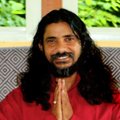
Yogi Vishnu Panigrahi
After practicing yoga from the very early age of 12, he decided to leave his family and friends behind to pursue the yogic path and meet his first yoga master - Narayan Muni at Jharsuguda Muni Samaj Yoga Ashram. It was here he took his first steps into the Himalayan tradition. In 1988, he met his second yoga master - Swami Niranjan Ji to learn the wisdom of the Vedas. There he came across the Jnana yoga (knowledge), which taught him important lessons on the path to self-realization. Yogi Vishnu was initiated into the Raja Yoga system by his great Guru Swami Veda Bharati and Swami Rama.

Yogi Ashutosh Mishra
Yogi Ashutosh Ji is born and brought up in a Brahmin family in Rishikesh and has been practicing yoga from a young age. He is very much inspired by his father who is a full-time social worker. He has completed his Masters's Degree in yoga at Uttarakhand University and has been teaching Hatha yoga, alignment, and Vinyasa for the last 6 years.

Praveen Rajput
Yogi Praveen Rajput is a renowned name in the field of yoga. He has had a successful journey as a yoga tutor and has achieved several milestones in his journey. Yogi Praveen Rajput was born in the pious land of Rishikesh, and since childhood, he was fascinated by the goodness of yoga. Since a very young age, he developed a passion for yoga practice. Yogi Praveen has always shared his knowledge of yoga with his friends and family, which has made him a successful yoga tutor.

Naveen
Mr. Naveen has been teaching yoga teacher training courses since 2015. He has trained over 1000 teachers in India and abroad. Most of his work is in the yoga capital, Rishikesh, India. He has also taught yoga in China and Vietnam. Naveen holds a Master's in yogic science and is a certified Prenatal and postnatal yoga teacher trainer. He has also done 500 hours of yoga TTC from the Yoga Alliance U.S.A. Mr. Naveen currently works with one of India’s leading Prenatal - Postnatal Yoga schools in Rishikesh, India.
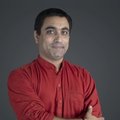
Sunil Ji
Yogi Sunil Bisht started learning ethics and moral values under the guidance of his father at the very early age of 4-5. His father taught and made him practice karma and Bhakti yoga from his childhood. He has completed his master's at Garhwal University in English literature. From the beginning, he was a keen student of yoga too. He has studied and practiced yoga and Ayurveda with different teachers and masters.

Sujata (Milli) Ray
Sujata Ray born in 1993 at lord Jagannath place. She is the elder of daughter Madhusudan Ray & Swarnalata Ray. She have two Younger sisters one Younger brother. When she was born, that time a small hole founded by doctor in her lungs area that’s why she was suffer in breathing problem. That treatment was very expansive and non-gaurentable, father had taken an alternative step. He cured her through naturopathy treatment is acupressure, yoga and pranayama. After she cured, have taken interest to know about naturopathy form her 6th class onwards and she saw all her diseases were control.

Umakanta Sahoo
Guna born in Jagannath Dham- Puri (Odisha, India), in 05.06.1991. He is Marma Therapist and Mallakhamb (Pole Yoga) Trainer. Guna started Mallakhamb (Pole Yoga) practice with Ayurveda life style before 10 year ago, In this 10 years he achieved many successes with Mallakhamb (Pole Yoga). In 2012 he was injured in Mallakhamb practice, that time his teacher Dr. Madhusudan Ray doing marma with Guna, after treatment Guna filling well. That was the time when Guna started liking Marma therapy then he learn from Dr. Madhusudan Ray.
Location
Vinyasa Yoga Academy proudly resides in Rishikesh, the yoga capital of the world. The divine flow of the holy Ganga River and the cool breeze of the Himalayan Mountains energize every cell of your being. Rishikesh has a rich spiritual history. It vibrates with the energies of great yogis who have been meditating for thousands of years. It is a perfect place for your yoga teacher training course. After a five-minute walk, you will find the market where you can buy organic products, local wares, food, restaurants, and so on. The world-famous Laxman Jhula hanging bridge is situated within a 10-minute walk.
Distances
- Market - 5 minutes walk
- Laxman Jhula hanging bridge - 10 minutes walk
- Delhi, 242 kilometers - 6 hours

Food
All meals are included in the price. It is common knowledge that food is a vital component and the source of life's energy for the human body. Your physical and emotional health is impacted by the type and quality of the food you eat. When nutrition is discussed from a yogic viewpoint, it encompasses much more than just the food's nutritional value. Since a full-fledged yoga practice necessitates the body's adequate nutritional augmentation, the energetic component of nutrition must also be taken into account while deciding on your diet.
Good news for yogis: Sattvic cuisine is completely vegetarian. As such meals do not include any animal components, and no animals are harmed in their production. Natural farming practices and the absence of any hazardous additives, preservatives, or tastes are required for these goods.
The following meals are included:
- Breakfast
- Lunch
- Dinner
- Drinks
The following drinks are included:
- Water
- Tea
The following dietary requirement(s) are served and/or catered for:
- Vegetarian
- Vegan
- Yogic
Things to do (optional)
Upon completion of your course, you will feel like Rishikesh is your second home. There are so many things on offer for you to do and they can help you find what you are looking for. For example:
- You can come and stay at Samadhi Yoga Ashram, home of their founder, Yogi Vishnu Panigrahi. Here, you will have the opportunity to attend Satsang with him, including meditation and discourse, for free
- If you would like to volunteer at Samadhi Ashram after the course, you can message them so that their team can make arrangements for you
- Vinyasa Yoga Academy has an orphanage and children’s school in Odisha that sometimes accepts volunteers
- If you are interested in the Himalayan mountains for trekking or hiking, they can help arrange the trip
- Interested students can also join the 300-hour superpower TTC, Kundalini yoga TTC, Yin yoga, prenatal and children yoga TTC, drop-in classes, and many different types of healing courses with discounted costs
- If the students are interested in having teaching experience, they offer a yoga internship program and a space to teach drop-in classes at the school. Students need to apply for this.
Other offers
- Astrology consultation
- Ayurveda doctor consultation
- Ayurveda treatment and detox as prescribed by the doctor
- Detergent powder for washing machine
- Past life-regression session
Spa treatments
Meanwhile, you can also book the following treatments for a fee:
- Swedish massage
- Deep tissue massage
- Hot stone massage
- Foot massage
- Aromatherapy massage
- Neck and shoulder massage
- Lymphatic face massage
- Reflexology
- Travel energizer massage
What's included
- 200-hour yoga teacher training course
- Certificate upon completion
- 14 nights accommodation
- 3 daily meals and tea
- Airport pickup from DED (Dehradun Airport)
- Yoga bag
- Yoga mat, yoga belt, yoga chair, and yoga bolster
- All classes
- Sound healing
- Mud bath
- Excursions
- E-Yoga TTC manual
- E-course books
- E-study materials
- TTC manual hard copy
- Neti pot
- Rubber Neti
- Books hard copy
- Eye cupping
- Kansathali foot massage
What's not included
- Ayurveda massage
- Personal healings
- Pick up by taxi
- Visa
- Airfare
- Personal expenses
- Airport drop off
- GST
How to get there
Recommended Airports
Transfer included
Jolly Grant Airport
14 km away from your destination
Transfer available for additional US$ 90 per person
Indira Gandhi International Airport
209 km away from your destination
Cancellation Policy
- A reservation requires a deposit of 30% of the total price.
- The deposit is non-refundable, if the booking is cancelled.
- The rest of the payment should be paid on arrival.

Reviews
For this organizer you can guarantee your booking through BookYogaTeacherTraining.com. All major credit cards supported.
Similar Yoga Teacher Training you might like
You recently viewed