
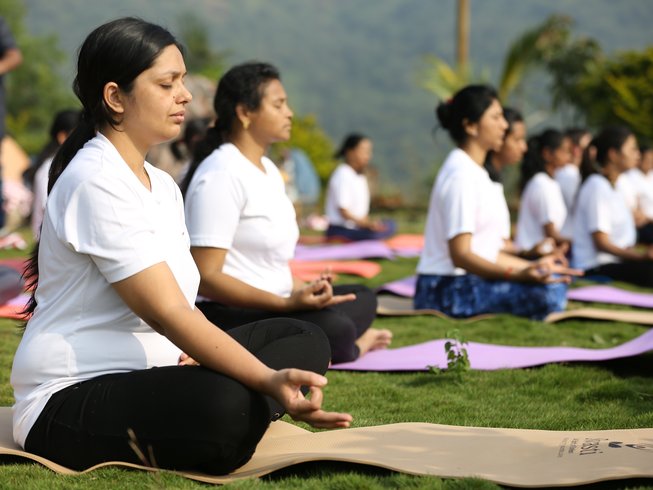
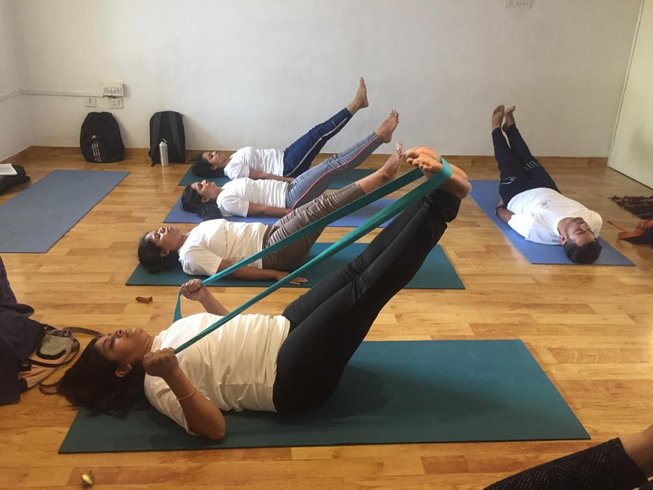
30 Day 400-Hour Intermediate Certified Yoga Teacher Training Course in Pune, India
Intensive Yoga Teacher Training India
Are you looking to experience authentic traditional yoga backed with rich spiritual knowledge in a Gurukul system of education, without any commercial clutter of TTCs? Then this one-month certified yoga teacher training program will provide classes on traditional yoga, yogic lifestyle, dharma talks, and communication, steering students towards a more mindful approach to life and self-realization.
Meet the instructors
Highlights
- Ayurveda consultant wellness talks
- Daily yoga practice and yoga theory lectures
- Curriculum as per standards of Ministry of AYUSH, Government of India
- Yoga certification from the Government of India to help advance your yoga career
- 3 mock MCQ yoga exams were conducted by lead yoga examiners
- Daily sattvic and vegetarian meals with a continental touch
- 29 nights accommodation
- Airport transfer
Skill level
- Intermediate
- Advanced
Types
30 days with instruction in English
Accommodation
Facilities
- Spa
- Air-conditioned rooms
- Environmentally friendly
- Kitchen
- Luggage room / storage
- Multilingual staff
- Smoke-free property
- Yoga shala
- Yoga studio
- ATM / banking
- Bicycle rental
- Free parking
- Free Wi-Fi
- Internet access
- Ironing / ironing board
- Laundry
- Library
- Medical assistance
- Meeting room
- Parking lot
- Tour assistance
- Wireless internet
Swasti Yoga hostel at Empire Estate offers 3 BHK spacious areas that have been built by applying the best creative options. It has an excellent blend of good location, fine planning, and perfect execution. Empire Estate is profitably situated very close to the Pune Airport and the IT hub at Hinjewadi.
Landmarks
- Banks
- ATMs
- Grocery shops
- Food joints
- Jewellery shops
- D mart shopping market
- Carnival
Facilities:
- Hairdryer
- Air conditioning
- Mosquito net
- Kettle
- Umbrella
- Luggage storage
- A fully equipped kitchenette with a microwave
- A seating area with a sofa
- Television
- A shared washing machine
Program
Certifications
Upon completion, you will receive a certification accredited by Swasti Yoga Center and after passing the YCB exam you will be certified by the Yoga Certification Board, Ministry of AYUSH.
As India is the birthplace of yoga, getting Indian government certification is an achievement that will not only validate your expertise but also provide you with a global edge in the world of yoga.
You can join anytime and Swasti Yoga Center can start with one-on-one personalized sessions too.
Swasti Yoga Centre is an ISO 9001:2015 certified yoga centre for quality education, training, therapy, and yoga research. They are an accredited training and therapy center by the Yoga Certification Board (YCB) and an associate center of the Indian Yoga Association (IYA).
This program will be a chance to not just explore, but learn what it means to actually live a yogic life within our modern society. After completion, the students will also receive a certificate from Swasti Yoga Centre in affiliation with the Indian Yoga Association and International Ayurveda Association.
Swasti Yoga Center has painstakingly designed every part of the TTC that appeals to every aspect of your personality expanding your mind and giving you a lifelong transformative experience. You can join anytime and start with one on one personalized sessions here in Pune, the place of BKS Iyengar Guruji.
Why YCB Certification?
The Yoga Certification Board (YCB) was established in India in 2018 by the Ministry of AYUSH (Ayurveda, Yoga & Naturopathy, Unani, Siddha, and Homoeopathy) by the Indian government to develop and promote standardized yoga education and training programs. The YCB yoga certification is significant for several reasons, including its credibility, recognition, and global importance.
Firstly, the YCB yoga certification program is designed to ensure that yoga teachers meet certain minimum standards of competency and knowledge. The certification requires extensive training and testing, including practical and written exams, to ensure that the yoga teacher is equipped with the necessary knowledge and skills to teach yoga safely and effectively.
Secondly, the YCB yoga certification is recognized by the Indian government, which means that only certified yoga teachers are eligible for various government-led yoga programs and initiatives. Additionally, the YCB certification is recognized by various international organizations, including the Indian Yoga Association, and International Yoga Federation, which adds to its credibility and global importance.
Thirdly, the YCB yoga certification has a standardized curriculum that covers various aspects of yoga, including philosophy, anatomy, and teaching methodology. This ensures that all certified yoga teachers have a consistent understanding of yoga and can teach it in a standardized way, regardless of where they are in the world.
Additionally, for yoga enthusiasts, the YCB certification is an assurance that their yoga teacher has met certain minimum standards of competency and knowledge, which is important for their safety and well-being.
Curriculum information
Unit 1 - Introduction to yoga and yogic practices
- 1.1 Yoga: Etymology, definitions (Patanjala Yoga Sutra, Bhagwad Gita & Kathopanishad), aim, objectives, and misconceptions
- 1.2 Yoga: Its origin, history, and development
- 1.3 Brief introductions to Samkhya and Yoga Darshana
- 1.4 Life sketches and teachings of yoga masters (Maharishi Ramana, Shri Aurobindo Swami Vivekananda, Swami Dayananda Saraswati)
- 1.5 Principles of yoga and practices of healthy living
- 1.6 Principles and practices of Jnana yoga
- 1.7 Principles and practices of Bhakti yoga
- 1.8 Principles and practices of Karma yoga
- 1.9 Concept and principles of Sukshma Vyayama, Sthula Vyayama, Surya Namaskara, and their significance in Yoga Sadhana
- 1.10 Concept and principles of Shatkarma: Meaning, types, principles, and their significance in Yoga Sadhana
- 1.11 Concept and principles of Yogasana: Meaning, types, principles, and their significance in Yoga Sadhana
- 1.12 Concept and principles of pranayama: Meaning, types, principles, and their significance in Yoga Sadhana
- 1.13 Introduction to Tri Bandha and their health benefits
- 1.14 Dhyana and its significance in health and well being
- 1.15 Introduction to yogic relaxation techniques with special reference to Yoga Nidra
Unit 2 - Introduction to yoga texts
- 2.1 Introduction to Prasthanatrayee, Purushartha Chatushtaya, and goal of human life
- 2.2 Yoga in Kathopnishad, Prashanopanisha, Tattriyopnishad with special emphasis on Panchakosha Vivek ad Ananda Mimamsa
- 2.3 Concept of Sthitaprajna, Bhakti, Karma, and Dhyana in Bhagavad Gita
- 2.4 Significance of Bhagavad Gita in day-to-day life
- 2.5 Concept of healthy living in Bhagavad Gita (Ahara, Vihara, Achara, Vichara)
- 2.6 Study of Patanjal Yoga Sutra including selected sutras from the following chapters (1. 1 to 12, 2. 46, 3. 1 to 4)
- 2.7 Concept of Chitta, Chitta Bhumi, Chitta Vritti, Chitta Vikshepa, Chittaprasadanam, and their relationship with wellness
- 2.8 Bahiranga Yoga of Maharishi Patanjali (Yama, Niyama, Asana, Pranayama, Pratyahara)
- 2.9 Antaranga Yoga of Maharishi Patanjali (Dharana, Dhyana, Samadhi)
- 2.10 Concept of metal well-being according to Patanjala Yoga
- 2.11 Hatha yoga: Its parampara, knowledge of basic yoga texts (Hatha Pradipika and Gerand Samhita). Relation between Hatha yoga and Raja yoga
- 2.12 Sadhaka and Badhaka tatva, principle to be followed by Hatha yoga practitioner
- 2.13 Concept of Matha, Mitahara, Pathya, and Apthaya
- 2.14 Concepts of Nadis, Prana, and Pranayama for subjective experiences
- 2.15 Knowledge of Hatha yoga practices for wellness (Shatkarma, asanas, pranayama, mudra, Nadaanusandhana)
Unit 3 - Yoga for wellness
- 3.1 General introductions to the human body and nine major systems of the human body
- 3.2 Introductions to sensory organs (Eyes, nose, ears, tongue, and skin)
- 3.3 Basic functions of nine major systems of the human body and homeostasis
- 3.4 Yogic concept of health and wellness
- 3.5 Concept of Tridoshas, Sapta Dhatu, Agni, Vayu, and Mala; their role in wellness
- 3.6 Concepts of Dinacharya and Ritucharya and their importance in well being
- 3.7 Importance of Ahara, Nidra, and Brahmacharya in well being
- 3.8 Yogic concept of mental hygiene: Maitre, Karina, Mudita, and Upeksha
- 3.9 Importance of psychosocial environment for health and wellness
- 3.10 Yogic concept and principles of Ahara (Mitahara, Yuktahara)
- 3.11 Health benefits of Suryanamskara, Shatkarma, Asanas, Pranayama, and practices leading to Dhyana (as per the practical syllabus of the course)
- 3.12 Salient features and contra indications of yoga practices for well-being (as per the practical syllabus of the course)
- 3.13 Knowledge of common diseases; their prevention and management by yoga
- 3.14 Knowledge of the role of yoga in the management of non-communicable diseases
- 3.15 Concept of stress and yogic management of stress and its consequences
Yoga practical
1. Prayer
- 1.1 Concept and recitation of Pranava
- 1.2 Concept and recitation of hymns
- 1.3 Selected universal prayers, invocations, and Nishpatti Bhava
2. Yogic Shat Karma
- 2.1 Neti: Sutra Neti and Jala Neti
- 2.2 Dhauti: Vamana Dhauti (Kunjal)
- 2.3 Kapalbhati (Vatakrama)
3. Yogic Sukshma Vyayama and Sthula Vyayama
a. Yogic Sukshma Vyayama (Micro circulation practices)
- Neck movement - Griva Shakti Vikasaka (I,II,III,IV)
- Shoulder movement - Bhuja Valli Shakti Vikasaka, Purna Bhuja Shakti Vikasaka
- Trunk movement - Kati Shakti Vikasaka (I,II,III,IV,V)
- Knee movement - Jangha Shakti Vikasaka (II-A&B)
- Ankle movement - Pada-mula shakti Vikasaka - A&B, Gulpha-pada-pristha-pada-tala shakti Vikasaka
b. Yogic Sthula Vyayama (Macro circulation practices)
- Sarvanga Pushti
- Hrid Gati (Engine daud)
4. Yogic Surya Namaskara with Mantra
5 Yogasana
- 5.1 Tdasana, Hastottanasana, Vrikshasana
- 5.2 Ardha Chakrasana, Padahastasana
- 5.3 Trikonasana, Padmasana, Vajarasana
- 5.5 Yogamudrasana, Parvatasana
- 5.6 Bhadrasana, Mandukasana, Ushtrasana, Shashankasana, Uttana Mandukasana, Paschimottanasana, Purvottanasana
- 5.7 Paschimottanasana, Purvottanasana
- 5.8 Vakrasana, Ardha Matsyendrasana, Gomukhasana
- 5.9 Makarasana, Bhujangasana, Shalabhasana, Dhanurasana
- 5.10 Pavanamuktasana and its variations
- 5.11 Uttanapadasana,Ardha Halasana, Setubhandhasana, Sarala-Matsyasana
- 5.12 Shavasana
6. Preparatory Breathing practices
- 6.1 Sectional breathing (Abdominal, thoracic, and clavicular breathing)
- 6.2 Yogic deep breathing
- 6.3 Anuloma Viloma / Nadi Shodhana
7. Pranayama
- 7.1 Concept of Puraka, Rechaka, and Kumbhaka
- 7.2 Ujjayee Pranayama (Without Kumbhaka)
- 7.3 Sheetalee Pranayama (Without Kumbhaka)
- 7.4 Sitkaree Pranayama (Without Kumbhaka)
- 7.5 Bhramaree Pranayama (Without Kumbhaka)
8. Concept and demonstration of Bandha
- 8.1 Jalandhara Bandha
- 8.2 Uddiyana Bandha
- 8.3 Mula Bandha
9. Concept and demonstration of Mudra
- 9.1 Yoga Mudra
- 9.2 Maha Mudra
- 9.3 Vipareetakarani Mudra
10. Practices leading to Dhyana Sadhana
- 10.1 Body awareness and breath awareness
- 10.2 Yoga Nidra
- 10.3 Antarmauna
- 10.4 Recitation of Pranava and Soham
- 10.5 Recitation of hymns
- 10.6 Practice of Dhyana
b. Teaching skills (Methods of teaching yoga)
- 1.1 Teaching methods with special reference to yoga
- 1.2 Factors influencing yoga teaching
- 1.3 Need for teaching practice and its use in yogic practice
- 1.4 Teaching aids: Meaning and need, the role of language, voice, fluency, clarity, and body language in an ideal presentation
- 1.5 Methods of teaching yoga to an individual, small group, and large group
- 1.6 Lecture cum demonstration in yoga: Its meaning, importance, and method of its presentation
- 1.7 Lesson plan: Its meaning and need
- 1.8 Preparation of lesson plan in yoga, preparation of lesson plan for an individual and for a group
- 1.9 Presentation of lessons in specific yogic practices: Kriya, asana, pranayama, and Dhyana
- 1.10 Assessment of a yoga class (detection and correction of mistakes)
Program highlights
- Daily yoga practice and yoga theory lectures
- Chanting mesmerizing sutras
- Learn to read classical texts in Sanskrit
- Study from Patanjali Yogasutra, Hatha Yoga Pradipika, Gherand Samhita, Shiv Samhita and many more yogic classical texts
- Curriculum as per standards of Ministry of AYUSH, Government of India
- Yoga certification from the Government of India to help advance your yoga career
- Being a personalized program you can start from your convenient date
- 3 mock MCQ yoga exams were conducted by lead yoga examiners
- Stress detox
- Ayurveda consultant wellness talks
- Yogic lifestyle and Indian culture
- Mentoring and Apprentice Program
- Indian folk art, rangoli, heena painting, spiritual temple consorts
- Mindful walk
- Full moon meditation
- Explore Self
- Art and music therapy
- Ayurveda and Indian cooking classes
Daily Schedule
- 06:30 - 08:00 Yoga asanas, pranayama, shuddhi kriyas (yogic cleansing techniques)
- 09:30 Sattvic breakfast
- 10:00 - 12:00 Yoga theory lecture (According to syllabus)
- 12:00 - 13:00 Mindfulness talk/Q&A and practice
- 13:30 Nourishing sattvic lunch
- 14:30 Free time to rest and explore
- 17:00 Pranayama, meditation, relaxation session/yoga activities, assignments, mock exams, guru-shishya discourse/Evening program (activities vary; temples, historical place visits, bhajan, kirtan, cultural programs)
- 19:30 Nourishing vegetarian dinner
- 21:00 Lights off
Included excursions
- Discover the beauty of Pune and nourish your mind, body, and soul with our curated local excursions. Join our Yoga center and explore the city's hidden gems through our unique blend of mindful movement, meditation, and cultural immersion. From tranquil nature walks to vibrant market tours, our excursions offer a refreshing escape from the hustle and bustle of city life. Come and experience the magic of Pune with Swasti Yoga Center!
- Teaching yoga in the public school
- Interaction with yoga community
- Indian festivals, traditions, celebrations, and prayer ceremonies. Educational trip to the temples, Ayurveda college, primary health care center
- Nature hikes with a trusted guide
- Free excursions to nearby sites of interest for yoga
Instructors
Dr Vikas Chothe
Swasti’s founder, Dr. Vikas Chothe, holds an MD, PhD in Ayurvedic medicine and works as yoga teacher and consultant. He has worked as a yoga ambassador for Indian government and invited as guest speaker by Indian Embassy in Armenia, Austria, and Malaysia. He has been working as a lead examiner for yoga certification board (YCB), AYUSH Ministry and has conducted exams for more than 3,000 students to date and visited the USA, Cambodia, China, UAE, France, Italy for promotion of Yoga and Ayurveda. He is also a yoga school auditor and assessment expert for the Yoga Certification Board.
Dr Shwetambari Chothe
Dr. Shwetambari Chothe is a certified yoga teacher by the government of India, consulting homeopath, assistant professor in LMF Homoeopathic Medical College, Pune, and co-founder of Swasti Yoga Center. Since childhood, she had a keen interest in yoga and Indian culture. She is a great chef with Ayurveda healthy cooking as her specialty. Qualifications: MD Homoeopath, Anatomy and Physiology expert, yoga teacher, and practitioner for six years.
Location
Called “Queen of the Deccan,” Pune is the cultural capital of the Maratha peoples. Pune exemplifies an indigenous Marathi culture and ethos, in which education, arts and crafts, and theatres are given due prominence. It is the birthplace of the poet-saint Tukaram (in Dehu) and Jnaneshvara (in Alandi), the author of the well-known commentary ‘Jnaneshwari’, on the “Bhagavad Gita”. Pune is lively and vibrant, which can be a great atmosphere and contrast to surround yourself in, when spending time focusing your energy inwardly and on your wellbeing through your yoga practice.

Food
During this training, you will be served daily meals. Enjoy healthy satvik home-cooked Maharashtrian degustation food with famous dal bhat (rice and legumes), fresh fruits and vegetables, homemade yogurt, pickle dish, and traditional roti (handmade flatbread). Food is life-giving and enables you another opportunity to live in harmony with nature. Food choices matter to both your health and the health of the planet.
So, each day you will explore ways to eat healthier and consciously. (Mitahar, Yukahar for yogis). The cooks will prepare the food with utmost devotion and love and nourish all the layers of your personality. With the cultural experiences continuing, Swasti Yoga Center wants to invite you to learn Maharashtrian cooking. You will get to visit their organic Ayurveda farm, where you will get the freshest and most organic vegetables and fruits. Our supermom chef will teach you how to blend spices and ingredients to get that perfect Indian flavor.
Pune, the seat of the Peshwas has retained its traditional cuisine and a special Pune meal would consist of Puran Poli (a sweet paratha with pulses/dal) Amti (masala dal), Pithla Bhakri (a masala chickpea gravy with a stiff ‘roti’), Varan Bhat (dal and rice), Matki Ki Usal (masala sprouts), Thali pith (a spicy chickpea-based pancake) and Alu chi Vadi (steamed and fried, sweet n’ spicy leaves).
The following meals are included:
- Breakfast
- Lunch
- Dinner
- Snacks
- Drinks
The following drinks are included:
- Water
- Tea
- Detox juices
The following dietary requirement(s) are served and/or catered for:
- Vegetarian
- Yogic
- Ayurvedic
What's included
- Daily yoga practice
- Yoga theory lecture
- Pranayama and meditation sessions
- 3 mock MCQ yoga exams conducted by lead yoga examiners
- Curriculum as per standards of Ministry of AYUSH, Government of India
- International faculty with MD doctors, certified yoga experts, Yoga ambassadors
- Yoga certification from the Government of India will help advance your yoga career
- A program completion certificate from Swasti Yoga Centre affiliation with the International Ayurveda Association and International Federation of Yoga Professionals
- List of certified yoga trainers will be displayed on the Ministry of AYUSH website
- 29 nights accommodation
- Daily Sattvic and vegetarian meals
- Airport transfers for Pune and Mumbai Airport
What's not included
- Airfare
- Visa fees
- Medicines
- Ayurveda treatment
- Travel insurance
- Yoga Certification Board (Govt. of India) yoga exam and registration fees - 350 USD
- GST
How to get there
Recommended Airports
Transfer included
Chhatrapati Shivaji International Airport
110 km away from your destination
Transfer included
Pune Airport
14 km away from your destination
Arrival by airplane
Please book your flight to arrive at Pune Airport (PNQ) and Chhatrapati Shivaji International Airport (BOM). Transfer from these airports are included.
Cancellation Policy
- A reservation requires a deposit of 30% of the total price.
- The deposit is non-refundable, if the booking is cancelled.
- The rest of the payment should be paid on arrival.

Reviews
For this organizer you can guarantee your booking through BookYogaTeacherTraining.com. All major credit cards supported.
Similar Yoga Teacher Training you might like
You recently viewed